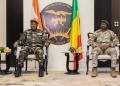

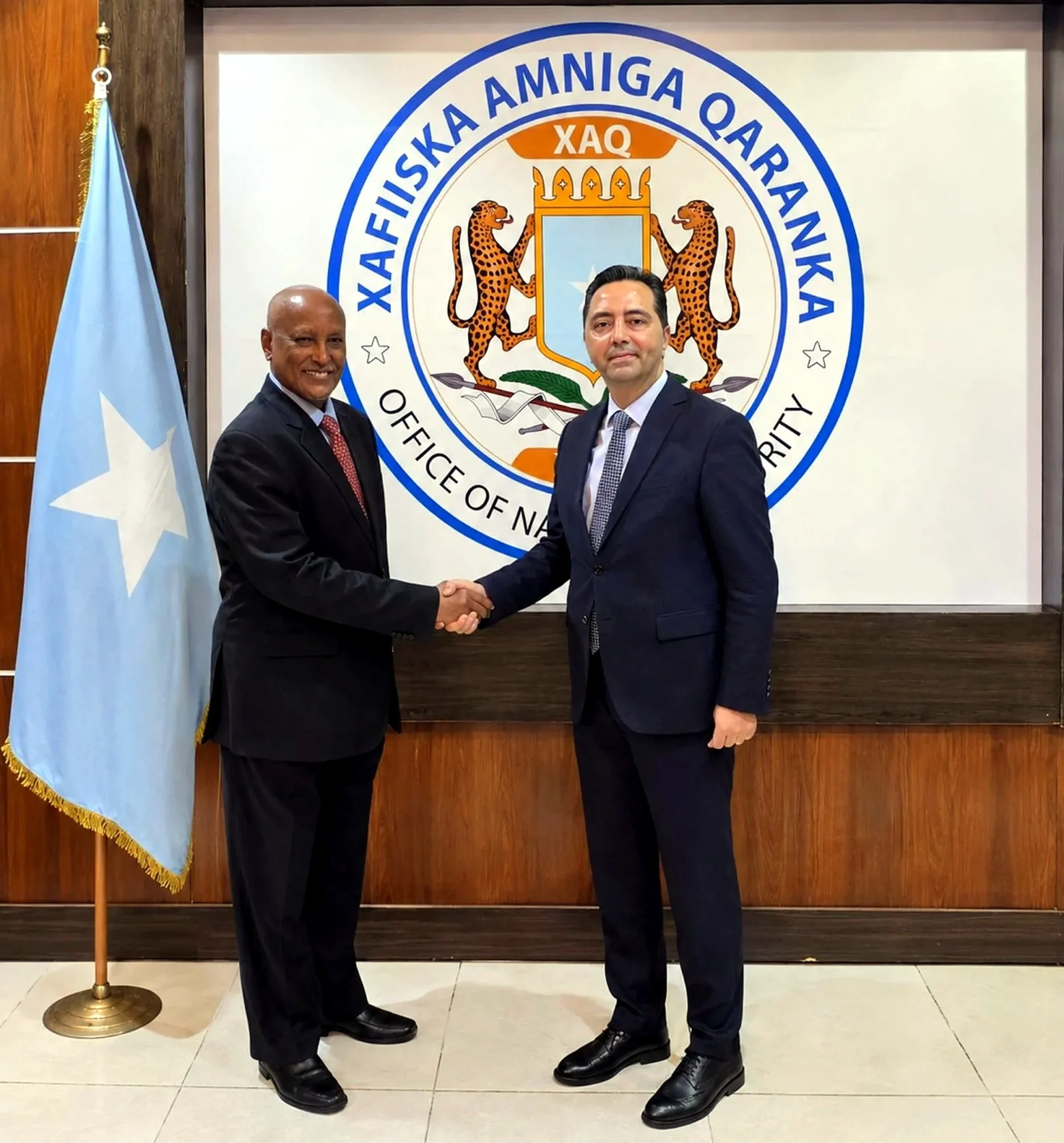
Turkey’s ambassador to Somalia, Ferhat Alkan, met Somalia’s National Security Adviser, Awes Hagi Yusuf Ahmed, in Mogadishu on 9 November 2026 for talks on counterterrorism operations and bilateral security cooperation, according to Somalia’s Office of the National Security Adviser and the Turkish Embassy in Mogadishu.
The meeting covered political developments in Somalia alongside the security situation, as troop-contributing nations begin withdrawing forces from the African Union Support and Stabilisation Mission in Somalia (AUSSOM). Uganda, the mission’s largest contributor, has already started pulling out its 6,500 troops, and peacekeepers have begun handing forward operating bases to the Somali National Army ahead of the end of the AUSSOM mandate on 31 December. Somali and Turkish forces are expected to take on a larger share of operations against the militant group al-Shabaab as that drawdown continues.
“Türkiye continues to contribute to the peace, stability, and security of Somalia, as it has in the past,” the Turkish Embassy said after the talks. Somalia’s national security adviser welcomed Turkey’s continued backing and pressed for closer coordination between the two governments, Somali officials said.
Alkan formally took up his post on 21 September 2026, succeeding Alper Aktaş, who had served as ambassador in Mogadishu since March 2024. A career diplomat who joined Turkey’s Foreign Ministry in 2001, Alkan previously represented Turkey in Mozambique from February 2025 until September 2026. His predecessor held a similar meeting with Awes Hagi Yusuf Ahmed in July, which shows how routine these security consultations have become.
Foreign Interference on the Agenda
The Mogadishu meeting followed a separate exchange on 5 November, when Somalia’s Ministry of Defence said Defence Minister Ahmed Moallim Fiqi met General Sabahattin Kılınç, commander of the International Joint Strategic Command at the General Staff of the Turkish Armed Forces. According to the ministry statement, the two discussed strategic defence cooperation, the security situation in the Horn of Africa, the fight against terrorism and “foreign interference in support of terrorist groups”. The statement did not name the countries or parties allegedly behind that interference, although Somali officials have in the past linked such complaints to rival outside powers active in the country.
Fiqi has become a regular counterpart for Turkish commanders. In May he held talks with Aktaş and the then TURKSOM commander, Major General Sebahattin Kalkan, on training and the rebuilding of Somalia’s defence institutions, and earlier this month Turkey’s army chief inspected the space base Ankara is building north-east of Mogadishu.
A Widening Military Footprint
Turkey built its security relationship with Somalia around Camp TURKSOM, a training academy in Mogadishu’s Jazeera district that opened in 2017 at a cost of roughly $50 million. It is Turkey’s largest overseas military facility, spans about 400 hectares, and can train between 1,000 and 1,500 Somali soldiers at a time under a two-year programme for officers and a one-year course for non-commissioned officers. The camp has graduated thousands of troops, including members of Somalia’s Gorgor commando force, and Military Africa has previously described how Turkey is building a new Somali army. That effort has included sending Somali special forces to train in Turkey and donating Kirpi mine-resistant ambush-protected (MRAP) vehicles and military trucks.
The relationship moved onto a treaty footing with the Defence and Economic Cooperation Framework Agreement signed on 8 February 2024, under which Ankara undertook to help build, train and equip the Somali navy. Since then the training mission has grown into a harder-edged military presence. Turkey deployed counter-terror troops in 2025, Somalia acquired the Bayraktar Akıncı unmanned combat aerial vehicle to strike al-Shabaab, and T-129 ATAK attack helicopters arrived in Mogadishu in June 2025.
Fighter jets followed. Somali government sources said three Turkish F-16s landed at Mogadishu’s Aden Adde International Airport on 28 January 2026, after months of work on hangars and support facilities there. It was the first time Ankara had based fighter aircraft in the country. Turkey kept the deployment unannounced until three of the jets flew over the Somali National Armed Forces’ 66th anniversary parade on 12 April, which Janes treated as confirmation, and Fiqi later confirmed it publicly. Turkish and Somali statements have since described F-16 strikes on al-Shabaab positions, including in the Goday area of Lower Shabelle in July.
Frigates and the Parliamentary Mandate
Turkey’s navy keeps ships rotating through Somali waters under what it calls the Somali Naval Task Group, a presence that began with the first warship visits in 2024 and grew when Ankara sent frigates to protect its energy exploration. Turkey’s Ministry of National Defence said on 28 October that the frigates TCG Gökçeada and TCG Yıldırım would start moving towards Mogadishu on 30 October to carry material by sea, take over task group duties and escort a Turkish fishing vessel. That ship, the Mustafa Korkmaz A, is due to carry out exploratory and trial fishing in Somalia’s exclusive economic zone, according to Baird Maritime. The fishing venture follows the creation of SOMTURK, a joint company formed in December 2025 by the Turkish group OYAK and the Somali National Fishing Company.
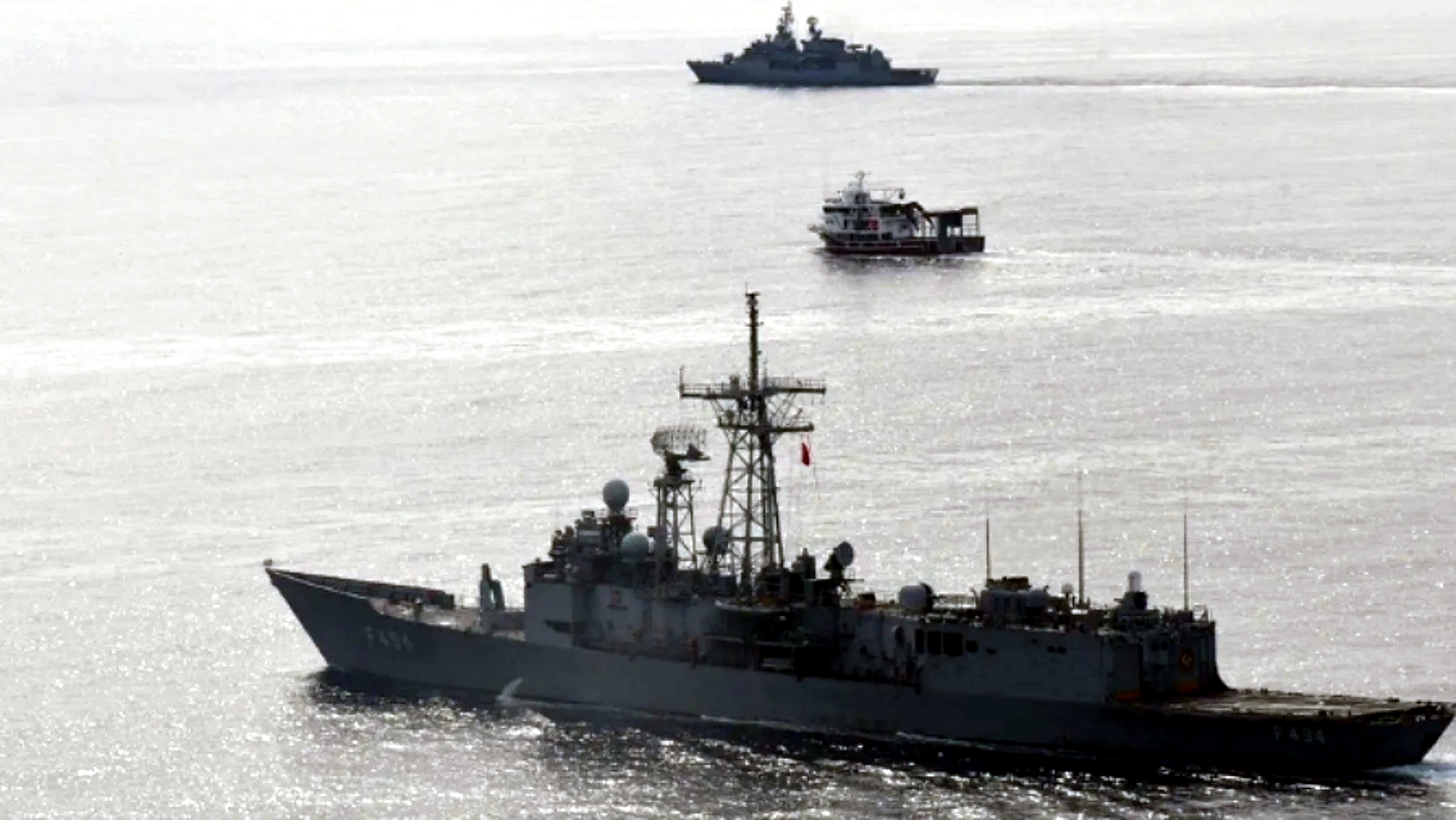
Turkey’s Grand National Assembly approved a two-year extension of the legal authorisation for its armed forces’ presence in Somalia on 21 July. The decision was published in the Official Gazette on 23 July and took effect on 27 July 2026, keeping the mandate in force until 27 July 2028, Turkish Minute reported. It covers operations against terrorism, piracy, illegal fishing and smuggling on land and in maritime areas the two governments designate jointly, and it leaves troop numbers and the scope of operations to President Recep Tayyip Erdoğan. The naval mission in the Gulf of Aden, Somali waters and the Arabian Sea runs under a separate, annually renewed authorisation.
Energy, Space and Regional Rivalry
Ankara has also moved into Somalia’s energy and space sectors, which it links to the same security partnership. The drillship Çağrı Bey arrived off Mogadishu in April 2026 for Turkey’s first overseas deep-sea oil exploration, after Turkey secured offshore drilling rights, and Turkish Petroleum has been drilling an exploration well off the Somali coast. Turkish officials first spoke of a missile and space rocket test site in Somalia in 2024 and began work on the launch facility later that year; the site, which Ankara intends to use for testing long-range rockets, has since been located about 78 kilometres north-east of Mogadishu.
Turkey’s deepening security role in Somalia comes as its rivalry with Israel and the United Arab Emirates plays out across the Horn of Africa, a contest Military Africa examined when Turkey positioned itself as Africa’s security partner and when Turkey and Egypt expanded their military presence in Somalia. Israel recognised the breakaway region of Somaliland in December 2025, a move Turkey and Somalia’s federal government cast as a threat to Somalia’s territorial integrity, and Ankara designated that territorial integrity a national security priority in March. Analysts who track the region say Turkish support for Mogadishu now does two things at once: it backs a partner government against al-Shabaab, and it works to keep rival outside powers from gaining ground in a country where Turkey has invested for more than a decade. Turkey is one of several outside actors whose role is growing, as Military Africa noted in its look at how foreign forces are taking a bigger role in Somalia’s war.
For Somalia, the arrangement carries a trade-off. Turkish training, aircraft and naval patrols fill gaps left by the African Union drawdown, but they also tie Mogadishu’s security planning to decisions made in Ankara, including when Turkish jets fly over the capital and how long Turkish forces stay under their parliamentary mandate. Opposition deputies in Ankara raised a related concern during the July debate, complaining that the contents of the 2024 agreement had still not been disclosed and warning that support for Somalia should not draw Turkey into internal disputes.
A Partnership Built to Outlast AUSSOM
Neither government has set a date for the next formal review of the partnership. But Turkey’s mission authorisation now runs to July 2028, and officials on both sides describe the F-16 deployment and expanded naval rotations as recurring commitments rather than one-off gestures. Three Turkish-Somali engagements in little more than a week, covering counterterrorism, foreign interference and a social services memorandum of understanding that Somalia’s cabinet approved on 12 November, point to a relationship both governments expect to keep widening. With AUSSOM’s mandate ending at the close of the year, how much of the security burden Ankara is prepared to carry in 2027 will be one of the clearest tests of that commitment.