
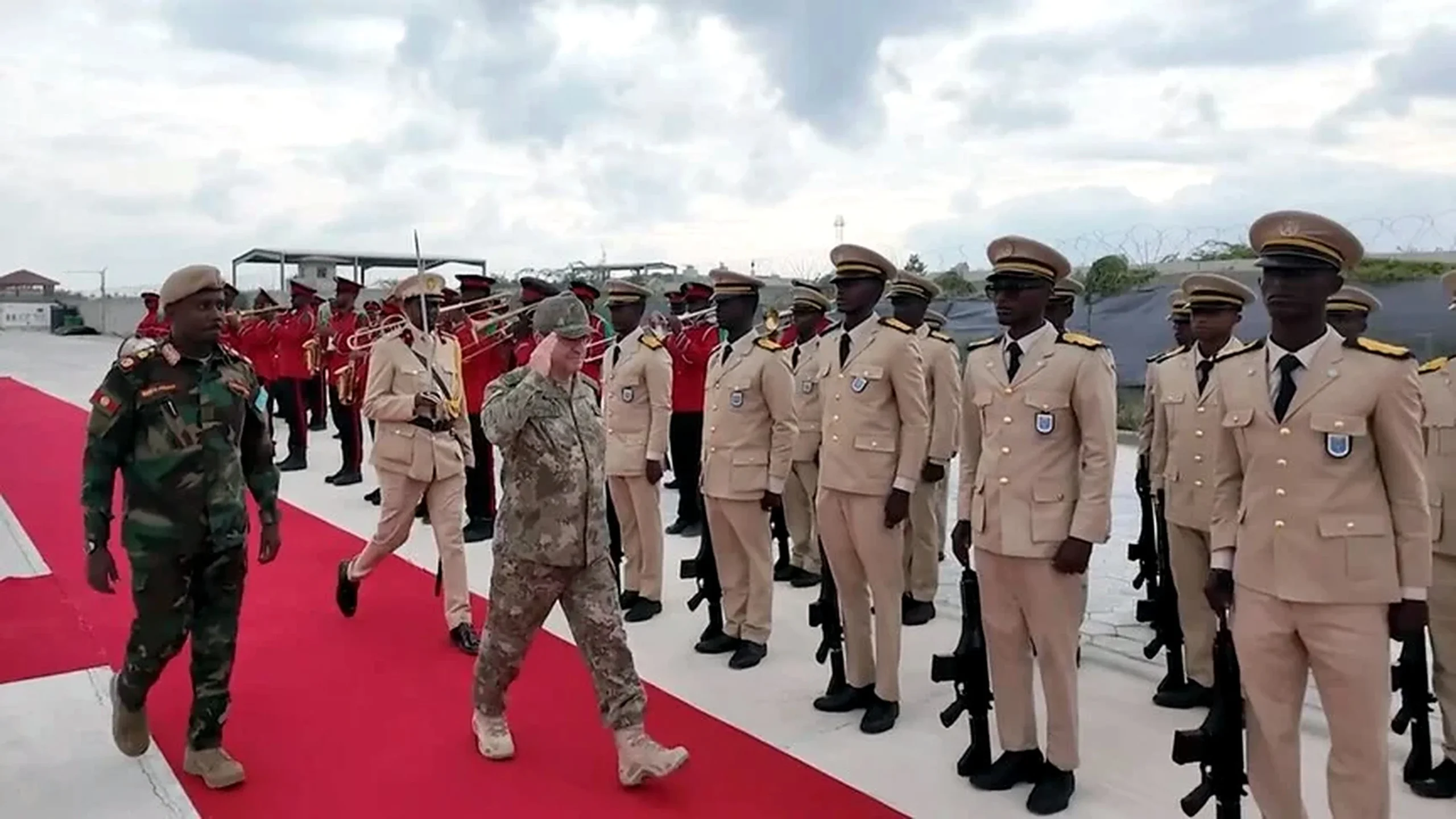
Türkiye’s Chief of General Staff, General Selçuk Bayraktaroğlu, inspected the space base Ankara is building in Somalia during a visit to the country, the Turkish General Staff said on 22 November 2026. Footage the Turkish Armed Forces (TSK) released the same day has since allowed defence analysts to place the facility on the coast north-east of Mogadishu, the first public confirmation of where Türkiye’s long-planned launch site sits.
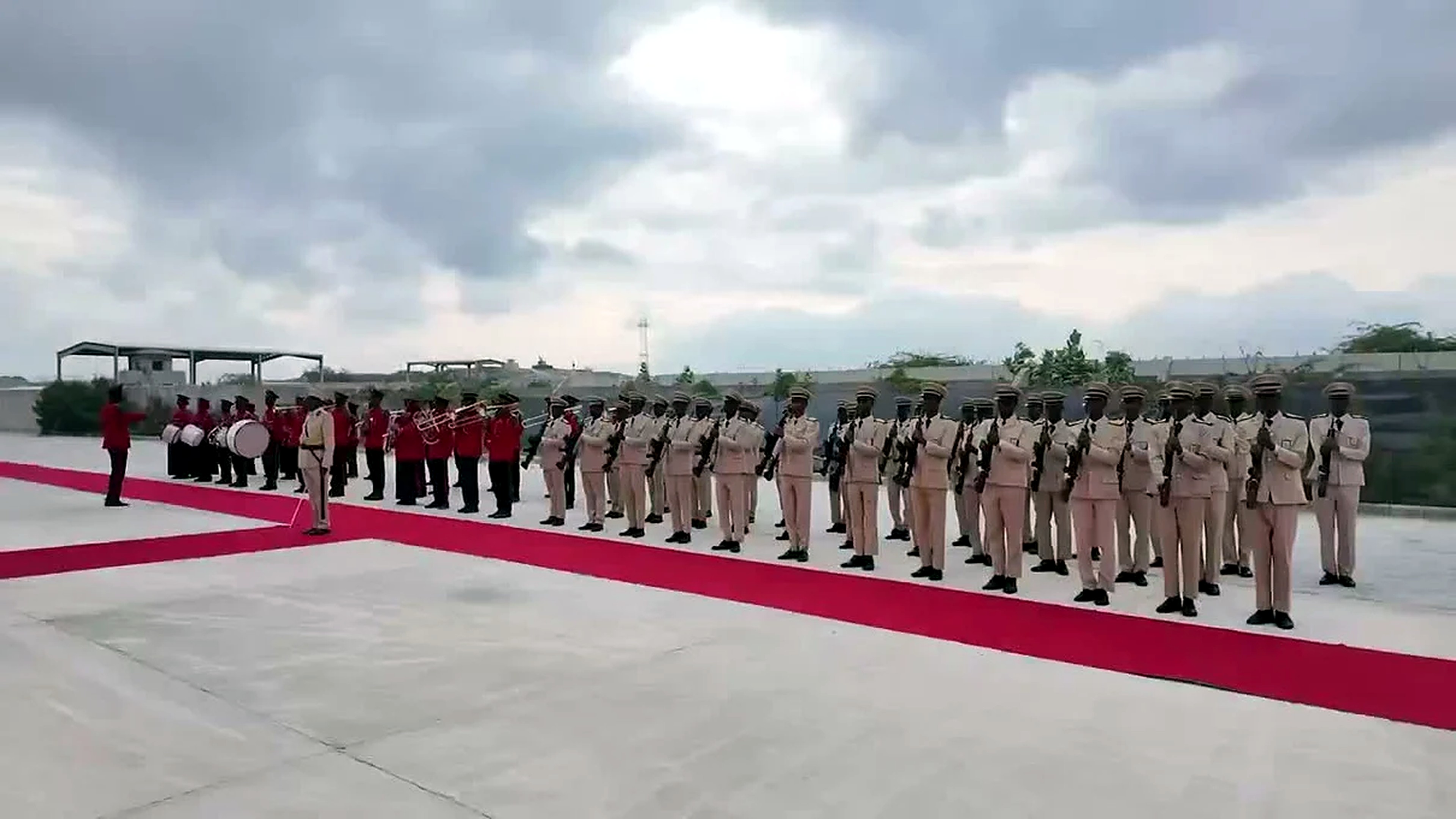
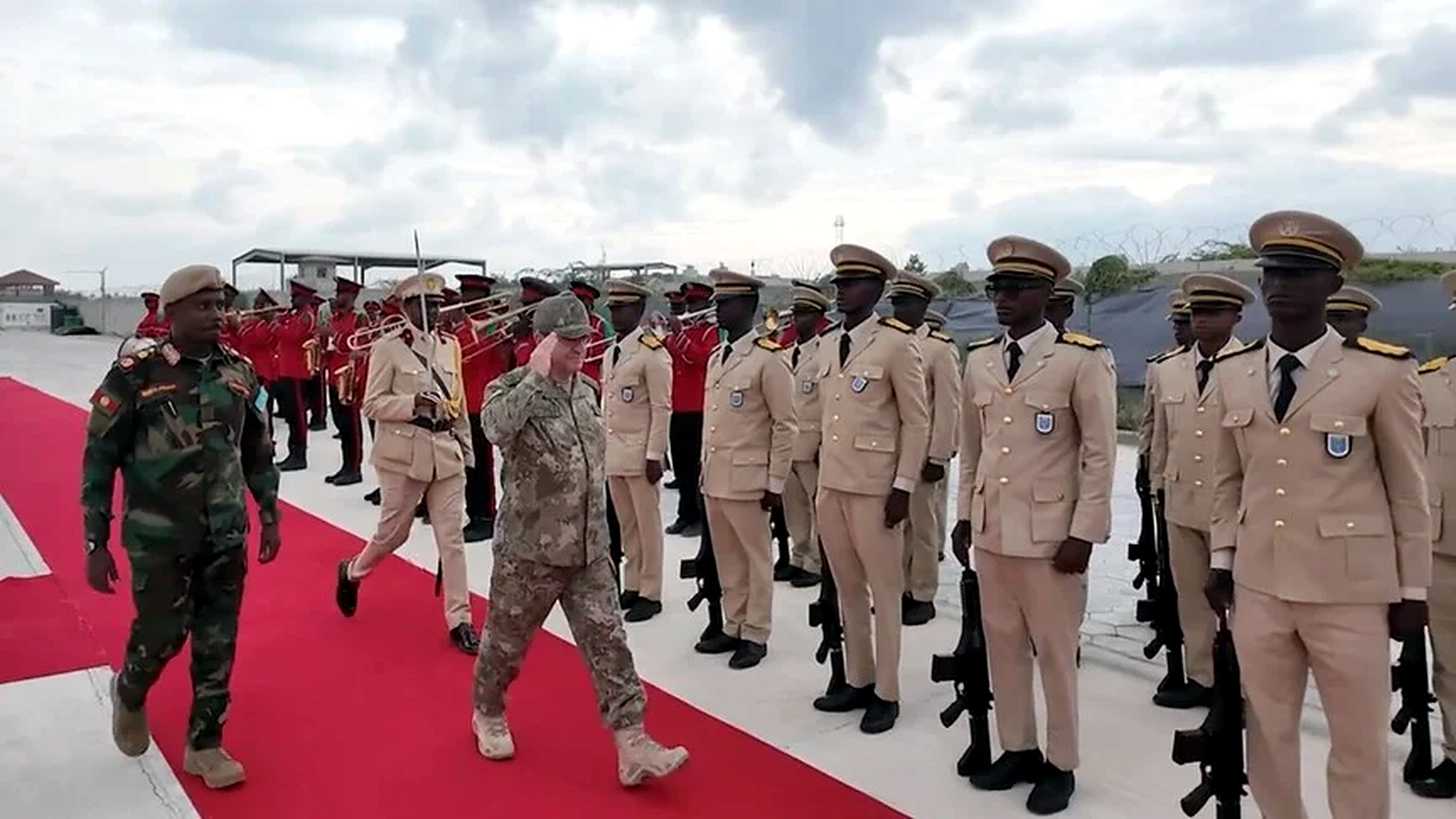
According to the General Staff’s post on the NSosyal social platform, reported by Anadolu Agency, Bayraktaroğlu was received with a military ceremony by the Chief of Defence Forces of the Somali National Armed Forces, Major General Ibrahim Mohamed Mohamud. He then inspected the Somali Turkish Task Force Command at Anadolu Barracks, the Turkish naval and air element commands and the Joint Operations Centre, before visiting the Space Base Campus, where he was briefed on construction work.
Later the same day he joined Somali President Hassan Sheikh Mohamud at a groundbreaking ceremony for a new Somali Navy headquarters, a new home for the Somali Turkish Task Force Command and a coordination centre for the Turkish Naval Task Group Barbaros campus, Turkish news agency ANKA also reported.
What the footage shows
The TSK video shows Bayraktaroğlu arriving at a site with at least one helicopter landing pad and inspecting Turkish soldiers at a barracks covered with overhead netting. He is also seen next to an M48 Patton tank dug into a defensive position, and what appears to be a mast-mounted Aselsan STR-400G weapon-locating radar stands in the background, according to Janes. A weapon-locating radar of this kind tracks incoming mortar, artillery and rocket rounds back to their firing point, a sensible fit for a remote compound in a country where al-Shabaab regularly shells government and foreign positions.
By matching the footage with satellite imagery, Janes located the base close to the coast about 78 km north-east of central Mogadishu, on a site covering roughly 7 square kilometres. Protective positions for armoured vehicles are visible around the compound, and construction work has been discernible in imagery since January 2026. Neither Ankara nor Mogadishu has published the coordinates.
From test range plan to construction site
Military Africa first reported in September 2024 that Türkiye was in advanced talks to build a missile and space rocket test site in Somalia, driven by the need for long-range testing of its ballistic missile programme as well as its space ambitions. By December that year President Hassan Sheikh Mohamud said Türkiye had begun building a rocket launch facility in the country.
Ankara formally launched the project at the turn of 2026. Industry and Technology Minister Mehmet Fatih Kacır and Turkish Space Agency (TUA) President Yusuf Kıraç set out a three-phase plan, with the first construction phase expected to take about 12 months and initial operational readiness targeted for the first months of 2027, SatNews reported. “Türkiye’s possession of a spaceport is a strategic step that will position our country as an independent, competitive, and globally influential actor,” Kacır said.
The site is meant first to put Turkish-built satellites into low Earth orbit and geosynchronous orbit, then to open to commercial customers, Anadolu Agency reported. Somalia’s position near the equator gives rockets extra velocity from the Earth’s rotation, and launches can head out over the Indian Ocean, away from populated areas and the crowded airspace around Türkiye. Analysts have long noted that the same open sea range would also suit long-range missile trials, a dual use Ankara has not addressed in public.
A naval and land footprint around the launch site
The space base sits inside a far wider Turkish military presence. Under the ten-year Defence and Economic Cooperation Framework Agreement signed in February 2024, Ankara committed to build, train and equip a Somali navy and help protect Somali waters. The new naval headquarters and Barbaros coordination centre are the most concrete step yet toward that naval goal. Earlier this month two frigates, TCG Gökçeada and TCG Yıldırım, sailed for Somalia with military supplies to take over the rotating Somali Maritime Task Group, and a Turkish naval task group escorted the drillship Çağrı Bey when it began Somalia’s first offshore drilling campaign in April.
On land, Turkish instructors have been training Somalia’s Gorgor commandos on tanks and heavy armour, and Türkiye’s parliament has extended its troop mandate in Somalia to July 2028. Military Africa has examined the limits of that model, in which equipment and training flow in but local capacity grows slowly, in its analysis Bought, Not Built.
Guarding Ankara’s Equatorial Gateway
The armour, radar and fortified positions seen in the video suggest Türkiye expects to defend the launch site itself rather than rely on Somali forces, as the African Union mission winds down and the federal government’s grip on the countryside around Mogadishu remains uneven. If Ankara keeps to its timetable, the first launch infrastructure should be ready in early 2027, giving a non-African power its own orbital launch site on the continent’s eastern seaboard. The pace of construction, and how Ankara protects a 7 square kilometre compound on a contested coastline, will show how far Türkiye’s strategic bet on the Horn of Africa now reaches.