Foreign forces operating outside the African Union mission are playing a growing part in Somalia’s war against al-Shabaab and the Islamic State in Somalia (ISIS-Somalia). United States Africa Command (AFRICOM) has logged 88 airstrikes in Somalia so far in 2026, while Uganda and Ethiopia have thousands of troops in the country on bilateral terms, Türkiye has deployed F-16 fighters and the private contractor Bancroft has trainers working close to the front line, according to an analysis by retired Lieutenant Colonel Freddie Grounds in ThisDay on 2 November.
The trend points to what some analysts call the bilateralisation of the war: as the African Union Support and Stabilisation Mission in Somalia (AUSSOM) struggles with funding and troop numbers, Mogadishu’s partners are increasingly fighting alongside it under their own arrangements.
A sharp rise in US airstrikes
AFRICOM’s published register listed 88 strikes in Somalia in 2026 at the time of Grounds’ writing, targeting both al-Shabaab and ISIS-Somalia. On 17 October the command confirmed a strike on al-Shabaab near Dhooble airport in southern Somalia. Al Jazeera reported that AFRICOM’s records showed 84 strikes through September, against 88 counted by the New America Foundation over the same period. Airwars researcher Anna Zahn said strikes under President Donald Trump’s second term had nearly matched the total for his first, at roughly four times the rate under President Joe Biden.
The focus of the campaign has also shifted. David Sterman of the New America Foundation said operations concentrated on ISIS-Somalia in the north, in Puntland, in early 2025, before moving back to al-Shabaab’s heartland in the south during 2026. Grounds noted that the strike figures do not show that US aircraft supported every successful ground operation, and civilian harm remains disputed: AFRICOM has acknowledged strikes near Jamaame in November 2025 but says the evidence did not meet its threshold for attributing civilian deaths to them.
Ugandan and Ethiopian troops beyond AUSSOM
Uganda and Ethiopia, both long-standing troop contributors, now keep large forces in Somalia outside the AU mission. Grounds estimates that 4,000 to 6,000 Ugandan troops are deployed bilaterally, on top of the roughly 4,500 allocated to AUSSOM, and that Ethiopia has about 5,000 bilateral troops alongside its AUSSOM allocation of 2,500. The Ugandan AUSSOM contingent took part in the March 2026 operations that recaptured Mubarak and Daarusalaam in Lower Shabelle.
Egypt is also entering the picture. Cairo held a deployment parade for its AUSSOM contingent in February 2026, and Military Africa has reported on Egypt readying troops for Somalia amid tension with Ethiopia. The presence of Egyptian and Ethiopian forces in the same theatre adds a regional rivalry to the counter-insurgency.
Turkish F-16s and contractor trainers
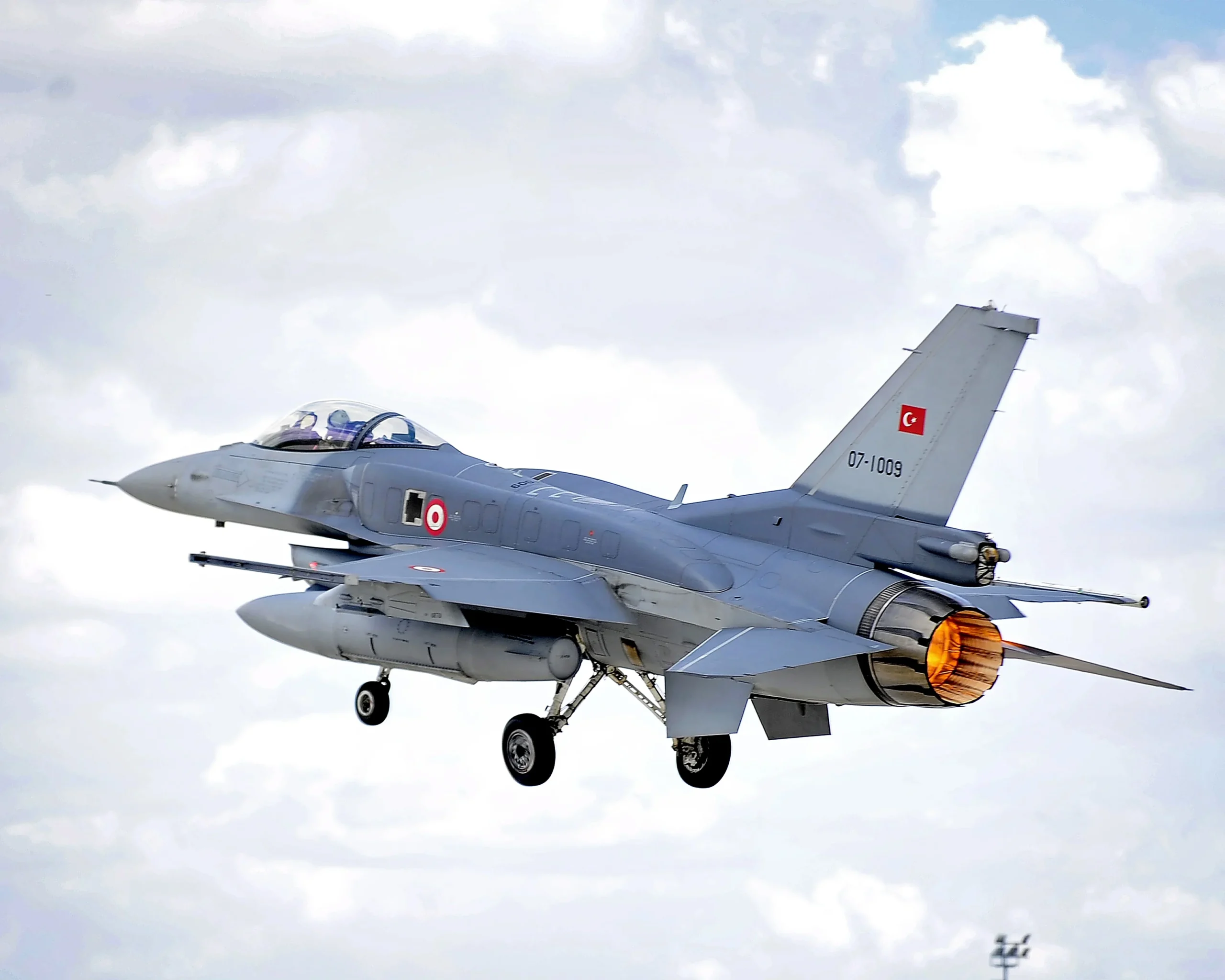
Türkiye, Somalia’s most active military partner, deployed F-16s to Mogadishu International Airport in January 2026 and showed them in public for the first time when three jets flew over the Somali National Army’s 66th anniversary parade on 12 April. They join the Bayraktar Akinci drones and T129 Atak attack helicopters that Ankara has supplied, and the TURKSOM training base it has run in Mogadishu since 2017. Grounds noted there is no established evidence that Turkish combat aircraft took part in the Lower Shabelle operations.
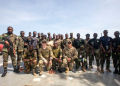
Bancroft Global Development, a US-based private contractor that trains and mentors Somali forces, also has personnel near the front line. Photographs from Lower Shabelle published by The EastAfrican show Bancroft staff alongside Somali and Ugandan troops, although Grounds cautioned that this does not establish that they took part in combat.
What bilateral support means for Somali forces
For Mogadishu, bilateral partners bring air power, artillery and mentoring that the Somali National Army (SNA) cannot yet supply itself. The army graduated its largest class since 1991 in August, around 3,000 soldiers, but still relies on foreign support to hold ground once al-Shabaab is pushed out. The risk is that a patchwork of national deployments, each with its own command chain and political interests, becomes harder to coordinate and harder to wind down than a single AU mission, a concern Military Africa examined in its analysis of the Turkish defence model in Africa. Whether AUSSOM secures stable funding in the coming months will decide how far that patchwork grows.