
The Nigerian Navy can buy ships abroad. What it cannot buy as easily is the ability to keep them at sea, repair them on Nigerian terms and design the next boat for Nigerian waters. That is why indigenous shipbuilding, long treated as a patriotic slogan, has become a standing operational requirement for the service, which marked its 70th anniversary in Lagos in June 2026 and is now building two more warships at its own dockyard.
A modest but real record
Since 2010 the Navy has completed five locally built vessels: a ferry, a dock boat and three Seaward Defence Boats (SDBs), its Chief of Policy and Plans, Rear Admiral Akinola Olatunde, told journalists in Abuja in May, BusinessDay reported. “The aspect of shipbuilding is something that we should be proud of as Nigerians,” he said.
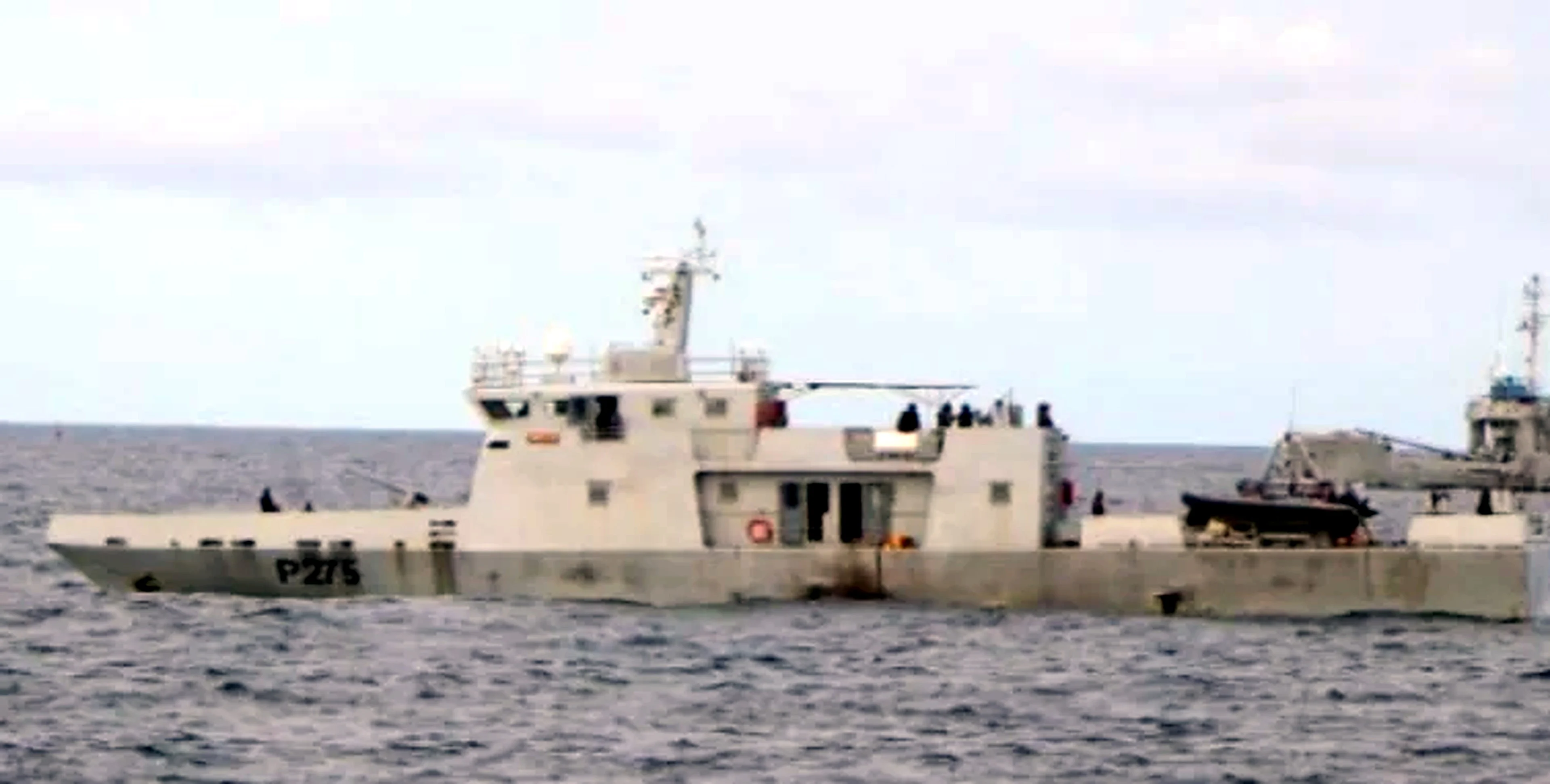
The combat line is the most important. NNS Andoni (P100), delivered in June 2012, was the first Nigerian-built warship, a 31-metre patrol boat armed with a manned 30mm gun, two 12.7mm machine guns and two 40mm grenade launchers. The 38-metre NNS Karaduwa (P102) followed in December 2016 with a remotely operated 30mm gun. NNS Oji (P275), commissioned by President Muhammadu Buhari on 8 December 2021 at the Naval Dockyard in Lagos, is a 43-metre vessel built mostly of steel rather than aluminium, armed with a 30mm remotely operated gun and three 12.7mm machine guns, and carries a rigid-hull inflatable boat for boarding parties. Each boat has been larger and more capable than the last.
According to the Navy, those three boats led the presidential fleet review in 2023, a clear signal that locally built steel now belongs in the front rank of the fleet rather than in a museum.
Two naval yards at work
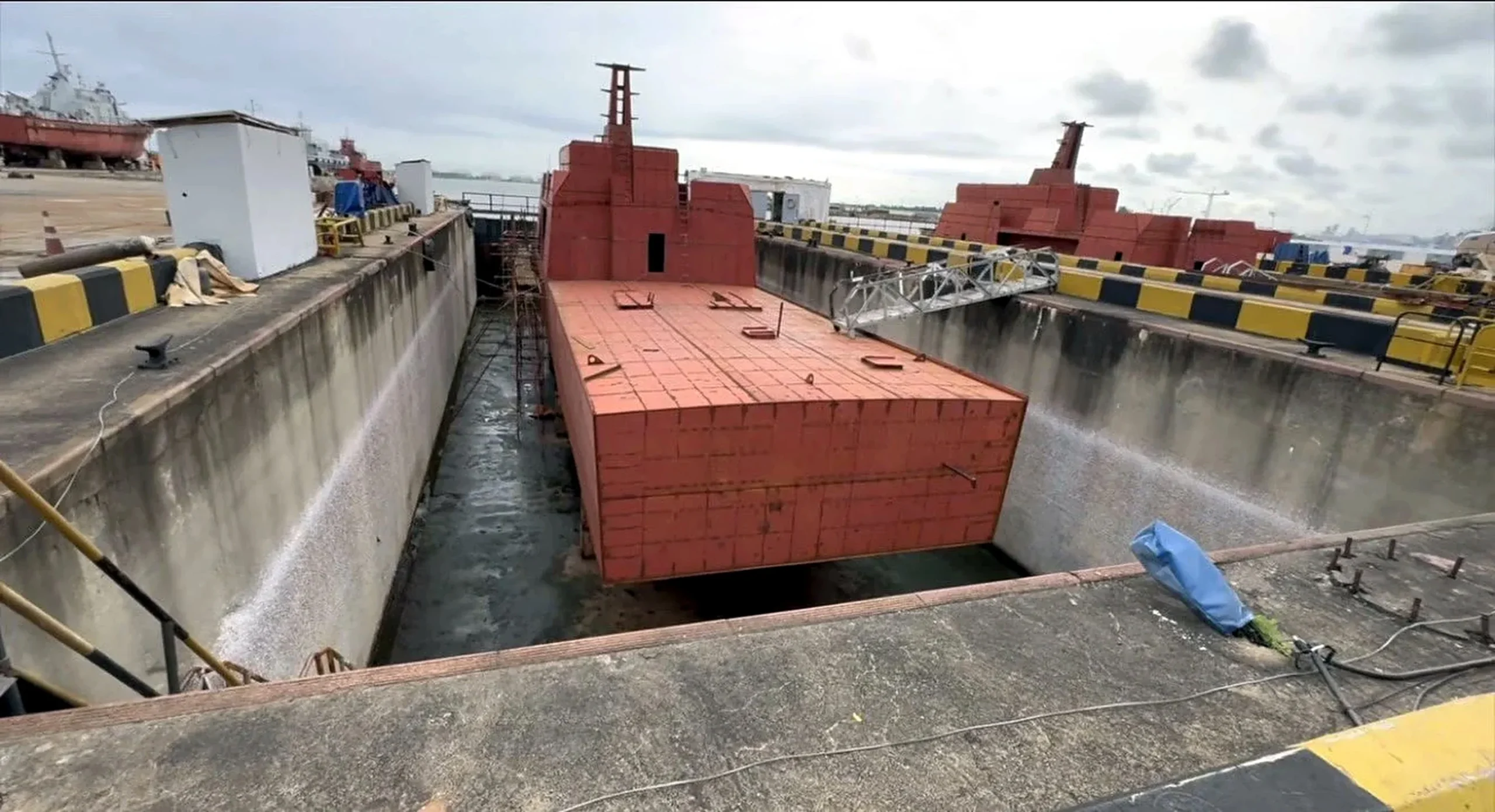
The work is split between the Navy’s two commercial yards. Naval Dockyard Limited (NDL) on Victoria Island, Lagos, is building two 44.2-metre Seaward Defence Boats, the first time the yard has built two hulls at once. The keels for these boats, SDB 4 and SDB 5, were laid at the same December 2021 ceremony at which NNS Oji was commissioned, and their hulls are now taking shape in the dockyard. Naval Shipyard Limited in Port Harcourt is building a 27-metre ferry for the Akwa Ibom State Government.
The dockyard has also crossed a regional threshold. Under a 2024 agreement to refurbish six Benin Navy warships, it handed back the first in October 2024 and delivered the third, BNS Matelot Brice Kpomassé, in November 2025. Work on the remaining three is under way. That is industrial diplomacy as much as engineering. A navy that can repair a neighbour’s ship is no longer only a customer of foreign yards.
Private capital enters the yard
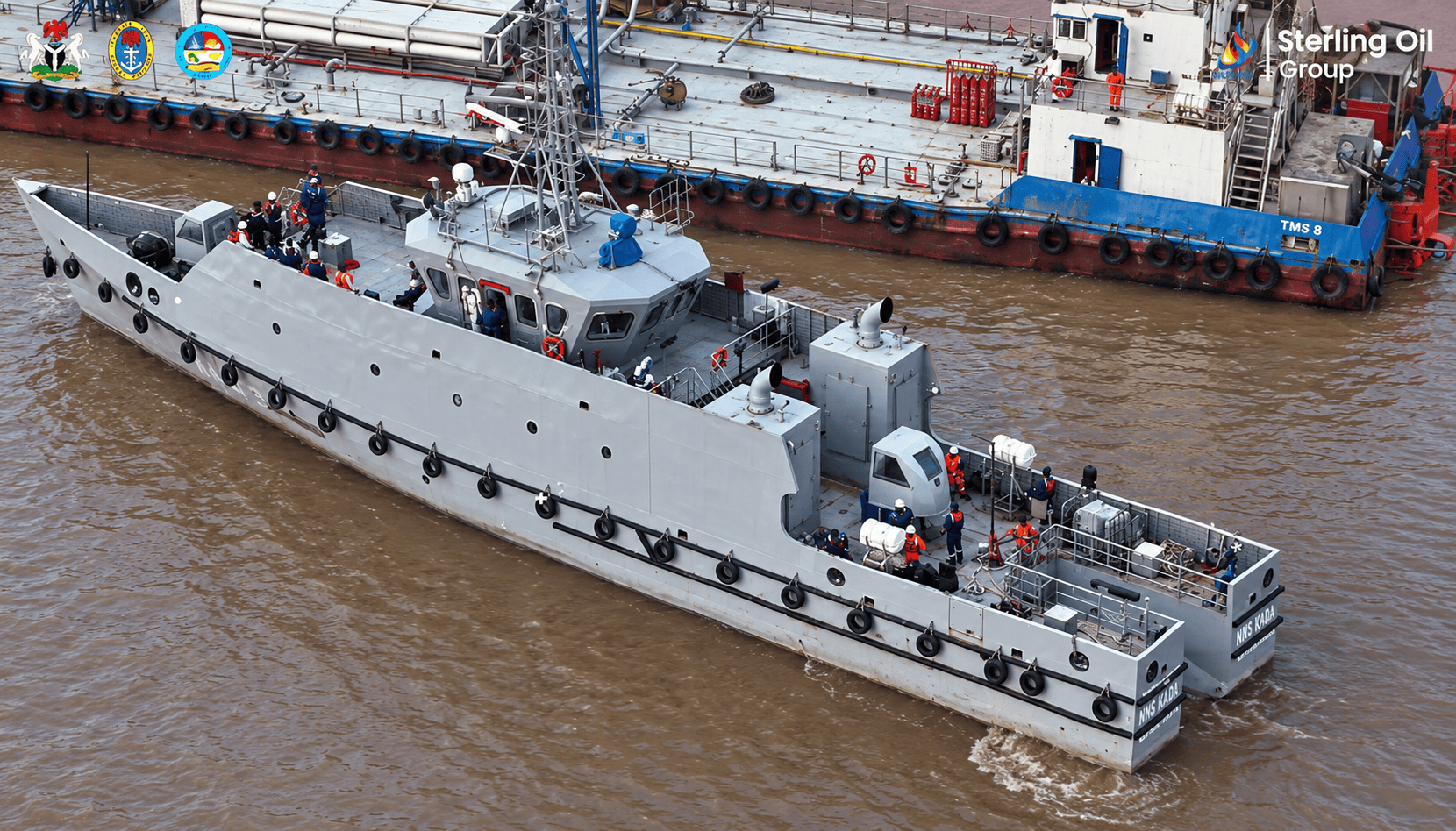
Private capital is entering the same space. On 18 August 2026 the Navy inducted SSV Kali 3, a 40-metre security support vessel designed and built at the Okpai HM Shipyard in Delta State by Sterling Oil Exploration and Energy Production Company (SEEPCO) under a memorandum of agreement with the service. Built to Bureau Veritas standards, it has a 2.5-metre draught for shallow waters, an endurance of 10 to 12 days and two rigid-hull inflatable boats for rapid boarding. It is the first of a planned series of ten, and the second, Kali 4, is almost ready for launch. In May 2026, Tantita Security Services also handed 15 locally built gunboats to the military at the Naval Shipyard in Port Harcourt.
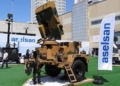
Energy companies that depend on secure waterways now have a reason to fund hulls that Nigerian welders and naval architects can produce at home. Nigerian firms are moving into new types of vessel as well: at the Africa International Defence Exhibition (AFRIDEX) 2026 in Lagos, the Arridex Group unveiled the ADX-Barra 200 autonomous surface vessel, and Turkish electronics maker ASELSAN has said it is looking for a local manufacturing partner in Nigeria and has inspected a Nigerian shipyard.
Still a buyer of foreign hulls
None of this means Nigeria has stopped importing. The three vessels President Bola Tinubu commissioned at the Navy’s 70th anniversary International Fleet Review on 1 June 2026, NNS Gurara (P206), NNS Mambila (P207) and NNS Oloibiri (P208), are 46-metre fast patrol vessels built in China by Poly Technologies. Earlier batches came from France, Singapore and South Korea, including French-built OCEA fast patrol boats.
The indigenous programme still sits at the patrol-boat end of the spectrum. Engines, weapons and many sensors remain foreign; NNS Oji, for example, carries a Simrad radar. The leap from a 44-metre defence boat to a frigate or a true offshore combatant has not yet been made.
Why the strategic case holds
The strategic case is still sound. Local construction shortens repair cycles, creates skilled jobs and reduces the political risk of depending on a single supplier. It also supports the Navy’s wider modernisation, including unmanned systems, maritime domain awareness and the African Union Combined Maritime Task Force for the Gulf of Guinea, which Tinubu launched alongside the anniversary celebrations. Platforms that can be maintained in Lagos and Port Harcourt are platforms that stay available. The pressure is constant: since the launch of Operation Delta Sentinel in January 2026, the Navy has stepped up patrols and interdiction against crude oil theft across the Niger Delta.
Other African navies show what is possible. Damen Shipyards Cape Town has built multi-mission inshore patrol vessels for the South African Navy, and Egypt has assembled Gowind corvettes at Alexandria with French help. Nigeria’s advantage is scale of demand: a long coastline, the Niger Delta’s creeks and a regional market of Gulf of Guinea navies that need patrol craft and repairs.
The next test: scale and technology transfer
The next test is scale and technology transfer. At the Doha International Maritime Defence Exhibition (DIMDEX) 2026 in Qatar in January, the Chief of the Naval Staff, Vice Admiral Idi Abbas, framed the goal plainly, Arise News reported: sustained technology transfer and collaboration with foreign partners should grow Nigeria into a leading African warship builder, not a permanent importer. That will require stable funding, certified yards, a deeper supplier base and a design authority that can move from coastal patrol craft to larger, more complex ships.
A measure of maritime independence
Indigenous shipbuilding will not replace every foreign contract, and it does not need to. If Nigeria can design, build and sustain the boats that actually fight oil theft, illegal fishing and sea robbery, and sell that competence to the region, it will have secured more than steel. It will have secured a measure of maritime independence.