

A Kenya Defence Forces (KDF) delegation led by Major General Faustino Mancha Lobaly, Director General of Defence National Security Industries (DNSI), took part in the first Africa International Defence Exhibition (AFRIDEX 2026), held at Eko Atlantic in Lagos, Nigeria, from 26 to 29 October, the Kenyan Ministry of Defence said.
The ministry framed the visit as part of the KDF’s effort to harness innovation, strengthen international partnerships and adopt advanced military technologies to improve operational readiness as emerging security threats reshape the global defence landscape.
Drones, counter-drone systems and cyber defence
The four-day exhibition brought together military leaders, defence experts, innovators and industry representatives from across the world, providing a platform for exploring emerging technologies, exchanging expertise and fostering cooperation against contemporary security challenges. Held under the patronage of Nigerian President Bola Ahmed Tinubu and hosted by the Defence Industries Corporation of Nigeria (DICON), AFRIDEX 2026 attracted over 30,000 official delegates from more than 100 countries and 500 exhibiting companies, according to the KDF.
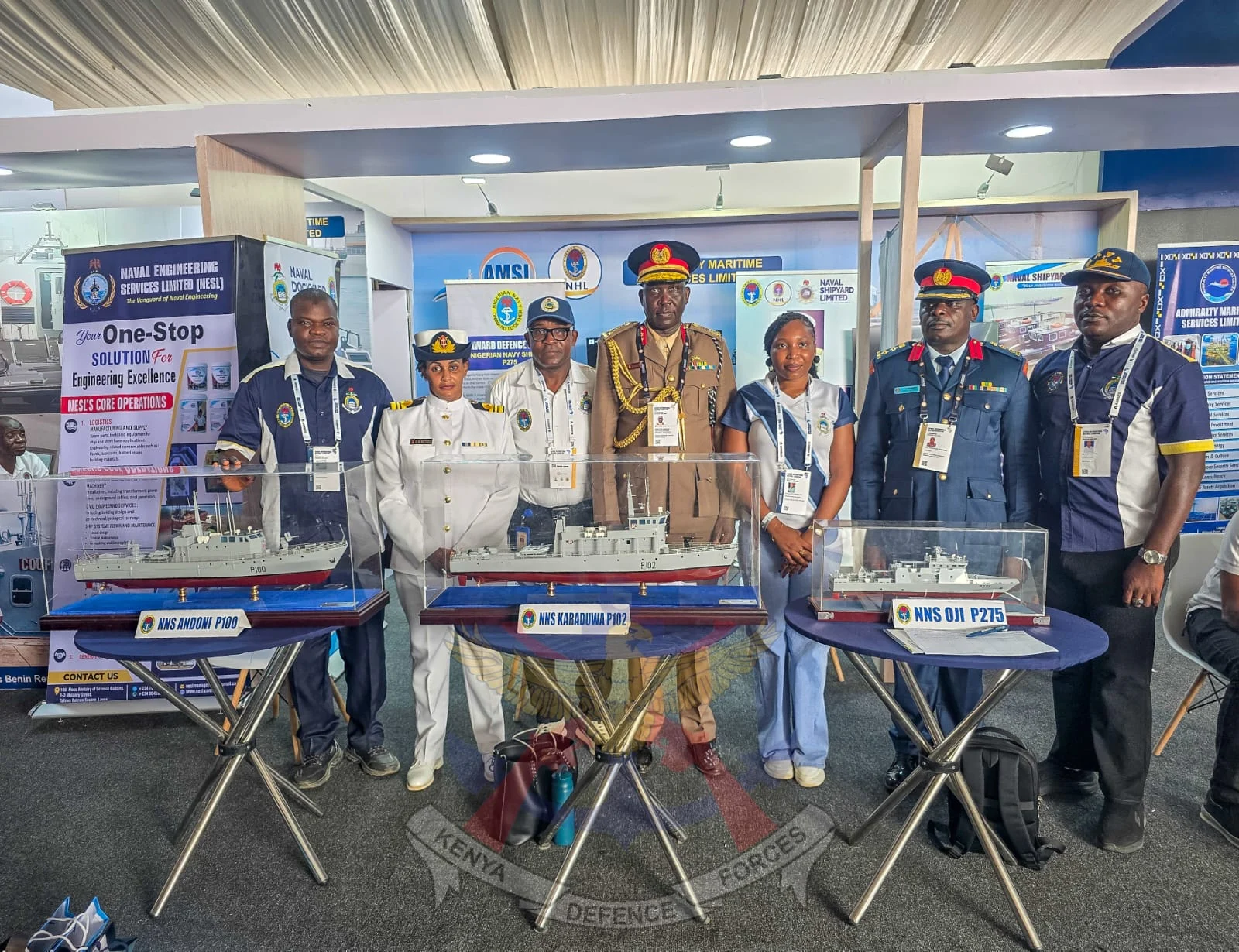
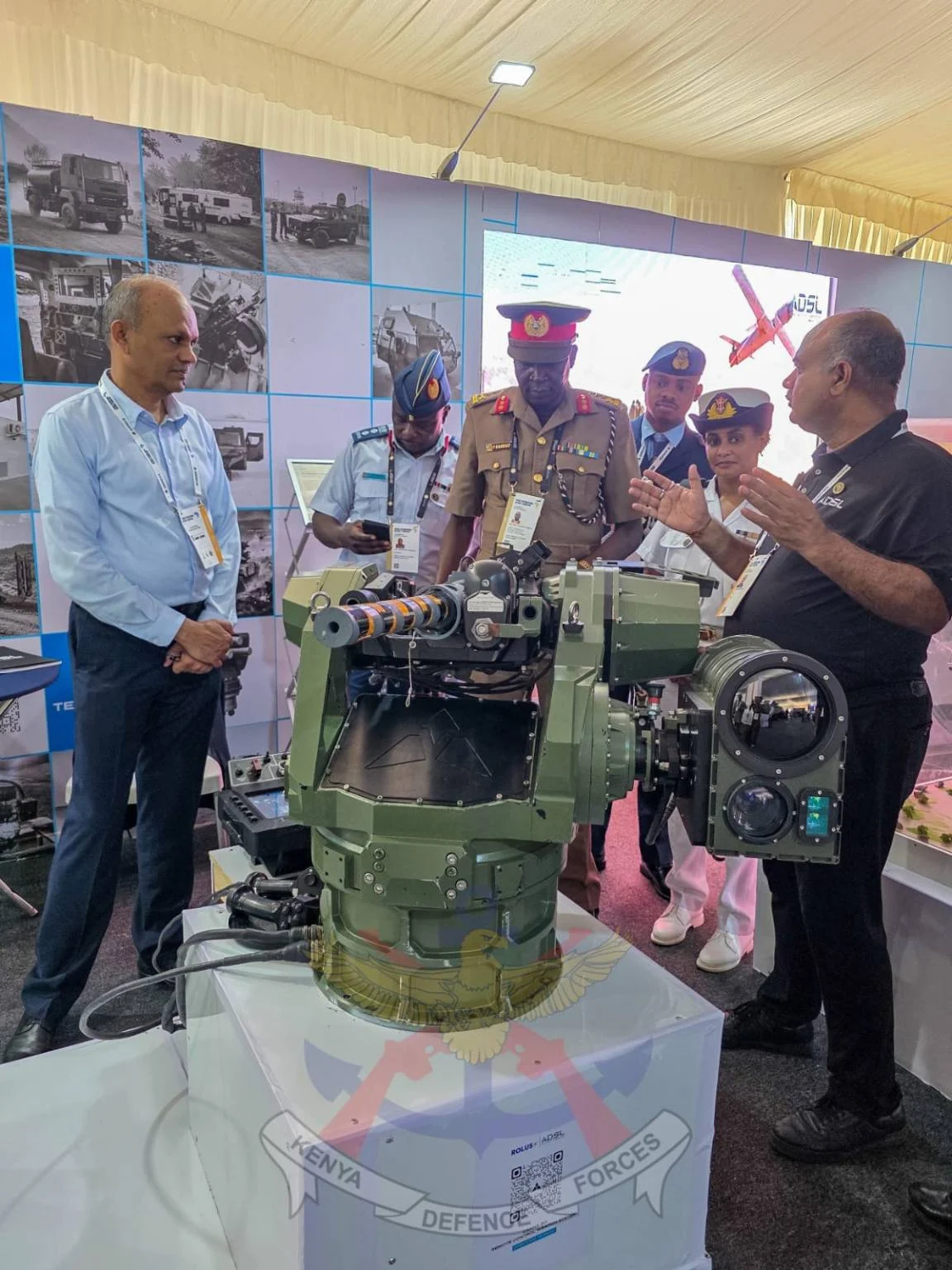
The exhibition featured unmanned aerial vehicles (UAVs), counter-drone systems, cyber defence solutions and battlefield management systems. Nigerian firms used the show to present local products, with Arridex unveiling its ADX-Barra 200 unmanned boats, while Turkey’s HAVELSAN signed a defence technology cooperation memorandum with DICON. Photographs released by the Kenyan ministry show the delegation at the Nigerian Navy’s shipbuilding stand, beside models of the seaward defence boats NNS Karaduwa and NNS Oji built at the Naval Dockyard in Lagos, and being briefed on a remotely operated weapon station.
Ministerial session with General Musa
On the sidelines of the exhibition, Major General Lobaly attended a high-level ministerial session for heads of delegation, chaired by Nigeria’s Minister of Defence, General Christopher Musa (retired). The engagement provided an opportunity to advance Kenya’s defence modernisation agenda, deepen strategic partnerships and explore ways of strengthening local defence industrial capabilities, the ministry said.
Musa had set the tone at the opening ceremony, telling delegates that “the threats we encounter are hybrid in nature and fast evolving across all domains of warfare” and that “the contemporary global realities therefore reinforce the importance of collective security”. President Tinubu, represented by Senate President Godswill Akpabio, told the same audience that Africa must become more self-reliant in defence and that “the measure of a successful partnership is the capability it leaves behind”.
The KDF said its participation reflected a forward-looking approach to defence modernisation and its determination to use technological innovation and international collaboration to build a resilient, adaptable and mission-ready force. The engagement also reaffirmed the KDF’s commitment to embracing emerging defence capabilities, improving operational effectiveness and strengthening partnerships that contribute to regional stability and international security.
Kenya’s defence industrial push
Lobaly’s presence at the head of the delegation reflects the weight Nairobi now gives to its own defence industry. As Director General of DNSI, he was among the senior officers at the August 2026 board meeting of the Kenya Ordnance Factories Corporation (KOFC), at which Chief of the Defence Forces General Charles Kahariri broke ground on a new ammunition production line in Eldoret. The KOFC modernisation is being carried out in three phases, due for completion in the 2027/2028 financial year, and is expected to raise production capacity by about 35% to supply small arms ammunition to the KDF, according to the Kenyan Ministry of Defence.
KOFC already opened a small arms production factory in 2021, and Kenya Shipyards Limited (KSL) has grown from the opening of the Mombasa shipyard to refitting Kenya Navy vessels such as KNS Shupavu. For the 2026/27 financial year, Kenya’s Ministry of Defence has around KSh 252 billion, of which about KSh 13.14 billion is allocated to defence industrialisation, according to an AFRIDEX country profile of Kenya.
Kenya has also widened its list of partners. It signed defence cooperation agreements with Türkiye and Angola in May 2026, has sought Egypt’s defence expertise, and has strengthened defence relations with South Korea. Recent acquisitions include Bayraktar TB2 drones from Türkiye, the Israeli SPYDER air defence system and, this month, eight refurbished MD500 helicopters under a trilateral deal.
From Lagos back to Eldoret and Mombasa
The Kenyan ministry did not name any agreements or purchases arising from the Lagos visit. Its value is more likely to show in industrial contacts: Nigeria’s experience of building patrol craft at its naval dockyard and partnering foreign firms through DICON offers lessons for KSL and KOFC as they expand. With drones, counter-drone systems and cyber defence at the centre of AFRIDEX, and the KDF facing Al-Shabaab on its border with Somalia, the technologies on show in Lagos match the areas where Kenya’s own industry and procurement plans are now focused.