

I have watched North African airpower arguments recycle the same claim for two years. Algeria, we are told, has entered the fifth-generation club. Morocco will answer with the Lockheed Martin F-35 Lightning II. Egypt will somehow split the difference with French Rafales and a Turkish stealth project that has not yet left the prototype stage. The labels travel faster than the aircraft.
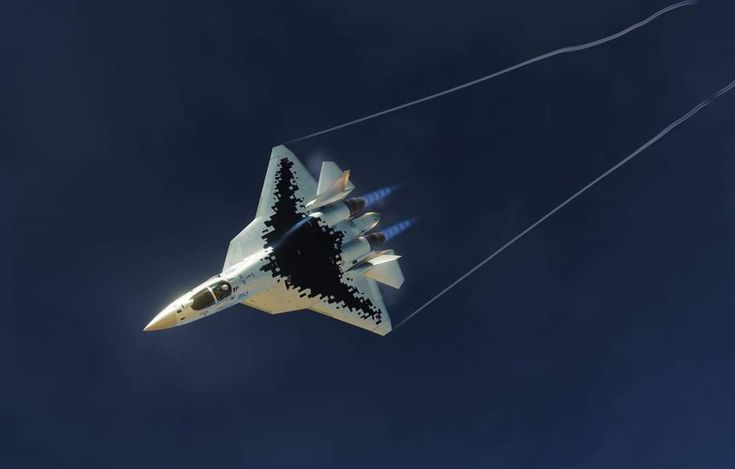
What I can say with greater confidence in September 2026 is narrower and more useful than the headline summaries suggest. Algeria has become the first African air force associated with an operational export Sukhoi Su-57E, the aircraft NATO has designated the Felon. That association rests on a February 2025 Algerian state-television announcement, a November 2025 statement by the United Aircraft Corporation (UAC) that two Su-57E jets had been delivered to an unnamed foreign partner, after an initial 2021 announcement. and subsequent open-source video of a Felon-class airframe flying over eastern Algeria in early 2026. The rest of the story is still a contract, a training pipeline, and a production line that has not kept the pace early briefings implied.
That is enough to change how Algiers, Rabat, and Cairo talk about deterrence. It is not enough to change how any of them fight an insurgency, suppress a trafficking corridor, or sustain daily air tasking in the Sahel. The distinction matters enormously, and it gets lost in the coverage.
What Has Actually Arrived in Algeria
The Algerian Air Force already flew the heaviest Russian combat mix on the continent before the Felon appeared. Sukhoi Su-30MKA multirole fighters formed the workhorse of the fleet. MiG-29 variants handled shorter-range work. Su-24MK2 aircraft provided strike capability. That baseline was substantial enough to make Algeria one of Africa’s most capable air arms without a single stealth airframe.
In 2025, the inventory grew further. Algeria added Su-35 air-superiority jets originally associated with a cancelled Egyptian order, with first airframes reported at the Aïn Beïda air base. Su-34M strike aircraft followed in batches, including a June 2026 delivery filmed in an ocean-blue scheme, distinct from the earlier desert pattern that characterised previous arrivals. Military Africa tracked those Su-35 and Su-34M movements as they leaked through open sources and later hardened into confirmed deployments.
The Su-57E sits on top of that growing stack as a political and industrial signal as much as a military one. The reporting that forms my working baseline, including Military Africa’s earlier coverage and subsequent factory tracking, points to an order commonly described as fourteen export Felons, paired in some accounts with matching Su-35E and Su-34ME packages. UAC stated in November 2025 that the first two export jets had been handed over. Factory tracking and open-source analysis later indicated that the hoped-for first batch of six aircraft in 2025 did not materialise. Two airframes arrived late in the year. Further aircraft, if the contract holds, are expected across 2026 and 2027.
Treating the various figures that have circulated requires some discipline. Fourteen is the number that appears most often in contract reporting. Two is the number with the strongest delivery evidence. Thirty-six, circulated in some secondary accounts as a 2027 end-state, remains unconfirmed by Algiers and should be read as ambition or option language until aircraft of that count exist on Algerian ramps.
The export Felon is a large, twin-engine, thrust-vectoring design built for reduced radar cross-section in the forward aspect and a mixed air-to-air and strike weapons load. The Su-57E’s public weapons descriptions include R-77M and R-74M2 air-to-air missiles, Kh-69 and related precision strike munitions, and a 30 mm cannon derived from the GSh-30-1 family. Payload figures from manufacturer and secondary technical reporting stand at around 7,500 kilograms across internal and external stations. Those figures describe a design intent, not an Algerian combat record.
The low-observable performance claim is the part of the Su-57E brochure that matters most to the Maghreb deterrence argument, and it is also the part that demands the most caution. Open estimates of the Su-57’s frontal radar cross-section often fall in a band considerably larger than the F-35A’s commonly cited figure. Several Western analysts describe the aircraft as a supermanoeuvrable heavy fighter with partial stealth characteristics rather than an all-aspect very-low-observable platform comparable to the F-35 or the F-22 Raptor. What is clear is that two aircraft do not generate a stealth umbrella over the Algerian-Moroccan frontier. They generate a new planning problem for Moroccan and Egyptian staffs, and a new sustainment problem for Algerian maintainers who must now protect radar-absorbent coatings, manage unique spares, and keep a Russian digital backbone alive while Moscow faces compounding Western sanctions pressure.
Pilot conversion is the quieter constraint that rarely gets the attention it deserves. Algerian crews trained in Russia before the first jets appeared on home soil. Moving from the Su-30MKA’s well-understood glass cockpit and established tactics onto the low-observable mission-planning cycle required by a Felon is not a weekend conversion course. Reports that Algiers has requested information about a two-seat operational conversion variant of the Su-57 fit that reality precisely. Until a dedicated training squadron, appropriate simulators, and a weapons stock are established inside Algeria, the Felon remains an introduction programme rather than a combat-ready regiment.
Morocco Is Building a Network, Not Chasing a Fighter
Morocco’s modernisation is easier to count because so much of it moves through notified United States Foreign Military Sales (FMS) paperwork and visible Israeli equipment deliveries, rather than through the opaque channels that characterise Russian and Chinese arms transfers.

The Royal Moroccan Air Force (RMAF) still centres on the F-16 Fighting Falcon. Block 52+ aircraft are in active service. Block 70/72 Viper airframes and associated simulator systems are in the American contracting pipeline, including a September 2026 contract award to CAE USA for two F-16 Block 72 full-mission simulators. That path keeps Morocco inside a NATO-standard cockpit, radar family, and weapons architecture for the foreseeable future, even without a fifth-generation platform of its own.
The Boeing AH-64E Apache Guardian helicopter programme has moved faster in the past eighteen months than any other element of Moroccan modernisation. The baseline order covers 24 helicopters with an option for 12 more. Open reporting puts first deliveries in March 2025, a second tranche arriving at Cap Draa in May 2026, and a third movement of airframes toward Morocco in September 2026 that independent tallies treat as pushing the in-country fleet toward 18 aircraft. The E-model brings the AN/APG-78 Longbow fire-control radar, AGM-114 Hellfire missiles, Advanced Precision Kill Weapon System (APKWS) rockets, and a Link 16 datalink path that connects the Apache fleet directly to the F-16 force and to uncrewed platforms. That is a battlefield helicopter networked into a Western kill chain. It is not a competitor to the Su-57E in the air-to-air realm. It is, however, a highly capable competitor in the more realistic Maghreb fight: finding, fixing, and striking ground forces, air-defence nodes, and moving armoured columns.
The surface fires and ground-based air-defence layer rounds out the picture. Washington authorised a possible sale of 18 M142 High Mobility Artillery Rocket System (HIMARS) launchers in 2023, alongside M57 Army Tactical Missile System (ATACMS) rounds and Guided Multiple Launch Rocket System (GMLRS) rockets. Reporting in September 2026 indicated that ten of those launchers had entered United States fiscal year 2027 contracting, which is not the same as eighteen launchers already on Moroccan soil. Elbit Systems’ Precise and Universal Launching System (PULS) sits in the same long-range precision rocket family, giving Rabat a second architecture for standoff fire support. Chinese PHL-03/AR2 launchers remain in the inventory alongside those more modern acquisitions. The resulting mix is inelegant in doctrinal terms. It is also difficult to disarm through any single sanctions channel.
On air defence, satellite imagery published by independent researchers and widely reported in January 2026 placed Israel Aerospace Industries (IAI) Barak MX equipment at Sidi Yahya airbase, northeast of Rabat. The Barak MX is a modular, vertically launched system intended to engage fixed-wing aircraft, helicopters, unmanned aerial vehicles, and certain missile classes at ranges spanning short to medium distances. It sits alongside other Moroccan layered air-defence systems reported over several years, including Chinese and European short-range and medium-range platforms. The Sidi Yahya imagery represents stronger evidence of hardware deployment than of full operational integration, a distinction worth keeping.
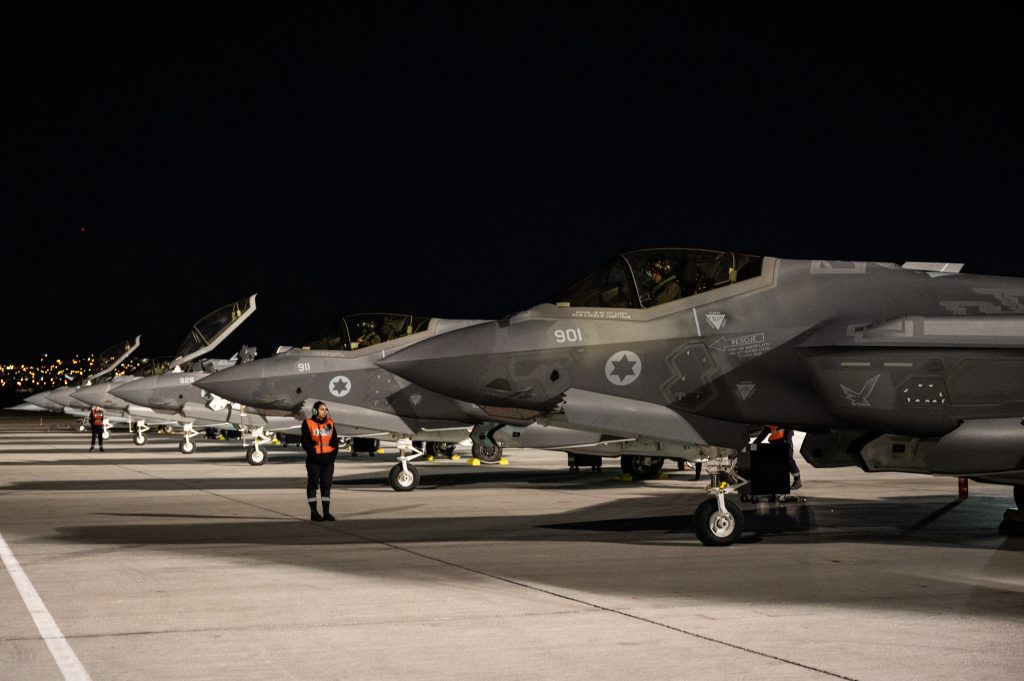
Morocco’s interest in the F-35A Lightning II is real, longstanding, and as yet unfulfilled. No public United States government decision has placed Lightning IIs on Moroccan ramps within this decade. Moroccan staffs can plan against an Algerian Felon today using Vipers, Apaches, rockets, and Barak. They cannot yet plan with an F-35 of their own.
The February 2026 Link 16 integration work reported from Agadir is the doctrinal tell that matters most in reading Morocco’s intent. Rabat is building a fused operational picture linking fighters, attack helicopters, and drones into a common tactical network. Algeria, by contrast, is building a heavier Russian fighter stack and, if tanker reporting holds, the aerial refuelling infrastructure needed to push that stack farther from its home bases. These are two fundamentally different theories of airpower, and the divergence says as much about the two nations’ strategic cultures as it does about their procurement budgets.
Egypt Is Buying Time and Industrial Options
Cairo does not sit on the Algerian-Moroccan border. It does sit in every North African air-balance discussion because it fields Africa’s largest fighter inventory and because it has deliberately refused to let any single supplier own that inventory.
The Egyptian Air Force rests on a very large Lockheed Martin F-16 fleet, commonly counted at around 220 aircraft when later production blocks and upgrades are included. A substantial share of those airframes are early Block 15, Block 32, and Block 40 jets, now three to four decades old and accumulating the maintenance burdens that age brings. Dassault Aviation’s Rafale is the upgrade path that has actually delivered metal. Egypt ordered 24 Rafale F3R aircraft in 2015 and signed for 30 more in 2021. Deliveries throughout 2026 have continued to push the in-service fleet toward 54 aircraft, with additional airframes photographed at Dassault’s facilities in France during August and September undergoing final fit-out. On 1 September 2026, the French publication La Tribune reported that Egypt had sent Dassault a formal request for proposal covering 24 further Rafales, which would take the fleet to 78 aircraft if converted into a signed contract. That is a proposal, not a third tranche.

The industrial footnote attached to the Rafale relationship is more strategically interesting than another order announcement. At the Egypt Defence Expo (EDEX) 2025, the Arab Organization for Industrialization (AOI) displayed Rafale wing sections presented as Egyptian-manufactured after Dassault certified selected component work at the Helwan industrial complex south of Cairo. Egypt is not simply buying French aircraft. It is inserting itself into the supply chain for those aircraft. That represents a different and more durable form of industrial sovereignty than flying two borrowed stealth jets.
The Turkish Aerospace KAAN programme is the fifth-generation file that keeps getting written as if it were already an Egyptian combat squadron. President Abdel Fattah el-Sisi expressed interest during the 2024 rapprochement with Ankara. Turkish officials stated in 2025 that Egypt would participate, with language on co-production appearing in subsequent reporting. Through mid-2026 that participation had not, in public, produced a ratified industrial contract with a delivery schedule, an engine plan, and a unit price that Egyptian procurement could defend to a budget committee. KAAN remains a twin-engine prototype family flying on General Electric F110 engines while Turkey works toward a domestically developed turbofan later in the decade. Serial entry into Turkish Air Force service remains a late-2020s target. An Egyptian production line at Helwan is a political project until metal is actually cut there.
Chinese options sit in the same unfinished procurement tray. Earlier reporting, including Military Africa’s own 2025 note on Moroccan F-35 interest, recorded Egyptian exploration of Chengdu Aerospace Corporation designs, including the FC-31/J-31 carrier-variant family. No confirmed Egyptian FC-31 contract has entered the public record. Treating that jet as Cairo’s stealth answer would repeat the analytical error that people routinely make with Algeria’s Felon: confusing a shopping list with an operational order of battle.
Egypt’s core problem is not a shortage of fighters. It is the compounding cost of keeping three distinct combat aviation cultures, American, French, and Russian, current, trained, and parts-supported while its most numerous type ages out of relevance at the far end of a long line of F-16 airframes. Rafale growth and KAAN discussions are answers to that institutional problem. They are only indirectly answers to two Su-57Es parked at an air base in eastern Algeria.
The Wider African Air Map Stays Unchanged
Fifth-generation language seduces because it sounds like a clean break from the past. In the Maghreb it is, for now, a prestige contest grafted onto a longstanding strategic rivalry. Algeria and Morocco severed diplomatic relations in 2021. They contest Western Sahara, border management arrangements, and the right to lead the Maghreb’s political voice. Airpower in that context is about who can see first, shoot first at high-value targets, and keep a capital city or a mechanised formation alive under incoming missiles.
A low-observable fighter with internal weapons bays changes the first-look calculation for Moroccan ground-based radars and for Egyptian planners watching the wider eastern Mediterranean. HIMARS, PULS, and Barak MX change the first-strike and first-defence calculation for Algerian staffs even if Rabat never receives an F-35. Rafales carrying the Meteor beyond-visual-range missile, if that integration reporting holds, change how Egypt thinks about the Mediterranean more than how it thinks about the distant garrison at Tindouf.
None of that maps cleanly onto the wars African air forces actually fly week to week. Algeria’s southern problem set runs toward the Sahel, trafficking corridors, and a long desert border requiring persistent patrol, not a stealth-versus-stealth duel over the Atlas Mountains. Morocco’s most active aviation demand is surveillance, border control, and the ability to mass precision fires and attack helicopters on a known grid reference. Egypt’s daily air tasking still covers Sinai operations and internal security support alongside conventional deterrence opposite Israel and Libya. A Su-57E is a poor tool for hunting pick-up trucks. An AH-64E is considerably better. A Bayraktar TB2 or an IAI Heron is cheaper still and available in greater numbers.
The rest of the African air map is running a different race entirely. Nigeria’s aviation recapitalisation around Embraer A-29 Super Tucanos, Chengdu JF-17 Thunder fighters, and planned Leonardo M-346 Master lead-in trainers remains an air force built around internal security and counterinsurgency priorities, not peer-competitor deterrence. Angola is directing its acquisition energy toward corvettes and naval unmanned aircraft. South Africa is trying to keep an air force airborne on a budget that barely supports the platforms it already owns. The North African states are operating in a separate competitive tier, and the procurement gap between the Maghreb and sub-Saharan Africa is growing.
Doctrine Without Mass Is a Press Release
I keep returning to raw numbers of available airframes because doctrine without mass is a press release. Two operational Felons cannot simultaneously hold combat air patrols over the frontier, generate a reliable suppression of enemy air defences (SEAD) package against Moroccan sites, and still leave enough aircraft in serviceable condition after the maintenance cycle completes. Fourteen Felons, if they arrive on schedule and if engines, radar-absorbent coatings, and missiles arrive with them, form a small elite regiment. They still live or die by tanker support, airborne early warning, and the older Su-30MKA force that will do the majority of flying in any prolonged operation.
The Il-78 Midas tanker story matters more for the Su-57E’s practical utility than any artist’s impression of its internal bays. A stealth fighter that cannot be refuelled in flight is a short-range political sculpture. Reports that Algeria is the likely customer for an export Ilyushin Il-78 aerial refuelling tanker are, on that basis, more operationally meaningful than the Felon deliveries themselves.
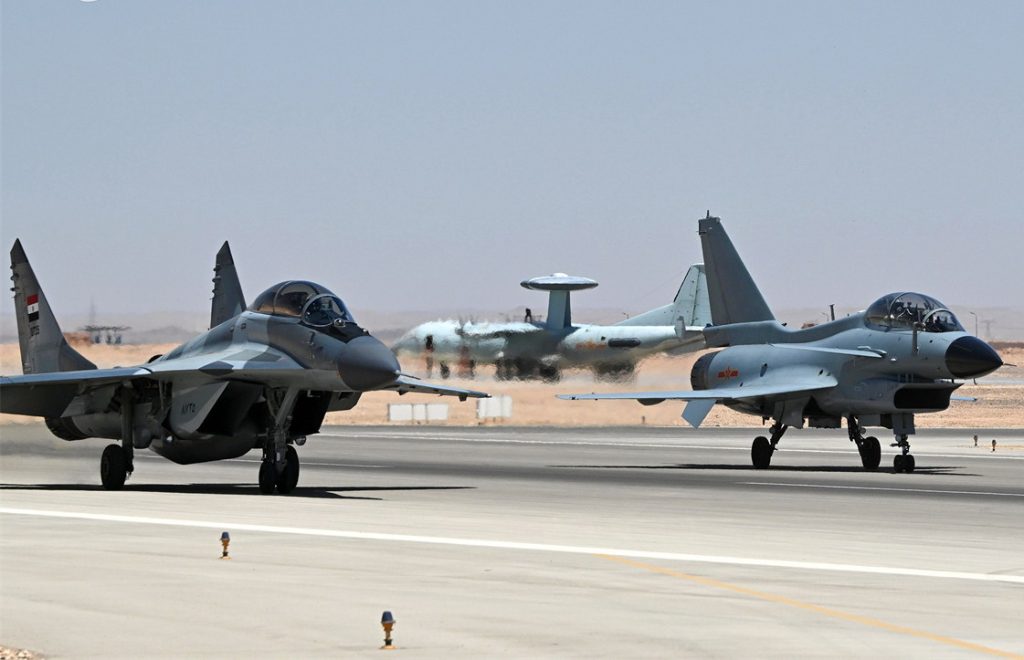
There is a second constraint that commentary frequently skips. Russia’s own Su-57 fleet is still small. Production at the Komsomolsk-on-Amur Aircraft Plant has had to serve the Russian Aerospace Forces (VKS), absorb wartime attrition and domestic industrial constraints, and still find airframes for export. That production reality explains why two jets arrived instead of six. It also explains why Algiers has reportedly been examining Chinese Chengdu J-10CE fighters and Shaanxi KJ-500 airborne early warning aircraft as a parallel acquisition track, with tentative 2027 delivery timelines surfacing in June reporting that Military Africa treated as unfinished at the time. Diversification would be rational. It would also give Algeria the same three-supplier sustainment headache that Egypt has managed, with mixed results, for decades.
How the Triangle Reads in September 2026
Algeria holds the only fifth-generation combat aircraft on African soil, on present evidence, and holds them in ones and twos. That is a status win and a qualitative warning shot fired at every procurement ministry from Rabat to Riyadh. It is not regional air dominance, and it should not be reported as such.
Morocco holds the more coherent Western sensor-to-shooter network: F-16 Vipers moving toward Block 70/72 capability, AH-64E Apaches arriving in operational batches and entering service with live-fire training, precision rockets entering the contracting cycle, and Barak MX installation at Sidi Yahya supported by satellite imagery. Morocco’s gap remains a true low-observable fighter, and the political exposure that Washington or Tel Aviv can slow or condition a critical spare part at will.
Egypt holds mass, a growing and industrially embedded Rafale core, a certified slice of French aerostructure work that few buyers anywhere have negotiated, and a Turkish stealth option that remains at the paper-and-prototype stage. Egypt’s gap is the age of its F-16 fleet on the legacy side, and the years that separate a KAAN memorandum of understanding from a KAAN combat squadron.
The unglamorous details will tell the real story over the next 24 months. For Algeria: how many Su-57Es are actually serviceable in 2027, whether an Il-78 tanker arrives to extend their range, and whether low-observable maintenance can be performed inside the country rather than requiring ferry flights to Russia. For Morocco: whether ten HIMARS in the fiscal year 2027 plan become launchers on Moroccan soil with a full ATACMS munitions stock, and whether the Apache fleet reaches the contracted 24 airframes with the weapons loadout and spare parts to match. For Egypt: whether the September 2026 Rafale request for proposal produces a signed third contract, and whether KAAN co-production language survives contact with Egyptian budget realities and becomes a factory gate.
Two Felons flying over Aïn Beïda tell me that Algeria refused to let the fifth-generation story belong only to Western clients and their partners. They do not tell me that the Maghreb has entered a fundamentally new kind of war. The old kind, fought with radars, rockets, helicopters, tankers, and politics, is still the contest these three air forces are structured, funded, and trained to deter.