

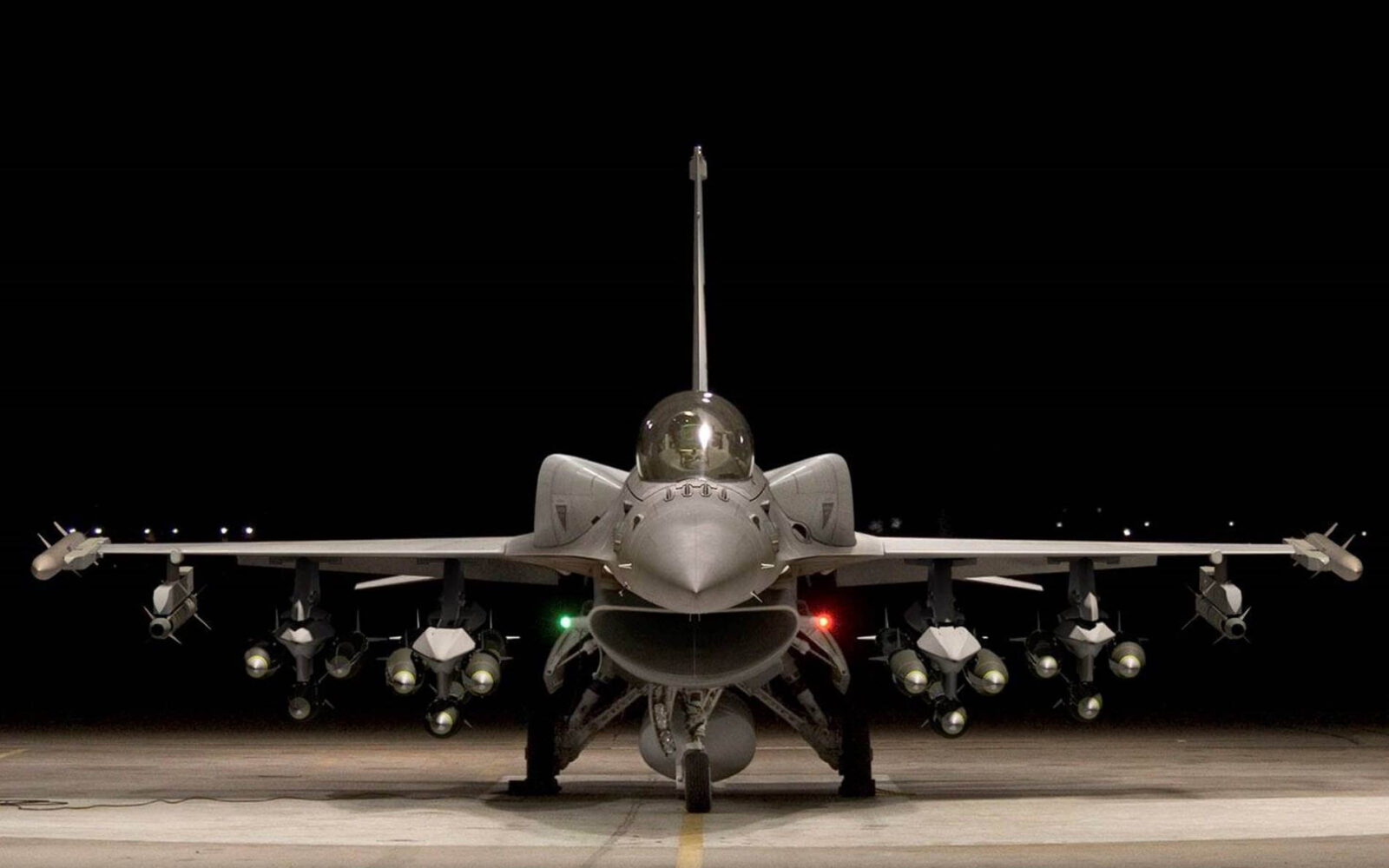
During the El Alamein 2026 airshow in Egypt, the Egyptian government submitted a formal request to the United States to purchase newly manufactured F-16 Viper Block 70 combat aircraft. Officials in Cairo who spoke with sources allied with Military Africa requested strict confidentiality regarding the submission. This request explains why Lockheed Martin mounted an upgraded corporate presence at the exhibition, accompanied by senior executive delegations. Although Egypt already operates one of the world’s largest F-16 inventories, an industry source confirmed that existing Egyptian Air Force airframes are too old and technically constrained to undergo modification to the latest Viper standard, necessitating new-build airframes directly from Lockheed Martin’s production line.
Evaluating the Age and Structural Limits of Egypt’s Legacy Fleet
Egypt operates the fourth-largest F-16 fleet globally, behind the United States, Turkey, and Israel. The Egyptian inventory totals between 220 and 240 aircraft, depending on operational attrition and formal airframe retirements. This fleet was assembled across four decades through a series of United States Foreign Military Sales (FMS) agreements designated as the Peace Vector series.
The initial procurement began under Peace Vector I in 1982 with the delivery of 42 Block 15 jets. This was followed by 40 Block 32 aircraft under Peace Vector II in 1986, and 47 Block 40 airframes delivered under Peace Vector III starting in 1991. Under the 1993 Peace Vector IV agreement, an additional 46 Block 40 fighters were assembled under license by Turkey’s TUSAS Aerospace Industries, now known as Turkish Aerospace, marking the first time the Fighting Falcon was manufactured outside the United States. Egypt’s final acquisition of new-build F-16s occurred under a 2010 contract for 20 Advanced Block 52 aircraft, with final deliveries concluding in November 2015.
Consequently, the core of Egypt’s fighter force relies on 129 older Block 15, 32, and 40 airframes manufactured between 1982 and 1995. These aircraft are now well past 30 years of operational service, with the earliest airframes approaching 45 years in age. Although Cairo upgraded its oldest Block 15 and 32 models with Block 40-equivalent avionics via Engineering Change Proposals, these modifications did not address structural metal fatigue or provide a modern sensor architecture.
Compounding these mechanical limitations is a critical armament constraint. Washington has long withheld the AIM-120 Advanced Medium-Range Air-to-Air Missile (AMRAAM) from Egyptian export packages due to political considerations. Deprived of standard American Beyond-Visual-Range (BVR) missiles, Egyptian F-16s face a structural vulnerability when confronting modern fighters equipped with active radar-guided missiles, regardless of airframe maintenance standards.
Capabilities of the F-16 Block 70 Viper
The F-16 Block 70/72 Viper, produced at Lockheed Martin’s assembly line in Greenville, South Carolina, introduces capabilities specifically designed to address these operational deficits. The aircraft is built around the Northrop Grumman AN/APG-83 Scalable Agile Beam Radar, an Active Electronically Scanned Array (AESA) radar that incorporates software and hardware technology derived from fifth-generation platforms such as the F-22 Raptor and F-35 Lightning II.
Beyond its primary sensor, the Block 70 configuration features a modernized glass cockpit equipped with a central Large Area Display, an upgraded digital architecture, and an Automatic Ground Collision Avoidance System designed to prevent controlled flight into terrain during high-G maneuvers or pilot incapacitation. The airframe includes fuselage-mounted Conformal Fuel Tanks that increase mission radius without occupying underwing weapon hardpoints or creating excessive aerodynamic drag. Furthermore, Lockheed Martin rates the structural service life of the Block 70 at 12,000 flight hours, double the 6,000-hour design limit of early Block 15 airframes.
As of mid-2026, Lockheed Martin holds a global production backlog of approximately 530 Block 70/72 aircraft across seven nations, including sales to Bahrain, Bulgaria, Jordan, Morocco, Slovakia, and Taiwan. Egypt shares a notable historical connection with the Block 70 program. During the early developmental phases of the Viper variant, both the United States and Egypt were slated to participate alongside Taiwan as original co-developers. However, Cairo and Washington withdrew from formal development roles, leaving Taiwan as the sole partner receiving royalty payments tied to subsequent international sales.
Fleet Diversification and the French Rafale
Cairo’s recent efforts to bridge its air-to-air capability gap focused on European procurement rather than American upgrades. Egypt issued a Request for Proposals to expand its Dassault Rafale fleet from 54 to 78 aircraft. The French platform provides the Egyptian Air Force with immediate access to the Thales RBE2-AA AESA radar and the MBDA Meteor ramjet-powered air-to-air missile. The Meteor offers a substantially larger engagement envelope and no-escape zone than export-tier variants of the AIM-120 AMRAAM, satisfying Egypt’s long-standing BVR operational requirement.
Acquiring additional Rafale jets increases the proportion of Egypt’s combat fleet equipped with modern AESA radars and integrated Electronic Warfare suites by nearly fifty percent. This transition also aligns with Cairo’s geopolitical strategy. French defense exports generally bypass the legislative reviews, armaments holds, and human rights conditions that periodically delay or restrict United States Foreign Military Sales. By procuring advanced European fighters, Egypt established a long-range strike capability without requiring policy concessions from Washington.
Outlook for Egyptian Air Power
The confidential request submitted at El Alamein indicates that Cairo is actively reassessing its long-term force structure. While European fighters resolve immediate tactical deficiencies, the sheer volume of Egypt’s legacy F-16 fleet means the type must remain a primary component of national defense for years to come. Because legacy airframes cannot be cost-effectively retrofitted with modern AESA sensors, buying new-build Block 70 Vipers represents the only viable path to maintaining mass while modernizing the fleet.
Whether Washington approves the top-secret request depends on broader geopolitical alignments and regional security balances. However, the presence of Lockheed Martin’s executive leadership at El Alamein confirms that serious negotiations are underway. If approved, a new tranche of Block 70 Vipers would allow the Egyptian Air Force to replace its oldest 1980s-era airframes while establishing technological parity across its tactical jet inventory.