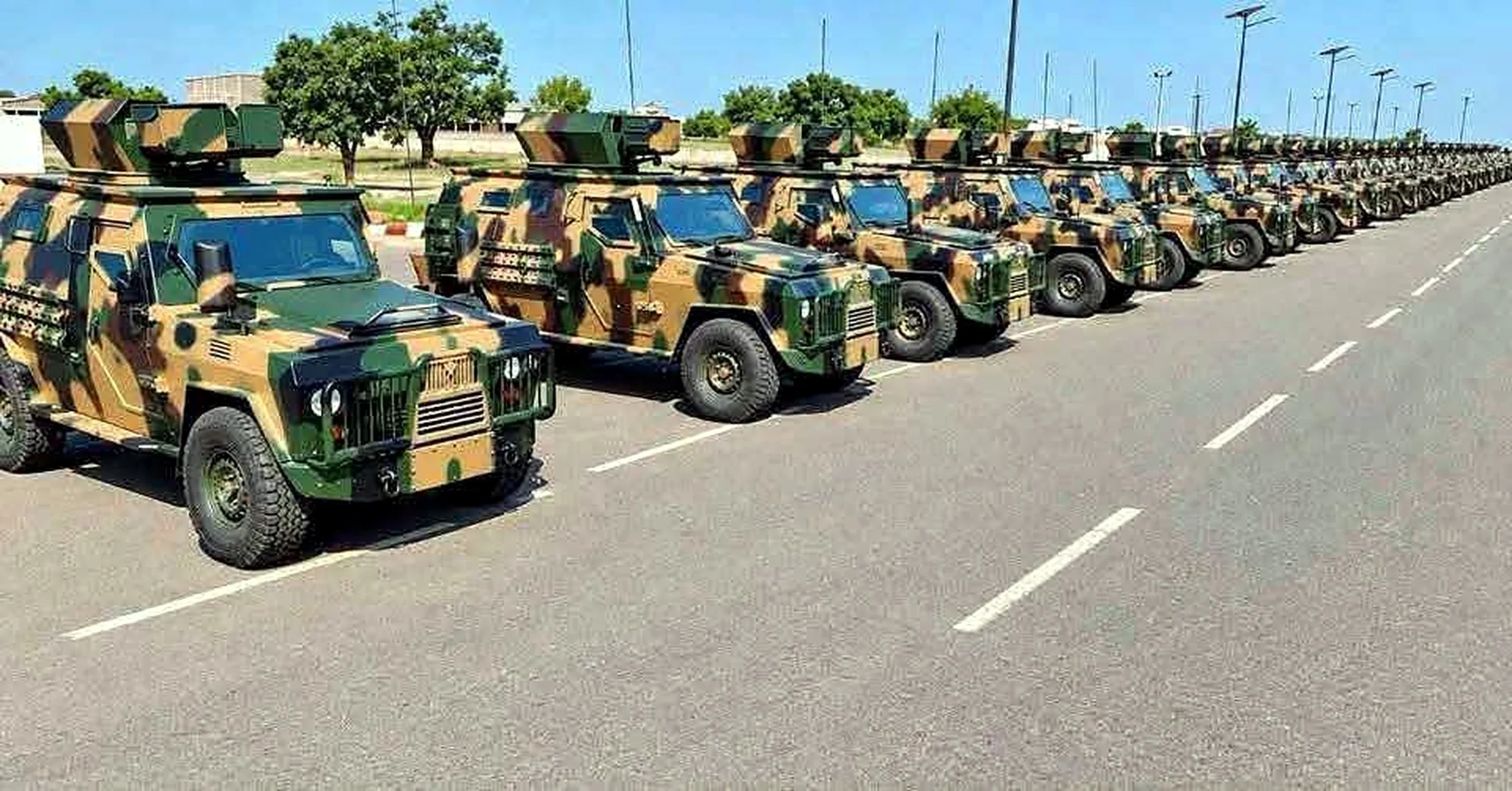
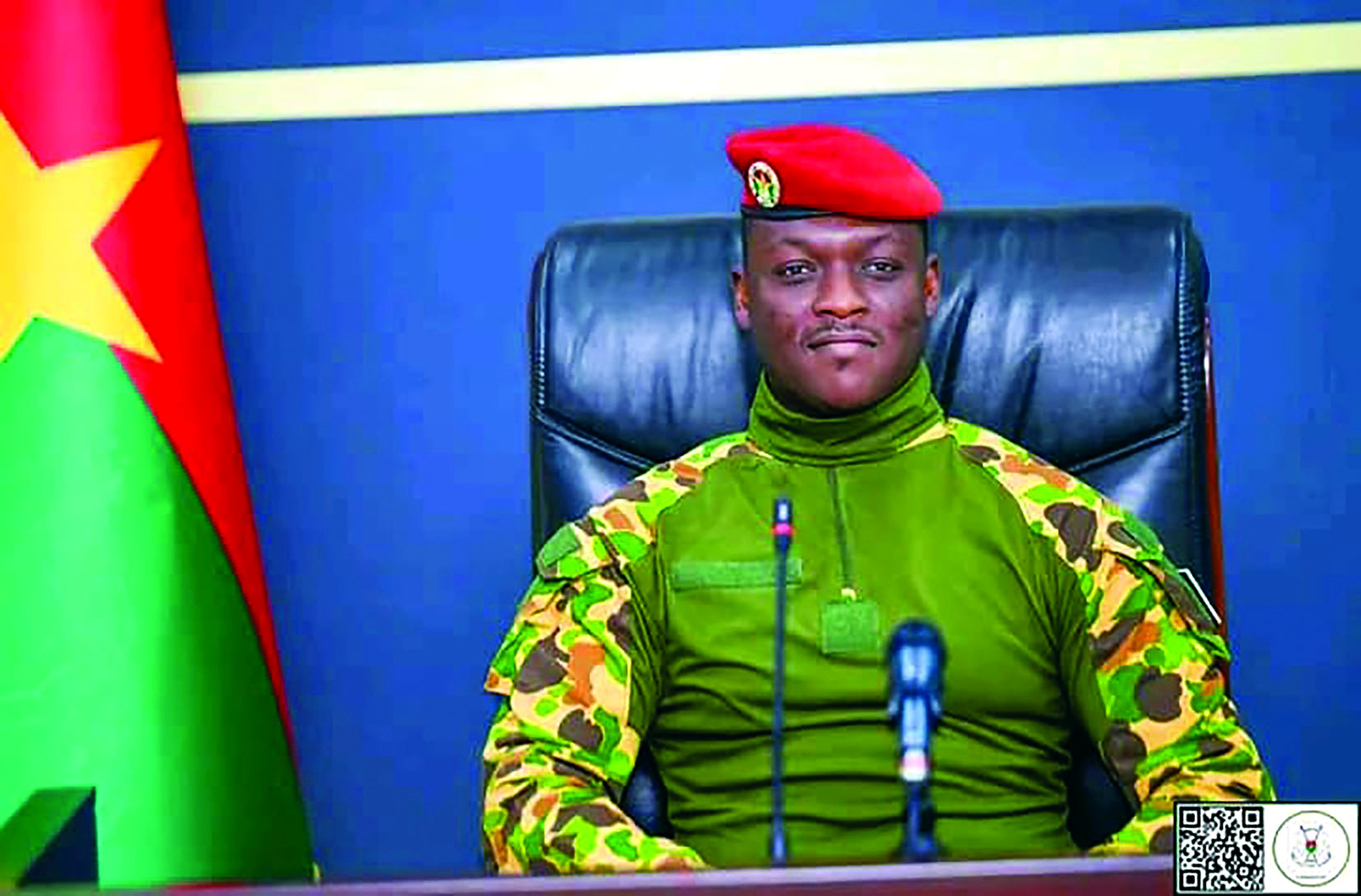
Burkina Faso’s President, Captain Ibrahim Traoré, said on Monday 21 September 2026 that nearly 300 Nanga armoured vehicles have been produced or adapted in the country since November 2025 by a Burkinabè company called Faso Armored, and that the firm will stay out of public view for reasons of national security. The vehicles are going to the Defence and Security Forces (FDS) and the Volunteers for the Defence of the Homeland (VDP), the civilian auxiliaries who fight alongside the army against jihadist groups.
Traoré made the disclosure at the Koulouba presidential palace in Ouagadougou, where he received the winners of HAKILI Mousso, a new national science competition for girls. The presidency confirmed the audience and said it focused on the importance of science in development. “From November 2025 to today, the national production line has delivered nearly 300 armoured vehicles to the FDS and the VDP,” Traoré said, according to the African Press Agency (APA). In the full remarks published by the state daily Sidwaya, he added that more than half of this output is already prepositioned in the field “for major operations to come” and that production is continuing.
From failed prototypes to an operational model
According to Traoré’s remarks as reported by Burkinabè media, the Nanga programme began in 2023 and went through several prototypes before reaching the model now deployed. “We failed at the start on some models, but today we have a model that is almost perfect and that is our pride,” he said. The name Nanga means “scorpion” in Mooré, Burkina Faso’s most widely spoken language, Sputnik Afrique reported.
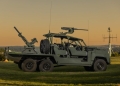
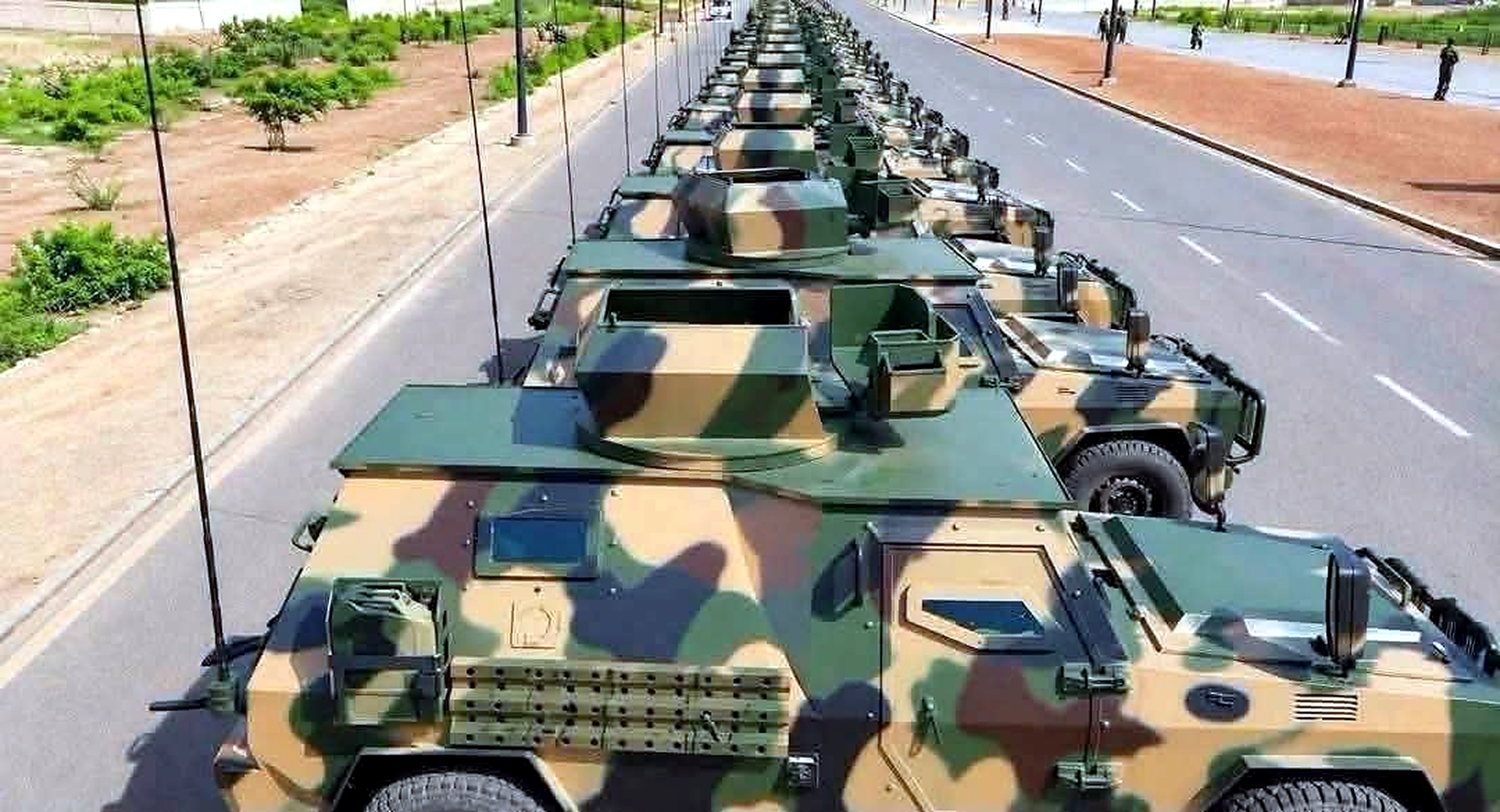
The vehicles had been shown publicly a few days earlier. On 13 September, the Government Information Service (SIG) and the presidency presented “Burkina Faso-made armoured vehicles”, and the first units were reported to have joined the security forces, La Nouvelle Tribune reported. The Nanga is described as a pickup truck whose original body has been replaced by armour designed and built locally, adapted to the demands of Burkinabè terrain. Photographs released by the presidency show four-wheel-drive vehicles in a green and tan camouflage scheme with a fully enclosed armoured cab and troop compartment, an armoured gunner’s turret on the roof, firing ports or vision blocks, side-mounted sand channels and racks for jerrycans.
Traoré explained the design in terms of the threat his troops face. Imported vehicles built to North Atlantic Treaty Organization (NATO) protection standards, he said, are often rated against 7.62 mm rifle fire, while Burkinabè units are ambushed by 12.7 mm heavy machine guns firing from less than 30 metres away. “So we thought about creating something adapted to our conditions, which is resistant and can withstand these 12.7 rounds, even at less than 15 metres, which can adapt to our terrain, go everywhere and which is effective and easy to maintain,” he said. APA added that the design also takes account of improvised explosive devices (IEDs), which have been one of the main killers of Burkinabè soldiers. The protection claims have not been independently tested or published.
A factory no one will be shown
Traoré linked the programme to his aim of cutting dependence on foreign suppliers. During the initial presentation he said he no longer wished to place new orders for armoured vehicles abroad and preferred local production. On 21 September he insisted that Faso Armored is a Burkinabè company created for this programme, “purely Burkinabè, designed by a Burkinabè enterprise, built by a Burkinabè enterprise”. He ruled out a public inauguration and said that those who had asked to see the company “will never see it”, presenting the secrecy as a security requirement.
The president also claimed that four to five other companies have been set up “in the field of war only” and are quietly making equipment that he would not describe. He told the students that one of them assembles electronic components and needs women scientists, and said that other armoured vehicle models “have been developed, tested and are in production. You will see them soon.” He also floated exports: “this armoured vehicle tomorrow can be exported and be everywhere in Africa.”
Answering the sceptics
Much of Traoré’s speech was a reply to online doubts that followed a documentary on the vehicles broadcast by national television, Radiodiffusion Télévision du Burkina (RTB). He argued that no manufacturer builds every component itself, noting that Mercedes and BMW cars run on Michelin tyres, and pointed to imported vehicles used in the region. Burkina Faso’s first armoured vehicles in Darfur were South African Casspirs with Mercedes engines, he said, while the French ACMAT Bastion, the VAB and the Australian Bushmaster all use British, German or American engines. Armoured vehicles bought by francophone West African states cost close to 500 million CFA francs each, he added.
Questions remain. Neither the government nor Faso Armored has said where the company is, what base pickups it uses, or how much of each vehicle is made in Burkina Faso, from the chassis and engine to the armoured steel and glass. LSI Africa, citing an unnamed senior military source, reported that the programme grew out of efforts to recover protected parts from broken-down Casspirs used by Burkinabè peacekeepers with the former United Nations-African Union mission in Darfur (UNAMID) and fit them to pickups, which would make the Nanga an up-armoured conversion rather than a vehicle built from scratch. Traoré’s own use of the phrase “produced or adapted” points in the same direction. Burkina Faso’s information space has also seen earlier mislabelling: in December 2024, Africa Check showed that photos shared online as “made in Burkina” armoured vehicles were in fact Chinese vehicles delivered to the army in November 2024.
From imported fleets to local armour
The Nanga marks a change for an army that has relied almost entirely on imported protected mobility. Military Africa has tracked deliveries of Ukrainian Shrek-M vehicles in 2019, South African Puma vehicles from OTT Technologies in 2021, Turkish Nurol Ejder Yalçın 4x4s in 2022, and a steady flow of Chinese armour since the military took power in 2022, from the January 2024 batch to VN-22 armoured vehicles and further deliveries in January 2025. Burkina Faso has continued to buy foreign systems, most recently the Chinese Sky Dragon 30 air defence system.
The Nanga is not the country’s first attempt at local armour. In May 2025, Burkinabè firm BAT Équipements, led by engineer Thierry Alain Belemkoabga, unveiled a light armoured vehicle prototype at the SYSDEF 2025 security and defence show in Ouagadougou after more than 24 months of development. That project was still presented as a prototype awaiting testing and certification, and it is not clear whether it is linked to Faso Armored.
Local production is spreading to other equipment for the security forces. On 9 September 2026, Burkina Faso inaugurated the TEXFORCES-BF industrial complex in Bobo-Dioulasso, with announced capital of 17 billion CFA francs, to make uniforms for the defence and security forces. Neighbours in the Alliance of Sahel States (AES) are moving the same way. Niger unveiled its Tamgak Wangari tactical vehicle in 2025, Chad has created Sahel Defence Industry to build a domestic arms base, and Mali used BAMEX 2026 to press for local production and technology transfer from Türkiye. The wider question of who controls African-made weapons, and their supply chains, is one Military Africa has examined in depth.
The Test Waiting on Burkina Faso’s Roads
With more than half of the reported 300 vehicles prepositioned for what Traoré called major operations to come, the Nanga’s real assessment will come in combat against Jama’at Nusrat al-Islam wal-Muslimin (JNIM) and Islamic State Sahel Province, whose ambushes and roadside bombs have taken a heavy toll on Burkinabè convoys. A locally armoured pickup that is cheap to build and easy to repair could give the FDS and VDP far more protected vehicles than imports at 500 million CFA francs each would allow. Whether the armour stops 12.7 mm fire at close range, how the vehicles cope with mines, and whether Faso Armored can keep up output and spare parts are the questions that operations, rather than presentations, will answer.