The United States Department of State on 4 November 2026 imposed sanctions on Abuja-registered Vanguard Tactical Supply Limited and two individuals based in Belarus and Russia, accusing all three of involvement in Iran’s efforts to buy Chinese-origin man-portable air-defence systems (MANPADS).
In a press statement, State Department spokesperson Tommy Pigott said the action was the latest in a series against Iran’s military procurement networks, following earlier rounds on 8 May, 10 June and 15 July 2026. The designations were made under Executive Order (E.O.) 13949, which targets persons involved in Iran’s conventional arms activities, and form part of Operation Economic Outcast, the wider US economic campaign against Tehran.
“Anyone who helps the regime build its arsenal should expect to be held accountable,” Pigott said.
Who Was Designated
The department’s fact sheet names three targets. Mohammed Ali Tolibov, who was already under earlier US sanctions, is the chief executive of Armory Alliance, a Belarus-based company that Washington says acted as an intermediary between China-based firms and Iran and was involved in efforts to arrange the purchase of hundreds of MANPADS. Armory Alliance was itself sanctioned in May and June. The Treasury’s Office of Foreign Assets Control (OFAC) lists Tolibov as a Belarusian national born in 1982.
Alisher Domullodzhanov, the second individual, is described as a Russia-based facilitator of MANPADS procurement for Iran. OFAC records him as a Russian national born in Dushanbe, Tajikistan, in 1989, with an address in Moscow Oblast. He had not been sanctioned before.
The third target is Vanguard Tactical Supply Limited. According to the State Department, the Nigeria-based company has been involved in efforts to obtain Chinese-origin MANPADS for Iran “via false end-users”. The fact sheet gives no quantities, dates or missile types for the Nigerian strand of the network, and does not say whether any weapons were delivered.
The Abuja Company on Two Sanctions Lists
OFAC’s entry for Vanguard Tactical Supply gives an address at Stallion Estate by Lobito Crescent in Wuse 2, Abuja, a Nigerian registration number of 9562580, and an establishment date of 20 May 2026. The company was 56 days old when it first appeared on the US sanctions list.
That first designation came on 15 July 2026, when the US Treasury sanctioned seven individuals and entities it described as an international network procuring weapons for Iran’s Islamic Revolutionary Guard Corps (IRGC). The Treasury called Vanguard Tactical Supply “an intermediary for Namazi’s efforts”, a reference to Behrouz Namazi, an Iranian national and general director of Tehran-based Nika Jet Company, whom it accused of seeking weapons for the IRGC. The same round listed a Milan-based Italian national and a Moscow air transport company, Avratek, along with two of its staff.
The July action was taken under E.O. 13382, which covers weapons of mass destruction proliferators and their supporters. The November action adds the conventional arms authority to the company’s existing entry, which already carried a secondary sanctions warning and the notation that it is linked to Namazi.
Neither department has named the owners or directors of Vanguard Tactical Supply, and Military Africa found no public response from the company or from Nigerian authorities at the time of publication. The allegations are those of the US government and have not been tested in court.
The practical effect is that any property the three targets hold in the United States or under the control of US persons is blocked, and US persons are barred from dealing with them. Entities owned 50 per cent or more by blocked persons are also blocked. For banks and suppliers outside the United States, including in Nigeria, the secondary sanctions notice means that knowingly doing business with the company carries its own risk of penalties.
False End-Users and the Paper Trail
An end-user certificate (EUC) is the document in which a buyer declares that it is the final recipient of controlled goods and will not pass them on. Exporting states rely on it when licensing arms sales. A false end-user is a declared recipient that is not the real one, and it is among the oldest methods of diverting weapons to embargoed destinations.
In Nigeria, EUCs for arms, ammunition and other controlled items are issued by the Office of the National Security Adviser (ONSA) through an electronic issuance and management system, and the Nigeria Customs Service checks them at the border. The State Department has not said which country’s documentation the network used or sought to use, and it has not alleged that genuine Nigerian certificates were issued.
The pattern matches what Washington described in June. Its 10 June fact sheet said Armory Alliance had tried to route MANPADS shipments from China through third countries while obscuring their origin and true end-user. That round covered 13 individuals and entities in Iran, Belarus and China, including Hong Kong, and followed the 8 May designations of 11 entities and three individuals in Iran, China, Belarus and the United Arab Emirates.
Africa has seen the same technique at work. In 2025, Gazelle helicopters exported from South Africa on flight plans listing Jordan as the destination turned up with Khalifa Haftar’s forces in Libya, in breach of the United Nations (UN) arms embargo. Sudan’s government has accused Kenya of serving as a conduit for weapons bound for the Rapid Support Forces. Military Africa has also examined how end-use assurances and export permissions shape what African states can do with the weapons they buy.
What Iran Is Trying to Buy
Iran has sought to rebuild its short-range air defences since the United States and Israel launched their military campaign against it in February 2026. In April, CNN reported that US intelligence had indications China was preparing to ship MANPADS to Iran through third countries to mask their origin. The Chinese embassy in Washington called the information untrue.
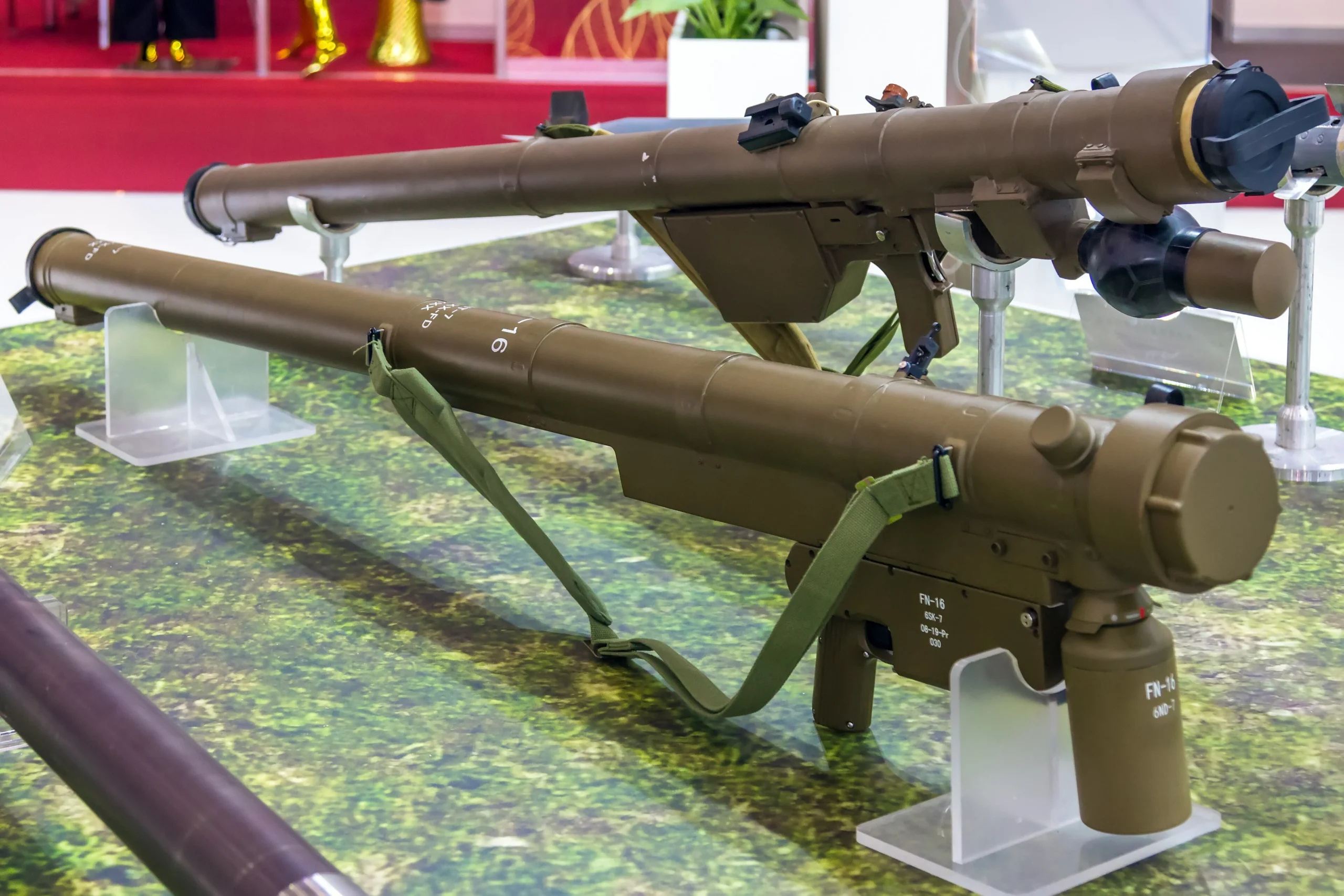
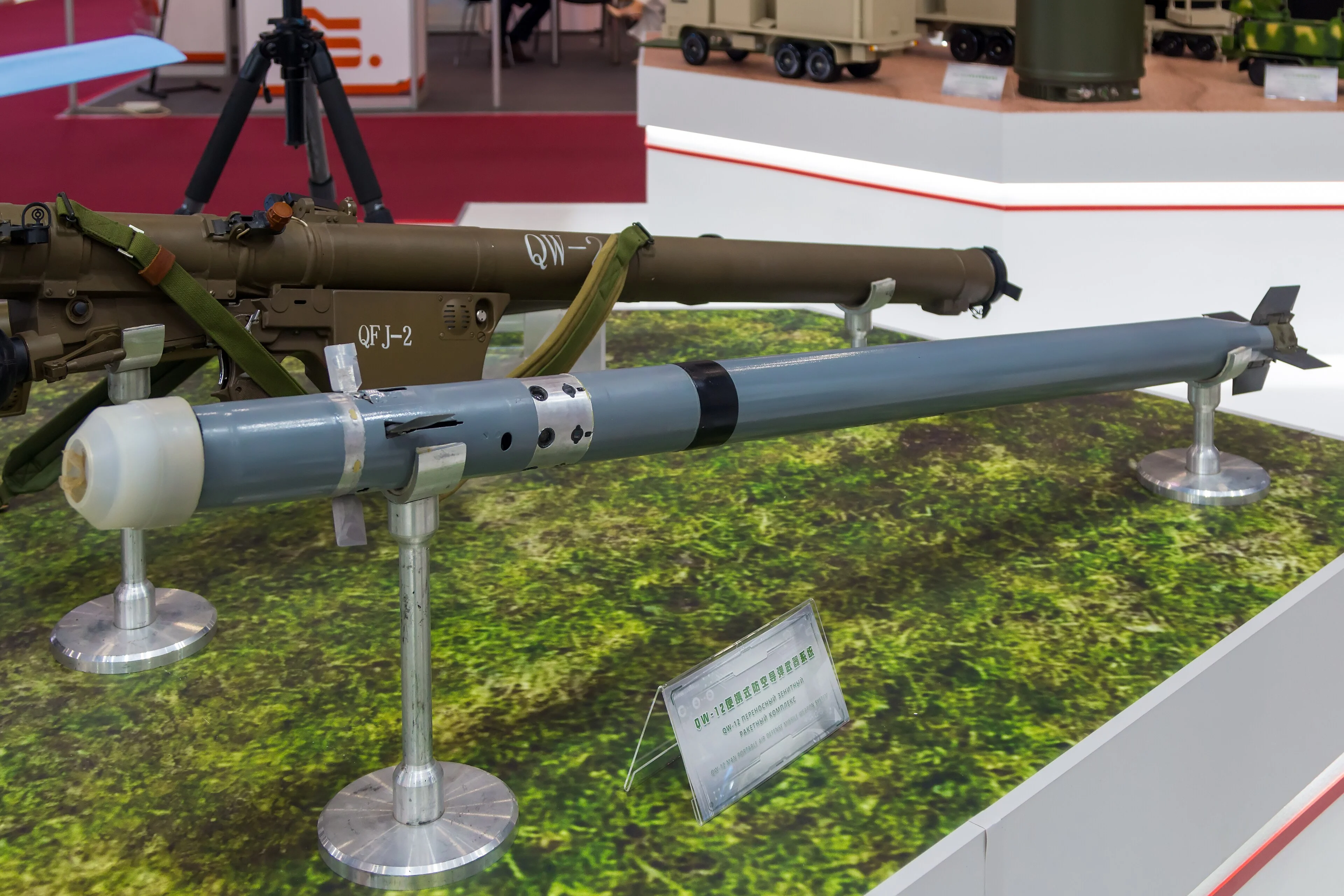
In late July, Reuters, citing three sources familiar with the deal, reported that Iran expected a first shipment within weeks under a contract for 300 to 400 MANPADS, including QW-12 and FN-16 missiles, valued at $60 million to $70 million. China’s Foreign Ministry denied the report, and Pakistan’s military rejected a claim that the systems would transit its territory.
Both types are infrared-guided, shoulder-launched missiles designed to engage helicopters, low-flying aircraft and drones. Army Recognition puts their engagement range at up to 6 km and their altitude ceiling below 4 km. They need no radar, can be carried by one soldier and are easy to conceal, which is why their trade is closely controlled. The FN-16 is a development of the FN-6, a family already in African service: Namibia has displayed the FN-6A, and MANPADS have brought down combat aircraft in Libya.
Any such sale to Iran is prohibited under UN measures. The Security Council restrictions lifted under the 2015 nuclear deal were restored on 27 September 2025, and Resolution 1929 obliges every UN member state, Nigeria included, to prevent the supply, sale or transfer of conventional weapons such as MANPADS to Iran.
Abuja’s Exposure as Washington Widens the Net
The November round is small, but it shows the direction of travel. The Treasury launched Operation Economic Outcast on 24 August 2026 as a sustained campaign against Iran’s remaining economic and procurement channels, and the State Department says each round is meant to raise the cost for brokers and suppliers in third countries. A company registered in Abuja has now been named twice in under four months.
The wider Middle East conflict has already touched African states, from the drone strike on Egypt’s Damietta Port to the missile strike on Ghanaian peacekeepers in Lebanon, while Iranian-designed Shahed-136-type loitering munitions have been used in Mali. The Vanguard Tactical Supply case adds a compliance dimension: newly registered African trading companies can be drawn into, or created for, procurement chains that end in Tehran.
What happens next depends largely on Abuja. Nigerian regulators have not said whether they will examine the company’s registration or any end-user paperwork linked to it. Designated parties can petition OFAC for removal from the list. The State Department, for its part, says it will keep working with partners to enforce the restored UN measures, which suggests that further sanctions rounds, and further scrutiny of intermediaries in Africa, are likely.