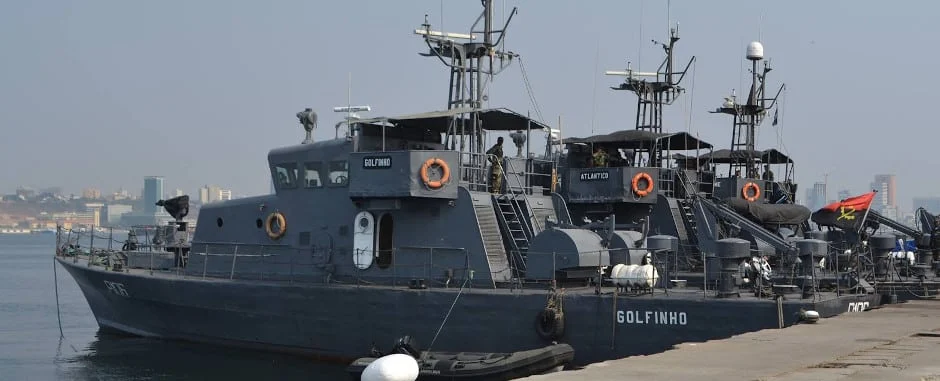
Spanish shipbuilder Navantia has signed a contract with Angola to repair and modernise two Mandume-class patrol vessels of the Angolan Navy, the company announced on 15 October 2026. The contract was signed with Simportex, the Angolan state-owned company responsible for procurement for the Ministry of Defence, and covers the Golfinho and Atlântico, built at the Spanish state-owned Empresa Nacional Bazán, now Navantia, in the early 1990s. Angola operates four Mandume-class vessels.
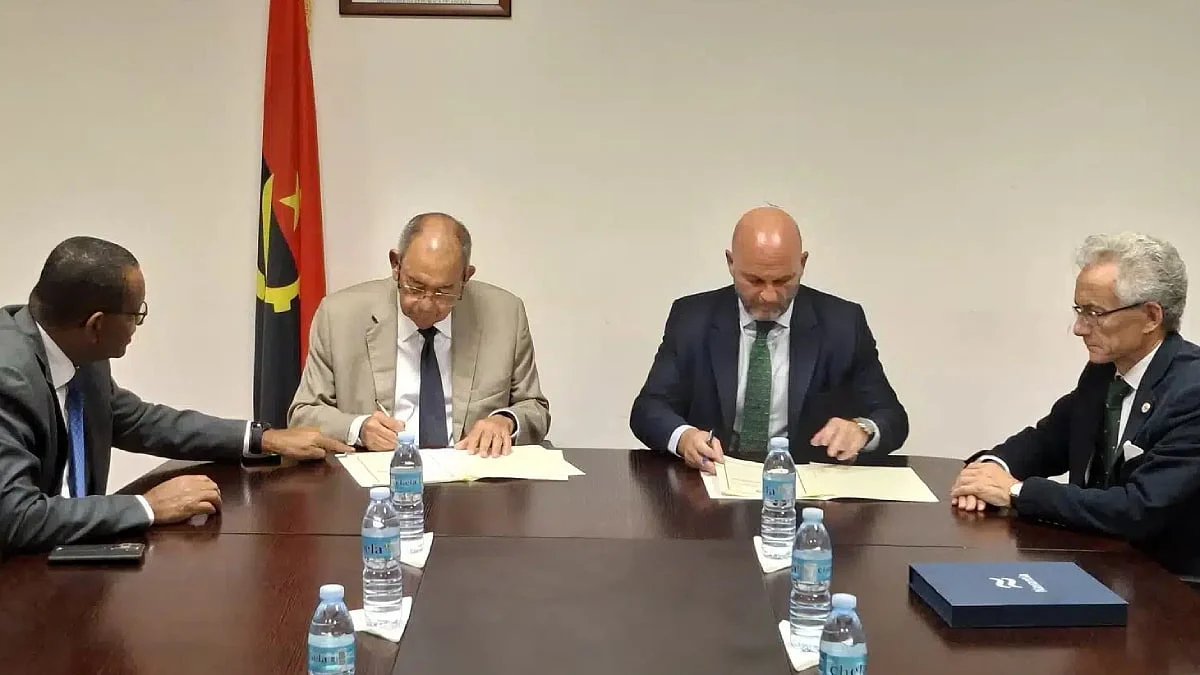
The agreement was signed by Álvaro Lobo, Navantia’s Commercial Director for Africa, and General Luís Manuel da Fonseca Sotto Maior Pizarro, President of Simportex, Naval News reported. Navantia said the modernisation and repair work will take place at its San Fernando shipyard in Cádiz, the same yard that built the class. Neither side has disclosed the value of the contract or a timeline for the work.
Training and life-cycle support
“This order from the Angolan government marks another step forward in Navantia’s international defence market for its Repairs and Services business area, particularly in Africa, where commercial efforts are being made to support navies in modernizing their existing ships,” the company said.
“In addition, the contract includes training for a number of officers of the Angolan Navy in Spain, as well as two years of life-cycle support and knowledge transfer to the Navy to enable the maintenance of the vessels in Angola.”
In February 2023, The Diplomat reported that Angola was considering a wider package from Navantia comprising up to six new patrol vessels alongside the modernisation of two of the four vessels Bazán supplied in the 1990s. However, Navantia sources said at the time that the deal depended on financing. Only the modernisation element has now been confirmed. Navantia’s main African customer in recent years has been Morocco, for which it delivered an Avante 1800 offshore patrol vessel in 2025.
The Mandume class
The Mandume class, a derivative of Bazán’s Cormorán design, is 29 metres long and displaces 112 tonnes at full load. The class is powered by two Paxman diesel engines and has a top speed of 25 to 27 knots depending on the source, with a range of about 800 nautical miles at 15 knots and a crew of 11, according to Navypedia. The boats were originally fitted with a 20 mm cannon and two 12.7 mm machine guns; armament now includes a machine gun on the bow, and a rigid-hulled inflatable boat (RHIB) can be carried on the aft deck.
The four boats are Mandume (P100) and Polar (P102), launched in September 1992, and Atlântico (P104) and Golfinho (P106), launched in February 1993. All were completed at San Fernando in 1993, which makes the pair now returning to Spain more than 33 years old.
A small navy rebuilding
Despite the overall size of the Angolan military, the Angolan Navy has remained very small, having been neglected for several decades. Since the 1990s, the force has declined from approximately 4,200 active personnel to around 1,000 in the early 2010s. This has left Angola particularly vulnerable to maritime threats such as the spread of piracy in the Gulf of Guinea over the past 10 to 15 years. In response, the Angolan government has embarked on a broad programme of naval revitalisation, including the procurement of several smaller vessels and patrol craft.
The Navy is also expanding its capabilities through the acquisition of three BR71 Mk II corvettes from France’s Constructions Mécaniques de Normandie (CMN). Once delivered, these vessels will considerably extend the Navy’s reach and effectiveness, particularly as Angola seeks to secure its offshore resources. The first of class, NRA Ekuikui II, was launched in France at the beginning of March this year and began sea trials in September ahead of delivery.
The corvettes form part of a €1 billion programme for three 71-metre ships designed to strengthen Angola’s maritime defence and national security capabilities. The programme is delivered in cooperation with Abu Dhabi Ship Building (ADSB) under a transfer of technology (ToT) framework, and one of the three vessels is being built at ADSB’s shipyard in Abu Dhabi to support industrial cooperation and knowledge transfer. That ship, NRA Nimi-ya-Lukeni, was launched in Abu Dhabi this week, and the corvettes will operate HT-100 NAVAL unmanned helicopters delivered by EDGE in September.
Apart from the Mandume class, the Angolan fleet includes three CMN HSI 32 interceptors, four Super Dvora Mk 3, three Ocean Eagle 43 trimarans, five ARESA PVC-170 and two Namacurra-class patrol boats, two CMN LCT 200-70 landing craft, over a dozen fisheries patrol boats and a research vessel. CMN has also supplied DV15 interceptors to Angola, and the Angolan Air Force flies C295 maritime surveillance aircraft over the same waters.
Keeping Luanda’s inshore patrol force at sea
The corvettes will give Angola an ocean-going presence, but patrolling its long coastline, oil fields and the Congo River mouth still falls largely to small craft like the Mandume class. Refitting two of the four boats is a cheaper way to keep that inshore force at sea than buying new hulls, and the training and two years of support written into the contract are meant to let Angolan crews maintain them at home afterwards. Whether Luanda follows with the new patrol vessels it discussed with Navantia in 2023, or refits the other two Mandumes, will depend on the same financing question that held the package back three years ago.