The Ghana Armed Forces (GAF) have run a string of operational and training exercises since July 2026, ending with a live-fire Land Combat Firepower Demonstration at the Battle Training Camp in Bundase, Greater Accra Region, on 30 October. Between them, the drills tested every level of the force: a staff college campaign-planning exercise, a General Headquarters tabletop exercise, an army-wide marksmanship competition and a joint live-fire demonstration. Alongside them, a new military training programme for national service graduates got under way. The exercises come as the GAF re-equips and as violent extremism spreads south from the Sahel towards Ghana’s northern border.
Live fire at Bundase
The Land Combat Firepower Demonstration, also referred to as the Land Combat Fire Demonstration or Land Combat Power Demonstration, is an annual live-fire and tactical field exercise in the GAF training calendar. It is designed to bridge classroom theory and battlefield practice for students of the Ghana Armed Forces Command and Staff College (GAFCSC), and this year’s edition was held for Senior Division Course 48, the GAF said.
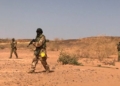
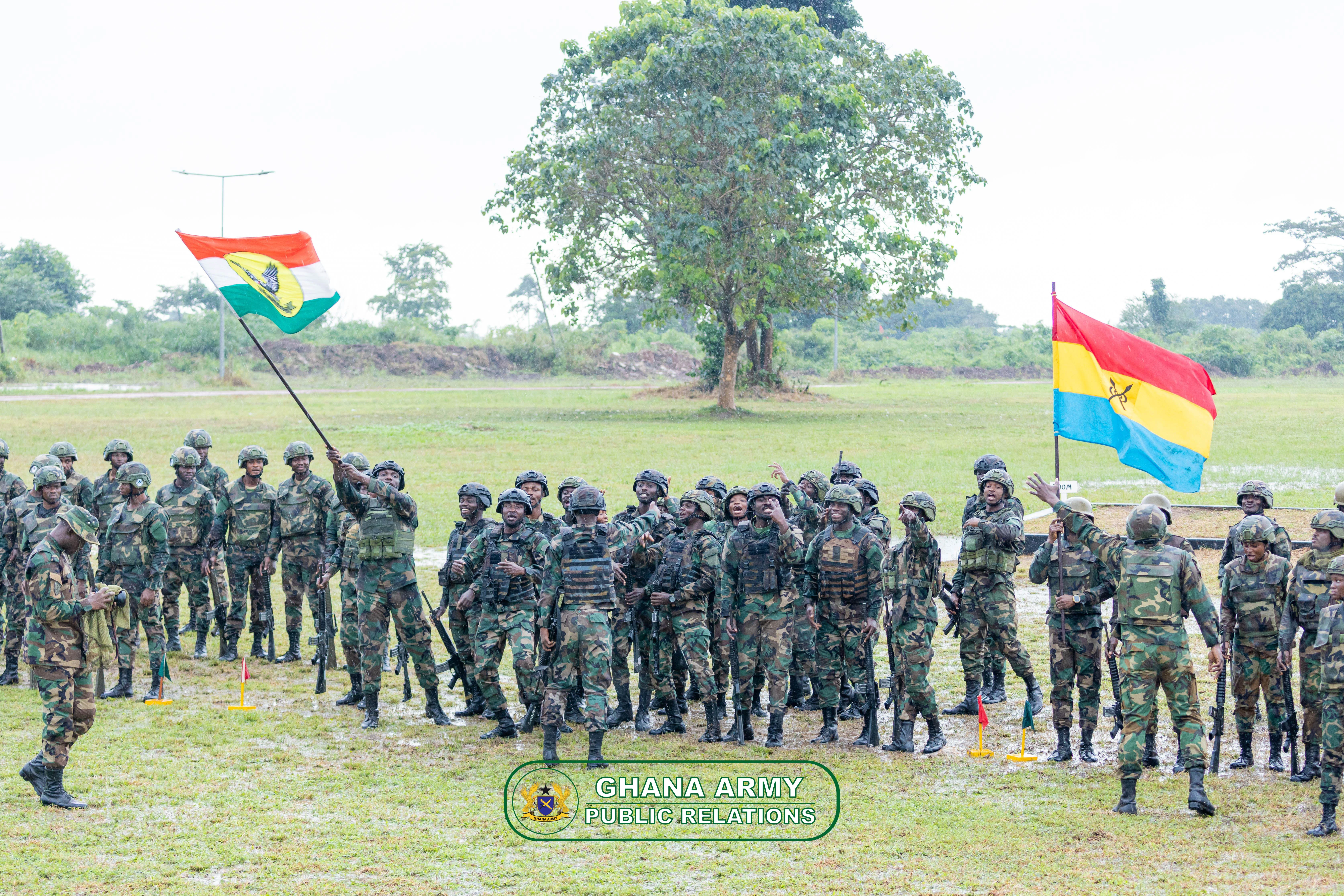
The 5th Infantry Battalion led and hosted the exercise, supported by the 1st and 2nd Infantry Battalions, 16 Artillery Brigade, 15 Armoured Brigade, 14 Engineer Brigade, 17 Army Signal Brigade and the Army Special Operations Brigade, with elements of the Ghana Navy and Ghana Air Force. Infantry platoons worked alongside armour, artillery, engineers and signals to simulate a full-spectrum response to a sub-regional threat. Students and troops practised the core tactical phases of interdicting an approaching force, neutralising hostile combatants and destroying enemy logistics bases, against a simulated opposing force called “Agressa”.
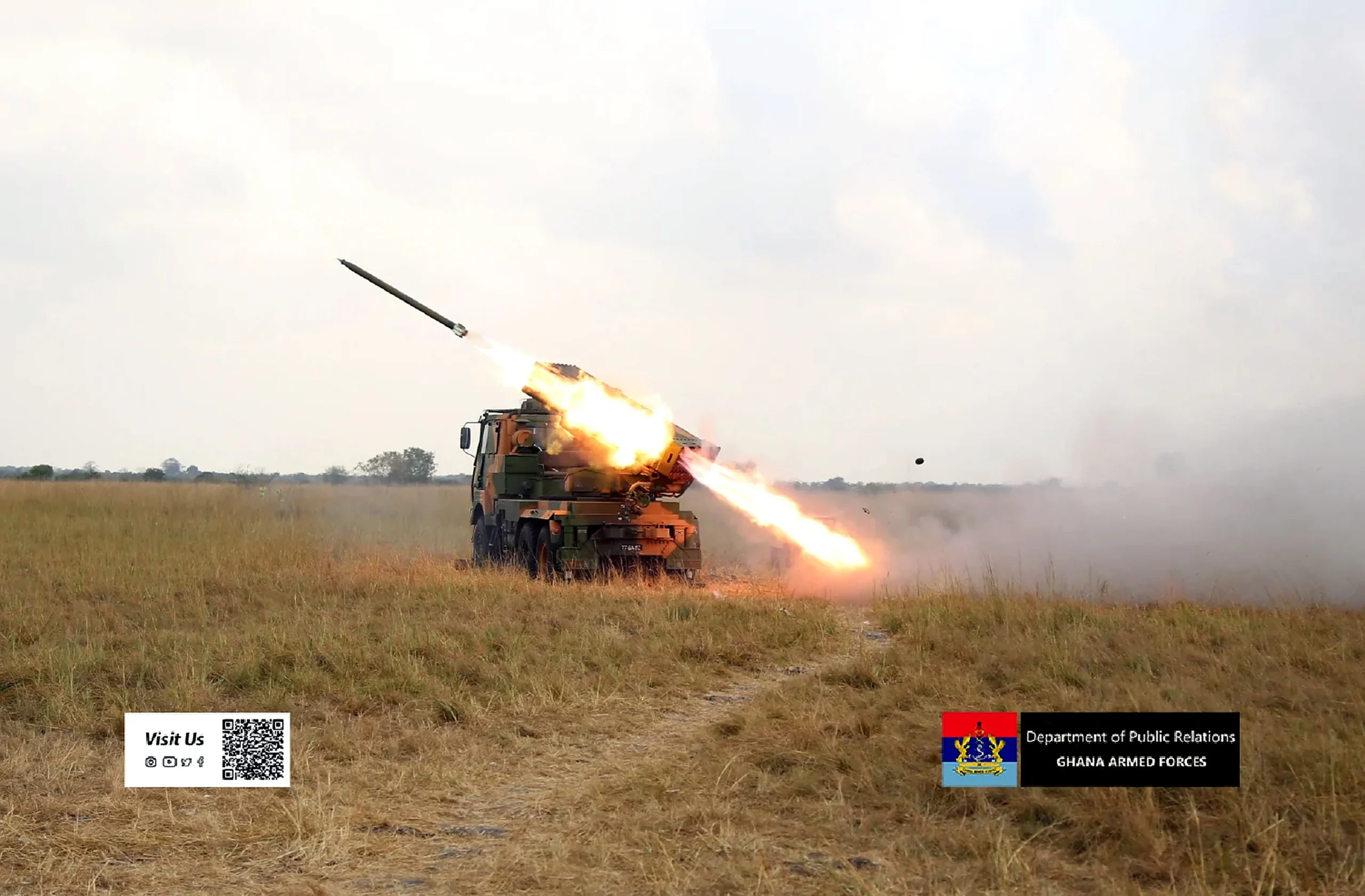
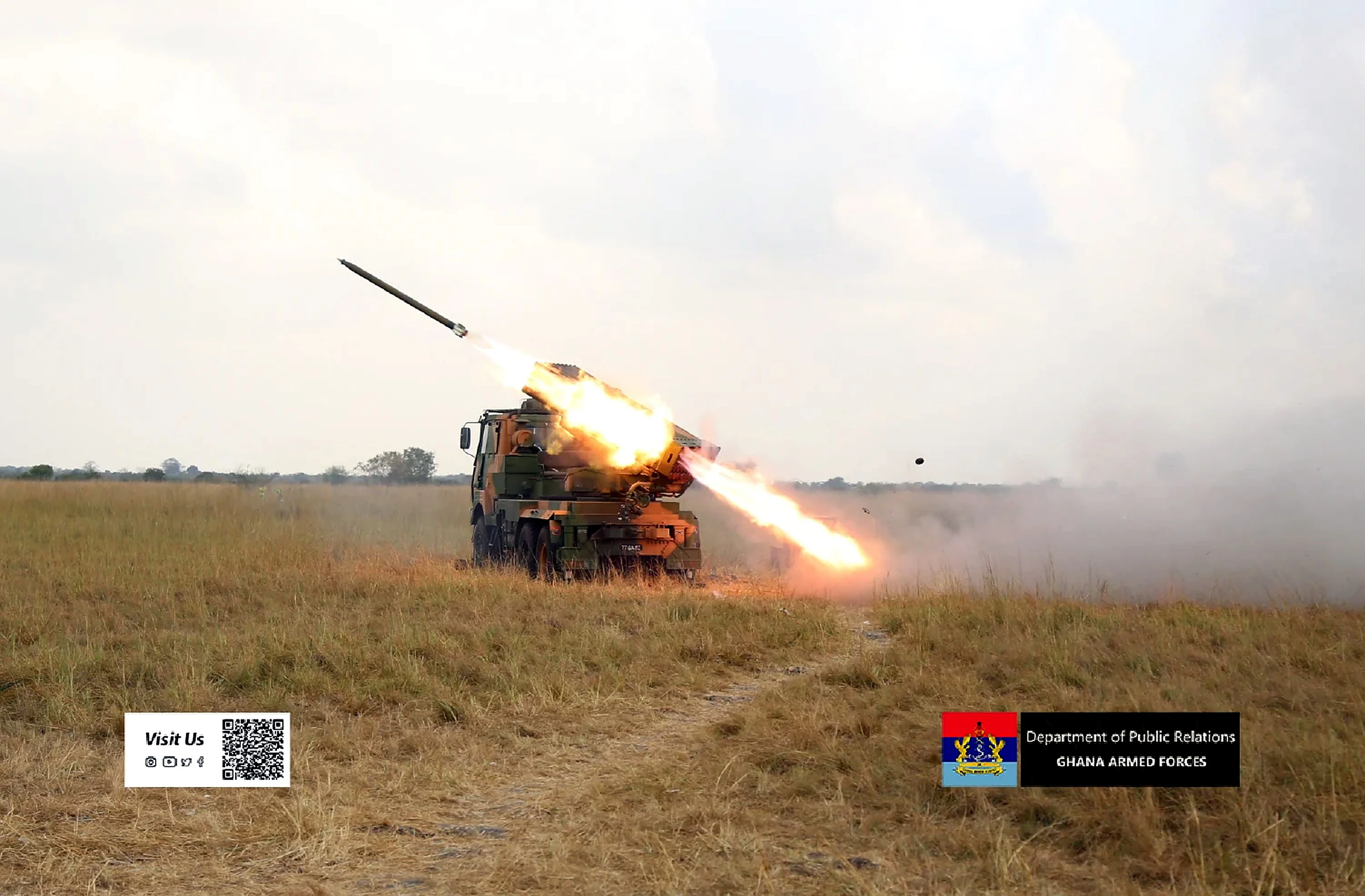
The live drills used light and heavy weapons. On show were M16 and AK-47 rifles, light machine guns including the L4A4, and Taurus PT92 AF, CZ 999 Scorpion and Smith & Wesson M&P 9 pistols, along with rocket-propelled grenades and artillery, including a truck-mounted multiple rocket launcher. Reports from the range also mention OTT Hunter tactical vehicles and Cavok CK 23 unmanned aerial systems (UAS), a French vertical take-off and landing drone. The scenario integrated fire support across deep, close and rear operations and included simulated battlefield casualty evacuations, among them treatment of traumatic amputations.
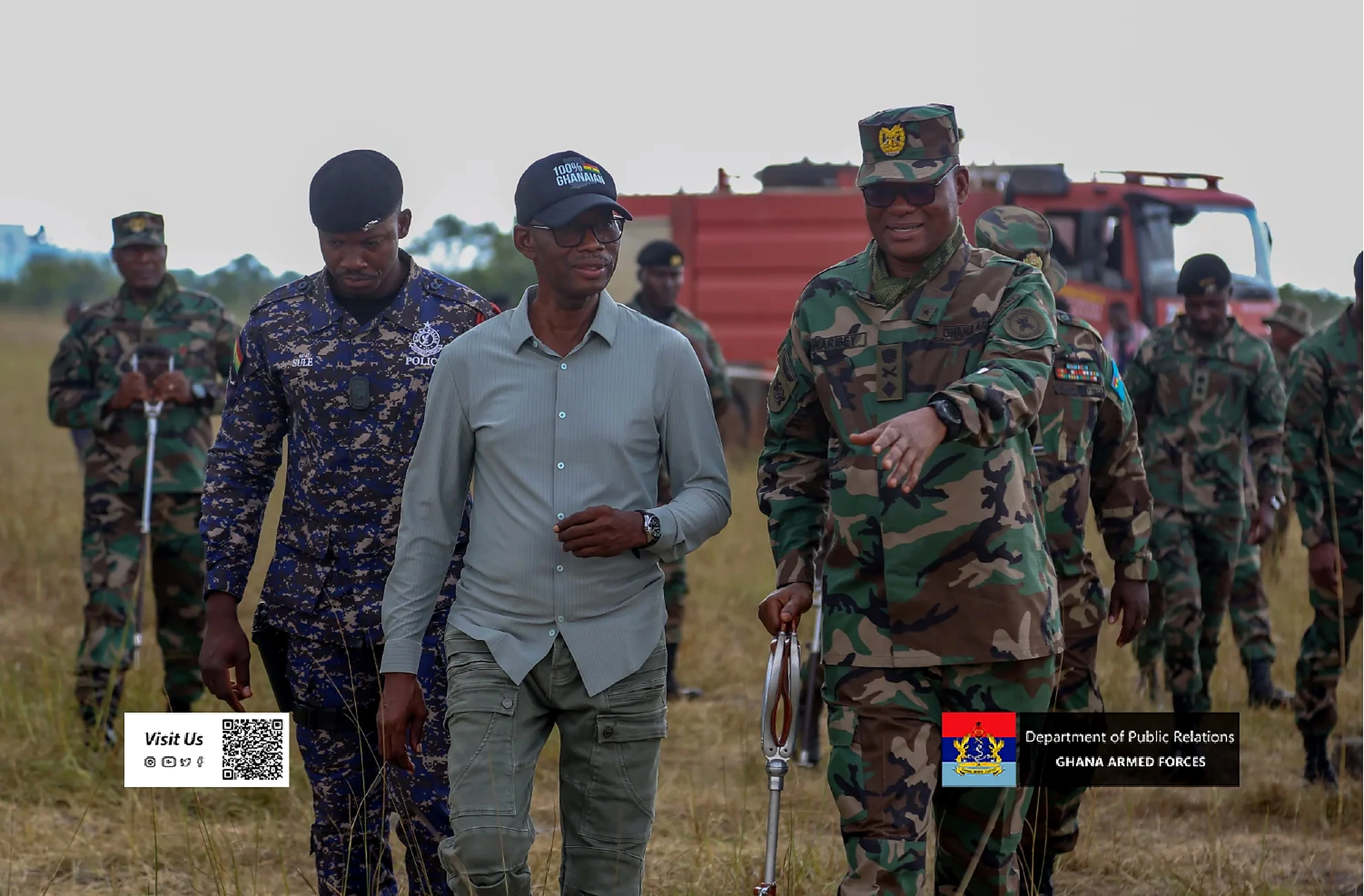
The guest of honour was Peter Lanchene Toobu, Member of Parliament for Wa West and Vice-Chairman of Parliament’s Defence and Interior Committee. The Chief of the Army Staff, Major General Lawrence Kwaku Gbetanu, the Chief of the Naval Staff, Rear Admiral Livinus Godwin Bessing, and international military attachés also attended. Toobu told the gathering that “the sovereignty of this nation, the defence of this nation, is in the hands of the Ghana Armed Forces”, adding: “Ghana is a no-go area.” He also stressed respect for civilian authority, saying mutual respect was essential to civil-military relations.
Brigadier General Edward Awaribey, General Officer Commanding Southern Command and Joint Task Force Commander for the exercise, said “this demonstration is not merely a training routine”. He said it showed how a battle group could coordinate defensive and offensive operations while integrating fire support and other combat assets, and pointed to emerging security threats in the West African sub-region. The GAF said the exercise ended without any reported casualties or damage.
Exercise Thunderbolt 2026
A month earlier, the Ghana Army ran Exercise Thunderbolt 2026, a four-day marksmanship and combat-readiness competition held from 28 September to 1 October at the Yawhimah Military Shooting Range in Sunyani, Bono Region, and hosted by 3 Infantry Battalion. Teams came from Southern Command, Northern Command, Central Command, Support Services Command, the Army Special Operations Brigade, 15 Armoured Brigade, 17 Army Signal Brigade, 16 Artillery Brigade and 14 Engineer Brigade, the Ghana Army said.
Competitors were tested with M16 rifles and carbines and pistols, and on falling-plate shooting. Southern Command was named overall winner. The competition also served to select the army’s shooting team for the Ghana Armed Forces Shooting Competition, Exercise Fire Blast 2026. Opening the event, Brigadier General Joshua Amanor, General Officer Commanding Central Command, told participants: “Compete hard but compete fairly. Seek not only to win but also to learn,” and warned that “we cannot be prepared when the crisis occurs,” MyJoyOnline reported. Bono Regional Minister Joseph Addai Akwaboah described the exercise as “an opportunity for participating formations to demonstrate and assess their firing capabilities.”
Resolute Synergy and Nkabom
At the strategic level, the GAF held Exercise Resolute Synergy 2026, a three-day operational-level joint tabletop exercise, from 25 to 27 August at the Great Minds Event Centre, Burma Camp, under the theme “Enhancing Preparedness through Joint Training”. Opened by the Chief of the Defence Staff, Lieutenant General William Agyapong, it tested strategic readiness, inter-agency coordination and decision-making across the land, maritime, air, cyber and information domains, including communications, command and control and resource sharing between the services and civilian defence staff, the GAF said. Official GAF updates described it as the first General Headquarters tabletop exercise of its kind in the CDS’s 36-year career, and the exercise was framed against regional volatility and the southward spread of extremist threats.
Agyapong asked evaluators for “honest assessments to help improve future training and operations”. The Director General Training, Brigadier General William Kwabiah, said success would depend on how well lessons learnt were built into training, doctrine, plans and future operations. Closing the exercise, Agyapong said lessons on resource management and deployment would be fed into future operational doctrine, the Ghana Air Force reported.
Before that, from 27 July to 5 August, students of the GAFCSC Senior Command and Staff Course (SCSC) 47 held Exercise Nkabom at Otu Barracks, Teshie. Nkabom is a joint, combined and multinational operational-level exercise built around an all-domain hybrid campaign and peace support operations, moving through shaping and deployment, intervention, stabilisation and withdrawal. This year’s scenario was set in a fictional “Zafran Archipelago” of four islands between Ghana’s coast and the Gulf of Guinea, the college said. Students in Joint Task Force and component headquarters appointments produced campaign plans, targeting, logistics and media plans and operational orders under directing staff and external controllers, and fronted simulated interviews and a press conference covering humanitarian concerns and rules of engagement. The exercise served as the capstone of SCSC 47’s study of campaign planning and operational art.
Military training for national service graduates
Beyond the regular force, the GAF has partnered with the National Service Authority (NSA) on a Basic Military Training Programme for national service personnel, aimed at instilling discipline, physical fitness and civic responsibility. Screening and medical examinations for pre-selected volunteers ran from 2 to 7 November 2026, including at Burma Camp, the Ghanaian Times reported. About 2,000 participants are being selected from more than 3,000 applicants for a four-week course covering basic drill, physical conditioning, weapon-handling basics, first aid and emergency preparedness. Participants are to receive priority consideration for future enlistment into the armed forces, and officials have floated making the training compulsory.
Preparing for threats from the north
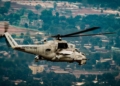
The exercises come as the GAF re-equips. Military Africa recently reported that the Ghana Armed Forces are retooling with new vehicles, ships and helicopters, and the army has deployed locally built drones to watch the northern border. Ghana has so far escaped the jihadist attacks that have spread from Burkina Faso into coastal neighbours such as Togo and Benin. The emphasis on joint fire support, inter-agency coordination and a larger reserve of trained young people points to a force preparing for that threat reaching its own territory.