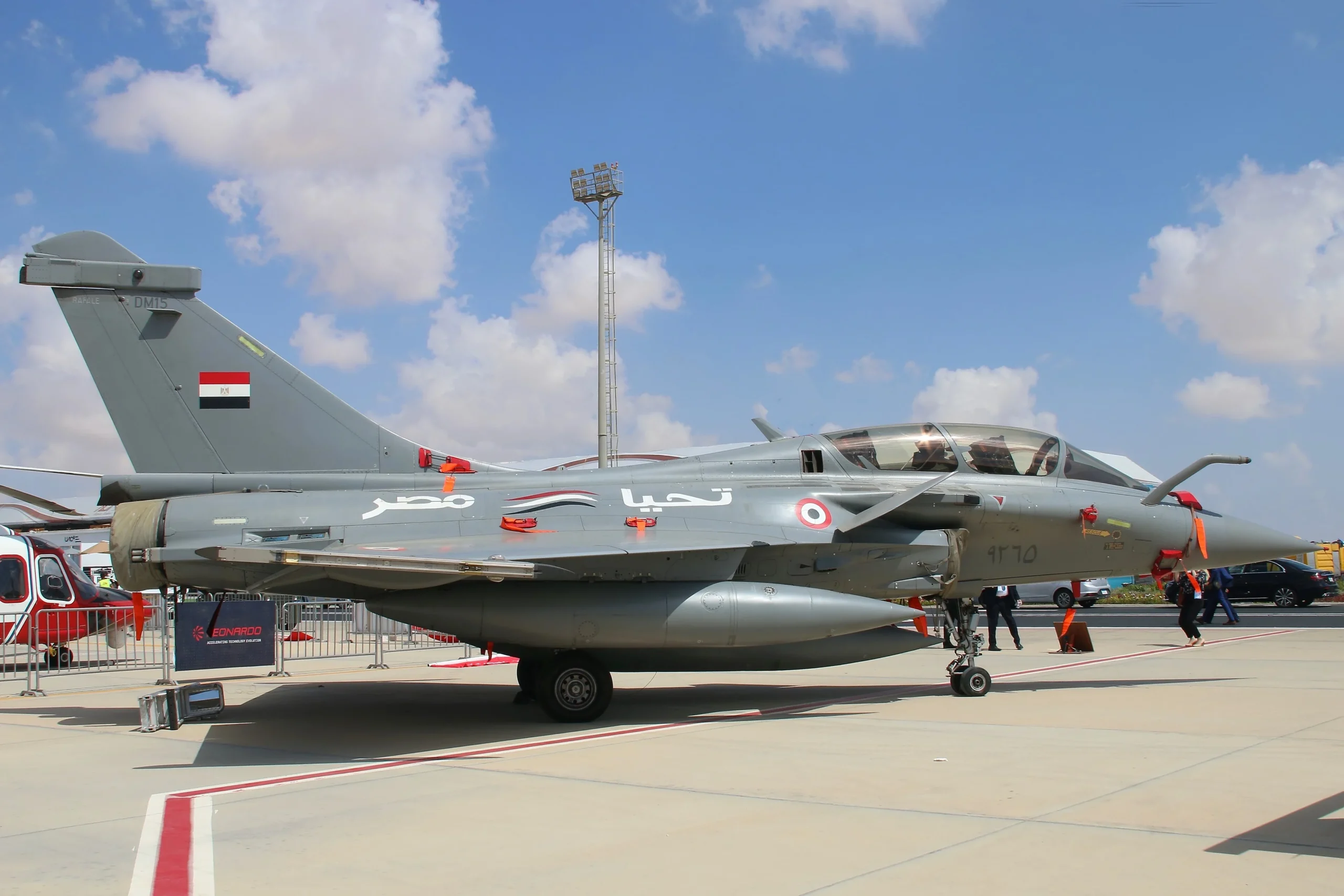
Egypt deployed a squadron of Rafale fighter jets, eight helicopters, four large transport aircraft and ground troops to Saudi Arabia months before President Abdel Fattah el-Sisi publicly pledged military support for the kingdom in October, Egyptian military sources have told Middle East Eye (MEE). The same sources say Cairo moved air defence systems to strategic positions at home and sent warships south towards the Bab al-Mandab Strait, while the country’s top commanders remain divided over whether Egyptian soldiers should ever fight on the ground in Yemen.
Foreign Minister Badr Abdelatty has since confirmed that Egyptian forces were in the kingdom before parliament authorised their use, turning what began as an anonymous account into an acknowledged operation. The disclosures come as Saudi Arabia absorbs a renewed campaign of missile and drone attacks from Yemen’s Houthi movement, and as regional powers from Cairo to Ankara and Islamabad weigh how far they will go to defend Riyadh.
What Egypt sent to the kingdom
An Egyptian military source, speaking on condition of anonymity because he was not authorised to talk to the media, told MEE that the deployment included a squadron of Dassault Rafale multirole fighters, eight helicopters and four large transport aircraft. He did not identify the helicopter types or the bases used. The Egyptian Air Force operates the Rafale with the 203rd Tactical Fighter Wing at Gebel El Basur and expects to field 54 of the jets by the end of 2026, after the second contract for 30 F3R-standard aircraft began delivering in late 2024, as Military Africa reported when Egypt took a new batch of Rafale F3R fighters in October 2025.
The source added that Egyptian Navy warships had moved towards the southern Red Sea, close to the Bab al-Mandab Strait, the narrow passage that joins the Red Sea to the Gulf of Aden and controls the southern approach to the Suez Canal. Cairo’s concern over the security of Red Sea shipping lanes and the threat from Houthi attacks in Yemen had been building for months. In August, Egypt reportedly increased its naval presence near the strait, with local media reports claiming that modern frigates and corvettes had been sent to the southern entrance of the Red Sea. Neither the reports nor MEE’s source named the ships, although the navy’s most capable surface combatants include its FREMM frigates and the German-built MEKO A-200EN frigates.
That naval build-up followed a drone attack on 29 July 2026 that hit an American regasification vessel anchored at the Mediterranean port of Damietta and spread fire to a nearby Greek gas storage tanker. No group claimed the strike, Iran and the Houthis denied involvement, and Cairo opened an inquiry without formally blaming anyone. A day later Egypt joined a 14-nation maritime defence alliance led by Saudi Arabia.
Hercules tracks over western Saudi Arabia
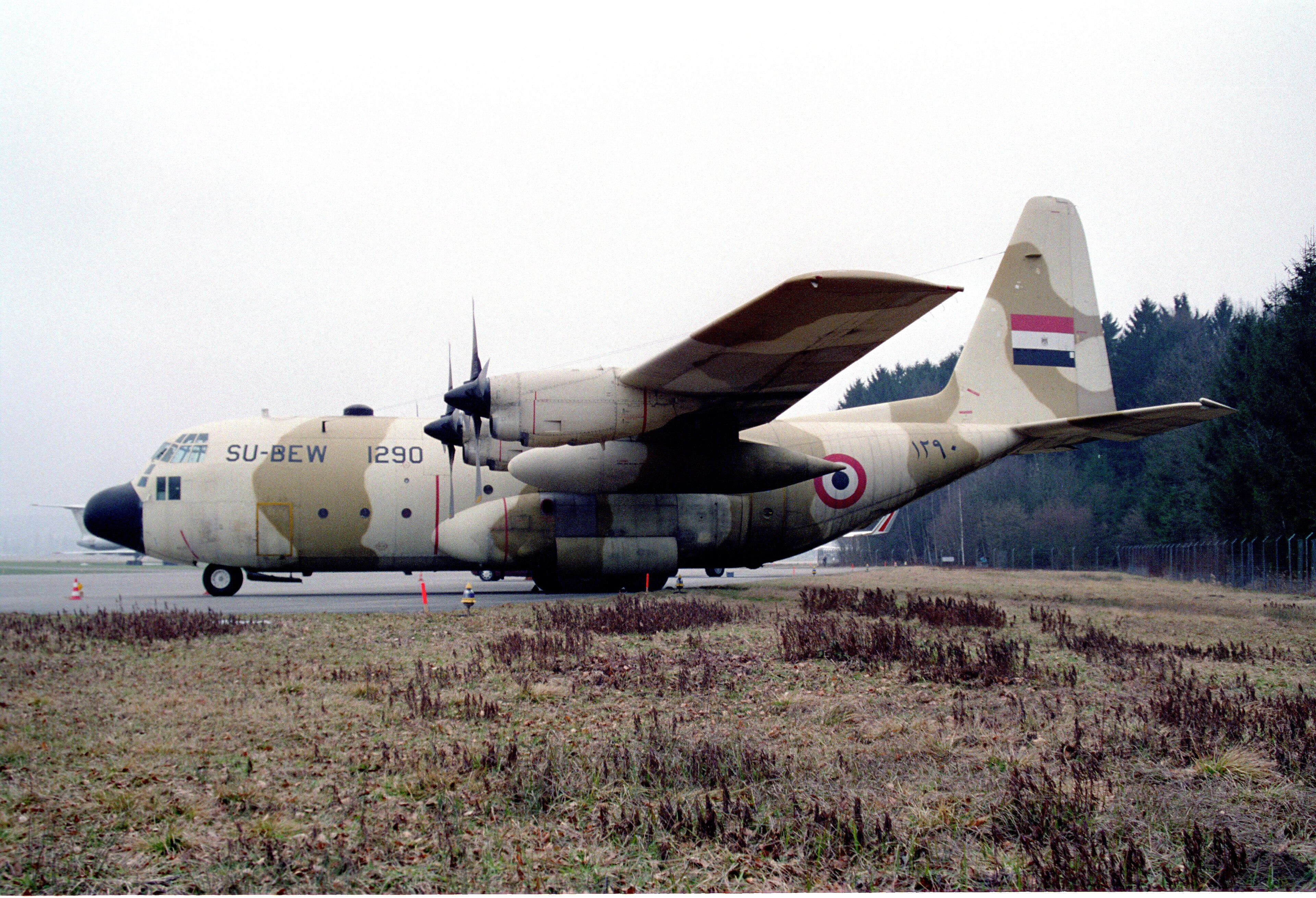
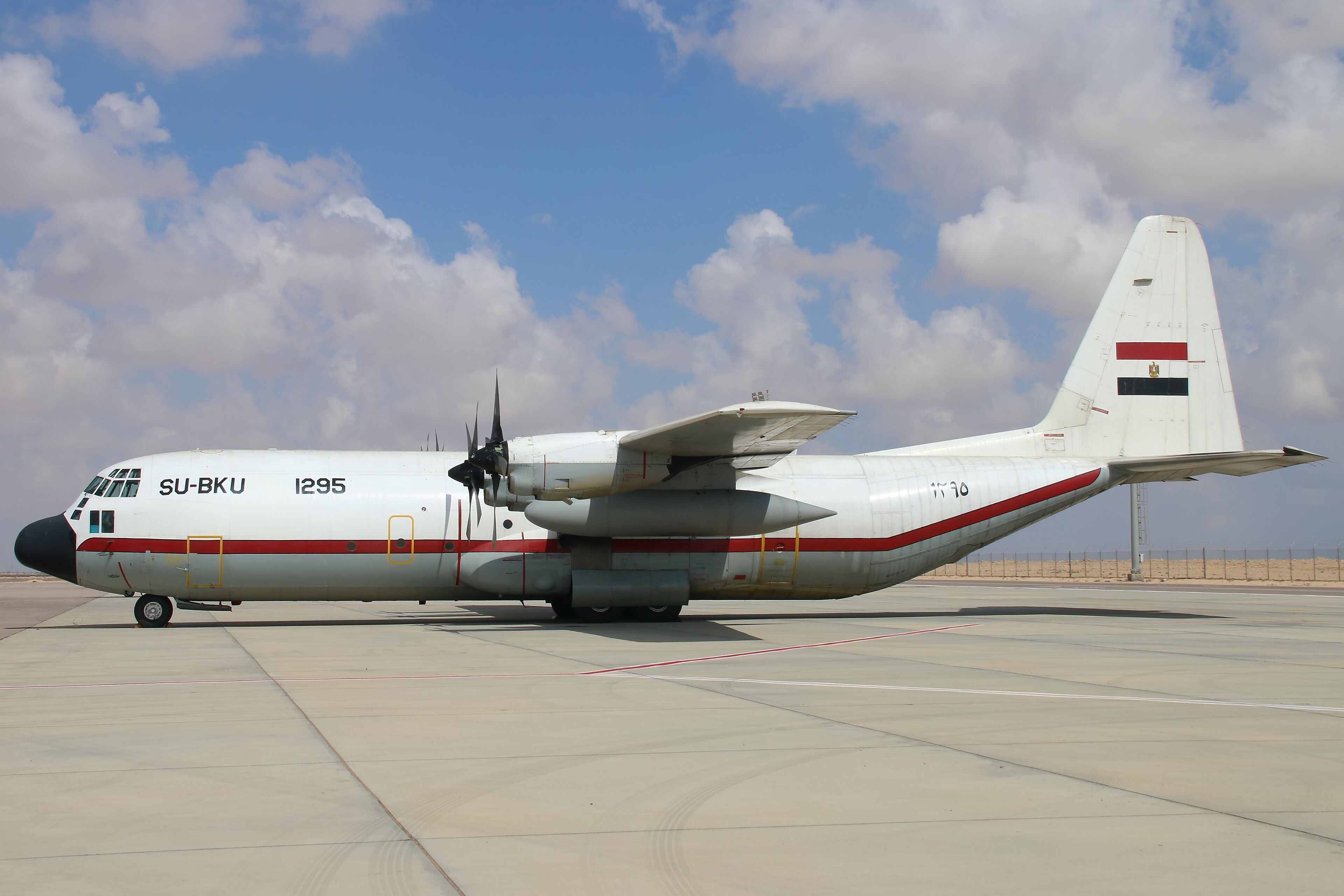
Open-source evidence had already pointed to Egyptian military flights into the kingdom. Al Jazeera Arabic’s open-source investigations unit reported in October that flight-tracking data had identified two Egyptian Air Force Lockheed C-130 Hercules transport aircraft operating in Saudi airspace. The aircraft, registered SU-BAI and SU-BEW, were tracked over western Saudi Arabia before their signals disappeared. One was later detected over north-western Saudi Arabia, and its signal vanished again while it flew towards the Red Sea coast near Al Wajh.
The C-130H has been the backbone of Egyptian military airlift since the late 1970s and can carry up to about 19 tonnes of cargo or more than 90 troops, which makes it the natural workhorse for moving personnel, munitions and spares to a detachment of fighters operating far from home. Transponders switched off over the kingdom suggest the flights were meant to stay out of public view, consistent with the sources’ account that Cairo kept the deployment quiet while planning continued.
Egypt has done this before. In May 2026, during the escalation with Iran, the United Arab Emirates (UAE) announced that a contingent of Egyptian Air Force Rafale F3R fighters had been deployed on its soil for the first time to help defend against Iranian drones and missiles. President Sisi inspected the detachment with Emirati President Mohamed bin Zayed during an unannounced visit to Abu Dhabi and declared that “what affects the Emirates affects Egypt”, according to Egyptian Streets.
Air defences repositioned at home
One of the military sources told MEE that Egypt had also repositioned several air defence systems, including Skyguard-Amoun batteries, to strategic locations in the east and south of the country. The Amoun is Egypt’s own configuration of the Skyguard short-range system, pairing the Swiss-designed Skyguard fire-control radar with twin 35 mm Oerlikon anti-aircraft guns and launchers for Sparrow surface-to-air missiles, a combination built to defeat low-flying aircraft, cruise missiles and drones at close range. It sits in the lower tier of a layered network that Egypt has thickened in recent years with the German IRIS-T SLM, the Chinese HQ-9B long-range system and Diehl SkyWolf high-power electromagnetic counter-drone systems.
The threat to Egyptian territory is not theoretical. In March 2025, a Houthi missile landed in Egypt after it failed to reach its target, and Egypt’s southern border is already the scene of a separate security operation, as Military Africa reported on the Southern Shield crackdown on the Sudan frontier.
“Security discussions and exchanges between the two countries had been ongoing since the fighting began, with the aim of agreeing on how military intervention and support would be carried out,” the source said. “While Egyptian-Saudi military cooperation had been agreed upon, the strategy, mechanisms and operational plans for intervention were still being discussed and coordinated to maintain Egypt’s national security,” he added.
Abdelatty confirms the deployment
On Monday 9 November, hours after MEE asked Egypt’s foreign ministry for comment, Foreign Minister Badr Abdelatty confirmed that the Egyptian military had been deployed to Saudi Arabia before Sisi obtained parliamentary approval. “Our presence there began a few months ago after the attacks and aggressions on Saudi Arabia during the escalation with Iran,” Abdelatty told France 24, adding that Cairo was now in the process of “strengthening” that deployment.
Speaking in Paris on the sidelines of a meeting of Group of Seven (G7) foreign ministers, Abdelatty described Egypt’s role as strictly defensive with a particular focus on air defence, and said the forces would help protect sensitive locations across the kingdom, including Islamic holy sites, according to Middle East Monitor. He also played down remarks by Mohammed Ali al-Houthi, a member of the Houthi Supreme Political Council, who had called Egypt’s decision a “declaration of war”. He gave no figures for the size of the force.
The public timeline began on 17 October, when Sisi used a graduation ceremony at the Egyptian Military Academy to ask parliament to authorise the deployment of Egyptian forces to defend Saudi Arabia if the kingdom requested it. The following day the National Defence Council, which the president chairs, announced that Egypt would provide all possible support to protect the kingdom’s security and territorial integrity.
Under Article 152 of Egypt’s constitution, the president must consult the National Defence Council and obtain the approval of two-thirds of the House of Representatives before sending the armed forces on a combat mission outside the country. Parliament held closed sessions on 18 and 19 October before reconvening on 26 October, when lawmakers approved Sisi’s request by a two-thirds majority in a roll-call vote behind closed doors, The National reported. No tally was published. The authorisation allows the president to take necessary measures, in coordination with the kingdom, to defend its territory against external aggression, but it has not publicly clarified the precise nature or extent of Egypt’s military commitment. Several legislators told AFP they had not received details of the size or scope of the deployment, and it remains unclear whether lawmakers knew troops were already in the kingdom when they voted. The Egyptian Social Democratic Party told its members to abstain, citing the economic cost and the risk of escalation.
Houthi strikes on the kingdom
The disclosures come as Saudi Arabia faces renewed missile and drone attacks by the Houthis, and the escalation is drawing regional powers into discussions over the kingdom’s defence. On Sunday 8 November, an administrative building of state oil company Saudi Aramco in Riyadh sustained minor damage from falling debris after an intercepted attack. No casualties were reported. Coalition spokesman Major General Turki al-Maliki said air defences destroyed several ballistic missiles, two aimed at Riyadh and one at the Eastern Province, according to Al Jazeera. Egypt was among the states that condemned the attack.
The incident followed a series of Houthi attacks on Saudi territory since a truce in Yemen collapsed in July, including strikes on strategic infrastructure such as airports and refineries, which prompted Riyadh to seek more military and diplomatic support from regional allies. A Houthi strike on Riyadh’s airport on 10 October killed at least 12 people, among them Azza Ramzy, a 28-year-old Egyptian flight attendant from Beheira province, a week before Sisi made his request to parliament. The Saudis have in turn escalated strikes against Houthi-controlled areas of Yemen, including the capital Sanaa, with dozens of casualties reported.
Divisions over ground intervention
A second senior Egyptian military official, also speaking on condition of anonymity, described sharp disagreements within the military leadership over the scope of any intervention, particularly whether Egyptian ground troops should take part in operations against the Houthis in northern Yemen. He said meetings involving Sisi, commanders from the different branches of the armed forces and members of the National Defence Council had been marked by disputes over the possibility of sending ground forces into Yemen.
“The meetings witnessed arguments over the deployment of ground troops in operations planned to take place in northern Yemen against the Houthis,” the official said. According to him, Sisi pushed for Egypt to join Saudi military operations, arguing that further delays were difficult to justify as attacks on the kingdom continued to escalate.
“Saudi Arabia had officially requested Egyptian military support in the current war. It was in Egypt’s security interests to take part in the operations to safeguard water security and protect the Red Sea and the Suez Canal,” the source said. “Saudi economic support for Egypt is also part of the objectives behind the Egyptian move,” he added. The claim of a formal request goes further than the public record: when parliament voted, Sisi had said Egypt would act only if Riyadh asked, and no formal Saudi request had been announced.
The source also pointed to Cairo’s financial relationship with Riyadh, which has become an important dimension of bilateral ties. On 30 October, Egyptian media outlets citing banking sources reported that Saudi Arabia had agreed to renew a $5.3bn deposit at the Central Bank of Egypt for another year, shortly before it was due to mature. The deposit forms part of wider Saudi financial support for an Egyptian economy under persistent pressure on its foreign currency reserves, pressure made worse by Houthi attacks on Red Sea shipping that have cut Suez Canal revenue. The renewal came less than two weeks after Sisi publicly pledged to defend Saudi Arabia, although there is no public evidence of a direct link between the financial arrangement and Cairo’s military decision.
The Mecca pact and a wider coalition
The debate over Egyptian ground troops also reflects wider regional efforts to strengthen Saudi Arabia’s defences. On 7 August, Saudi Arabia, Türkiye and Pakistan signed the Mecca Joint Defence Agreement, committing the three countries to treat an armed attack against any one of them as an attack against all. The 16-article pact runs for ten years and covers defence industry cooperation, joint training and the sharing of logistics and intelligence.
Türkiye’s parliament ratified the agreement on 5 November by 279 votes to 119, Al Jazeera reported, although ratification does not in itself establish that Turkish combat troops will be deployed to Yemen. The precise nature of any Turkish or Pakistani military contribution to Saudi Arabia has not been publicly established. Ankara’s ties with Cairo are also deepening on the naval side, as Türkiye now aims to build warships jointly with Egypt under its MILGEM programme.
Ground troops remain a red line
For now, Egypt’s publicly declared commitment is to support Saudi Arabia’s defence. Whether that could eventually extend to Egyptian ground forces entering Yemen remains unclear. The first military source who disclosed the deployments to MEE did not rule out Egyptian troops joining the fighting in its final phase, after air and naval operations had weakened the Houthis’ military capabilities.
“Egyptian ground intervention could take place as part of a multinational ground force, rather than through Egyptian troops alone, along the lines of what happened during the 1991 Gulf War,” the source said. Egypt sent about 35,000 troops to the United States-led coalition that drove Iraqi forces out of Kuwait in 1991, one of the largest Arab contingents in that war. He stressed, however, that “a ground war was not an option at present”.
“The current situation first required dealing with the Houthis’ command and control centres, missile and drone launch platforms, and air defence systems before any ground engagement or even consideration of a ground war,” he explained.
Over the previous month the Houthis had launched multiple cross-border raids against Saudi military positions, the first such incursions into Saudi territory since the ceasefire in Yemen collapsed. The small-scale raids targeted border posts in Saudi Arabia’s rugged, mountainous south-west, according to Arab and Western officials. Yemeni government forces also launched an operation in October to retake Houthi-held territory, including Sanaa.
The first source said a ground offensive could ultimately be avoided if air and naval operations succeeded in weakening the Houthis’ military infrastructure. “If the air and naval operations achieved major successes, a ground offensive could instead be carried out by Yemeni forces supporting the country’s internationally recognised government, without foreign ground troops,” he said. He estimated that the fighting could last four to six months before its outcome became clear, but cautioned that it could continue for longer depending on the scale of the air and naval campaign, the targets struck and whether the forces involved managed to neutralise Houthi air defences.
The second military official offered a markedly different account, saying commanders of the armed forces and members of the National Defence Council had agreed that Egypt should stay out of ground operations in Yemen.
The shadow of Nasser’s Yemen war
The disagreement is rooted partly in Egypt’s own experience of military intervention in Yemen. Under President Gamal Abdel Nasser, Egypt intervened in Yemen’s civil war in 1962, deploying tens of thousands of troops, as many as 70,000 at the peak, to support republican forces fighting royalists backed by Saudi Arabia. The campaign became a costly and protracted engagement for Cairo, with thousands of Egyptian soldiers killed in mountainous terrain that favoured the defenders. Nasser agreed to withdraw his forces at the Khartoum summit after the 1967 war with Israel, and the civil war ended in 1970.
Six decades later, the roles are reversed: Egyptian Rafales now stand alongside Saudi forces against an armed movement in northern Yemen. Cairo has shown with its detachments to the UAE and Saudi Arabia that it is willing to put fighters, transports and air defence crews forward to protect its Gulf partners and the sea lanes that feed the Suez Canal. Whether it will send infantry back into Yemen’s highlands depends on an argument inside Egypt’s own high command that, by both sources’ accounts, has not yet been settled. For more of Military Africa’s coverage, see our Egypt and Houthi pages, and our analysis of North Africa’s air arms race.