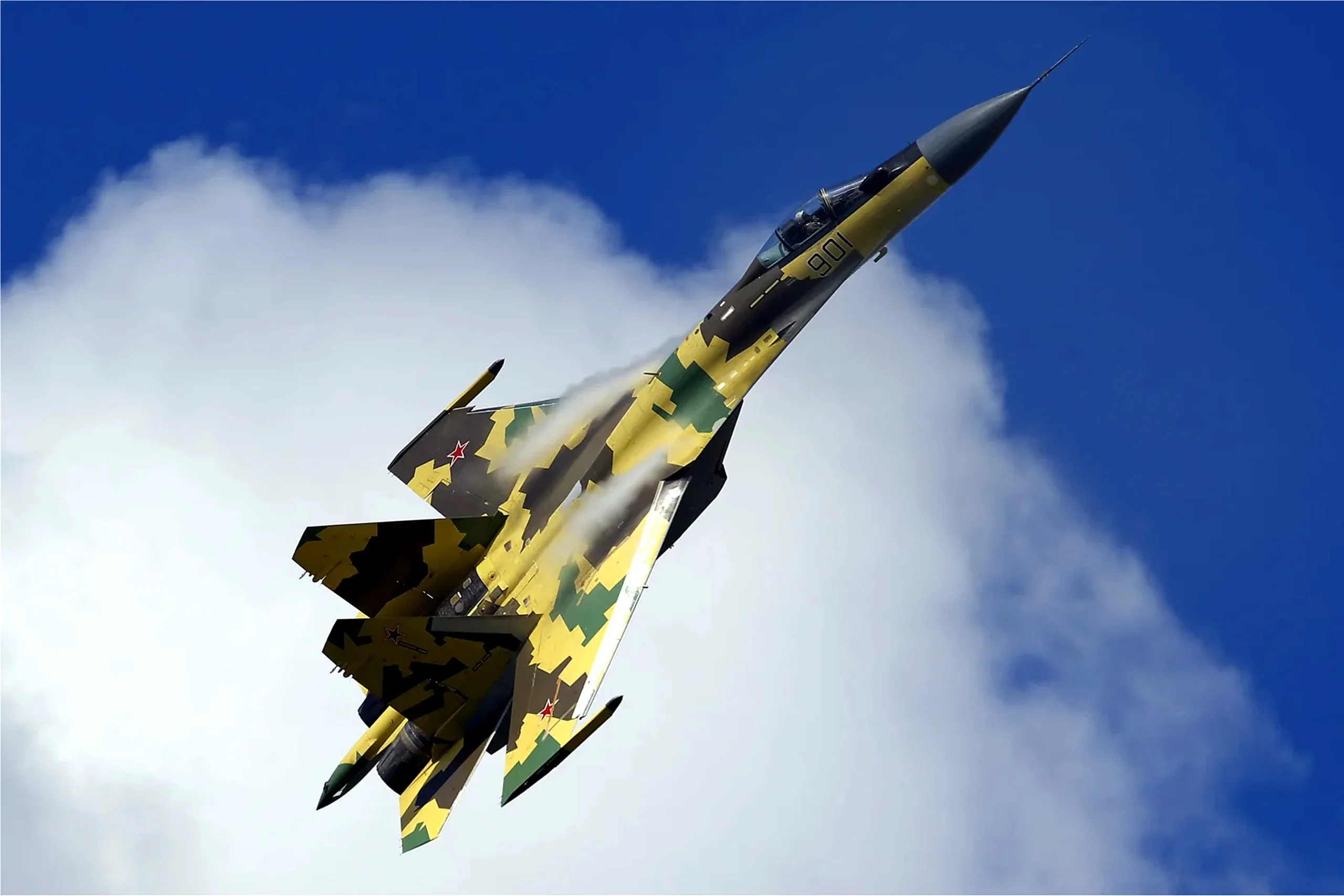
Russia is extending its military reach across Africa with headline deals such as Ethiopia’s purchase of 12 Sukhoi Su-35 fighters and four S-400 air defence batteries, but it is struggling to turn that reach into deliveries on the scale of its rivals, French business daily Les Echos reported on 8 November. Data from the Stockholm International Peace Research Institute (SIPRI) puts Russia’s share of Africa’s major arms imports at 15 per cent for 2021 to 2025, behind the United States and China.
Ethiopia’s Su-35s and S-400s
The most visible recent deal came during the third Russia-Africa Summit in Moscow. On 28 October, Ethiopian Prime Minister Abiy Ahmed announced that Ethiopia had taken delivery of its first twelve Su-35s, a year ahead of schedule, and that four S-400 batteries would follow, Al Jazeera reported. He thanked President Vladimir Putin for speeding up delivery and said the equipment would help Ethiopia “preemptively deter aggression”. No value, terms or arrival date for the S-400s were disclosed.
Even this deal shows the gap between announcement and delivery. The handover photographs showed Abiy beside two jets at Zhukovsky, outside Moscow, and Ecofin Agency reported that Russian arms exporter Rosoboronexport had confirmed only two aircraft so far of the twelve. Ethiopia becomes the second confirmed African Su-35 operator after Algeria, and the deal comes after Egypt’s earlier order for 24 Su-35s collapsed under the threat of United States sanctions.
Third place in Africa’s arms market
SIPRI’s latest figures show how far Russia has slipped. For 2021 to 2025, the United States supplied 19 per cent of Africa’s major arms imports, most of it to Morocco and Egypt, China 17 per cent and Russia 15 per cent. In sub-Saharan Africa China was the largest supplier at 22 per cent, ahead of Russia at 12 per cent and Türkiye at 11 per cent. For most of the past two decades Russia was Africa’s leading supplier, and the shift reflects both Western sanctions and the demands of its war in Ukraine, which absorbs much of its production of aircraft, missiles and ammunition.
SIPRI’s figures cover major weapons only, so they understate Russia’s role in small arms and light weapons. They also miss services that do not show up as arms transfers, such as the Africa Corps, the Russian Defence Ministry force that has taken over the former Wagner Group’s role in Mali, Burkina Faso and Niger.
Reach without volume
Moscow’s footprint is still wide. Algeria remains its biggest African customer, taking Su-34 strike aircraft and the Su-57E. Sudan has been reported as negotiating for Su-30 and Su-35 jets in a deal linked to a Red Sea naval facility. In Mali, an Orion drone was sighted over Bamako in June, and Russian forces there operate electronic warfare equipment. Uganda’s President Yoweri Museveni recently commissioned Russian-donated military facilities worth $53 million, and African officers attended Russia’s Center-2026 exercise. Rosoboronexport has put its African order book at about $4 billion.
The constraint is capacity. With its own forces consuming aircraft, spare parts and munitions, Russia has fewer systems to sell and less spare industrial capacity to support those already exported. The prospect of US sanctions under the Countering America’s Adversaries Through Sanctions Act (CAATSA) also weighs on buyers with ties to Washington, as Egypt’s cancelled Su-35 order showed.
Ethiopia’s deliveries as the test
Ethiopia’s order will be the clearest measure of what Russia can still deliver. How many of the twelve Su-35s reach Ethiopian bases, how quickly they are made operational, and when the four S-400 batteries arrive will show whether Moscow’s latest African deals translate into hardware on the ground. Meanwhile China, which SIPRI already ranks as the leading supplier to sub-Saharan Africa, is deepening defence ties with Addis Ababa too.