
Estonian intelligence software company SensusQ, now part of the German drone maker Quantum Systems, is working with governments in Africa to build national systems that bring all of a country’s sensor data together in one place, its chief executive Villiko Nurmoja told Military Africa at the Africa International Defence Exhibition (AFRIDEX) 2026 in Lagos. Nurmoja, who co-founded the company in 2020, described SensusQ as “the European flagship company in the area of intelligence fusion and sensor fusion.”
Speaking on the exhibition floor at Eko Atlantic, he said the company’s main project on the continent is supporting several governments with crisis management and embedded fusion. He would not name them. “I cannot disclose yet the governments we’re working with, but not far from here,” he said. “That will be very unique in Africa, where all the sensors in one country are coming together. It’s like a national fusion cell. That’s the technology we’re providing.”
Combining sensor data on one map
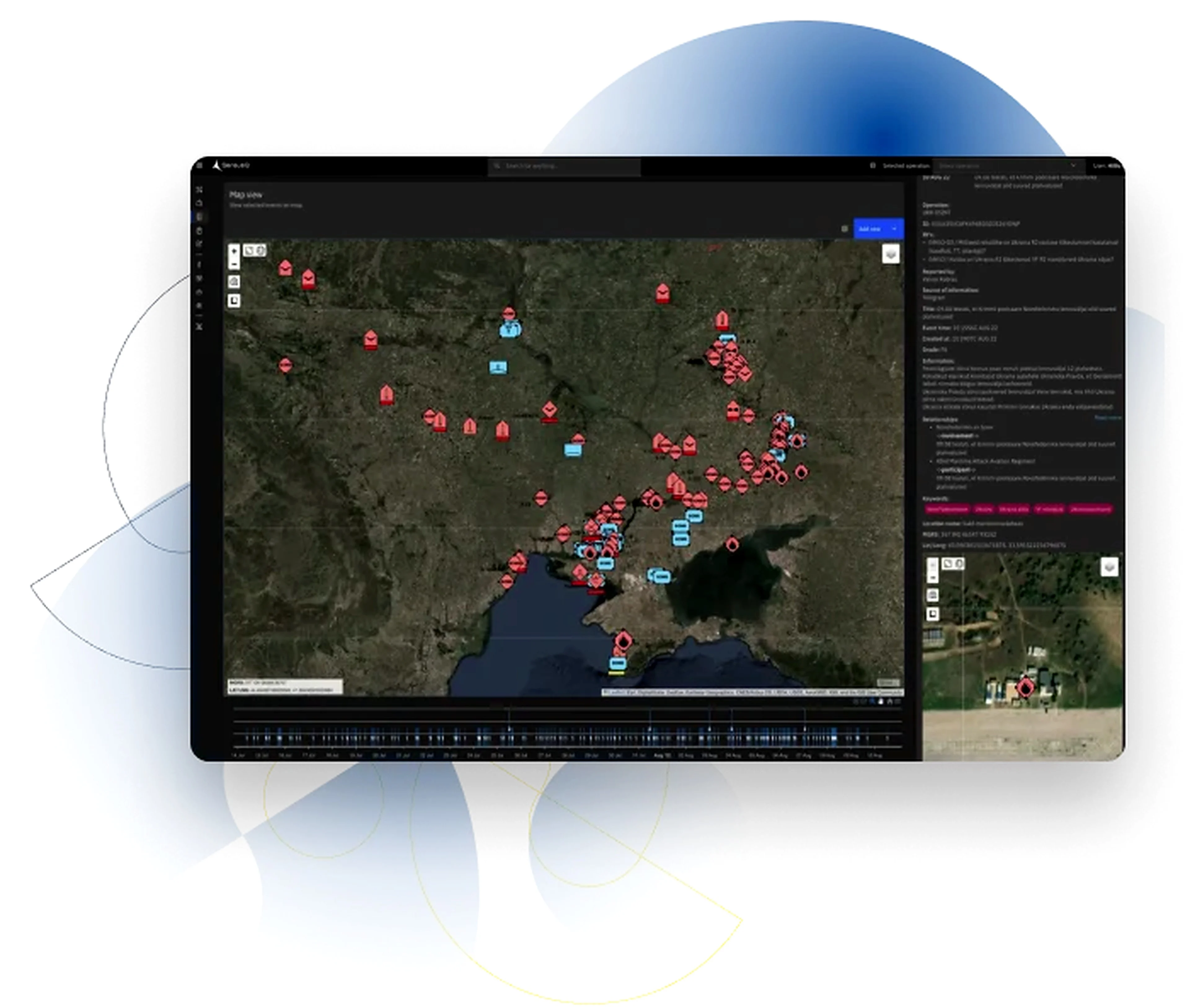
SensusQ’s product is an artificial intelligence (AI) powered system that pulls information from many sources into a single operating picture. “This AI powered system helps you to combine all the sensor data in one place, and you understand what is actually going on and how the situation comes together,” Nurmoja said. “We can take information from drone feeds, from different cameras, even from cell phones and radars, and we put the information together and display it on a map. So we know exactly what’s going on and where it is happening.”
The software is marketed as the SensusQ Intelligence Management Platform, and earlier versions were known as Winning Minds. According to the company’s website, it collects data from open sources such as Telegram channels, websites, email and RSS feeds, as well as spreadsheet imports and sensor inputs, and organises it by operation and intelligence requirement. Raw reports go into an operation log, where analysts group them into events, summarise them and link them to people, places, units or organisations. Events can be plotted on a map using standard North Atlantic Treaty Organization (NATO) military symbols, viewed on a timeline and turned into standard reports, with AI tools that summarise the underlying data. Access is controlled by role, with an activity history for every user.
Nurmoja said the platform also maps relationships. “We have integrated different components here. We see how different identities are connected to each other, and that helps you to investigate things as well as to find the right targets to execute,” he said. This kind of link analysis, which traces the connections between people, phones, vehicles and locations, is a core tool in counter-insurgency and counter-terrorism intelligence, where the aim is to map a network rather than react to single incidents.
SensusQ says the platform can help plan and conduct military operations 30% faster. In a 2024 interview with Army Technology, chief strategy officer Erik Kannike said it offers an open application programming interface (API), integrates with existing camera systems and runs on the customer’s own premises, so sensitive data stays under national control. He named Palantir and Helsing as the company’s main competitors.
From the battlefield to missing persons
Nurmoja said the system is not built only for armies. Asked whether it could be used to find a missing person or track an individual, he said: “Absolutely, that’s one of the use cases, because the platform is not only for the military and law enforcement, but also for national resilience and crisis management. If somebody is missing, you have the data here, you can add the picture, and the AI recognises the picture and understands where this person has been recognised before.”
That civil and security mix is visible in the company’s customer list. SensusQ’s early backer Startup Wise Guys names the Estonian Ministry of Defence and the Ministry of Defence of Ukraine as customers, and Army Technology reported that the platform has been deployed with Ukrainian border guards and used by the Estonian Defence League. The company says it supported the Estonian Police during the Song and Dance Celebration in Tallinn, one of the country’s largest public events, where it reported a threefold efficiency gain. It also contributed intelligence fusion work to the British Army’s Project ASGARD, which aims to bring data sources together into a common intelligence picture.
A national fusion cell for Africa
For African governments, the national fusion cell Nurmoja described addresses a familiar problem. Armed forces, police, intelligence services, border agencies and emergency services across the continent often run their own surveillance aircraft, drones, cameras and radars, but the data rarely reaches a shared picture in time to act on it. Insurgent and criminal networks in the Lake Chad Basin, the Sahel and the Gulf of Guinea exploit those seams between agencies and borders.
The same theme ran through AFRIDEX. Officers and industry at the exhibition’s Technical Theatre discussed regional collaboration and information sharing, while Turkish firm HAVELSAN and Nigeria’s Defence Industries Corporation of Nigeria (DICON) signed a cooperation agreement covering command, control, communications, computers, intelligence, surveillance and reconnaissance (C4ISR). A Kenya Defence Forces delegation toured the show looking at drones, counter-drone and cyber defence systems. As African forces add more drones and sensors, including locally built platforms such as the ADX-Barra 200 unmanned surface vessel unveiled at AFRIDEX, the software that turns their output into usable intelligence becomes as important as the sensors themselves.
SensusQ’s on-premises design is likely to matter to African buyers. Governments building a national fusion cell will want the data, much of it sensitive personal information, to stay on servers they control rather than in a foreign cloud.
Joining Quantum Systems
Nurmoja said the past year’s main achievement was the acquisition. “The main achievement for the last year is actually that our product was recognised. One of the leading European defence primes, Quantum Systems, acquired our company this summer, and that’s a very, very big thing,” he said.
Resilience Media first reported the deal on 15 May 2026, and Quantum Systems announced it formally in July alongside a new office in Tallinn, its second base on NATO’s eastern flank after Lithuania. According to European Security & Defence, SensusQ will become part of Quantum Systems’ in-house software capability and strengthen its intelligence, surveillance and reconnaissance (ISR) and analytics offering. No price was disclosed. “Estonia has built an exceptional reputation for engineering excellence, software innovation, and defence technology,” said Martin Karkour, Quantum Systems’ chief revenue officer.
Quantum Systems, founded in 2015 in Gilching near Munich by former Bundeswehr helicopter pilot Florian Seibel, builds the Vector and Twister reconnaissance drones and the Trinity mapping drone, all of which take off and land vertically. Hundreds of Vector systems have been supplied to Ukraine, and the company announced a 1.2 billion US dollar Series D funding round on 2 July 2026 to scale up production, expand internationally and invest in software, AI and autonomy. Buying SensusQ gives it the software layer that turns what its drones see into intelligence, so it can sell sensors, platforms and analysis as one package. SensusQ’s chief strategy officer Erik Kannike told Resilience Media that the combination is “bigger than the sum of its parts” and that the company’s Estonian operations and staff would stay.
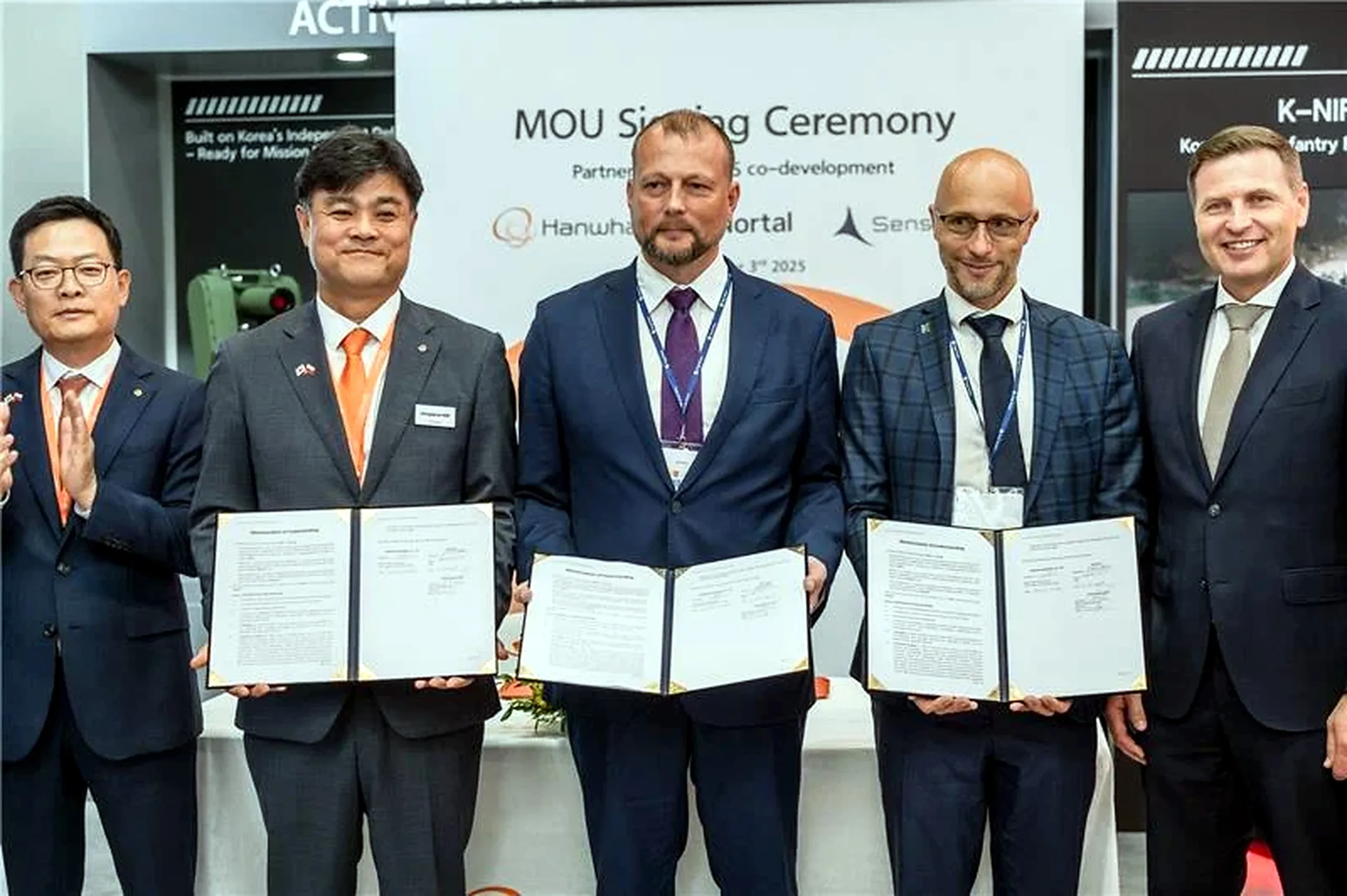
Before the acquisition, SensusQ had built a network of partners. In March 2025 it teamed up with Estonian technology firm Nortal to offer interoperable intelligence software to defence, public safety and corporate customers, and in September 2025 Hanwha Aerospace, Nortal and SensusQ signed a memorandum of understanding at the MSPO defence exhibition in Poland to co-develop a battle management system.
Weekly releases and close customer work
Asked about upcoming launches or partnership announcements, Nurmoja said the company releases new features constantly. “Our company is so agile that we pretty much launch something every week. Something always comes up, because it’s software and we continue developing it,” he said.
He said development and customer support keep the company busy. “Development gives us the unique approach, bringing all the technologies together, but also working very, very closely with the customers to learn from them and to understand how to make things better for them,” he said.
The road to the acquisition was not smooth. Resilience Media reported that SensusQ sought legal protection from bankruptcy in Estonia earlier in 2026 and restructured before the Quantum Systems deal. Nurmoja put the company’s resilience down to where it comes from. “We continue pushing. We are Estonians from the very high north, and we know exactly what hard things are, like winter,” he said. “Therefore, it is our habit to push very hard in anything we do.”
Estonian software for African command centres
SensusQ’s appearance in Lagos shows that Quantum Systems sees Africa as a market for more than drones. Estonia built its reputation on digital government and cyber defence, and SensusQ’s founders, military veterans with service in Iraq and Afghanistan, have tested their platform in Ukraine and with NATO allies. The next test is whether an unnamed African government near Nigeria will become the first on the continent to run a full national fusion cell built on it, and whether that model of sharing data across agencies spreads to other states facing insurgency, border crime and crisis response.