
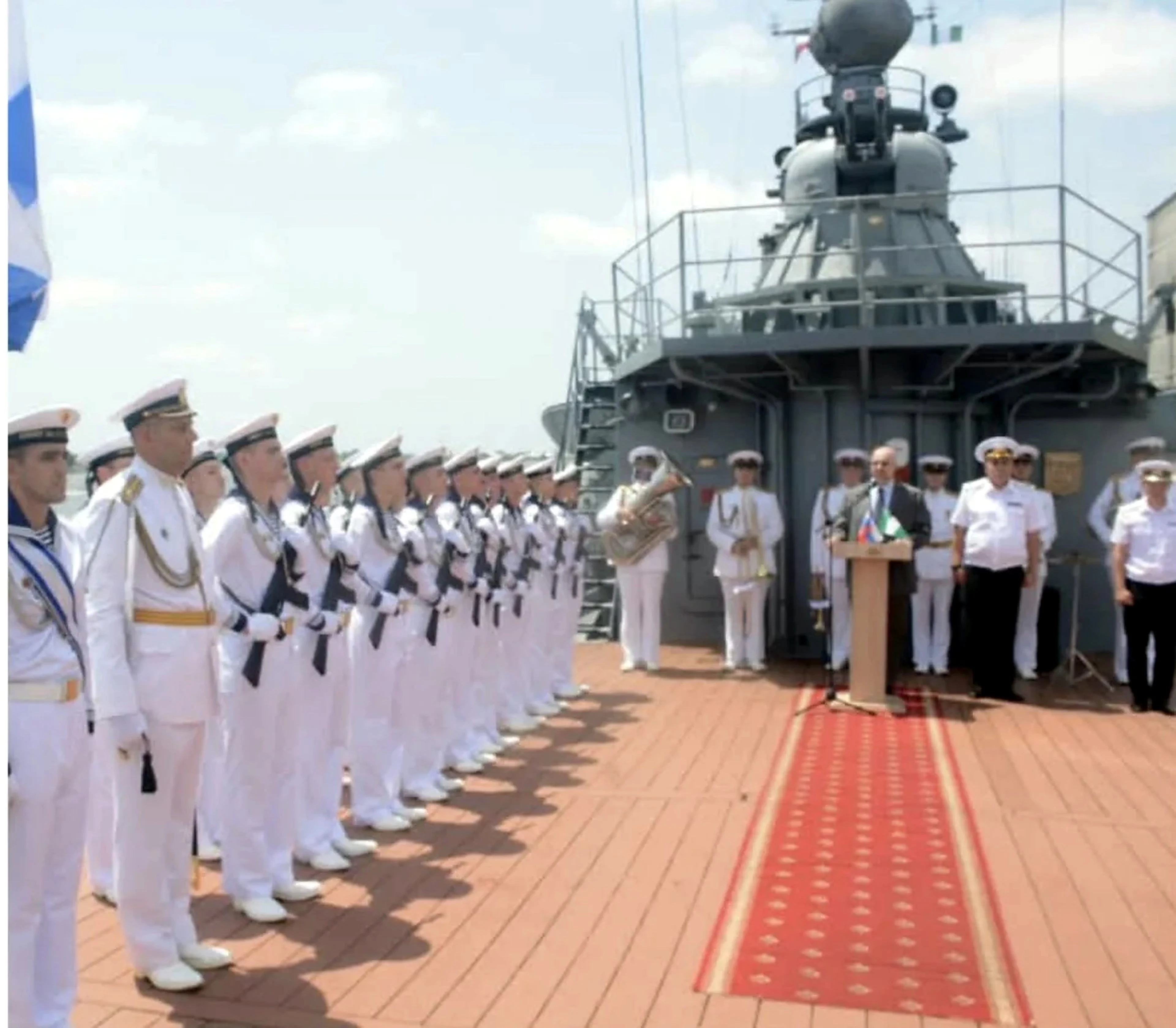
The Russian Navy’s Baltic Fleet training ship Perekop has docked in Lagos, Nigeria, as part of a long-distance training and cooperation voyage, the fleet’s press service announced on Saturday, 7 November 2026. The Smolnyy-class vessel reached the Nigerian port after a short passage from Douala in Cameroon, and the call extends a West and Southern African leg that Military Africa followed when the ship called at Walvis Bay in Namibia in October.
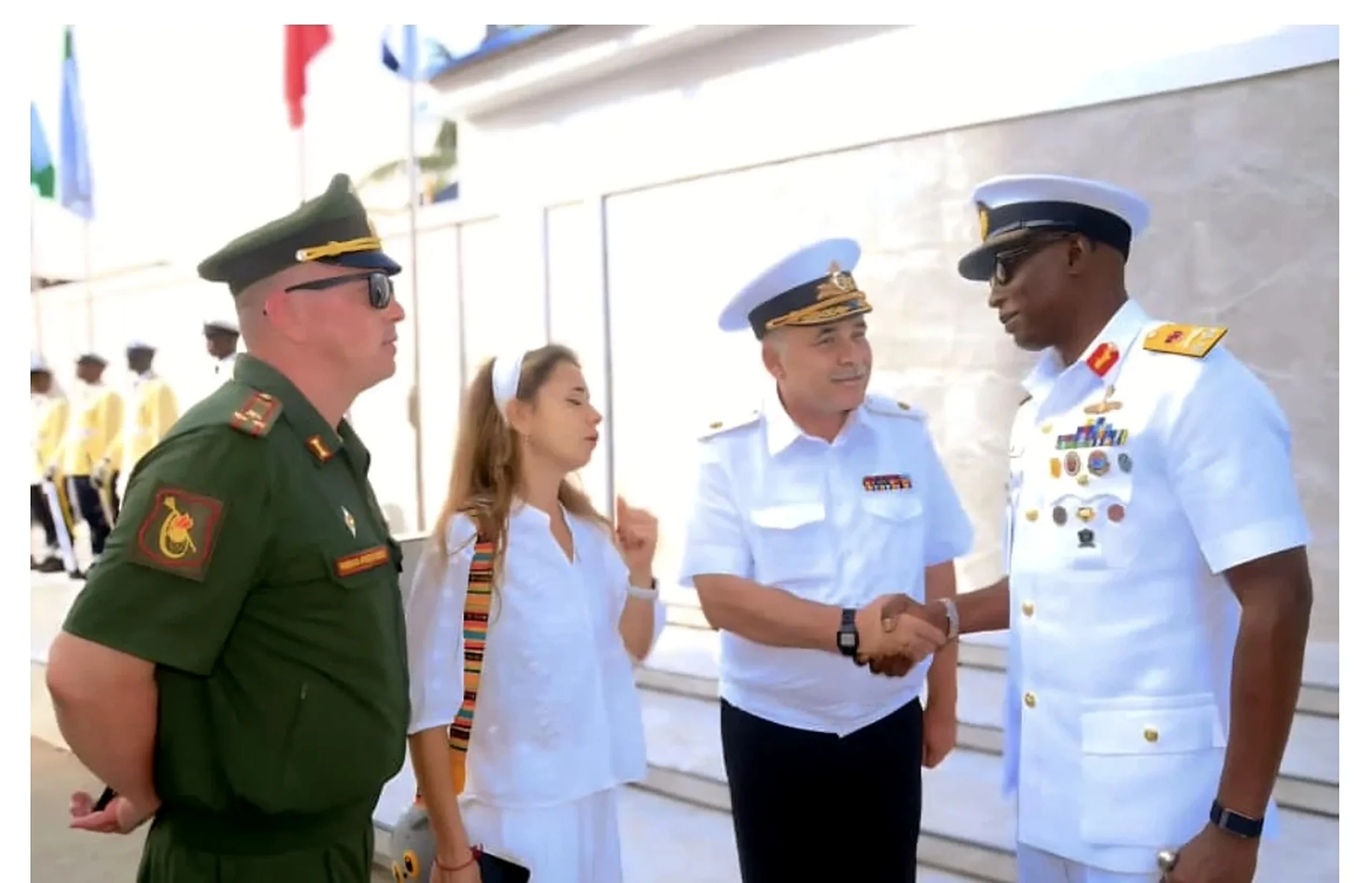
Russia’s Chargé d’Affaires in Nigeria, Igor Ivannikov, and the Russian military attaché attended a welcoming ceremony at the port, together with representatives of the Nigerian Navy command, according to the Baltic Fleet statement carried by Interfax and TASS. At the close of the ceremony, the expedition commander, Rear Admiral Vyacheslav Sytnik, signed the ship’s book of honoured visitors.
Talks at Western Naval Command
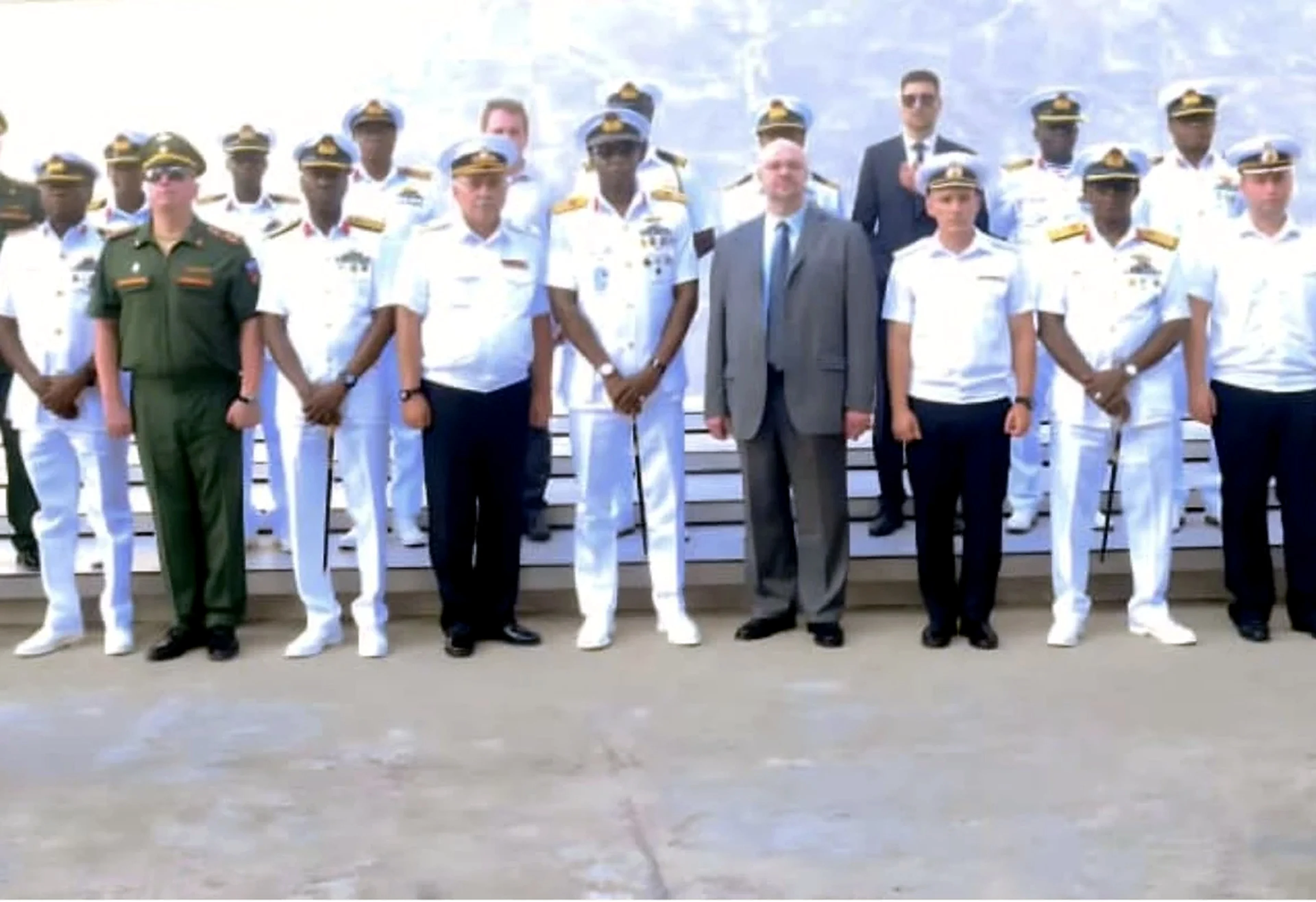
Sytnik and Ivannikov then met Rear Admiral Abubakar Abdullahi Mustapha, Flag Officer Commanding (FOC) of the Nigerian Navy’s Western Naval Command (WNC), at the command’s headquarters in Apapa, Lagos, to discuss bilateral naval cooperation. Mustapha received the Russian delegation on behalf of the Chief of the Naval Staff, Vice Admiral Idi Abbas, The Spye News reported. He is the 46th officer to lead the command, having taken over from Rear Admiral Mike Oamen in November 2025, according to ThisDay.
Mustapha told the visitors that port calls of this kind deepen professional contact between navies, allow them to exchange operational experience and strengthen relations between the Nigerian and Russian navies. He added that visits by foreign training ships give young Nigerian naval officers practical exposure to international training methods. Sytnik thanked the Nigerian Navy for its reception and said the Russian side wished to explore joint training activities with Nigerian personnel while Perekop remains in Lagos. The talks covered naval training, professional development and maritime security.
Damage Control, Football and Shore Visits
The programme for the Lagos stop mirrors those of the voyage’s earlier African calls. Nigerian Navy personnel are touring the ship and watching demonstration exercises in damage control and ship survivability, the drills that train a crew to contain fire, flooding and hull damage and keep a stricken vessel afloat and fighting. A friendly football match between Russian and Nigerian sailors is also on the programme, alongside sightseeing for the crew and cadets and official exchanges ashore.
The same format was used further south. In Pointe-Noire, the crew ran damage-control and first-aid demonstrations for Republic of the Congo Navy personnel, TASS reported. In Douala, the ship’s command held talks with Cameroonian military and civil officials, and cadets played football and volleyball against Cameroonian sailors, according to the Russian Ministry of Defence. As it left Douala, the crew practised joint manoeuvres with the Cameroonian patrol boat P-108, TASS reported on 6 November. Cameroon is itself expanding its small-boat fleet and is due to receive a Metal Shark 38 Defiant patrol boat from the United States.
Russian and African Cadets on Board
Cadets from the Admiral F.F. Ushakov Baltic Naval Institute in Kaliningrad are completing navigation training on board, alongside servicemen from Namibia and the Republic of the Congo who are studying naval science in Russia, the Baltic Fleet said on arrival in Lagos. Four Namibian cadets joined at Walvis Bay, and twelve Congolese cadets boarded at Pointe-Noire, according to TASS. The Ministry of Defence also said several Cameroonian cadets would stay aboard after Douala to continue their navigation practice. Earlier in the voyage, 13 Tanzanian cadets who train in Russia completed their shipboard practice and left the ship at Dar es Salaam.
Cadets on Perekop stand watch as officers of the watch and their deputies, plot courses with navigation instruments and practise passages through straits and narrow channels. The ship carries dedicated classrooms, an astronomical observation deck for celestial navigation, a damage-control training compartment and six-oared boats for seamanship drills.
A 49-Year-Old Ship on a Four-Ocean Route
Perekop (pennant number 310) is the second of the Project 887 Smolnyy-class training ships built for the Soviet Navy at the Szczecin shipyard in Poland. It was launched on 11 December 1976 and entered service in 1977. The ship displaces about 7,270 tonnes at full load and measures 138 metres in length, with a beam of 17 metres and a draught of 5.5 metres, according to the Russian Ministry of Defence. It reaches 20 knots and has a range of about 9,000 nautical miles at 14 knots. Besides its own crew, it can carry around 30 instructors and up to 300 cadets.
The ship keeps the armament of a 1970s Soviet escort: two twin 76mm gun mounts, two twin 30mm anti-aircraft guns and an RBU-2500 anti-submarine rocket launcher, backed by air search radar and a hull-mounted sonar. Its sister ship Smolny made similar African tours in 2024 and 2025, including calls at Cape Town, a return to South Africa and Dar es Salaam.
The current expedition began in early July and is due to last until mid-December. The route of about 30,000 nautical miles runs along Russia’s Northern Sea Route and through four oceans, 14 seas, 23 straits and nine bays, according to the Russian Ministry of Defence. In Africa, Perekop has already called at Victoria in Seychelles, Dar es Salaam in Tanzania, Maputo in Mozambique, Walvis Bay, Pointe-Noire and Douala before Lagos. The Baltic Fleet said in September that cadets from Guinea were also expected to board during the voyage, which points to at least one further West African call, although no port has been announced.
Lagos and the Competition for Gulf of Guinea Partners
Lagos is a regular stop for foreign navies seeking ties with Nigeria, whose fleet is one of the largest in Africa and whose waters sit at the centre of Gulf of Guinea maritime security. A Chinese task group led by the destroyer Nanning berthed in Lagos in July 2023, and the Portuguese Navy opened the Coastal Grip II exercise with the Nigerian Navy at NNS Beecroft in Apapa in September 2026. Weeks before Perekop arrived, Lagos also hosted the first Africa International Defence Exhibition (AFRIDEX) at Eko Atlantic, the waterfront where the Nigerian Navy staged its 70th anniversary International Fleet Review in June.
Perekop is the first Russian naval port call in Lagos recorded by Military Africa. It comes as Moscow widens its military contacts across the continent, from African defence officials attending the Center-2026 exercise in the Urals to military-technical cooperation agreements with several states, including the one Nigeria signed with Russia in August 2021. Nigeria’s naval training and procurement ties, however, lean mainly towards Western, Asian and Turkish partners, and Türkiye has become a rising supplier to West Africa, as SIPRI data shows.
From Apapa Handshakes to Joint Training
The more lasting test of the visit lies in Sytnik’s offer of joint training. Namibia, the Republic of the Congo, Cameroon and Tanzania already send officer candidates to Russian naval schools, and their cadets have used Perekop as a floating classroom on this voyage. Nigeria has no cadets aboard, and neither navy has announced a training agreement or a follow-on exercise. Whether the damage-control demonstrations and football in Apapa lead to Nigerian cadets joining a future Russian training cruise, or remain a courtesy call on a crowded diplomatic calendar, will show how far Abuja intends to broaden its naval partnerships beyond its established partners.