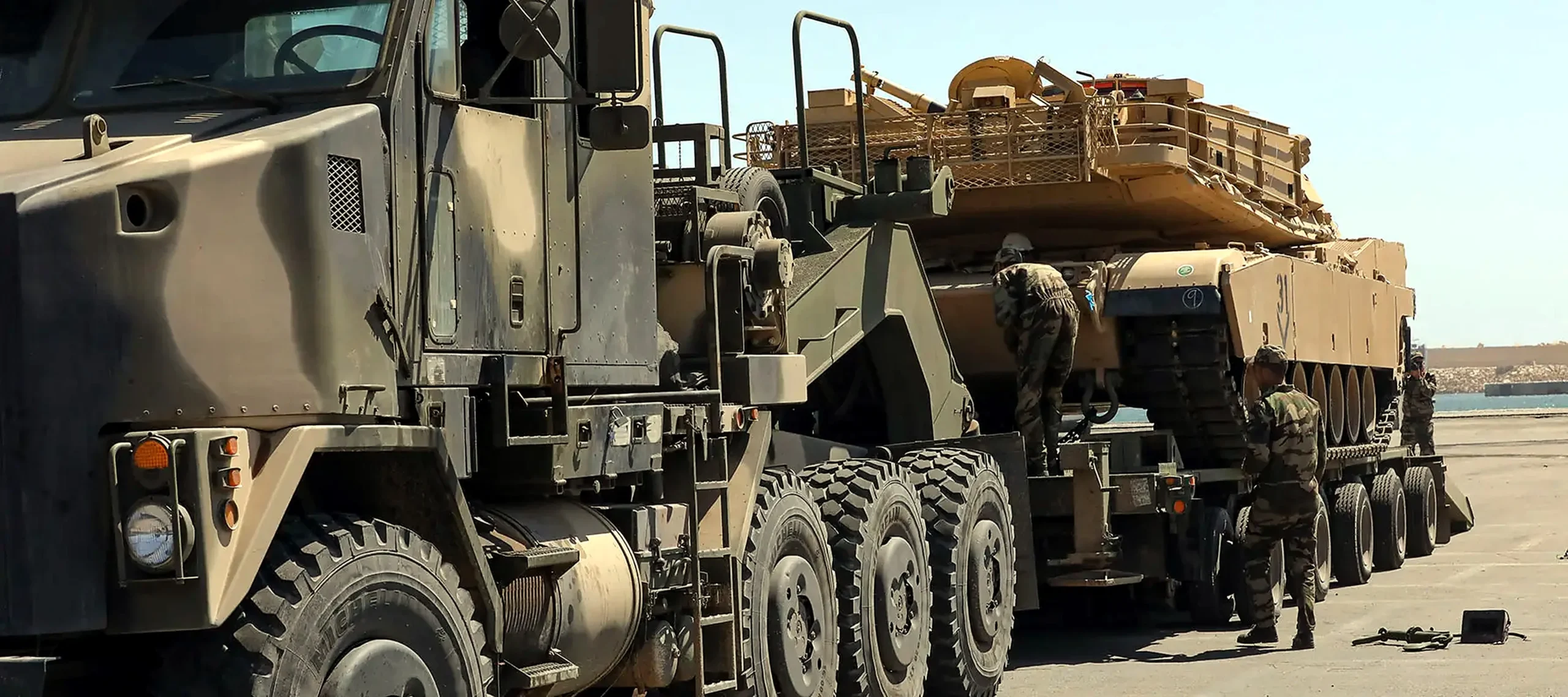
Oshkosh Defense has received a second direct order to supply military trucks to the Royal Moroccan Armed Forces, covering 50 Heavy Equipment Transporter (HET) A1 tractors and 50 MN573 heavy-duty trailers, the American manufacturer announced on 5 October 2026. The follow-on package was placed through Optimum Vehicle Logistics, Oshkosh’s local industry partner and exclusive distributor in Morocco, under a Direct Commercial Sales (DCS) arrangement, meaning it was negotiated between the companies and the customer rather than through the US government’s Foreign Military Sales system.
The MN573 trailers are designed and built in partnership with Dutch specialty vehicle manufacturer Broshuis BV and use its PL2 pendular axle system. The order also includes parts, services and training. Neither Oshkosh nor Rabat has disclosed its value or a delivery schedule, Morocco World News reported.
Building on the 2024 contract
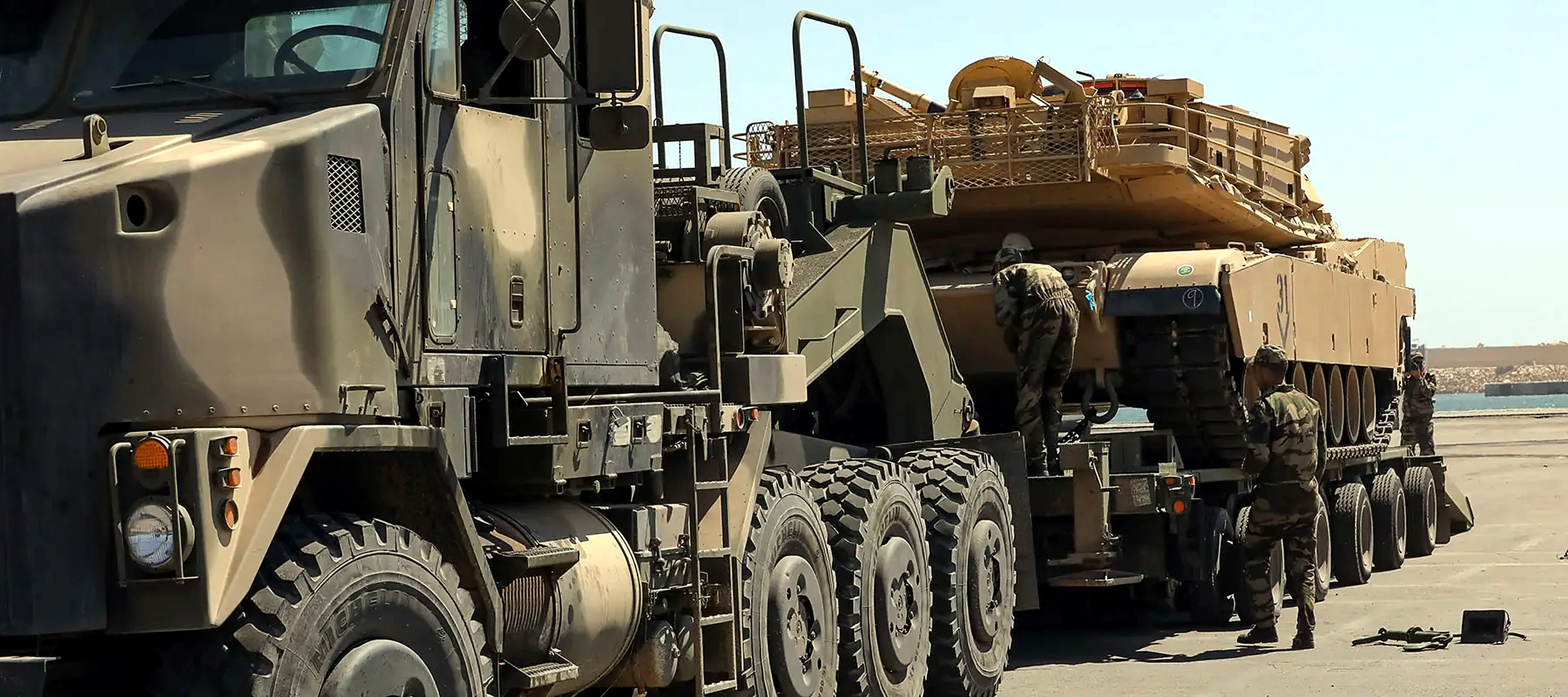
The procurement builds on Rabat’s initial contract in 2024 for an undisclosed number of HET A1 tractors and 635NL trailers, which Military Africa reported at the time. That order supports Morocco’s goals to upgrade its military’s cross-theatre logistics, sustain its armoured formations and reinforce overall operational readiness. Deliveries were expected to begin in summer 2025, and Oshkosh now says the vehicles from that batch have been delivered to the North African country and fielded.
“Working alongside Optimum Vehicle Logistics, our exclusive distributor in the Kingdom of Morocco, Oshkosh Defense is advancing Morocco’s modernization objectives through the delivery of heavy tactical wheeled vehicles,” said Pat Williams, Chief Programs Officer at Oshkosh Defense. “This additional order reflects the growing demand for our mission-ready, performance-proven mobility solutions designed to meet evolving requirements quickly and effectively.”
The HET A1 truck
Oshkosh’s HET A1 is designed to carry heavy-class tactical vehicles, including main battle tanks, recovery vehicles and self-propelled artillery, and handles line haul, local haul and the evacuation of damaged equipment for maintenance. It is the export version of the tractor the US Army designates M1070, which is paired with the M1000 semi-trailer to move Abrams tanks.
Its cab seats up to six people and has air conditioning as well as modular crew protection. The truck is powered by a 700-horsepower Caterpillar C18 engine driving an Allison 4800SP transmission through a single-speed Oshkosh 30000 Series transfer case, and is fitted with two winches that can each pull up to 55,000 pounds (24,948 kilogrammes). The winches allow a crew to recover disabled vehicles onto the trailer without a separate recovery vehicle, according to Oshkosh’s specifications.
Moving Morocco’s Abrams fleet
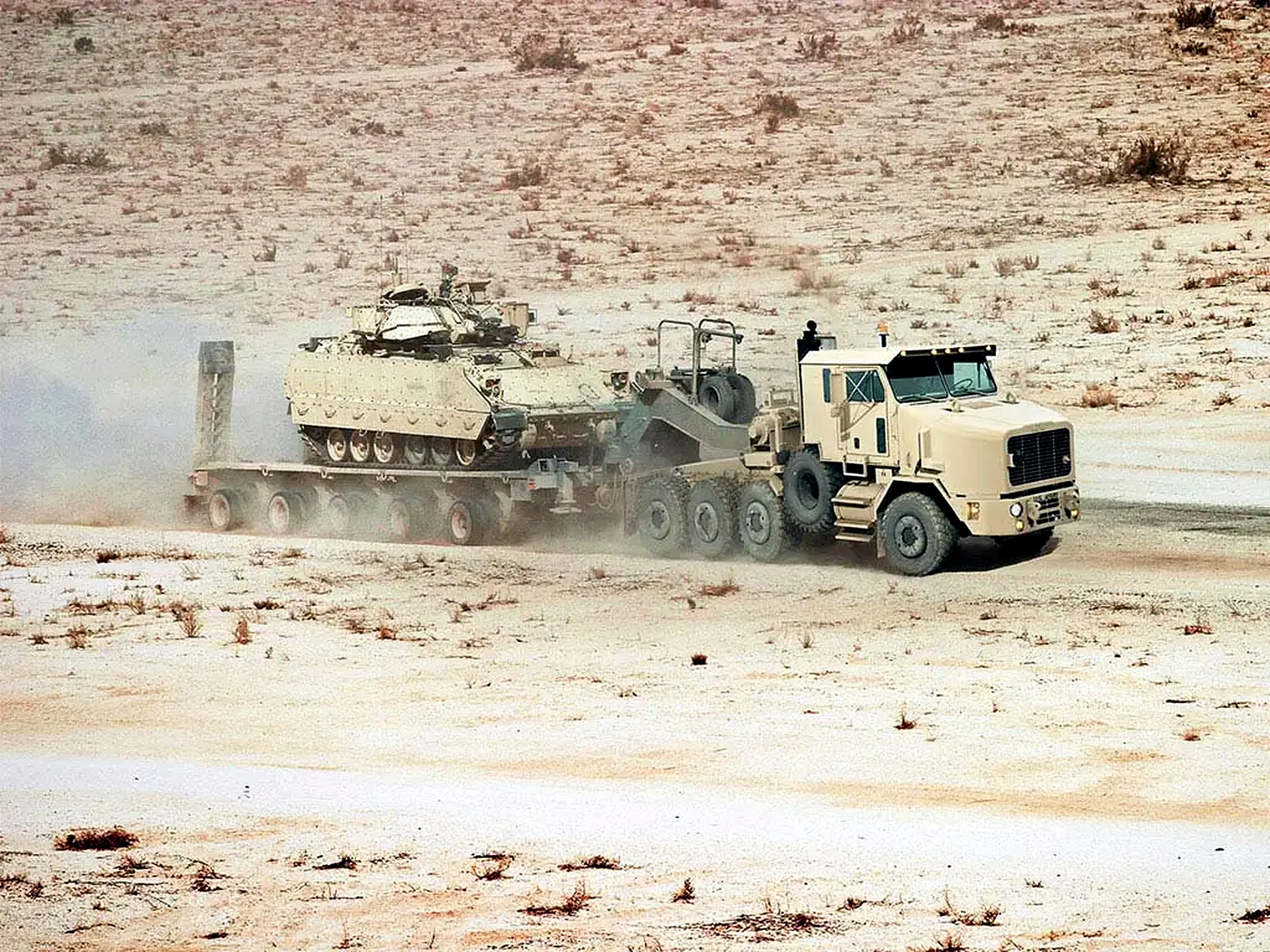
The HET order is closely tied to Morocco’s armoured force. The Royal Moroccan Armed Forces began acquiring M1 Abrams tanks from the United States in 2015 and have since received newer versions of the Abrams. At around 60 tonnes or more, these tanks cannot travel long distances on their own tracks without heavy wear on engines, running gear and roads, so dedicated transporters are needed to move them between garrisons, training areas and the southern provinces.
Rabat is also looking beyond the Abrams. In January, reports indicated that Morocco had begun evaluating up to 400 South Korean K2 Black Panther tanks, while India’s Tata Advanced Systems began building its Wheeled Armoured Platform near Casablanca in 2025. Any further growth in heavy armour would add to the demand for transporters.
Logistics behind North Africa’s heaviest armour
Among African armies, only Egypt and Algeria field heavy armoured fleets on a similar scale, and Egypt, which is upgrading 555 M1A1 Abrams tanks, faces the same logistics demands. With 50 more HET A1 tractors and trailers on order, Morocco is investing in the less visible half of armoured warfare: the ability to move, recover and sustain tanks over long distances. How quickly the second batch arrives, and whether Rabat orders more as its tank fleet grows, will shape how far and how fast its armoured brigades can deploy.