
Carl von Clausewitz, the Prussian theorist whose ideas still anchor most military academies, described a force’s centre of gravity as the hub of all its power, the point on which everything else depends. Strike it, and the rest of the structure weakens or collapses. Miss it, and no amount of firepower elsewhere changes the outcome. Across Africa’s live conflicts in 2026, from the Sahel to the Horn, from the Niger Delta to the Congolese highlands, that hub is rarely a weapons platform. It is a tanker truck, a ration convoy, or an ammunition resupply line moving down a single road that an adversary already knows how to cut.
Mali: The Fuel War
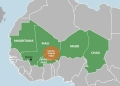
No case illustrates this more starkly than what is now openly called Mali’s fuel war. On 3 September 2025, Jama’at Nusrat al-Islam wal-Muslimin (JNIM), the al-Qaeda-affiliated coalition that has fought Malian and Russian forces across the country’s north and centre, announced a blockade on fuel entering the capital, Bamako. The demand started as a call for lower rural fuel taxes before evolving into a broader political challenge to the ruling junta. What followed was not a siege in the conventional sense of troops surrounding a city. It was a slower, more surgical campaign against the roads that keep a landlocked country running.
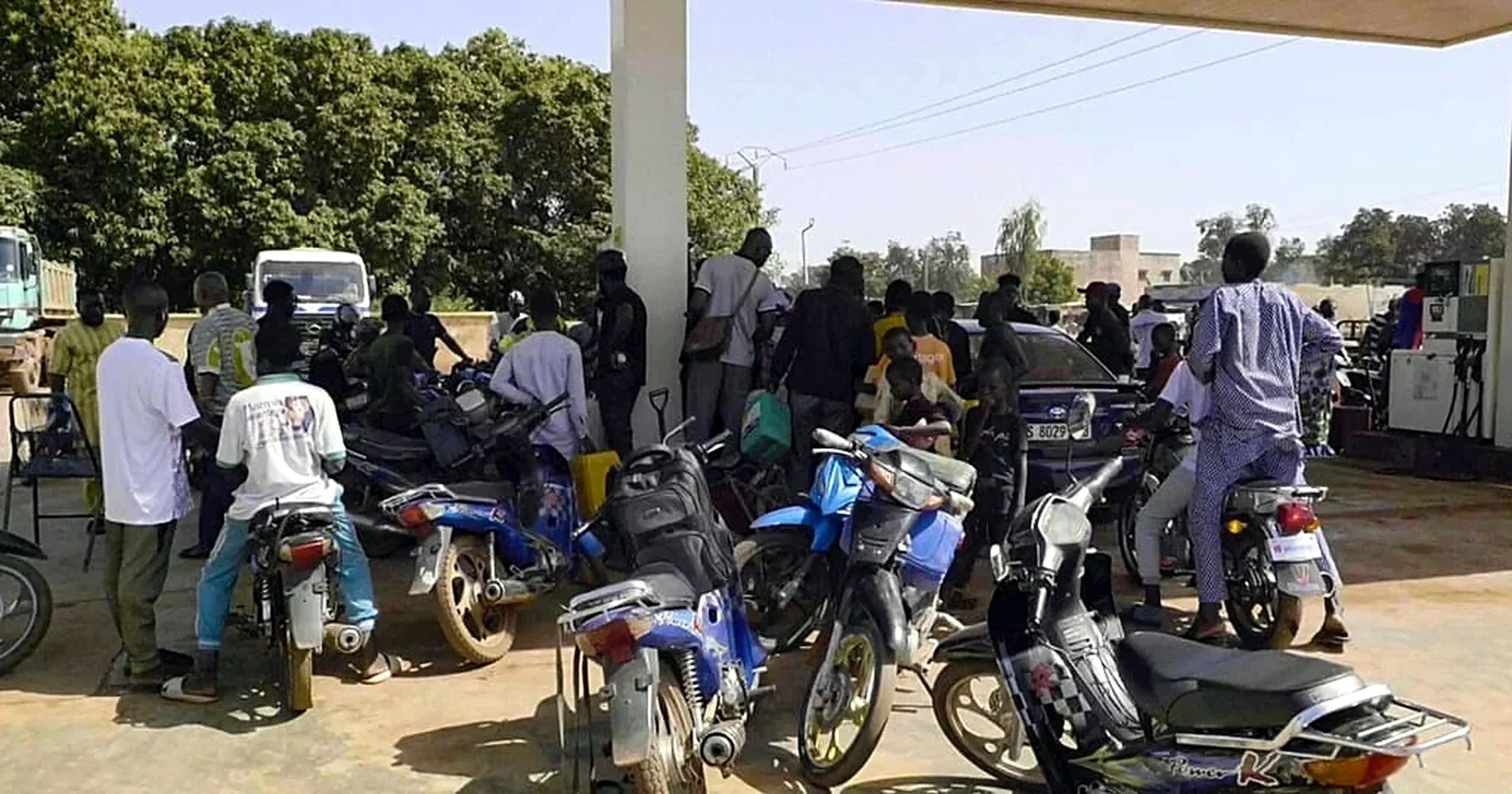
Mali imports roughly 95 percent of its fuel by road, mostly from Senegal and Ivory Coast, since the country has no coastline and no domestic refining capacity to speak of. JNIM fighters ambushed convoys and burned tankers along those corridors, destroying more than 300 vehicles by mid-2026 according to open-source tracking, while setting up checkpoints to tax whatever fuel it chose not to destroy. The results inside Bamako were immediate and visible. Fuel stations saw queues stretching for hours. Schools and universities closed for two weeks from late October 2025. Power generation, already unreliable, weakened further, and satellite imagery showed a capital measurably darker at night. Farm machinery stood idle through harvest season for want of diesel.
The Malian junta and its Russian-backed Africa Corps partners tried to fight back with escorted convoys, moving more than a thousand tankers into the city since late October 2025 under armed protection, and in January 2026 the government appointed a general specifically to direct what officials now call the fuel war. Moscow shipped 200,000 tonnes of petroleum to ease the pressure. None of it fully broke the blockade. In early February 2026, an attack on a fuel convoy near the Senegalese border killed at least 15 people, a reminder that every delivery into the capital is now a contested military operation rather than a commercial transaction. JNIM briefly eased pressure in early 2026, likely to reposition for the rebel and jihadist offensive that struck Mali’s north in late April, before declaring a renewed full blockade on Bamako on 28 April.
Oluwole Ojewale, a research fellow at Nigeria’s Obafemi Awolowo University, has described such blockades as “instruments of coercive governance and asymmetric warfare designed to weaken the junta, undermine public confidence in the military, and possibly solidify control.” That framing matters because it explains why JNIM chose a fuel line over a firefight. A group that cannot yet hold Bamako by force can still make the state visibly fail to perform its most basic function, keeping the lights and the economy running, at a fraction of the cost of a conventional assault.
The same dynamic has repeated itself at a smaller scale elsewhere in Mali. JNIM’s fuel embargo on the western cities of Kayes and Nioro du Sahel paralysed movement earlier in the campaign, and even military-escorted convoys were ambushed. One fuel truck driver, quoted by Africa Defense Forum, put the human cost of keeping the corridors open simply: “Everyone has a role in building the country. Ours is to supply Mali with fuel. We do it out of patriotism.” That patriotism now carries a real risk of death on every run.
Nigeria: Strangling the Supply Chain
In Nigeria’s northeast, the roles are reversed but the target is the same. The Nigerian Army has spent the past two years explicitly reframing its counter-insurgency campaign against Boko Haram and Islamic State West Africa Province (ISWAP) around logistics denial rather than pure territorial control. A theatre commander described the approach bluntly in an October 2025 interview: “By cutting off their supply chains, we have effectively crippled their capacity to sustain prolonged engagements.” Troops under Operation HADIN KAI have repeatedly intercepted what the Army calls terrorist logistics convoys, including a December 2025 operation near Sojiri and Kayamla in Borno State that killed at least 21 fighters moving supplies toward their enclaves, and smaller interdictions of vehicles carrying fuel and food along known resupply routes such as the Usmadi axis.
ISWAP has faced the reverse problem. The group built much of its earlier success on isolating Nigerian Army supercamps, the consolidated forward bases the military adopted after 2019 to concentrate personnel and equipment in defensible hubs. ISWAP’s method was to detonate the roads and bridges connecting those camps to the rest of the theatre, effectively besieging government forces from the outside rather than assaulting them directly, according to analysis from the Soufan Center. The tactic worked well enough that some of those same supercamps, designed as strongholds, became strategic liabilities once their supply lines were severed.
The two sides are, in effect, fighting the same logistics war from opposite ends: the Army trying to starve ISWAP’s mobility and ammunition resupply, and ISWAP trying to strand Army garrisons behind cut roads. Neither side has fully won that fight. Convoy ambushes remain common on routes such as the Biu-Buratai-Buni Yadi road between Borno and Yobe states, and casualty figures from both militaries and insurgent groups continue to accumulate on exactly the roads that resupply matters most.
The Democratic Republic of Congo: The Road That Decided Goma
Eastern Congo offers a case where control of a single highway effectively decided a city’s fate. When the Rwandan-backed March 23 Movement (M23) advanced on Goma in January 2025, the decisive moment was not the fighting inside the city itself but the group’s success in cutting the N2 highway, the road connecting Goma to the rest of the Democratic Republic of Congo (DRC) and the primary corridor for both military resupply and humanitarian aid into North Kivu. Once that road fell, Goma became functionally an island, reachable only by air or negotiated access through territory M23 controlled.
The pattern repeated later that year. In September 2025, M23 captured Nzibira, a tin and gold mining town in South Kivu that also served, critically, as a Congolese Armed Forces (FARDC) logistics hub with its own airfield. Losing a logistics node with organic air resupply capacity was a heavier blow to FARDC’s operational reach in the south than the loss of the town’s population or mineral output alone would suggest.
M23’s own logistics tell the other half of the story. The group has financed its campaign partly through control of the Rubaya mining hub, which produces an estimated 15 to 20 percent of global coltan supply and has generated reported monthly revenues exceeding 800,000 US dollars for the group through mining levies, later supplemented by a roughly 15 percent tax on tantalum production. Consolidating the Rubaya-Goma-Rwanda transit corridor gave M23 both a revenue stream and a secure logistics spine of its own, a rebel group building the same kind of supply architecture that a conventional army would need, just funded by minerals instead of a state treasury.
Sudan: Starvation as Doctrine
If Mali shows fuel denial and Congo shows road denial, Sudan shows what happens when food itself becomes the weapon. The Rapid Support Forces (RSF) besieged El Fasher, the capital of North Darfur and the last major holdout in the region, for roughly 18 months before the city fell on 26 October 2025. The siege included a 57-kilometre earthen wall built around the city, completed in October 2025, specifically to block the movement of food, water, and humanitarian supplies.
A Yale Humanitarian Research Lab study, using satellite imagery, documented that RSF forces attacked 41 agricultural communities around El Fasher between March and June 2024 alone, and that the area of land under active cultivation in the surrounding countryside fell by more than 80 percent during that period. Inside the city, residents exhausted every available food substitute as the siege wore on. Reports from displaced residents described communities reduced to eating kora ambaz, an animal feed byproduct left over from peanut oil extraction, and eventually cow skin, before the last community kitchens closed in October 2025. The United Nations Fact-Finding Mission on Sudan concluded that the siege “systematically weakened the targeted population through starvation, deprivation, trauma and confinement,” and both UN investigators and Amnesty International have said the campaign carries what they described as the hallmarks of genocide, given its concentration on non-Arab communities including the Zaghawa and Fur.
El Fasher is an extreme case, but it demonstrates a principle that runs through every conflict on this list. Denying an adversary’s logistics does not require defeating their army. It requires controlling what moves in and out of the places that army, or the population it claims to protect, depends on to survive.
Somalia: The Arteries to Mogadishu
Al-Shabaab has pursued a version of the same strategy against the Somali government, though with less international attention than Sudan or Mali. Rather than attempting to storm Mogadishu directly, analysts tracking the group’s 2025 to 2026 offensive describe a deliberate campaign of what one regional assessment called economic coercion on critical supply lines, specifically the roads linking the capital to Afgooye and Balcad, arteries the government depends on for trade and reinforcement. The strategy aims for exhaustion rather than conquest: intimidating traffic on those roads, taxing what moves through al-Shabaab-controlled checkpoints, and gradually isolating the capital rather than assaulting it outright.
The African Union’s own peacekeeping mission illustrates a different, but related, logistics vulnerability. The current mission, the African Union Support and Stabilization Mission in Somalia (AUSSOM), which succeeded the African Union Transition Mission in Somalia (ATMIS) in January 2025, depends heavily on external funding simply to move, feed, and pay its roughly 12,600 authorised personnel. The European Union committed 8.71 million US dollars in April 2026 specifically to help pay AUSSOM’s security personnel and support non-lethal equipment, and reporting has flagged the mission’s continued viability as at risk should that outside logistical and financial support end. A multinational counter-insurgency force with armoured vehicles and air support can still be operationally hollowed out if the money and fuel behind it stop arriving on schedule.
Ammunition: The Quiet Third Leg
Fuel and food dominate the headlines because their failure is visible in fuel queues and famine images. Ammunition scarcity is quieter but no less decisive, and it increasingly runs through industrial capacity rather than battlefield interdiction alone. South Africa’s Rheinmetall Denel Munition (RDM), one of the continent’s most significant artillery and medium-calibre ammunition producers, has been running expanded production, including extended shifts, for several years to meet global demand that surged after 2022, demand that competes directly with orders African militaries themselves are trying to place. When a state’s own ammunition pipeline depends on a global queue rather than domestic stockpiles, resupply during an active campaign becomes a procurement problem as much as a battlefield one, a vulnerability distinct from convoy ambushes but rooted in the same underlying truth: firepower is only as reliable as the supply chain feeding it.
Logistics as the Real Centre of Gravity
None of the conflicts above were decided primarily by which side had the more advanced rifle, aircraft, or armoured vehicle. Mali’s fuel war has cost both sides more strategically than most individual battles in the country’s north. Goma fell when a road fell. El Fasher’s population was broken by hunger before the final assault came. Al-Shabaab is squeezing Mogadishu one artery at a time rather than storming it. Military Africa’s own analysis of mobility in African conflict zones put the underlying principle plainly: “Logistics remains the silent killer of massed formations.” A heavy, well-armed force still needs a constant flow of fuel, spare parts, ammunition, and food to remain a force at all, and in terrain where the nearest secure base can sit hundreds of kilometres away, that supply line is frequently the softest target on the battlefield.
For African militaries and the analysts who study them, the implication is straightforward even if it is uncomfortable. Procurement decisions that prioritise a marginally better platform over a more resilient supply chain are optimising for the wrong variable. The armies and insurgencies that have shown the most staying power across these conflicts, from JNIM’s checkpoint economy to M23’s mineral-funded logistics spine, are the ones that treated sustainment as a weapon in its own right rather than an afterthought behind it.