
In response to the sudden emergence of the long-range drone threat from Iran, many Gulf states scrambled to bring in specialist Ukrainian equipment, trainers and advisers. The goal was to enhance their existing air defence systems which were both very expensive and poorly matched to the threat, having been designed to defend against fast jets and ballistic missiles.
The results are promising enough for the collaboration to continue, but the initial engagement was more difficult, less effective and slower than both sides had hoped.
This should be a wake-up call for African states. The first long-range drones have already been seen on the continent, and proliferation could occur quickly. Preparing for effective defence against a Shahed-class threat takes much longer than it will take for the threat itself to materialise.
The threat
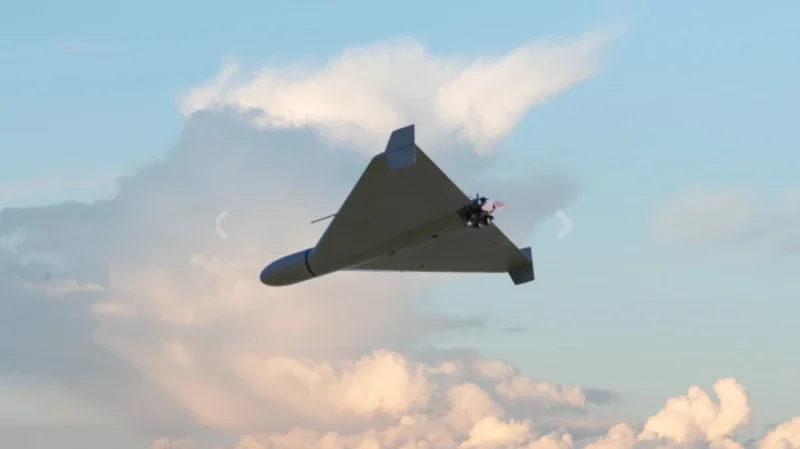
The emergence of Shahed-type drones (more correctly: long-range, one-way attack UAS) has made deep-strike cheap and accessible to states and non-state actors that could not previously have deployed aircraft or missiles. These weapons can be destructive and disruptive as single shots, but they are cheap enough to deploy in large salvos to overwhelm conventional air defences and achieve strategic effects.
This is not a static challenge. The capabilities of Shahed-type platforms are continuing to evolve. Current trends include greater manoeuvrability and speed (including jet propulsion); remote piloting through video feed (enabling the target of mobile air defence crews / vehicles, as well as static infrastructure), and on-board counter-measures to defensive systems.
Nor is this a risk that is somehow confined to their “home” theatres of Ukraine and the Gulf. The components required are comparatively simple, the parts can be transported in small commercial vehicles or constructed from scratch at fairly simple facilities and—just as importantly—there is now a large and mobile base of knowledgeable producers, some of whom will be willing to travel. Operation of these platforms does not require anything like the training of predecessor long-range munitions. With a minimum of training and a little remote support, the drones can be armed, programmed and launched from simple sites or from the back of pick-up trucks.
Any risk assessment consists of two parts: likelihood and severity. The small drones threat which is already rapidly maturing in multiple African theatres certainly scores more highly on likelihood. But when it comes to severity there is no contest: a Shahed-type drone carries approximately 50 times the payload of a small battlefield FPV UAS and has the potential to shut down infrastructure, destroy expensive hardware and spread panic in even small numbers.
Countering this threat
Ukraine is the only country in the world that has been forced to face a sustained Shahed threat. Since Russia started launching Iran-supplied Shaheds in September 2022, over 60,000 have been launched at Ukraine (counting the Russian-made “Geran” equivalent within the category for simplicity), with more than 6,000 in each of the worst weeks. Starting from very limited capabilities, working largely without Patriot-style interceptors (which are reserved for the missile threat), and faced with very large concentrations of attacks in simultaneous waves, Ukraine has nevertheless consistently neutralised more than 90%, and at times closer to 98%.
When US-aligned countries in the Middle East faced a sudden threat from these weapons earlier in 2026, as Iran reacted to US/Israeli bombing, Gulf countries were quick to accept Ukrainian offers of help in the form of trainers, equipment and advice.
This experience has provided the first look at how applicable Ukrainian capabilities can be when deployed outside the Ukrainian theatre, and the less-than-seamless experience can provide important lessons for other countries that should be engaging that same expertise.
Key learnings from recent Gulf experience
Six months on, some clear conclusions can be made on what has worked and not worked so far. These can then be extended into lessons that other countries can learn from.
- Ukrainian systems and experience are world-leading against this category of threat. Legacy air defence practices were exposed as vulnerable, expensive and poorly suited. Gulf countries are actively continuing the collaboration. American users have also discreetly engaged Ukrainian capability.
- Local teams were not prepared to operate interceptor drones. In many cases, they had little or no previous experience with drones, including FPV systems. As a result, they received capabilities that they could not effectively employ.
- Ukrainian capability is not just a “product” that can be dropped in, but a complex system of systems that requires time and effort to function properly. This was not immediately recognised, and isolated Ukrainian teams operating blind initially under-performed against expectations.
- The biggest challenge is integration. In the absence of time to properly organise command-and-control, specialist drone interceptor platforms were often restricted to visual target acquisition and line-of-sight engagement in order to deconflict with the legacy conventional defences. As a result they were less effective than in Ukraine.
- The next challenge was local conditions. Extreme heat and humidity, and the fine, metallic dust of the Gulf impaired performance and meant sometimes interceptors simply didn’t work. This could have been overcome as a matter of configuration and set-up – but not at the pace demanded when responding to an ongoing live attack.
- Ukrainian and local Gulf teams were not always effective working partners, despite the best intentions of both sides. There were significant differences in culture, doctrine, mindset and integration requirements that made collaboration under pressure difficult.
Lessons for other militaries
- Counter-UAS systems are not fully autonomous and out-of-the-box. Even the most advanced systems require trained operators to position and manage defences. Effective counter-UAS depends on proper set-up, configuration and integration. This can be accelerated to a degree, but not bypassed and not replaced with just more technology.
- Effective protection requires a layered approach rather than reliance on a single technology. It should integrate detection, kinetic countermeasures, electronic warfare, physical security, and cybersecurity into a single defensive architecture under a unified control system.
- Defeating the threat requires training as well as integrated systems. The Gulf states were able to quickly acquire interceptors from Ukraine, but they performed much worse than in Ukraine because the operating teams weren’t properly drilled, and the full system was not prepared to coordinate.
- Testing of systems for local conditions is vital. Atmospheric and weather conditions have a large effect on small aerial systems. This is a matter of configuration and set-up rather than overall potential, but it requires testing and iteration time.
- A specialist delivery partner could be a powerful enabler of the capability transfer from the leaders in Ukraine to third countries: able to select the right partners from the hundreds of Ukrainian entities in the sector, coordinate them as a single service, and adapt to doctrine and training that makes sense to partners.
The Africa context
African states already facing armed threats should assume that Shahed-type drones will eventually appear, probably suddenly – and when they do it will be too late to start getting ready.
This is not a distant scenario. Iranian or Iranian-derived large UAS platforms have already been used in Yemen, the wider Middle East, Sudan and, in July 2026, Mali. Further spread is inevitable. There is little to stop their diffusion across the region – they are relatively cheap or available from sponsors, simple to transport covertly, and relatively easy to operate. There are also international actors actively interested in encouraging their wider deployment.
Alongside that, there is the reality that African states lack the defence budgets of many Gulf states. While a small oil-rich state might be able to simultaneously deploy Patriot-interceptor batteries, squadrons of jet interceptors, and low-cost Ukrainian gun and interceptor systems, most African states will have to choose—and it’s unlikely to be the F35s.
Steps to take
The first lesson from the Gulf is do not wait. The emergence of the threat can occur in days, while the effective preparation of counter-measures requires months.
At a minimum, countries facing the possibility of a Shahed-type threat, should take the following steps:
- Brief commanders, air-defence personnel and political leaders on the threat, its likely evolution and the available defensive measures
- Map likely launch areas, approach routes and vulnerable targets based on the range and performance of current systems
- Prepare contingency plans that are ready to swiftly activate in line with an escalating threat.
- Acquire key defensive systems in small numbers (particularly detection systems, electronic warfare systems and interceptors) to (a) test in local conditions, and (b) hold in reserve for rapid deployment.
- Conduct wargames or exercises to test effective integration with other systems, particularly air-defence units, radar operators and military aviation.
- Maintain a small cadre of trained operators and/or establish a relationship with external contractors who could rapidly respond when needed.
Ukrainian capabilities are a good match for these requirements: affordable systems developed against the live threat, combined with the doctrine, training and operational know-how required to turn hardware into an effective defensive architecture.
Long-range one-way attack drones are spreading faster than the defences needed to stop them. The Gulf experience shows that countries cannot wait for the first attack before training operators, testing equipment and integrating it with existing systems. African states still have time to prepare, but perhaps less than they think.
SKUA DEFENCE brings battlefield-proven Ukrainian defence capabilities to UK and allied partners, combining direct access to Ukraine’s defence technology sector with British military experience in integration, deployment and operational delivery.
James Westlake is a former British Army officer and the founder/CEO of Skua Defence. He will be at Afridex in October and welcomes opportunities to engage further on this topic.
Viktor Taran is a veteran of the Ukrainian Armed Forces, a director at Skua Defence, and the founder of Skua’s partner, the Kruk Training Centre in Kyiv, Ukraine.