
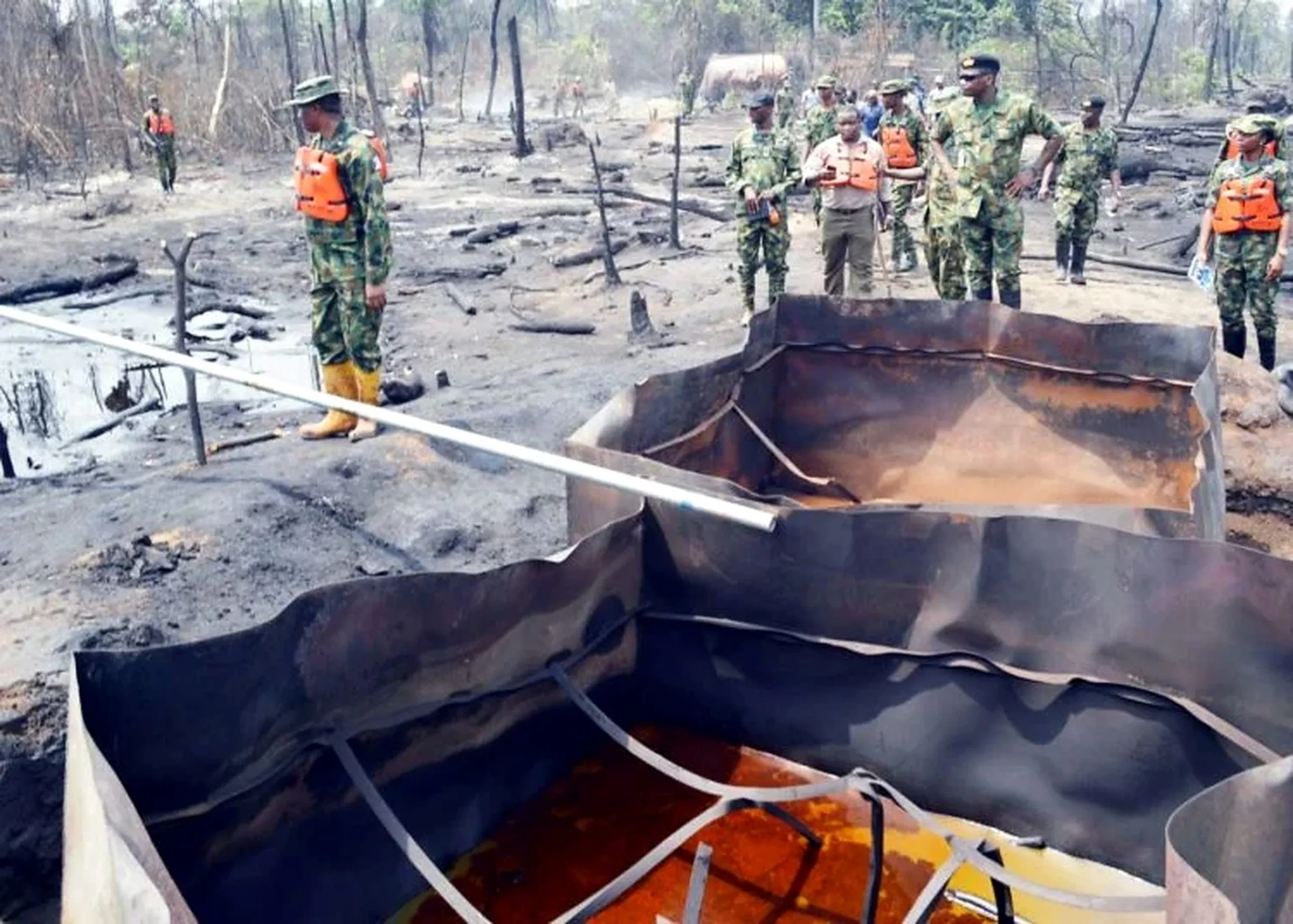
The Nigerian Navy says its personnel arrested 259 suspected oil thieves and deactivated 168 illegal refining sites between November 2025 and November 2026, the first year under Chief of the Naval Staff (CNS) Vice Admiral Idi Abbas. The force says it recovered more than 7.48 million litres of stolen crude oil and illegally refined petroleum products in that period. The figures were released by Navy Captain Abiodun Folorunsho, Director of Information at Naval Headquarters, in a scorecard marking Abbas’s first year in post, The Guardian Nigeria and Leadership reported.
The reporting period runs from 30 October 2025 to 4 November 2026, according to the directorate. President Bola Tinubu appointed Abbas, the 23rd CNS, on 24 October 2025 in a reshuffle of the service chiefs, and he succeeded Vice Admiral Emmanuel Ogalla at a handover in Abuja days later. Alongside the arrests and recoveries, the Navy says it destroyed 363 dugout pits, seized four vessels suspected of involvement in crude oil theft, and secured nine convictions for offences tied to crude oil theft and pipeline vandalism. The Navy also says it held Nigeria’s zero-piracy status through the year while intensifying intelligence-driven operations against bunkering and other maritime crime.
Operation DELTA SENTINEL at the Centre
A central piece of that campaign, according to the Navy, was the activation of Operation DELTA SENTINEL in January 2026 to strengthen efforts against crude oil theft, illegal bunkering and other criminal activity in the maritime domain. The operation replaced Operation DELTA SANITY II and added enhanced surveillance, better intelligence coordination and a structured quarterly review, with an initial duration of one year. In its first quarter alone, the Navy said, DELTA SENTINEL units carried out more than 183 operations, dismantled 12 illegal refineries and recovered about 531,500 litres of illegally refined products, and Abbas later extended its most intensive phase by 90 days.
Crude theft and illegal “cooking” sites, makeshift refineries that boil stolen crude from tapped pipelines into diesel and kerosene for resale, have dogged Nigeria’s oil-producing creeks for years and remain a direct drain on state revenue. The Navy has credited its operations with helping to lift national crude output towards 1.7 million barrels per day by mid-2026.
Three Fast Patrol Vessels Join the Fleet
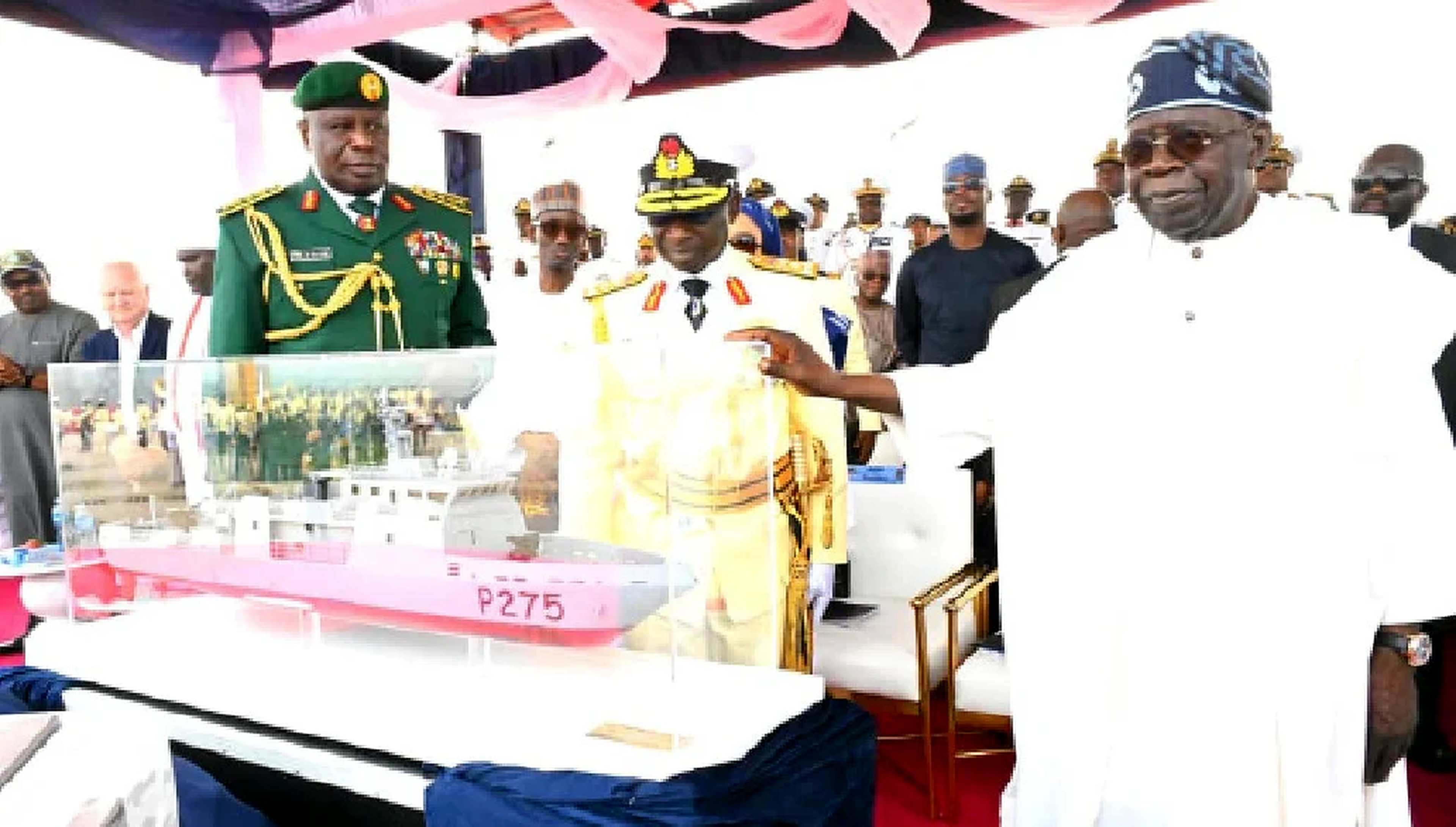
The year also brought new hardware. On 1 June 2026, President Tinubu commissioned three fast patrol vessels, NNS Gurara (P206), NNS Mambila (P207) and NNS Oloibiri (P208), at the Navy’s 70th anniversary International Fleet Review at the Eko Atlantic Waterfront in Lagos. The vessels were built in China by Poly Technologies Incorporated. Each measures 46 metres and carries remote and manual naval gun stations, heavy machine guns and automated tracking systems. They were designed for high-speed interception and patrol missions and sit in the Navy’s fast patrol vessel (FPV) class, the type of hull best suited to chasing down the small, fast craft used in bunkering runs.
Poly Technologies is not a new name in Nigerian procurement. The company also supplies the BigFoot mine-resistant ambush-protected (MRAP) vehicle used by the Nigerian Army, so the patrol vessel order extends an existing supplier relationship rather than opening a new one. Even so, the programme sits at the lower end of naval capability. Military Africa’s recent assessment of Nigeria’s push for indigenous naval shipbuilding observed that engines, weapons and much of the sensor suite on comparable hulls remain foreign-sourced, and that the step up from a patrol boat to a frigate-class combatant “has not yet been made”. The Navy has set out a wider plan for a technology-driven fleet built around drones, surveillance and artificial intelligence.
Marines, Exercises and a Regional Task Force
Personnel growth ran alongside the hardware additions. The Navy says it graduated and inducted its first batch of 328 Nigerian Navy Marines during the year, a new specialist corps aimed at close-quarters and riverine operations. Those marines, according to the Naval Headquarters statement, were deployed partly to reinforce operations against asymmetric threats in northern Nigeria, while a second batch continued training. The Navy frames this as part of a broader move to build a force capable of operating across both maritime and inland theatres, not just blue-water patrol.
Regional cooperation also featured. The Navy took part in exercises including OBANGAME EXPRESS 2026, COASTAL GRIP 2, GRAND AFRICAN NEMO 2026 and CROCODILE LIFT over the year, drills that bring Gulf of Guinea states together to practise interdiction and information-sharing against piracy and trafficking. A further milestone, by the Navy’s own account, was the launch of the Combined Maritime Task Force (CMTF) for the Gulf of Guinea during the 70th anniversary celebrations in June 2026. Backed by Côte d’Ivoire, The Gambia, Ghana, Liberia, Nigeria and Sierra Leone, the CMTF is expected to grow to about 1,500 personnel with air, surface and electronic surveillance assets, ADF Magazine reported, extending coordinated patrol coverage beyond Nigeria’s own waters.
Infrastructure spending rounded out the scorecard. The Navy says it completed more than 36 projects covering accommodation, medical, office and multipurpose facilities, and began work on a 200-bed reference hospital at Navy Town in Asokoro, Abuja. It also points to more than 93 community development projects delivered through its CNS Special Intervention Quick Impact Projects programme, a welfare and outreach scheme aimed at communities near naval bases and operational areas.
How the Numbers Compare
Set against earlier years, the numbers show a campaign that has grown in scale but not always in a straight line. The Navy reported arresting 20 vessels and destroying 149 illegal refineries in 2015, arresting 11 suspects in 2016 and seizing 1.59 million litres of diesel in a single Port Harcourt operation in 2017. In 2024, the service said, it deactivated 468 illegal refinery sites and arrested 215 suspects, a heavier year for site destruction than the 168 sites now reported for 2025-2026, but with fewer arrests than this year’s 259. The drop in sites destroyed alongside a rise in arrests could reflect a shift toward prosecuting networks rather than simply razing infrastructure that is often rebuilt within weeks.
The Creeks Still Set the Test
What the figures do make clear is that oil theft remains a standing mission for the fleet rather than a one-off crackdown. With Operation DELTA SENTINEL now almost a year old, three new patrol vessels in service and a new marine corps starting to deploy, the Navy’s own account points to a force adding capacity faster than it is closing the underlying theft problem. Whether the nine convictions secured this year translate into a deterrent, or whether dismantled refineries simply resurface elsewhere in the creeks, as similar sites have done before, is the question the next annual scorecard will have to answer.