
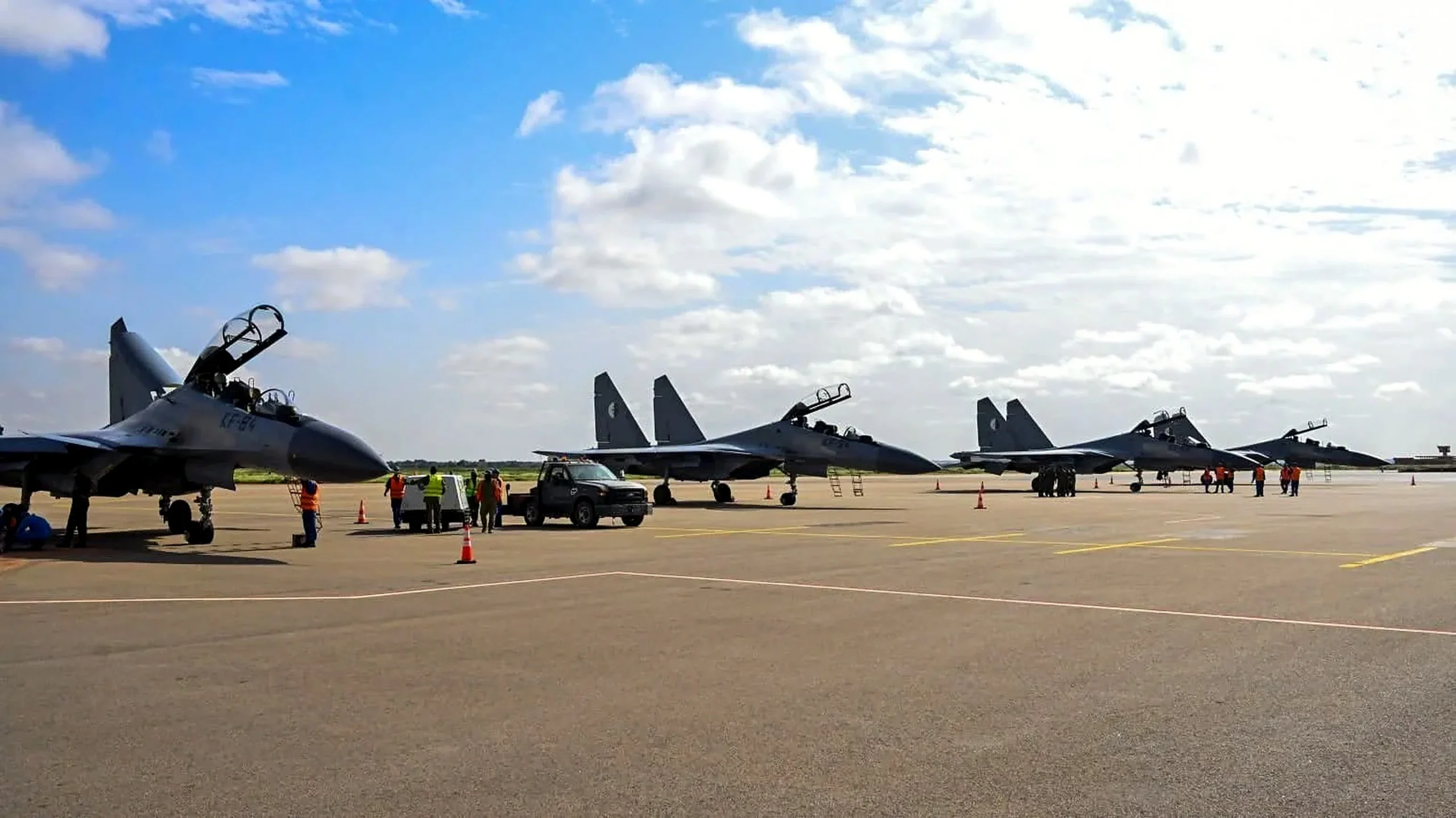
Algeria sent four Sukhoi Su-30MKA fighter jets to Niger on 30 August 2026, a day after a mutiny shook Niamey, in what reports describe as the first deployment of Algerian combat aircraft abroad since the 1973 Arab-Israeli war.
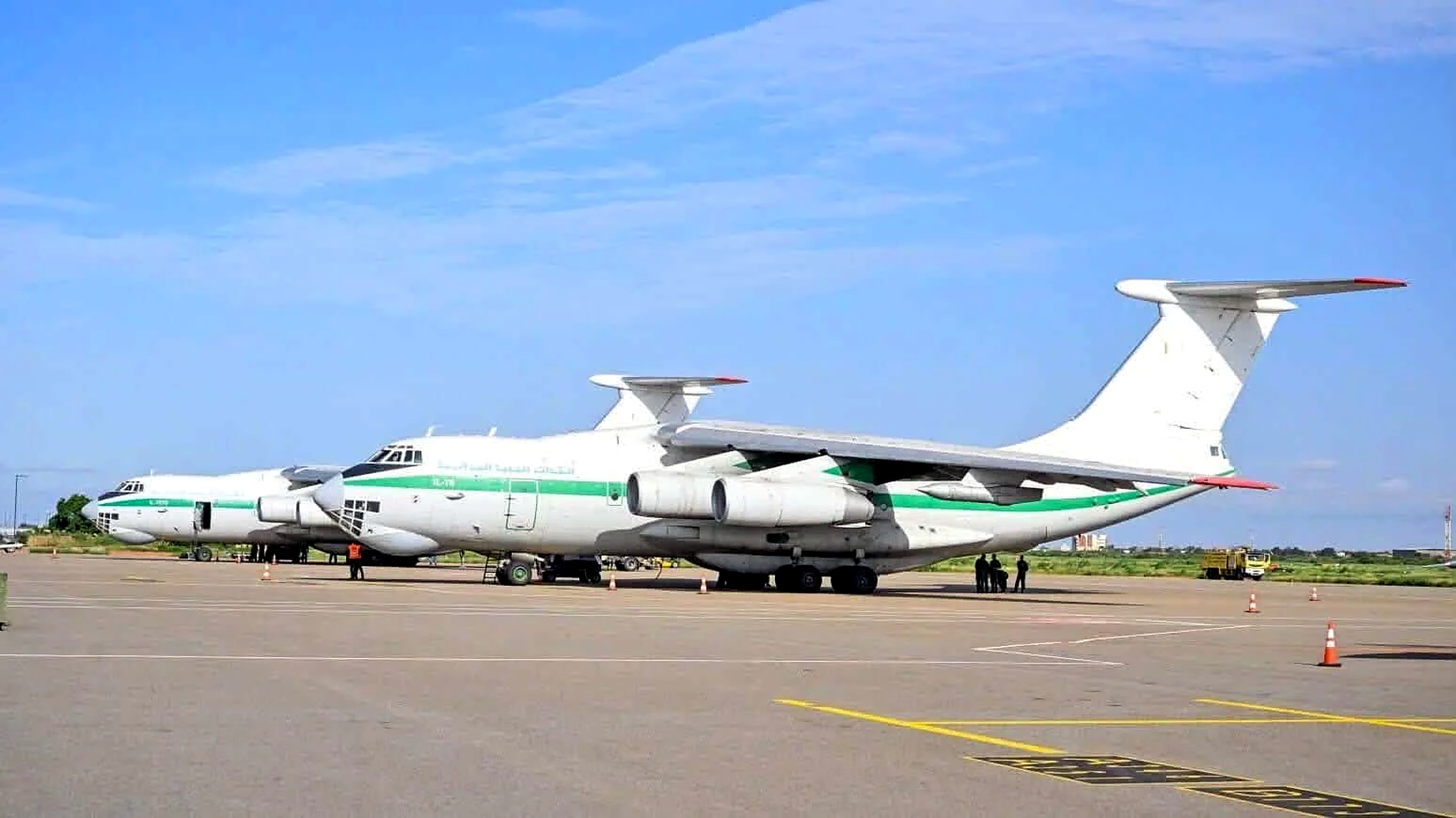
The jets flew in as two patrols and landed at Diori Hamani International Airport, which shares its runways with Niger’s Air Base 101, alongside an Ilyushin Il-78 aerial tanker and an Il-76 transport aircraft. Video released by Algeria’s Ministry of National Defence (MDN) showed the aircraft parked on the civilian side of the airport rather than at the air base on the north side of the runways, Janes noted. The ministry said the deployment came at Niger’s request and on the instruction of President Abdelmadjid Tebboune, after gunfire and explosions hit the presidency, the airport and Air Base 101 overnight on 28 into 29 August. Mutineers calling themselves the Armed Forces for the Restoration of the Fatherland (FARP) were repelled by loyal troops and Russia’s Africa Corps, according to regional media, and Niger’s junta, led by General Abdourahamane Tiani, said it had put down the uprising by the time the jets arrived.
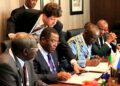
A military delegation led by Major General Rachid Cheblaoui held a press conference with Nigerien officials after landing, and Niger’s prime minister, Ali Mahamane Lamine Zeine, met the Algerian crews on the tarmac. The jets flew a pass over Niamey with the Il-78 before touching down. In October, Tebboune said the warplanes had been sent to help thwart a “coup attempt”, which he called a “provocation”.
The deployment followed an earlier gesture. On 9 August, Algeria handed Niger’s army four helicopters, two Mi-24V SuperHind gunships and two Mi-171 transports, together with ammunition, spare parts and maintenance equipment, as part of what Algerian officials called deepening military cooperation between the two countries.
Rebuilding a Relationship, Not Starting One
The fighter deployment reads less as a sudden intervention than as Algiers protecting ties it had already rebuilt. Relations between Algeria and Niger had collapsed in April 2025, and they thawed through early 2026. The two countries returned their ambassadors on 12 February, and General Tiani paid a two-day visit to Algiers on 15 and 16 February, which Tebboune said ended “an abnormal period of chilliness”. On 24 March the two prime ministers signed more than 20 agreements in Niamey, and by June the two countries had switched on an Algerian-built power plant near Niamey and signed energy agreements tied to the long-delayed Trans-Saharan Gas Pipeline (TSGP).
That pipeline gives Algiers a direct stake in Niger’s stability. The project, first agreed in 2009 and relaunched this year with state energy company Sonatrach taking the lead on the Nigerien section, is designed to carry up to 30 billion cubic metres of gas a year from Nigeria’s fields through Niger to Algeria’s Hassi R’Mel hub, a route of roughly 4,128 kilometres. Algeria began building a new 1,210-kilometre stretch of its own section in June 2026; Niger’s roughly 840-kilometre segment has not yet broken ground. Security along that corridor, much of it through territory contested by armed groups, now bears directly on Algeria’s energy exports.
Algeria shares long land borders with both Niger and Mali, which together with Burkina Faso form the Alliance of Sahel States (AES). All three juntas have spent years fighting Jama’at Nusrat al-Islam wal-Muslimin (JNIM) and the Islamic State Sahel Province, insurgencies Algerian officials increasingly treat as a threat to their own territory rather than a neighbour’s problem. The Algerian army’s recent discovery of first-person-view (FPV) attack drones in an arms cache near the Mali border shows why.
Algeria’s relationship with Mali shows how quickly that calculation can sour and then recover. Algerian air defences shot down a Malian-operated Bayraktar Akıncı drone near the border town of Tinzaouaten on 1 April 2025, prompting Mali and its AES partners to recall their ambassadors and both countries to shut their airspace to each other. The rift lasted more than 14 months before Algiers and Bamako reinstated ambassadors and reopened their skies on 10 July 2026, although tensions over northern Mali persist, as Military Africa noted in its analysis of Mali’s recapture of Kidal.
Riccardo Fabiani, North Africa project director at the International Crisis Group, has described the shift as part of a broader recalibration. “Algeria is ready to play a security and military role, and no longer exclusively a diplomatic one,” he told Middle East Eye, pointing to an environment he said is “changing very rapidly”.
What Algeria Sent, and What It Can Do
The Su-30MKA is a twin-seat, heavyweight multirole fighter built for the Algerian Air Force on the Indian Su-30MKI platform, and it forms the backbone of Algeria’s long-range air power alongside the newer types Russia has been prioritising for Algerian delivery. Two pilots sit in tandem, one flying and one running weapons and sensors. Niamey lies roughly 2,600 kilometres south of Algiers, and Algeria’s Flanker fleet is based in the north of the country, which is why the Il-78 tanker was central to the operation.
Each aircraft is powered by two Saturn/Lyulka AL-31FP afterburning turbofans fitted with thrust-vectoring nozzles, giving it a top speed near Mach 2 and a combat radius of about 1,500 kilometres before refuelling, a figure the Il-78 extends considerably. It can carry up to 8,000 kilograms of ordnance on 12 hardpoints, and its canard-and-thrust-vectoring layout lets it perform extreme post-stall manoeuvres in close combat.
The jet’s N011M Bars passive electronically scanned array radar can track up to 15 targets and engage four at once, and the aircraft can relay target data to other fighters in its formation, functioning as a small airborne command post. Open-source accounts of the Algerian variant credit it with French-made Thales head-up and multifunction displays, infrared navigation pods and a Damocles laser designator to sharpen strike accuracy, while an infrared search-and-track sensor lets pilots detect and follow enemy aircraft at ranges of up to about 90 kilometres without switching on radar. Its weapons range from R-77 and R-73 air-to-air missiles to Kh-31 anti-radar and anti-ship missiles, though none of that firepower has been reported in use over Niger.
From Air Patrol to Ground Mission
Four jets will not shift the regional military balance on their own. The value of the August deployment, officials and observers agree, lay in the message rather than the hardware: Algiers moved fast, within a day of the mutiny. It has since gone further. Niger’s defence minister, General Salifou Mody, signed a military cooperation protocol in Algiers on 21 October, both chambers of Algeria’s parliament approved a troop deployment in closed sessions on 25 October, and units of the People’s National Army (ANP) began moving into northern Niger the next day. Army chief General Saïd Chanegriha has said those units are there at Niamey’s request to guard shared energy sites, including the Kafra oil block that Sonatrach is exploring with Niger’s Sonidep. Algiers has published no troop numbers, equipment list, duration or cost, and the European Union’s request for clarification has drawn sharp rebukes from both capitals.
That ground deployment, rather than the jets, was the first use of Article 91 of Algeria’s 2020 constitution, which lets the president send troops abroad with backing from two-thirds of each chamber of parliament, alongside existing provisions for United Nations, African Union and Arab League peacekeeping missions. That the authority was used barely six years after it was written shows how far Algiers has moved from the strict non-intervention doctrine that kept its forces at home for more than five decades.
The shift coincides with record military spending. Algeria spent $25.4 billion on defence in 2025, an 11 percent rise and by far the largest total in Africa, according to the Stockholm International Peace Research Institute’s April 2026 data. That spending equalled 8.8 percent of gross domestic product, the second-highest share in the world after Ukraine, and the investment has fed the air arms race across North Africa.
A Harder Line From the Gulf to the Sahel
Algeria’s posture toward other states is also hardening. On 10 September 2026, Algiers severed diplomatic relations with the United Arab Emirates, gave the Emirati ambassador 48 hours to leave and closed its airspace to UAE-registered aircraft, accusing Abu Dhabi of repeated “provocative or hostile” actions without detailing the specific incidents. The dispute is rooted in years of friction over Western Sahara, the UAE’s ties with Israel and competition for influence in the Sahel. Whether Algeria’s harder-edged approach stays focused on its southern border or shapes its wider foreign policy will become clearer as the pipeline project, the ANP mission in northern Niger and Niger’s own security picture develop over the coming months.