
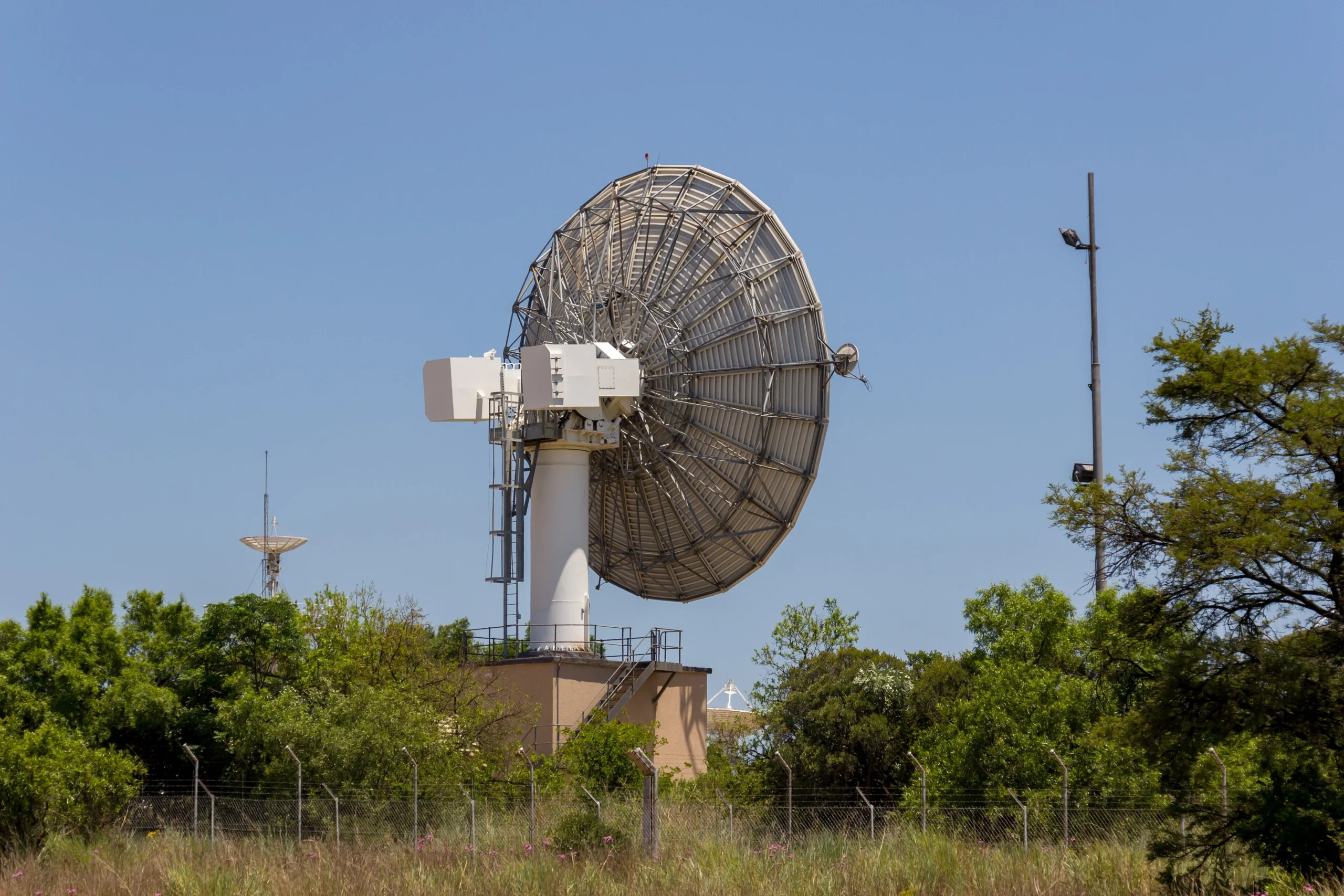
South Africa’s state signal distributor Sentech told Parliament on 24 November 2026 that a national communications satellite would cost R6.5 billion (about US$372 million), giving the clearest price yet for a programme officials have pitched as both a connectivity project and a matter of national security. Sentech chief executive Tebogo Leshope set out the figure at a joint meeting of the Portfolio Committee on Communications and Digital Technologies and the Portfolio Committee on Science, Technology and Innovation.
“We engaged stakeholders. We have quantified the cost at R6,5 billion. It covers satellite manufacturing and the launch, ground station and equipment, and all other related services,” Leshope said, according to IOL. The draft National Satellite Communications Strategy, drawn up by the Department of Communications and Digital Technologies (DCDT), the Department of Science, Technology and Innovation (DSTI), Sentech and the South African National Space Agency (SANSA), has still to go to Cabinet for approval.
Four ways to pay
Officials put four financing models before the committees, Space in Africa reported. In the first, National Treasury would fund the full capital cost and treat the satellite as a strategic national asset. The second would create a satellite company, SATCO, as a public-private partnership that pools government money with strategic anchor investors and coordinates all government satellite requirements, much as Nigerian Communications Satellite Limited (NIGCOMSAT) does for Nigeria. Under the third, SATCO would borrow from development finance institutions such as the Development Bank of Southern Africa, the Industrial Development Corporation and the New Development Bank, possibly backed by Treasury’s Budget Facility for Infrastructure. The fourth mixes state funding, debt and private capital.
The cost has crept up. When the strategy was first briefed to the same committees in November 2024 the estimate was about R6 billion, and DSTI officials repeated a figure of up to R6 billion in April 2025, ITWeb reported.
A defence and security case
While the latest briefing stressed rural broadband and infrastructure sovereignty, the strategy has carried a security rationale from the start. At the November 2024 briefing officials said the satellite would provide secure communication infrastructure for the defence sector, disaster management and emergency response, and would reduce reliance on foreign services exposed to geopolitical pressure, according to the Parliamentary Monitoring Group. SANSA told MPs it had engaged the South African National Defence Force (SANDF) and its newly created Space Command directorate on protecting space assets. Parliament said at the time that the satellite could “enhance national security and technological sovereignty”.
A government statement quoted by ITWeb in 2025 was more direct: “A domestic system would also strengthen South Africa’s sovereign capabilities, as required by the national defence and security clusters.” It said the satellite would be acquired and run by a national satellite organisation in partnership with an international satellite fleet operator. Officials recommended a dedicated satellite rather than leased capacity on a shared spacecraft, and said an orbital slot had been secured with the regulator ICASA to replace South Africa’s degraded International Telecommunication Union allotment, for a spacecraft expected to last 15 to 20 years.
Questions from MPs
MPs have pressed the departments on gaps. In 2024 they asked why the Department of Defence and the SANDF were not formally part of the project steering committee, and raised the risk of sabotage, from defective components to signal jamming. The committees have also asked for a full business plan and said security cluster committees would join future oversight.
South Africa has built small satellites for years, from the ZACube-2 nanosatellite launched in 2018 to SANSA’s interest in reviving a national launch capability, but it has no geostationary communications satellite of its own and relies on foreign operators. Elsewhere on the continent, Nigeria is close to contracts for six new satellites, including the NigComSat-2A and 2B communications spacecraft and a synthetic aperture radar satellite.
Secure Links for a Stretched SANDF
For the SANDF, which runs border patrols, peace support missions and maritime operations across a wide area, sovereign satellite bandwidth would cut dependence on commercial capacity bought from foreign providers. Whether the defence force gets that capacity depends on Cabinet approving the strategy and on Treasury choosing a funding model in a tight fiscal year. Until then, R6.5 billion remains a price tag rather than a programme.