Nigeria’s National Space Research and Development Agency (NASRDA) says the procurement process for six new satellites approved by President Bola Tinubu’s administration has reached 95 per cent completion, with contracts due to be signed with foreign technical partners in November. NASRDA Director-General Professor Matthew Adepoju gave the update in an interview with the News Agency of Nigeria (NAN) in Abuja on Friday, 2 October 2026.
Adepoju said the satellites were approved to strengthen Nigeria’s space programme and replace ageing space assets. The package comprises three optical Earth observation satellites, one synthetic aperture radar (SAR) satellite and two communications satellites, NigComSat-2A and NigComSat-2B. “Currently, there is a procurement procedure which we are at 95 per cent level now,” he said. “Very soon, at the African Space Economic Conference coming up in November, we will be signing an MoU and contractual agreement with our foreign technical partners.”
The event he referred to is the Africa Space Economy, Innovation and Communication Conference (ASEICC 2026), which NASRDA will host in Abuja from 24 to 27 November with support from the United Nations Office for Outer Space Affairs (UNOOSA).
Sub-Metre Optical and Radar Imaging
Adepoju stressed that the new spacecraft are not nanosatellites, the small satellites of roughly one to ten kilograms that many African programmes have used to build early capability, and said funding for the programme had been approved. “We have three optical satellites to be launched at sub-metre resolution. We have Synthetic Aperture Radar to be launched at one-metre and sub-metre resolution, then communication satellites, which come as 2A and 2B,” he said.
The Earth observation element picks up from the plan Military Africa reported in August, when Nigeria set out to procure four new satellites for military surveillance. The Federal Executive Council (FEC) approved that package of three optical satellites, reported under the working names NigeriaSat-3, NigeriaSat-4 and NigeriaSat-5, and one SAR satellite in May 2025. The latest figure of six satellites adds the two NigComSat communications spacecraft to those four.
The SAR satellite carries the most direct military value. Radar imaging works at night and through cloud and rain, conditions that limit optical satellites over the forests of the north-east and the creeks of the Niger Delta. Former Minister of Innovation, Science and Technology Uche Nnaji said in 2025 that Nigerian forces currently buy commercial imagery when tracking armed groups in areas such as the Sambisa forest. The Defence Space Administration (DSA), which operates Nigeria’s first military satellite, DELSAT-1, is expected to be a main user of the radar data.
NigComSat-2A and 2B
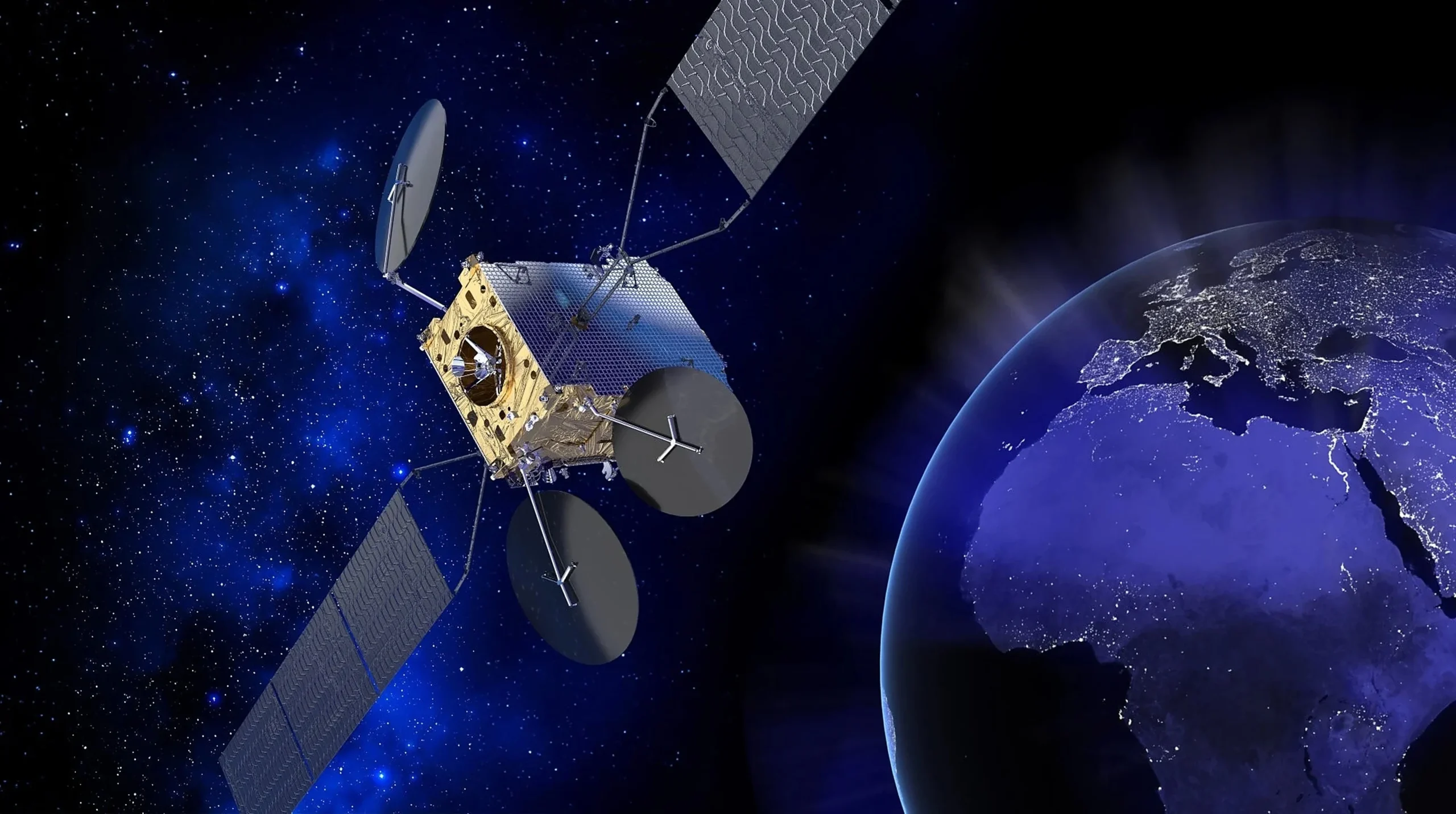
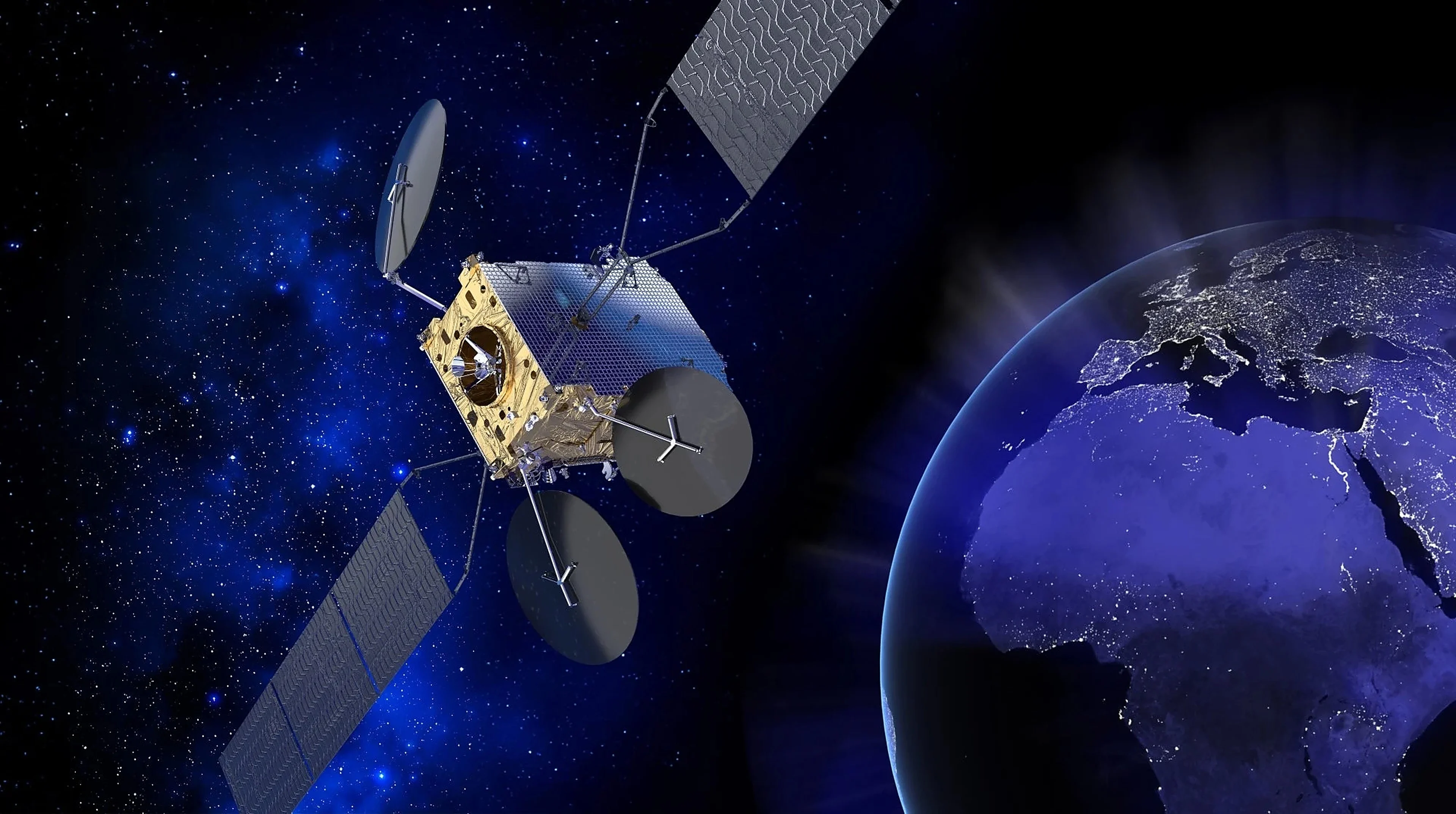
The communications satellites are further advanced than the rest of the package. The FEC approved the acquisition and deployment of NigComSat-2A and NigComSat-2B on 22 August 2026, with Israel Aerospace Industries (IAI) and France’s Thales Alenia Space selected as manufacturers, according to state operator Nigerian Communications Satellite Limited (NIGCOMSAT). On 14 September, Thales Alenia Space announced it had signed a contract to build NigComSat-2A, a geostationary satellite on its Spacebus B2 platform with a launch mass of close to four tonnes and an expected service life of more than 15 years. It will carry a C-, Ku-, Ka- and L-band payload covering West, Central and Southern Africa, Space in Africa reported. That leaves IAI as the expected builder of NigComSat-2B, although Israel’s Calcalist had earlier reported the reverse allocation.
NIGCOMSAT Managing Director Nkechi Jane Egerton-Idehen has said 2A is targeted for launch in 2028 and 2B in 2029. The two satellites will replace NigComSat-1R, which China built and launched in December 2011 after the original NigComSat-1 failed in orbit in 2008, and which is approaching the end of its 15-year design life. The choice of European and Israeli builders ends the Chinese role in Nigeria’s communications satellite programme that began in 2007. NIGCOMSAT has also said the satellites will support secure communications for national security and defence.
NAN reported that the whole programme is estimated to cost $2 billion and will be delivered through several international partners, adding that China Great Wall Industry Corporation (CGWIC) is also involved. Other reports describe CGWIC as one of the bidders, alongside Airbus and Turkish Aerospace, in the NigComSat competition that Thales and IAI won, and its role in the wider package has not been set out publicly. The cost figures also differ: Calcalist put the combined value of the two communications satellite deals alone at about $2 billion, while TechCabal reported that the final contract cost had not been disclosed because vendor financing backed by export-import banks was still being closed. NIGCOMSAT rejected allegations of irregularities in the procurement in September, saying it followed the Public Procurement Act.
A New Assembly, Integration and Testing Laboratory
Adepoju said NASRDA would also build a new Assembly, Integration and Testing Laboratory (AITL) to improve Nigeria’s capacity to develop satellites locally, with end-to-end capability for satellite assembly, integration and testing and support for manufacturing a new generation of spacecraft. “One of the beautiful things that we are going to do is to build our new Assembly, Integration and Testing Laboratory, which is end-to-end,” he said. “That is where we will be manufacturing a new set of satellites, and that is why I said we are going to declare new missions very soon.”
He said the laboratory would be completed within 18 months of signing the contract. “We have the timeline from the day of signing the contract to commissioning, and that is 18 months,” he said. Nigeria has built satellites with foreign partners before, including NigeriaSat-X, which Nigerian engineers assembled under a training programme with Surrey Satellite Technology in the United Kingdom, but has lacked a full domestic facility of this kind.
Tighter Regulation of the Space Sector
The NASRDA chief said the agency was also strengthening regulation and spectrum management to improve oversight of activity in Nigeria’s space sector. “Gone are the days that foreign companies and partners come and do whatever they like in our space sector,” he said. “Now we monitor, we manage and ensure that the abuses of the past are no longer repeated in this country.”
Adepoju urged young Nigerians to explore opportunities in the space sector, saying innovation did not always require large financial resources. He said investment in space technology and other critical infrastructure would support Nigeria’s long-term economic goals, including its target of a $1 trillion economy. NASRDA has also been courting private investors ahead of ASEICC, and has worked with Nigerian firms such as Proforce, with which it signed a space technology memorandum of understanding in 2022.
Signatures Due at the Obasanjo Space Centre
The November conference will test whether the 95 per cent figure turns into signed contracts for the Earth observation and radar satellites, whose builders NASRDA has not named. If signatures follow, the AITL timeline would put the laboratory into service by around mid-2028, the same year NigComSat-2A is due in orbit. For the armed forces, the SAR satellite would offer a sovereign source of all-weather imagery to add to DELSAT-1, reducing reliance on purchased commercial data, provided NASRDA and the DSA settle how tasking is shared between the civilian agency and the military users it is meant to serve.