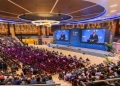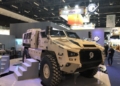

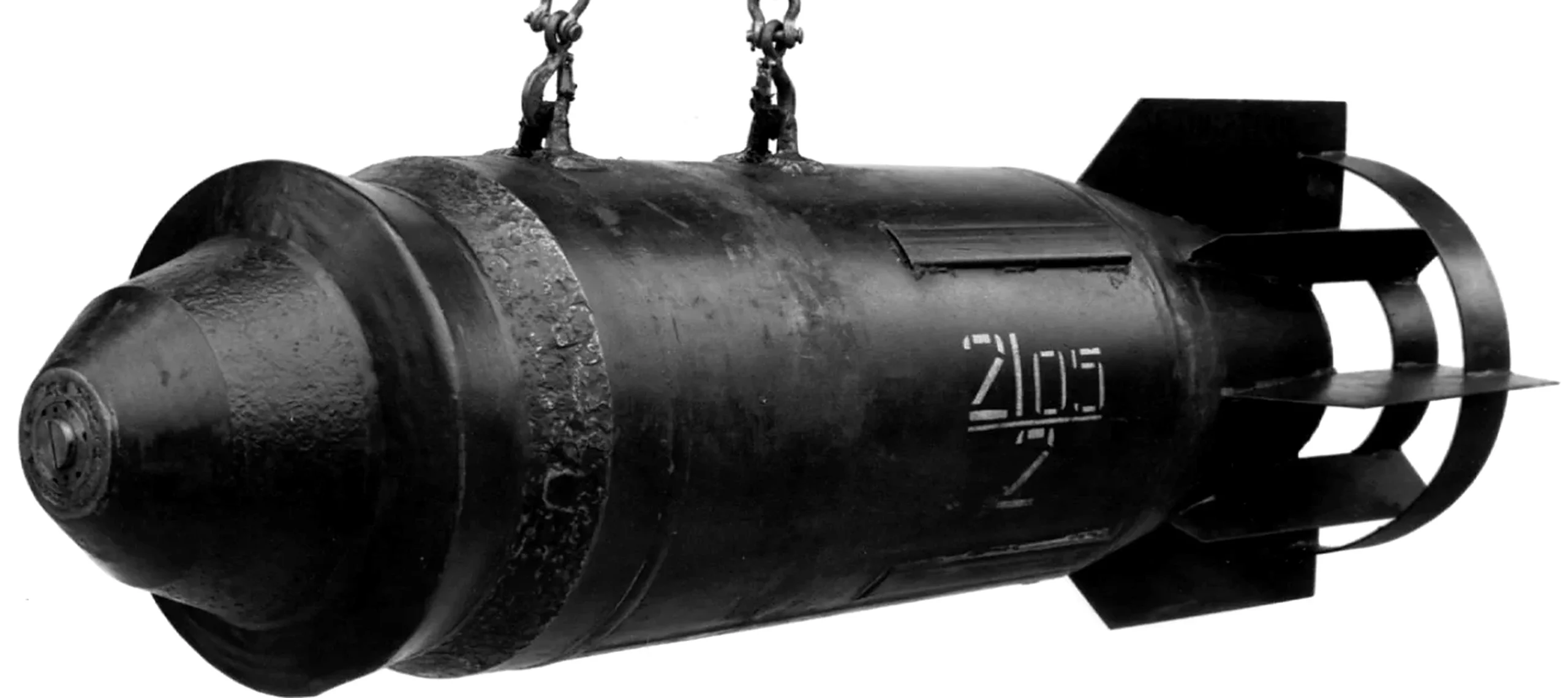
Sudan’s state-owned Defence Industries System (DIS) displayed locally produced FAB-250 and FAB-500 unguided aerial bombs, a pair of Soviet-designed weapons the country previously imported from Russia, at the second Bamako International Defence and Security Exhibition (BAMEX 2026) in Mali, which closed on 13 November. According to Sudan Tribune, the Sudanese pavilion also showed Burkan 3 guided bombs, anti-armour weapons, ammunition for light, medium and heavy weapons, and wireless communications equipment, with the Sarsar armoured vehicle presented on display screens rather than on the stand.
A photograph released with the report shows a DIS representative talking Malian officers through the exhibits on 13 November. The DIS said its pavilion drew strong interest from the Malian military and could lead to future contracts, and described its presence in Bamako as part of a strategy to expand into Africa and build regional defence partnerships, Atheer News reported.
From Russian Imports to Local Production
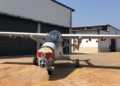
The FAB-250 and FAB-500 are general-purpose high-explosive bombs of about 250 kg and 500 kg, first fielded by the Soviet Union in the 1950s and still in wide use with air forces that fly Russian aircraft. The Sudanese Air Force operates Sukhoi and Mikoyan jets and Mil helicopters, and free-fall bombs of this family remain among the most commonly used munitions in the war between the Sudanese Armed Forces (SAF) and the paramilitary Rapid Support Forces (RSF), now in its fourth year.
Sudan Tribune did not say how many bombs the DIS produces or when production began, and the DIS has not published figures. Local manufacture would reduce the SAF’s reliance on imported air-delivered munitions at a time when its supply lines run through a small number of partners, but the claim has not been independently confirmed.
The Burkan family is older. Sudan’s SAFAT Aviation Group showed a 250 kg Burkan guided bomb at the Africa Aerospace and Defence exhibition in 2016, when its brochure claimed a glide range of up to 80 km from a release altitude of 10 km, according to defenceWeb. SAFAT’s chief test pilot said at the time that the weapon had been dropped by Sudanese aircraft in the Saudi-led campaign in Yemen. The specifications of the newer Burkan 3 shown in Bamako have not been released.
Who Is the Defence Industries System?
The DIS is the successor to the Military Industry Corporation (MIC), founded by decree in 1993 to supply the SAF during an international arms embargo. It is owned by the SAF and runs factories producing ammunition, small arms, artillery, armoured vehicles and aviation services, many of them licensed or unlicensed versions of Chinese, Russian and Iranian designs. The United States sanctioned the DIS in June 2023 and the European Union followed in January 2024, both over its role in supplying the army during the war with the RSF.
Its best-known vehicle, the Sarsar-2, is a 4×4 armoured personnel carrier built on a licence-made Kia truck chassis. As Military Africa reported in October, the Sarsar family was the SAF’s standard light armoured vehicle until the army began receiving about 100 Pakistani Mohafiz-V vehicles in July 2026.
A Busier Field at BAMEX
Sudan was one of several non-Turkish exhibitors at this year’s show. BAMEX 2026 opened on 9 November with manufacturers from Türkiye, China, Germany and Sudan, after the 2025 edition was almost entirely Turkish. Military Africa’s coverage from Bamako included Baykar’s KIZILELMA in Malian colours and ASELSAN’s KORKUT air defence system.
Mali makes a logical target. Its air force flies Russian-designed aircraft, including the Mi-24 and Mi-8 helicopters it took delivery of in Bamako on 16 November, and uses the same family of free-fall bombs. A Sudanese supplier would offer an African source for munitions that Bamako currently obtains from Russia, though any sale would face scrutiny given the US and EU sanctions on the DIS.
Khartoum’s Export Ambitions in the Sahel
The DIS has tried to sell abroad before, at IDEX in Abu Dhabi and at AAD in South Africa, with limited public success. What has changed is the market. The Sahel juntas of the Alliance of Sahel States (AES) are buying from new suppliers and favour partners that ask few questions, while a Sudanese industry kept busy by its own war now claims to make munitions it once had to import. Whether the interest the DIS reports in Bamako becomes contracts will show how far that pitch travels.