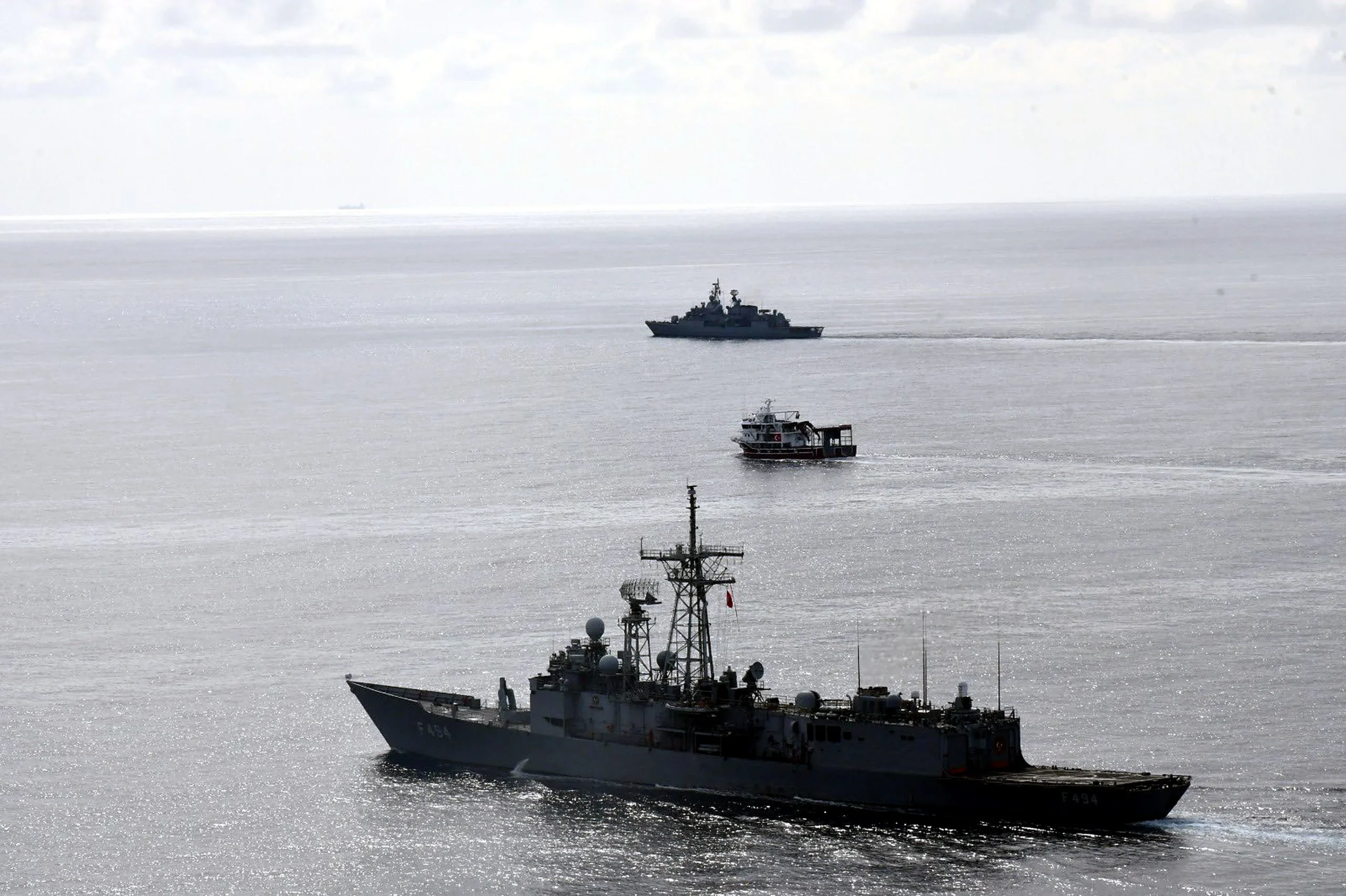
Two Turkish Navy frigates, TCG Gökçeada and TCG Yıldırım, left for Somalia on Friday 30 October 2026 carrying military equipment and supplies, Türkiye’s Ministry of National Defence (MSB) announced at its weekly press briefing on 28 October. The ministry named the vessels but gave no details on the type or quantity of equipment aboard.
The ministry also did not say whether the cargo was meant for the Somali National Armed Forces or for Turkish personnel stationed in the country. It gave no arrival date for the ships and no indication of how long they would stay in Somali waters. Turkish outlet Envanter Medya reported that the frigates are carrying supplies and rotating personnel for Turkish naval units already stationed off the Horn of Africa.
The departure followed a meeting on 24 October between the commander of the Turkish Land Forces and his Somali counterpart, who brought a military delegation to the talks. Both sides said afterwards that they would keep working together to build up the capabilities of Somalia’s armed forces and to support regional security.
Escort duty and a task group handover
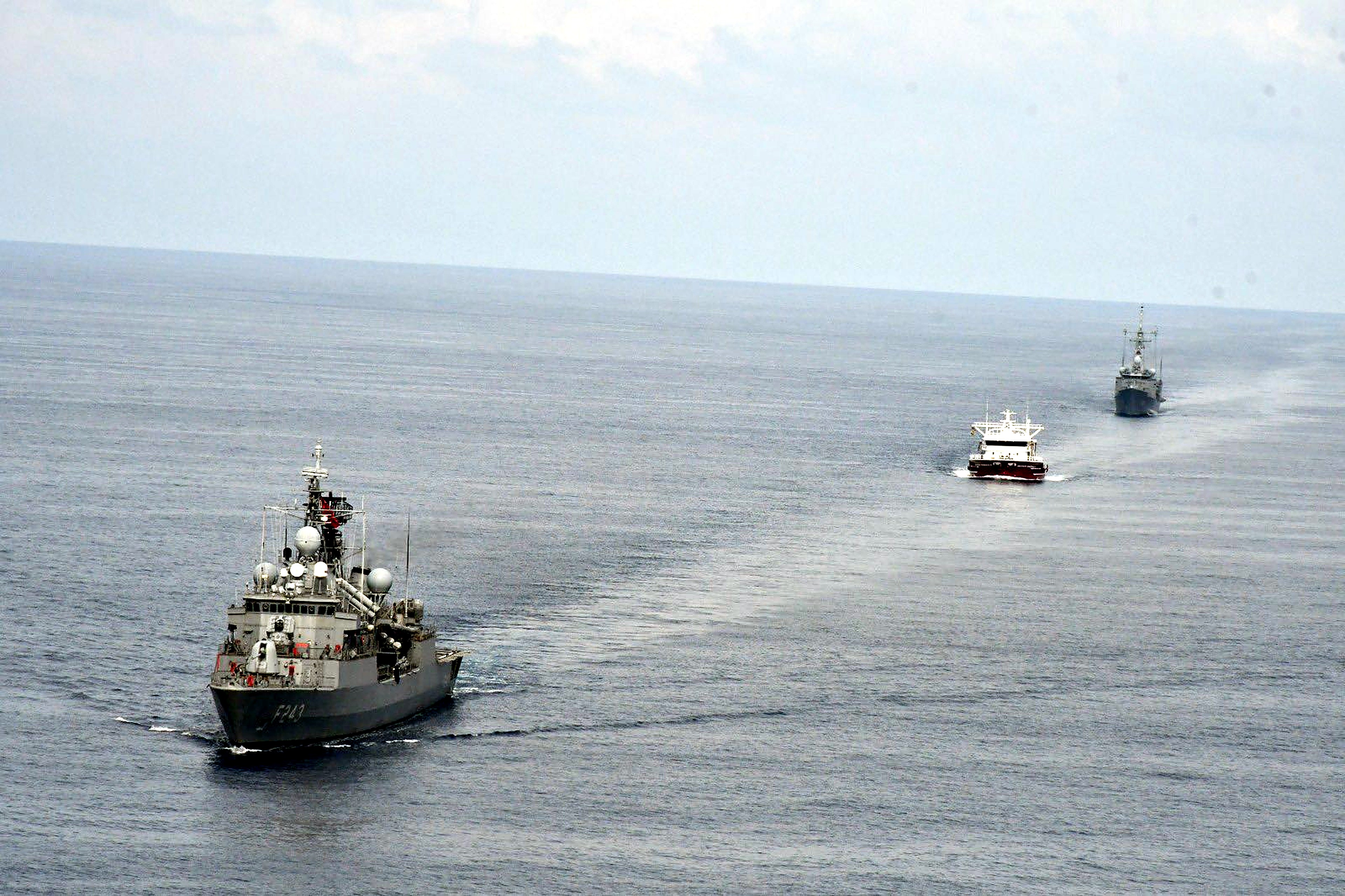
Both frigates are sailing as part of what Türkiye calls the Somali Maritime Task Group (Somali Deniz Görev Grubu, SDGG), a rotating naval presence off the Somali coast. On 4 November the MSB said on X that TCG Gökçeada and TCG Yıldırım were continuing their passage to Mogadishu while escorting and protecting the Turkish fishing vessel Mustafa Korkmaz A, which plans to carry out exploratory and trial fishing in Somalia’s exclusive economic zone (EEZ), and that the ships would take part in an SDGG handover on arrival, Baird Maritime also reported. The fishing work follows the creation of SOMTURK, a joint venture set up in Somalia by the Turkish armed forces pension fund OYAK in December 2025, and the issue of the first international fishing licence under the arrangement to the Turkish-flagged Ergun Reis A in March 2026.
A much larger Turkish footprint in Somalia
The frigate sailing is one piece of a much larger Turkish presence in Somalia. Türkiye has trained thousands of Somali soldiers at the Camp TURKSOM training base in Mogadishu, its largest overseas military facility, and has supplied armoured vehicles such as the Kirpi mine-resistant ambush-protected (MRAP) vehicle and drones to Somali forces. Turkish firms also run the capital’s main port and airport, and Ankara has pursued offshore hydrocarbon exploration deals that critics say favour Türkiye disproportionately. Military Africa has examined that imbalance in its analysis of the Turkish defence model and the capacity it leaves behind in Africa.
That energy push has drawn its own naval escort. Ankara first announced in 2024 that it would deploy frigates to Somalia to protect energy exploration. The Turkish deep-sea drillship Çağrı Bey arrived in Mogadishu on 9 April 2026 to begin Somalia’s first offshore deep-sea drilling campaign at the Curad-1 well, backed by a naval task group built around the frigate TCG Gökova, the corvette TCG Bafra and the landing ship TCG Sancaktar. The same month, three Turkish F-16 fighter jets flew a low-altitude pass over Mogadishu to mark the 66th anniversary of the Somali National Army. Turkish warships have been calling at Mogadishu since at least April 2024, when TCG Kınalıada visited the capital.
Built on the 2024 defence pact
Türkiye’s military relationship with Somalia rests on a ten-year Defence and Economic Cooperation Framework Agreement signed on 8 February 2024, which commits Ankara to help build, train and equip a Somali navy and to protect Somali waters. Türkiye’s parliament approved a two-year deployment to Somalia in July 2024, and Military Africa reported in April 2025 that about 500 troops had arrived in Mogadishu as the first phase of a contingent of up to 2,500, tasked with protecting TURKSOM and helping secure the capital’s key sites. On 21 July 2026 the Grand National Assembly extended the mandate for two more years from 27 July, through July 2028, covering operations against al-Shabaab, piracy, illegal fishing and smuggling, The Eastleigh Voice reported.
The relationship has not been without friction. In June 2025, Puntland authorities seized a Turkish vessel carrying weapons bound for Somalia and looted part of its cargo, a reminder that Turkish shipments to Mogadishu sometimes cross waters where the federal government’s authority is contested.
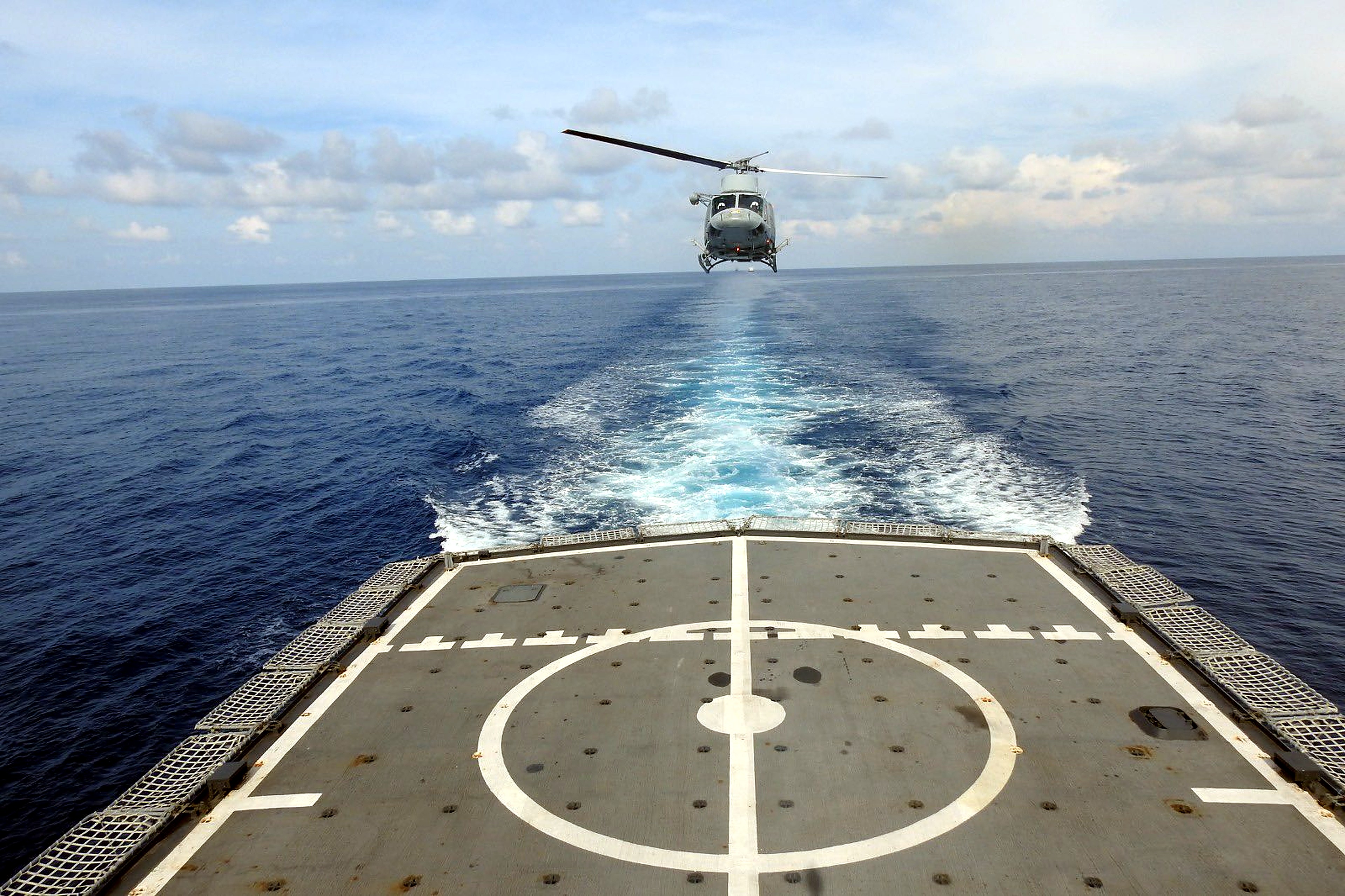
TCG Gökçeada: a modernised Perry-class frigate
The two ships put the sailing in perspective for readers tracking Turkish naval capacity in the region. TCG Gökçeada (F-494) is a Gabya-class, or G-class, frigate, Türkiye’s designation for the former United States Navy Oliver Hazard Perry class. Formerly USS Mahlon S. Tisdale (FFG-27), she was transferred to Türkiye on 5 April 1999 and commissioned into Turkish service on 27 September 1999. She displaces about 4,100 tonnes and is 138.1 metres long.
Like the rest of the class, Gökçeada has been upgraded with the GENESIS combat management system, which automates threat assessment and weapon assignment for the crew, and Turkish sources say she carries an X-band satellite communications fit linking her to Turkish national and North Atlantic Treaty Organization (NATO) secure networks. Turkish defence outlets also report that she has been used in trials of small unmanned aerial vehicles launched from her flight deck, including Enetki Defence’s Delican vertical take-off drone, which the Turkish Navy is evaluating for surveillance around its ships.
TCG Yıldırım: a MEKO 200 veteran
TCG Yıldırım (F-243) is older. A Yavuz-class frigate built to the German MEKO 200 Track I design at Gölcük Naval Shipyard, she was commissioned on 17 November 1989. At 3,030 tonnes full load and 110.5 metres long, she is smaller than Gökçeada but carries a heavier anti-ship fit: eight RGM-84 Harpoon anti-ship missiles in two quadruple launchers, 16 RIM-7 Sea Sparrow surface-to-air missiles, a 5-inch (127 mm) deck gun and three Oerlikon Sea Zenith 25 mm close-in weapon systems for point defence. She has a crew of about 180 and can operate an AB 212 anti-submarine helicopter from her hangar.
Both ships have prior experience in the Gulf of Aden. Gökçeada has served rotations with Combined Task Force 151 (CTF-151), the multinational counter-piracy force, and both frigates have escorted Turkish vessels through pirate-prone waters off Somalia for more than a decade.
Layered Turkish Power off the Somali Coast
The timing places this sailing within a broader pattern of layered Turkish military activity in Somalia this year: naval task groups supporting the Çağrı Bey drilling campaign, fighter jet flyovers, troop deployments tied to the campaign against al-Shabaab, escorts for Turkish fishing vessels, and now a frigate pair carrying unspecified equipment and supplies. Somali and Turkish officials have framed each step as part of the 2024 defence pact rather than a new initiative. With the parliamentary mandate now running to July 2028 and the African Union mission facing the loss of United Nations funding support, Türkiye’s role among the foreign forces taking a bigger part in Somalia’s war looks set to grow, at sea as well as on land.