

While the volume of major arms imported by African states fell by 41% between 2016–20 and 2021–25, imports into sub-Saharan Africa rose and West African arms imports have grown sharply as the region’s security situation has deteriorated, according to data from the Stockholm International Peace Research Institute (SIPRI). The institute’s latest Trends in International Arms Transfers fact sheet, published in March 2026, puts Nigeria, Senegal and Mali at the top of sub-Saharan Africa’s importers.
The continental decline is driven largely by Algeria, whose imports fell by 78% from a 2016–20 peak. Africa’s share of global arms imports dropped to 4.3% in 2021–25, from 7.9% five years earlier. Over the same period, imports by sub-Saharan states rose by 13%, to 2.2% of the global total.
West Africa’s long rise
SIPRI’s previous fact sheet, published in March 2025, found that the combined arms imports of West African states almost doubled (+82%) between 2010–14 and 2020–24. Nigeria accounted for by far the biggest share (34%) of arms imports to West Africa in 2020–24.
“The growth in arms imports to West Africa has been striking. While the volume of imports remains relatively small, it has important geopolitical implications,” said Katarina Djokic, Researcher with the SIPRI Arms Transfers Programme, when SIPRI released those figures. “States like Burkina Faso, Mali and Senegal seem to be rapidly increasing their imports. Arms suppliers are using arms exports to boost their influence in this part of the world, including emerging suppliers, primarily Türkiye, alongside more established actors such as China, France, Russia and the USA.”
The 2021–25 data confirms the pattern. The three largest arms recipients in sub-Saharan Africa were all West African: Nigeria (receiving 16% of subregional imports), Senegal (8.8%) and Mali (8%), as Military Africa reported when the figures were released.
Who supplies Africa
The main suppliers to Africa as a whole in 2021–25 were the United States (accounting for 19% of African imports of major arms), China (17%), Russia (15%) and France (8.3%). In sub-Saharan Africa the order changes: China, which supplied major arms to 23 states and accounted for 22% of subregional imports, was the largest supplier. Russia was next (12%), followed by Türkiye (11%).
Türkiye’s rise is visible across the Sahel and coastal West Africa. Baykar’s drones have spread rapidly, with Burkina Faso’s Akinci drones breaking cover in 2024 and Mali acquiring additional Akincis in 2026, while Senegal has deepened ties with Turkish industry through Aselsan and joint maritime surveillance flights by the Turkish Navy from Dakar.

Morocco and Algeria
Morocco (ranked 28th globally) and Algeria (33rd) are by far the largest recipients of major arms in Africa, and their long-running tensions with each other are a major driver of their imports. Morocco’s imports rose by 12% in 2021–25, making it the larger of the two. SIPRI notes that Algeria is highly secretive about its arms purchases, and its estimates may understate Algerian imports given unverified reports of further Russian deals. The rivalry is playing out most visibly in the air, as Military Africa examined in North Africa’s air arms race.
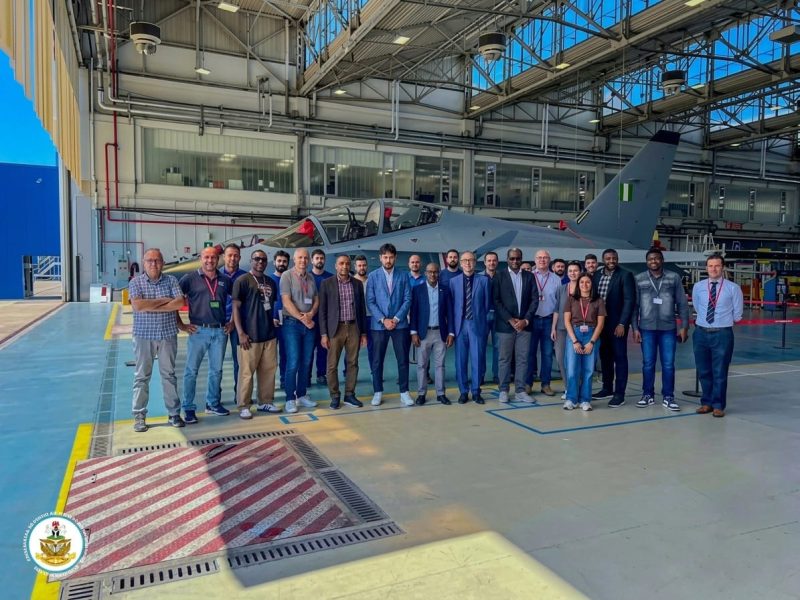
Nigeria’s acquisitions set the pace in West Africa
Nigeria’s share will likely stay high as current programmes deliver. The first of its 24 Leonardo M-346FA fighter-attack aircraft were cleared for delivery in August 2026, and Nigerian Air Force technicians are training in Italy to maintain them. Senegal continues to build its navy around missile-armed OPV 58S patrol vessels, while Mali and Burkina Faso rely increasingly on Russian, Chinese and Turkish equipment. SIPRI’s next annual figures, due in March 2027, will show whether West Africa’s growth holds as conflicts in the Sahel spill towards the Gulf of Guinea coast.