

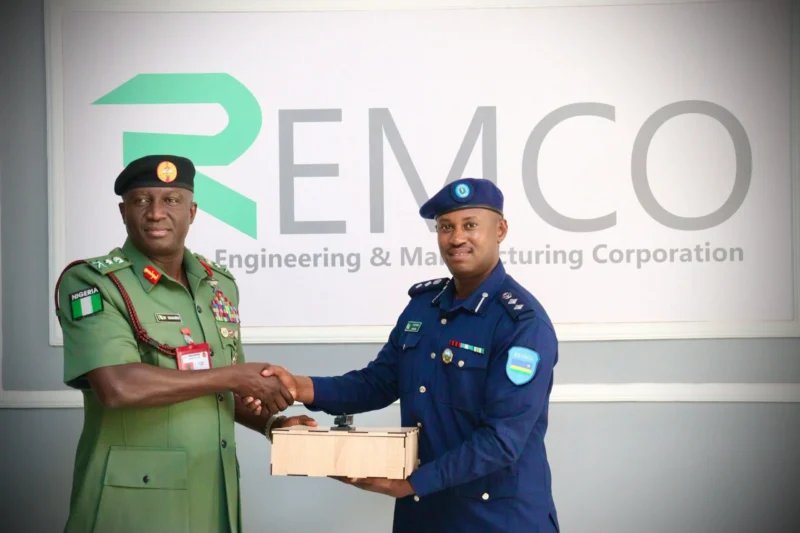
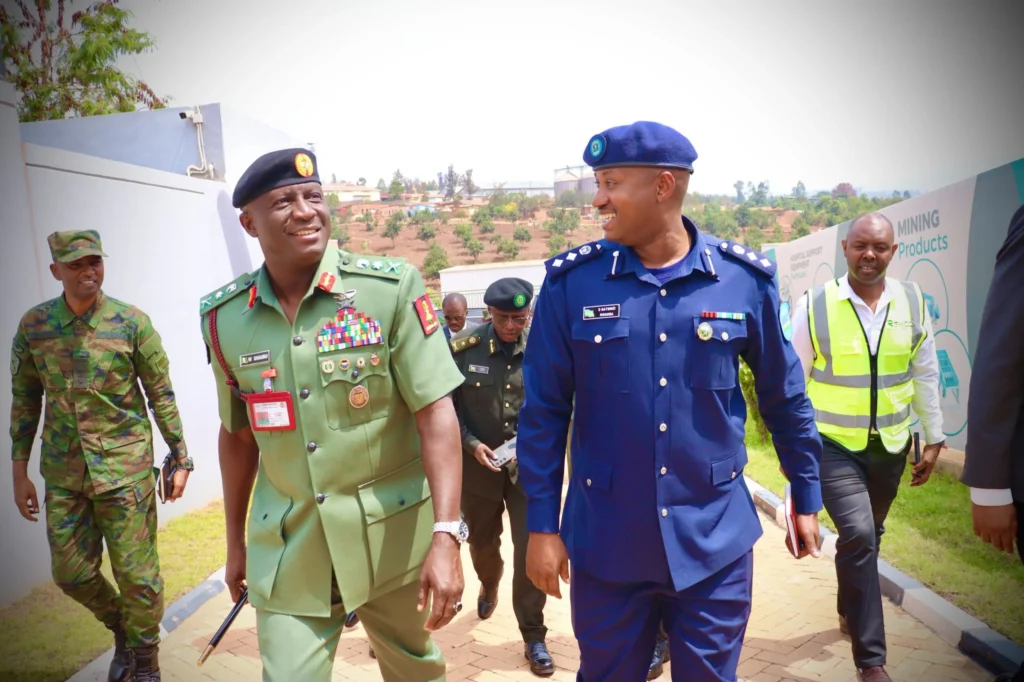
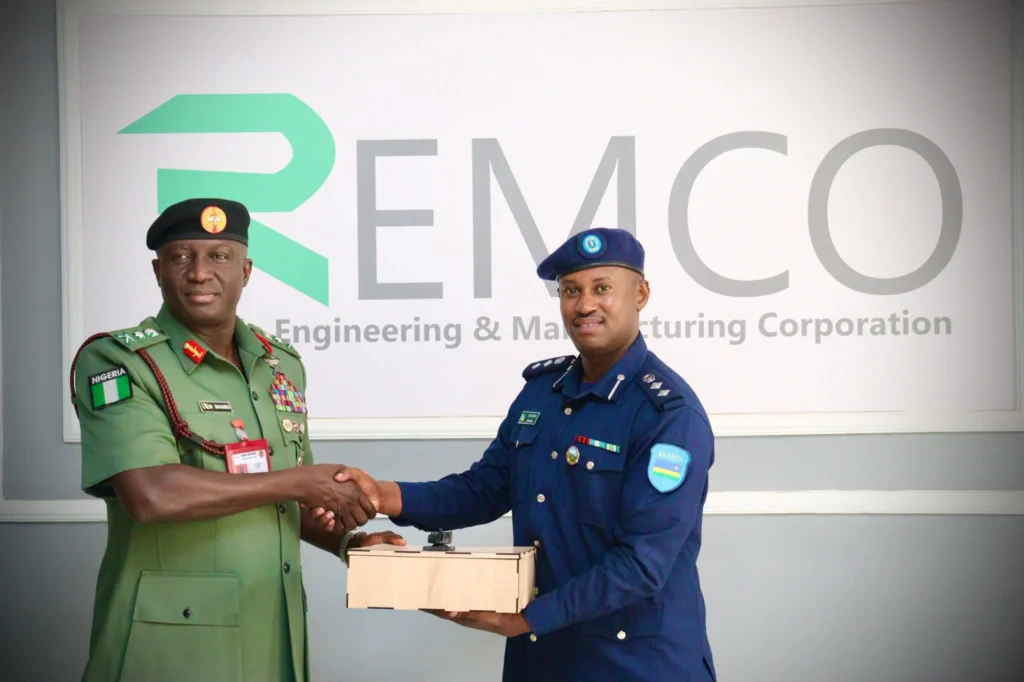
Nigeria’s Chief of Army Staff, Lieutenant General Waidi Shaibu, toured the Rwanda Engineering and Manufacturing Corporation (REMCO) in Kigali on 21 October 2026 and called on African states to build their own defence industries.
The tour formed part of an official visit to Rwanda from 18 to 23 October. Shaibu said African countries should invest in research and development, grow local technical skills and form cross-border industrial partnerships to answer their own security problems.
REMCO Chief Executive Emile Rugambajye received the delegation at the state-owned plant in the Kigali Special Economic Zone. According to a statement from Colonel Appolonia Anele, Acting Director of Army Public Relations, Shaibu reviewed the company’s precision engineering, machining, metal casting and machinery fabrication work.
Press reports say REMCO displayed sniper rifles, assault rifles, machine guns, pistols and armoured vehicles at the inaugural International Security Conference on Africa, held in Kigali during the visit.
Talks With Rwandan Leaders

Earlier in the week, Shaibu called on Rwanda Defence Force (RDF) Chief of Defence Staff General Mubarakh Muganga. He then held bilateral talks with RDF Army Chief of Staff Major General Vincent Nyakarundi.
Shaibu said both armies had committed to implementing existing memoranda of understanding on military training and on the exchange of directing staff and logistics personnel. He also reaffirmed Nigerian Army support for specialised training, joint exercises and defence technology cooperation with the RDF. The Nigerian Army has been widening such ties this year, from a training and intelligence-sharing agreement with Jordan to an offer of counter-terrorism and drone warfare training to Bangladesh.
The delegation also visited the Kigali Genocide Memorial and the Campaign Against Genocide Museum. The Army statement said Shaibu praised Rwanda’s rebuilding since 1994 and argued that discipline, leadership and national resolve remain central to countering insecurity across Africa.
On 22 October, President Paul Kagame received Shaibu at Urugwiro Village, his office in Kigali, to discuss ways of strengthening defence cooperation between the two countries, The New Times reported. The Nigerian Army also reported separate meetings with Rwanda’s Minister of Defence.
What REMCO Brings
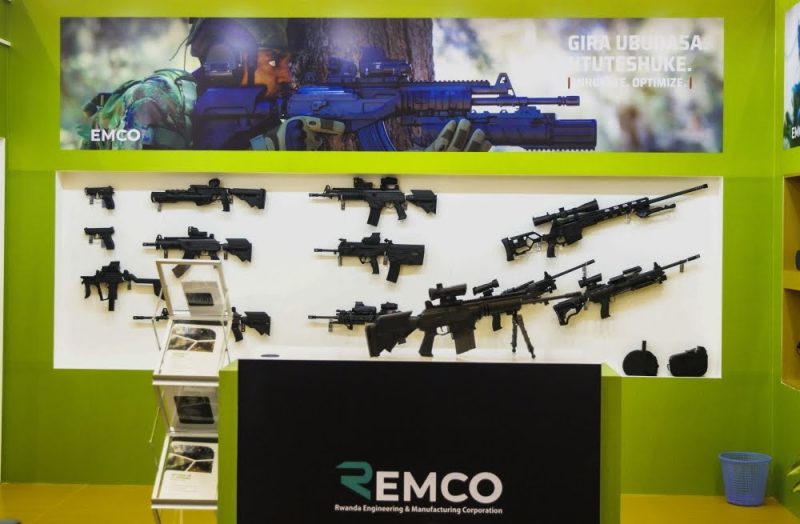
REMCO was founded in 2018. It specialises in engineering, metal casting, fabrication and the production of machinery, equipment and spare parts. Reports also say it makes small arms in collaboration with Israel Weapon Industries (IWI), the Israeli firearms maker.
The Nigerian Army’s case for local manufacturing is practical. Shaibu said domestic production improves equipment availability, meaning the share of a fleet fit for use on a given day. It also shortens maintenance supply chains and cuts exposure to disruption in global defence supply networks.
He said he wants technical exchanges, joint research, knowledge transfer and manufacturing partnerships to strengthen Nigeria’s own production, equipment maintenance and technical support. The Army tied the visit to the Defence Industries Corporation of Nigeria (DICON), the state arms maker, which hosted the first AFRIDEX exhibition in Lagos days after Shaibu returned home and has already paired with private firms on projects such as an indigenous counter-drone system with UNICCON. The Army has also opened a joint service centre with China’s NORINCO in Bauchi to keep imported armour running.
The Import Picture
The push follows a period of heavy buying. The Stockholm International Peace Research Institute (SIPRI) reported in March 2026 that arms imports to sub-Saharan Africa rose 13 per cent between 2016 to 2020 and 2021 to 2025. Imports across the whole continent fell 41 per cent over the same span, driven largely by a 78 per cent drop in Algeria.
Nigeria took 16 per cent of the sub-region’s imports, the largest share. Senegal took 8.8 per cent and Mali 8.0 per cent. SIPRI counts only major systems such as aircraft, armoured vehicles, missiles and ships, so small arms like those REMCO makes sit outside its totals.
Nigeria’s own buying shows the dependence. ADF Magazine, citing Business Insider Africa, reports a $346 million United States arms sale package to Nigeria and a $1.38 billion contract for aircraft and helicopters from Italy and the United States. Bell has just started building Nigeria’s 12 AH-1Z Viper attack helicopters in Texas.
Nigeria is not alone in looking for shorter supply lines. Senegal has opened its first military vehicle assembly plant at Diamniadio, according to Seneweb, Mali has been widening its list of suppliers, and Abuja itself has asked the Czech Republic for help with an ammunition line.
That gap matters for the Nigerian argument. Local plants can realistically cover small arms, ammunition, spare parts and repair work first. Aircraft, ships and advanced armour will stay import-heavy for years, and even licensed local assembly often depends on foreign-made components, a dependence Military Africa examined in who really controls Africa’s weapons.
Scale is the other constraint. Rwanda’s own army is small, so REMCO needs export orders to keep production lines busy. Nigeria has a far larger requirement and an existing industrial base in DICON, which gives it more room to absorb output but also more capacity to compete with a Rwandan supplier.
From Kigali Talks to Shared Production Lines
No contract, joint venture or technology-transfer deal has been announced. The visit produced commitments to carry out existing memoranda and an expressed interest in manufacturing cooperation, not a signed programme.
For the Nigerian Army, the likely gain is in sustainment. Spare parts and repair capacity decide how many weapons and vehicles stay ready during a long counter-insurgency campaign. A partner that can machine and cast parts to order could help close that gap, if its quality control meets Nigerian military standards.
The Army statement framed the engagement as part of joint efforts against terrorism, violent extremism and cross-border threats. Industrial cooperation is a slower track than training, but it is the one that can reduce import reliance. The next signs to watch are whether the Nigerian Army sends a DICON technical team to Kigali, whether the two sides name a joint maintenance or research project, and whether the training and staff exchanges begin before the end of the year.