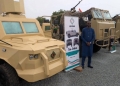

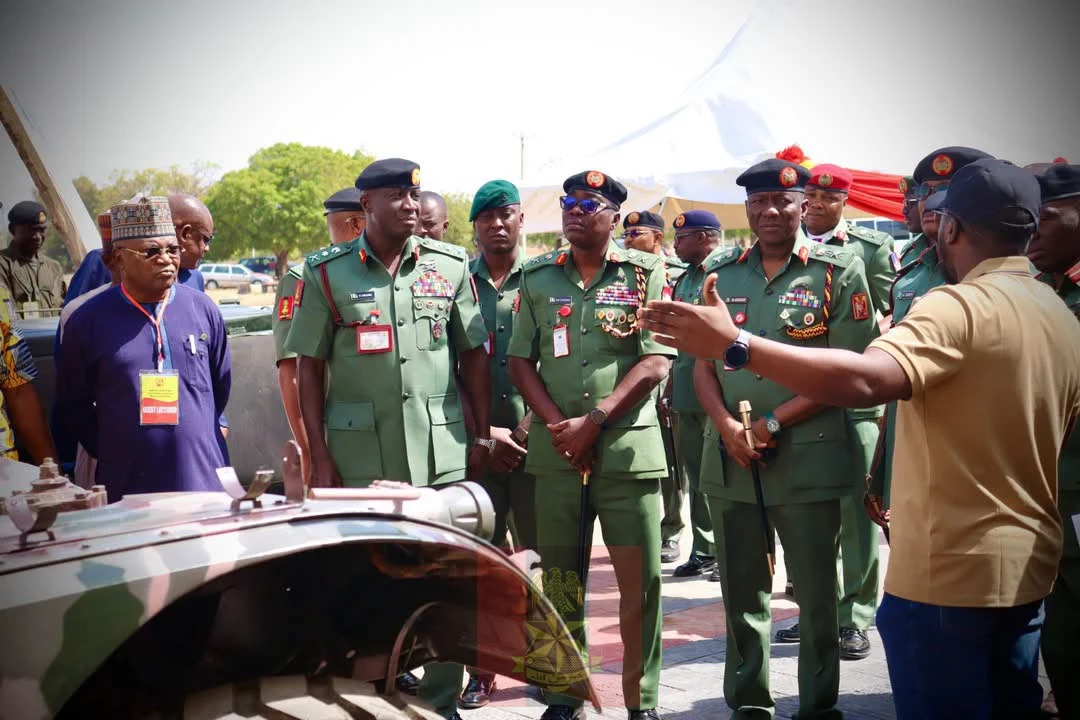
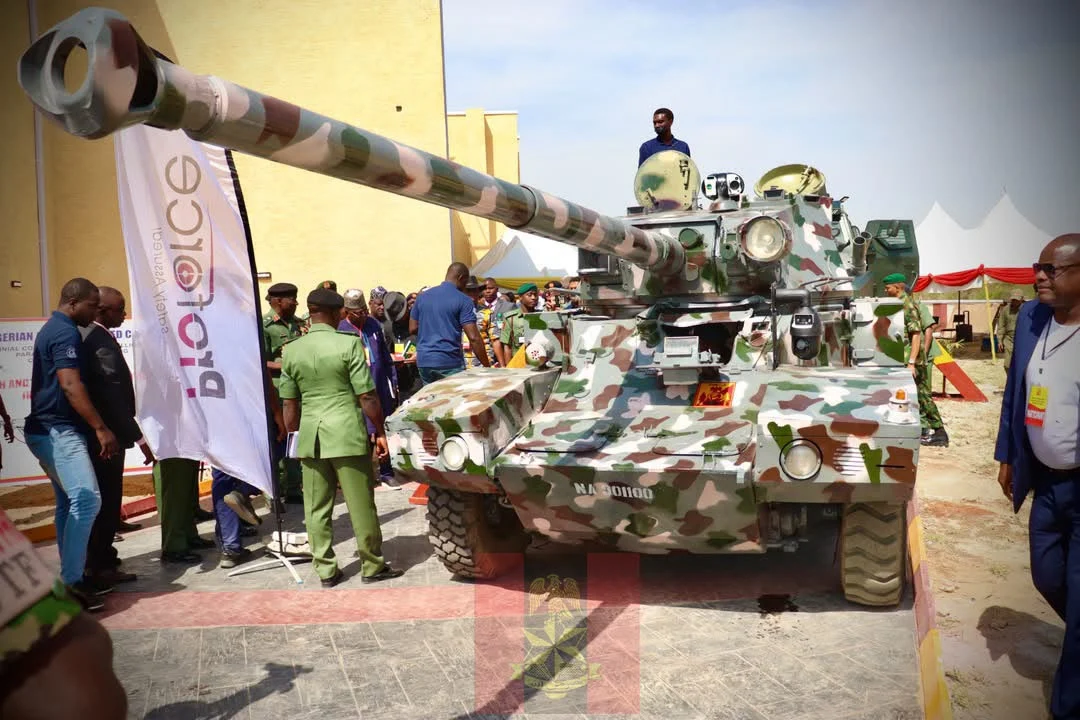
The Chief of Army Staff, Lieutenant General Waidi Shaibu, inspected main battle tanks and armoured personnel carriers (APCs) modified by the Nigerian firms Proforce Limited and Terra Industries at a research and development exhibition in Bauchi on Thursday 19 November 2026, and launched a new Standard Operating Procedure (SOP) for the Nigerian Army Armoured Corps (NAAC). The events formed part of the corps’ first Biennial Conference, Reunion and Pulling-Out Ceremony, held at the NAAC headquarters in Bauchi, Voice of Nigeria reported.
The army has not said which tank and APC types were modified, what work was carried out, or how many vehicles are involved.
A rulebook for the armoured fleet
According to a statement by the Acting Director of Army Public Relations, Colonel Appolonia Anele, the SOP is meant to standardise operational processes, enforce accountability and improve coordination in the deployment, management and maintenance of the army’s armoured assets. The statement described the vehicles shown by Proforce and Terra Industries as evidence of “growing strategic collaboration between the Nigerian Army and domestic defence enterprises” in improving equipment performance and sustainability.
Speaking at the conference, whose theme was “Emerging Trends in Tank Warfare for Enhanced Counter-Terrorism and Counter-Insurgency Operations in Nigeria”, Shaibu said the Armoured Corps now comprises four divisions, 10 brigades, 11 reconnaissance battalions and 26 tank battalions, ThisDay reported. He said the army has begun local repairs of armoured fighting vehicles through the Nigerian Army Corps of Engineers and Armoured Corps repair teams, work he said would raise the corps’ equipment inventory by more than 50 per cent from its current level once complete. He repeated his directive to “Train Better to Fight Better” and said the conference would be held every two years.
Two very different local partners
Proforce, founded in 2008, is Nigeria’s largest private armoured vehicle maker and has supplied the army with the Ara mine-resistant ambush-protected (MRAP) vehicle and the PF Hulk 4×4 APC, which Military Africa covered when it was unveiled in 2024. Its plants build APCs, MRAPs and armoured patrol boats for Nigerian and regional customers.
Terra Industries, formerly Terrahaptix, is better known for drones, surveillance software and unmanned ground vehicles. In February 2026 it signed a memorandum of understanding with the Defence Industries Corporation of Nigeria (DICON) to form a joint venture for local production, as Military Africa reported in March, and it has since armed its Duma unmanned ground vehicle for combat use. Its appearance beside Proforce on a tank and APC programme suggests the army is drawing on the start-up for sensors, electronics or remote systems rather than hull work, though neither company has described its role.
Bauchi as Nigeria’s armour hub
Bauchi has become the centre of the army’s effort to keep its armour running. In August 2026 the army and China North Industries Corporation (NORINCO) began operations at a comprehensive service centre at Obienu Barracks, the NAAC base, to carry out major overhauls of NORINCO-supplied VT-4 main battle tanks, ST-1 fire-support vehicles and SH-5 self-propelled howitzers, the first of which arrived in 2020. The corps also operates older Vickers Mk3 tanks and a mixed fleet of wheeled armour from Europe, the former Soviet Union, the United Arab Emirates and China, much of it decades old.
That mix is the problem the Bauchi initiatives are trying to solve. Spare parts for so many types are hard to source from abroad, and vehicles damaged in the north-east and north-west are often parked rather than repaired. Local modification and repair offer a quicker and cheaper route to restoring numbers than new imports, at a time when Military Africa has reported that personnel costs take about 76 per cent of Nigeria’s 2026 defence budget.
Rebuilding Armour for the Counter-Insurgency Fight
If the repair programme delivers the 50 per cent increase Shaibu described, it would put far more tanks and APCs back on the road for operations against Boko Haram, the Islamic State West Africa Province (ISWAP) and armed bandit groups. The harder question is whether modified vehicles can be supported at scale once the exhibition is over. That will depend on how quickly the new SOP is applied across the four armoured divisions, whether Proforce and Terra Industries receive production contracts rather than one-off demonstrations, and whether the army publishes enough detail for its local suppliers to plan around.