
Morocco bought drones from six (6) countries in 2024 and 2025, up from three (3) in 2020 to 2022, and is now building some of them at home. The shift appears in the Africa Drone Intelligence database run by Military Africa, which records 48 Moroccan drones for those two years. The database logs 201 drones from 2020 to 2022 from 3 suppliers, of which Israel supplied 160 of them. Across all 271 units on record, Israel accounts for 176 (64.9%). In the 2024 and 2025 entries, Israel’s share of the 48 falls to 33.3%.
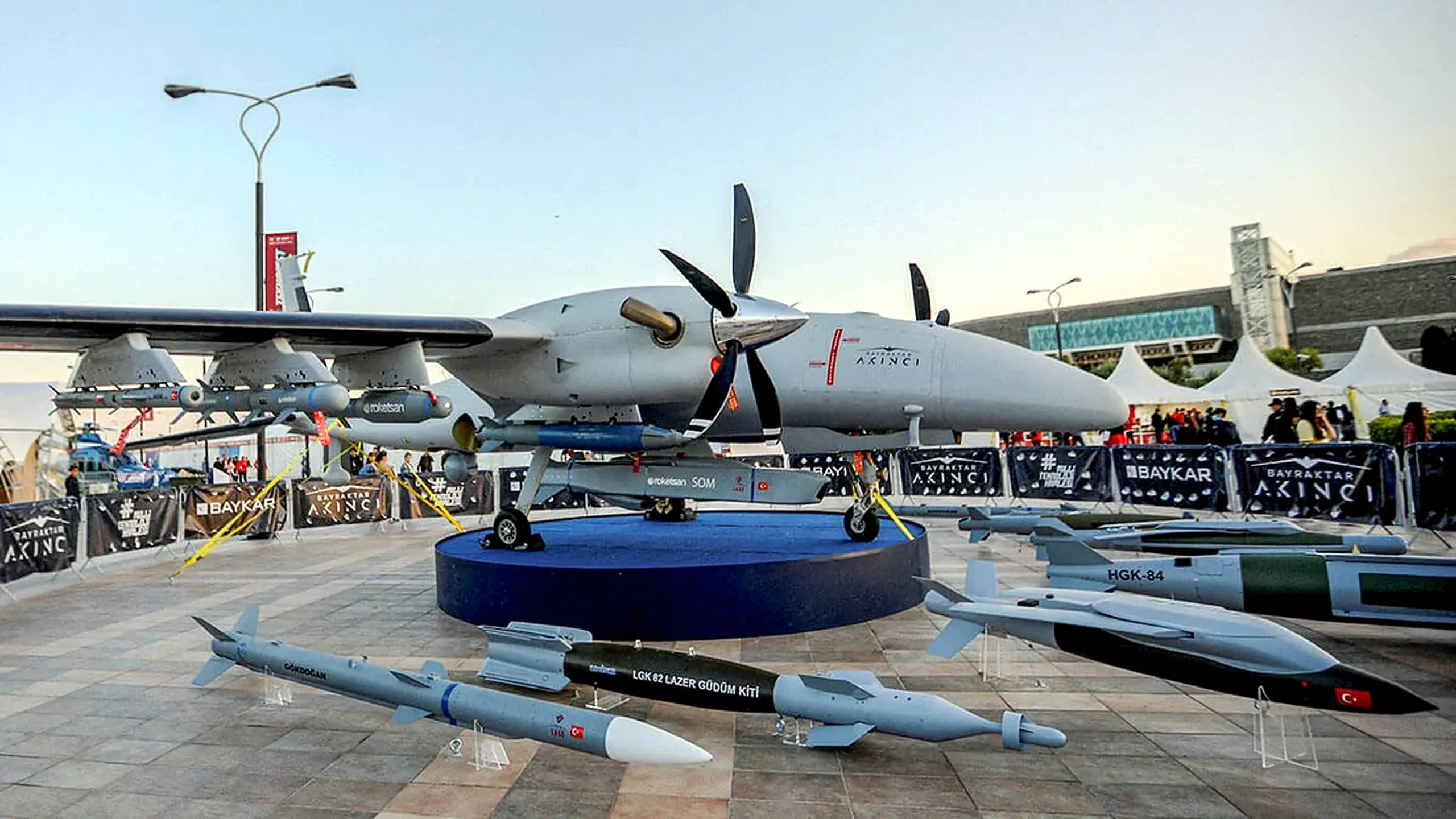
The six origin countries in the 2024 – 2025 entries are Israel, Turkey, France, China, the United States, and Morocco itself. The 2025 entries list 16 SpyX loitering munitions (small explosive drones that loiter, then dive on a target) from Israel’s BlueBird. They also list 12 Akinci from Baykar of Turkey, 6 DT26 from France’s Delair, 5 TB-001 from China’s Sichuan Tengden and 4 MQ-9B ordered from General Atomics of the United States. For 2025, the database adds 5 ATLAS ISTAR aircraft from Moroccan firm Aerodrive Engineering. Satellite imagery from June 2026 showed Akincis parked beside Bayraktar TB2s at Ben Guerir air base. The Akinci is the heaviest drone in Morocco’s records, with a 6,000 kg take-off weight and a 1,500 kg payload. Military Africa’s separate tracking of 234 programmes across 34 countries puts Morocco at 279 drones, second to Egypt at 313.
BlueBird opened a SpyX plant at Benslimane, near Casablanca, in November 2025, Globes reported. The SpyX has a range of about 50 km and a 2.5 kg warhead. Baykar registered a Moroccan subsidiary, Atlas Defence, at Benslimane in December 2024 and began hiring technicians and test pilots in February 2026. Aerodrive’s ATLAS ISTAR first flew in October 2024. The firm reportedly holds an order for 500 loitering munitions, with a Benslimane production line expected to open in 2027. Moroccan authorities approved licences for 10 defence projects worth more than $260 million in 2025; Local production represents the larger strategic shift.
On 9 October 2026, at the Marrakech Air Show, Abu Dhabi’s EDGE Group signed two agreements with Morocco’s Administration of National Defence. One covers the Desert Sting 16 glide bomb and the Thunder P-31 guidance kit, plus the work to integrate them on Morocco’s armed drones. The DS-16 weighs 23 kg, has a 12 kg warhead and can strike at 15 km when dropped from 30,000 feet. The P-31 turns an MK 81 general-purpose bomb into a guided weapon and reaches 10 km from a drone. The second agreement is a memorandum of understanding on local production.
Morocco received 6 more AH-64E Apache attack helicopters at Sale on Monday, 26 October 2026, bringing its total to 19 of 24 ordered. The delivery came weeks after the US Army grounded about 400 of its own Apaches. The International Crisis Group has described Algerian orders for Turkish and Chinese drones as a response to Morocco’s build-up. Algeria’s recorded deliveries from 2023 to 2026 total 17 units, against Morocco’s 48 in 2024 and 2025 alone.
Morocco and AFRICOM signed a memorandum on 13 July 2026 to set up a multidomain training and experimentation centre at Tan-Tan. The U.S. Army’s Southern European Task Force, Africa (SETAF-AF), plans to test counter-drone systems in Morocco in 2027. Domestic lines add another layer.