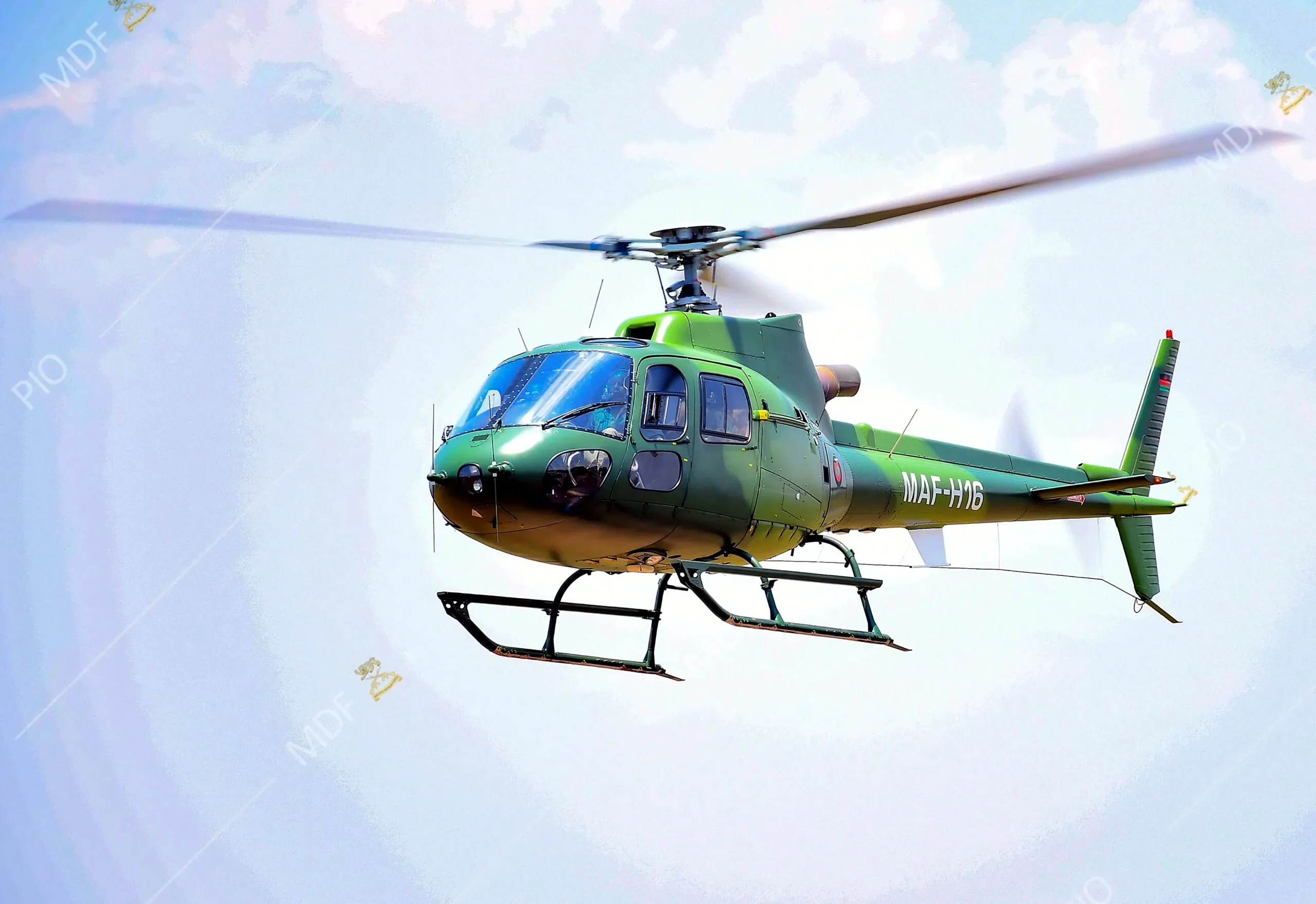
The Malawi Air Force has returned its only AS550 Fennec light utility helicopter to service after an overhaul by Airbus in South Africa, with the aircraft, serial MAF-H16, officially received at Lilongwe Air Base on Monday 26 October 2026. The Malawi Defence Force (MDF) announced the return on its Facebook page, describing the helicopter as an AS550 A2 Fennec and saying it will once again support troop and equipment transport, aerial reconnaissance, disaster response and access to remote communities, Malawi24 reported.
Airbus South Africa carried out the work. MAF-H16 is the air force’s sole AS550, defenceWeb reported, and it now operates alongside the rest of Malawi’s small fleet of aircraft.
“The Fennec is a workhorse”
General George Alexander Jaffu (Jnr), Commander of the Malawi Defence Force, called the helicopter a versatile multi-role platform. “The Fennec is a workhorse. It enables us to move people and equipment quickly,” he said, adding that it also helps the MDF reach communities, maintain awareness from the air and make sound decisions during operations.
Jaffu said an overhaul of this kind demands considerable resources, careful planning and firm government backing. He thanked President Arthur Peter Mutharika, who is also Commander-in-Chief of the Malawi Defence Force, for supporting the maintenance of the force’s aircraft.
The AS550 Fennec is the military version of the single-engine AS350 Écureuil (Squirrel) light helicopter, developed by Aérospatiale and later Eurocopter, and marketed today by Airbus Helicopters as the H125M. Light, simple and relatively cheap to run, the type can carry a pilot and up to five passengers, lift underslung loads, fly casualty evacuation and observation sorties, and operate from unprepared landing sites. Those qualities suit Malawi, a narrow, landlocked country where flooding along the Shire River and in the southern districts often cuts road access during the rainy season.
A small fleet with limited flying hours
The Malawi Air Force, formerly the Malawi Army Air Wing, is small and has very limited flight capacity. It has no combat aircraft. Its fixed-wing transport element consists of two Dornier 228s and two Chinese-built MA600 turboprops received recently, while its rotary-wing element is made up of a handful of light transport and utility helicopters, according to defenceWeb, citing the Dutch aviation group Scramble.
Of four SA330H Puma medium transport helicopters, one has been written off and the others are believed to be grounded. Of six Gazelle light helicopters, around three are flyable, and a single AS532 Cougar is airworthy. Scramble lists none of the air force’s AS350 Écureuils as operational. In January, Military Africa reported that Airbus Helicopters was restoring two Malawian AS350 Écureuils to full operational status, which suggests that work had not been completed when the Scramble listing was compiled, or that the two airframes have yet to return to the flight line.
The return of MAF-H16 therefore adds a reliable airframe to a fleet in which serviceable helicopters are few. The Dornier 228 fleet has also been reduced: on 10 June 2024, an MDF Dornier 228 carrying Vice-President Saulos Chilima crashed in the Chikangawa Forest Reserve in Mzimba District, killing all ten people on board.
Ageing equipment and scarce foreign exchange
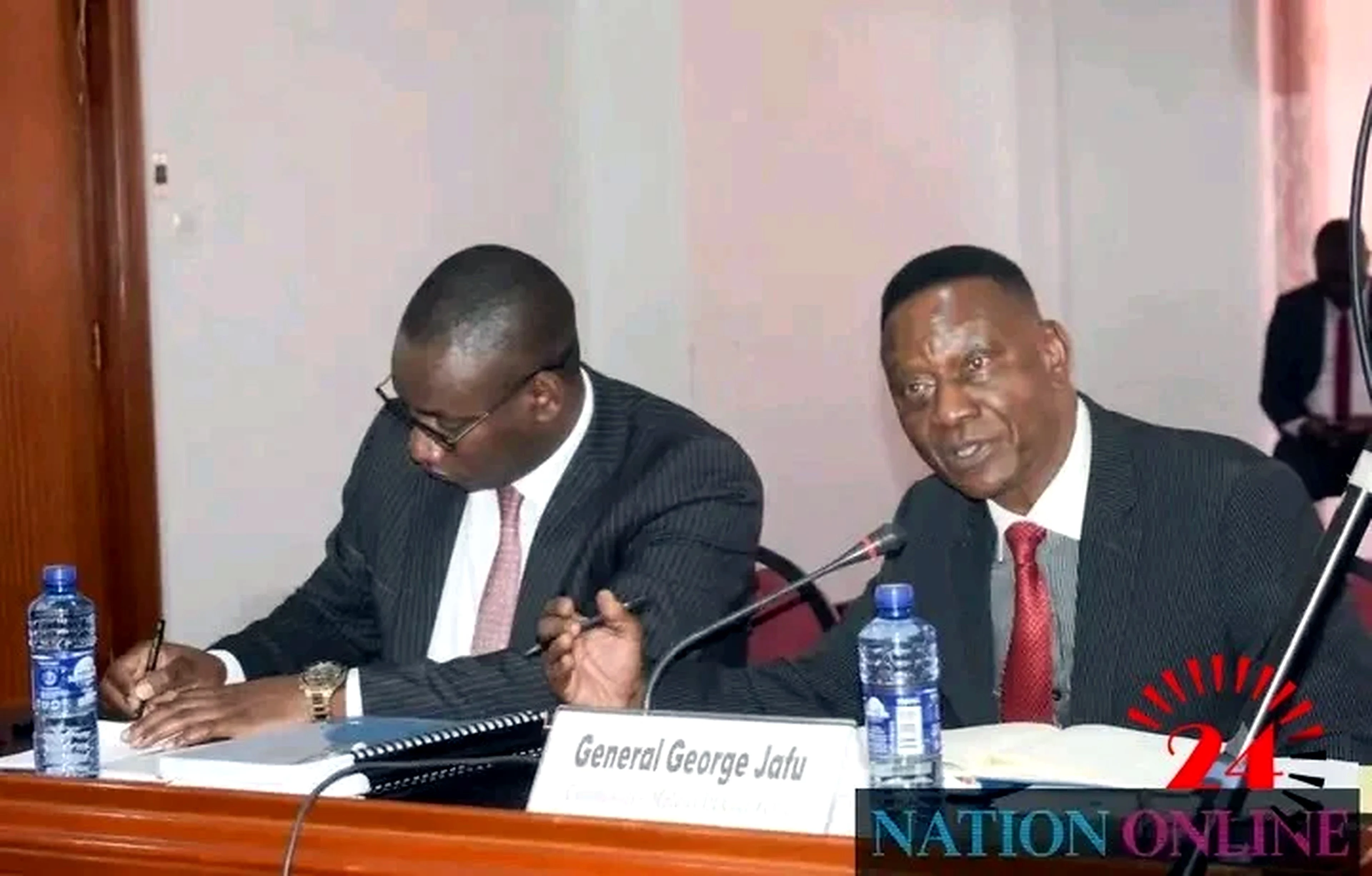
The overhaul follows public warnings from the MDF leadership about the state of its equipment. Appearing before Parliament’s ad hoc committee investigating the Chikangawa crash in June, Jaffu said outdated equipment was a growing threat to the force’s operations and safety, and that years of underinvestment had held back modernisation, Malawi24 reported. He told the committee that planned purchases had not been completed, largely because of financial constraints and chronic foreign exchange shortages, that several equipment payments were still outstanding, and that parts for some older aviation equipment had become hard or impossible to source because manufacturers had discontinued the technology.
“When something happens, that is when you realise the importance of having modern equipment,” Jaffu told lawmakers. Overhauling existing airframes through the original manufacturer, as with MAF-H16 and the AS350 programme, offers the MDF a cheaper route to restoring capacity than buying new aircraft.
Keeping Malawi’s helicopters in the air
Malawi is not alone in choosing refurbishment over new purchases. Kenya recently took delivery of eight refurbished MD500 helicopters and has also taken ex-Emirati Fennecs for counter-insurgency operations, while Airbus is preparing to open a helicopter maintenance hub in Morocco to support operators in West Africa. For southern African users such as Malawi, Airbus South Africa remains the nearest source of factory-level support for the Écureuil family.
The test now is whether the MDF can sustain the Fennec’s availability through routine maintenance and spares funding, and whether the two AS350s follow it back into service. With Malawi’s armed forces regularly called on for flood relief and to support civil authorities, one dependable light helicopter makes a real difference to how quickly the MDF can respond, but the fleet will remain thin until the grounded Pumas and Écureuils fly again.