
Estonian drone maker KrattWorks brought its target drones to Africa for the first time at the Africa International Defence Exhibition (AFRIDEX) 2026 in Lagos, pitching systems that let armed forces train against the kind of drone attacks now seen on battlefields from Ukraine to the Lake Chad Basin. “Our main business here is to display our target drones, which are mainly meant for target practice for armed forces, or also weapon testing for counter-UAS manufacturers,” Ranno Pajuri, the company’s business development manager, told Military Africa at the show. “This is our first time here.”
Counter-unmanned aircraft system (counter-UAS) manufacturers need something to shoot at when they test their weapons, and soldiers need realistic threats to practise against. KrattWorks, based in Tallinn, builds drones that play the role of the enemy. “One of our main product lines is target drones. That means that the drones are meant to simulate actual threats,” Pajuri said.
PARM: simulating FPV and swarm attacks
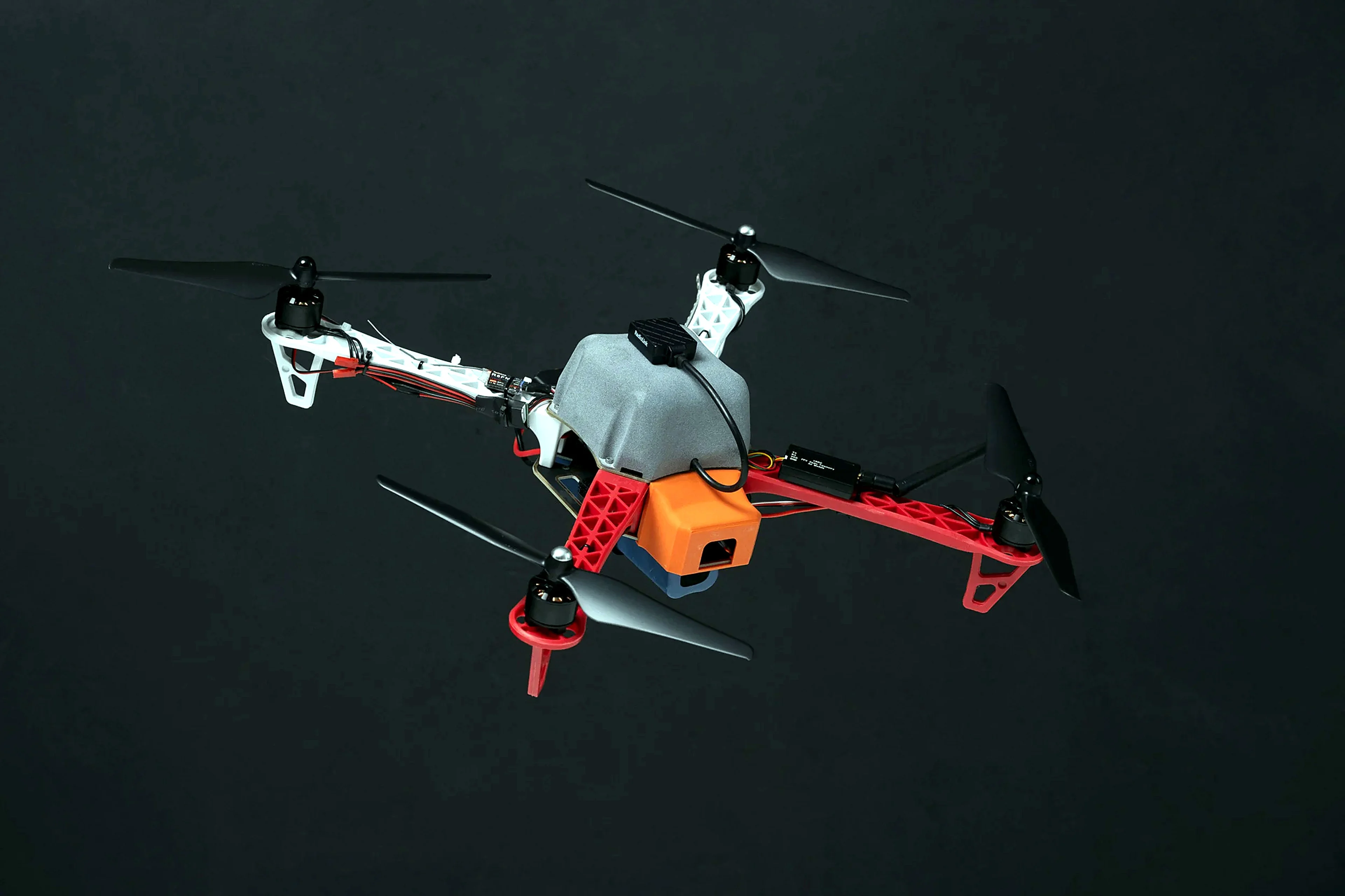
The company offers two families of target drone. “One is a smaller one, called PARM, and it is meant to simulate FPV type small drone attacks on friendly units, so they can train to become better at countering those threats,” Pajuri said, referring to the first-person view (FPV) attack drones that have become one of the deadliest weapons in modern ground combat.
According to KrattWorks, the PARM is a 36 by 36 centimetre quadcopter with a flight time of 20 to 25 minutes, a top speed of up to 65 kilometres per hour and a radio range of up to one kilometre. One ground control station, a rugged tablet or touch-screen laptop, can fly several PARM drones at once, so a single operator can stage a swarm attack on a training range. The company says operators are ready after about two days of instruction, without dedicated drone pilots, and the drones are sold in sets of 10 in two cases with a control computer, batteries and charging stations.
The PARM is intended for live-fire training with small arms, heavy machine guns and anti-aircraft cannons, for counter-drone drills from small-unit to battalion level, and for testing drone detection equipment, whether radar, radio frequency or acoustic sensors. It is designed to mimic the behaviour of FPV drones and swarms rather than fly predictable straight lines.
DART: fixed-wing targets for air defence
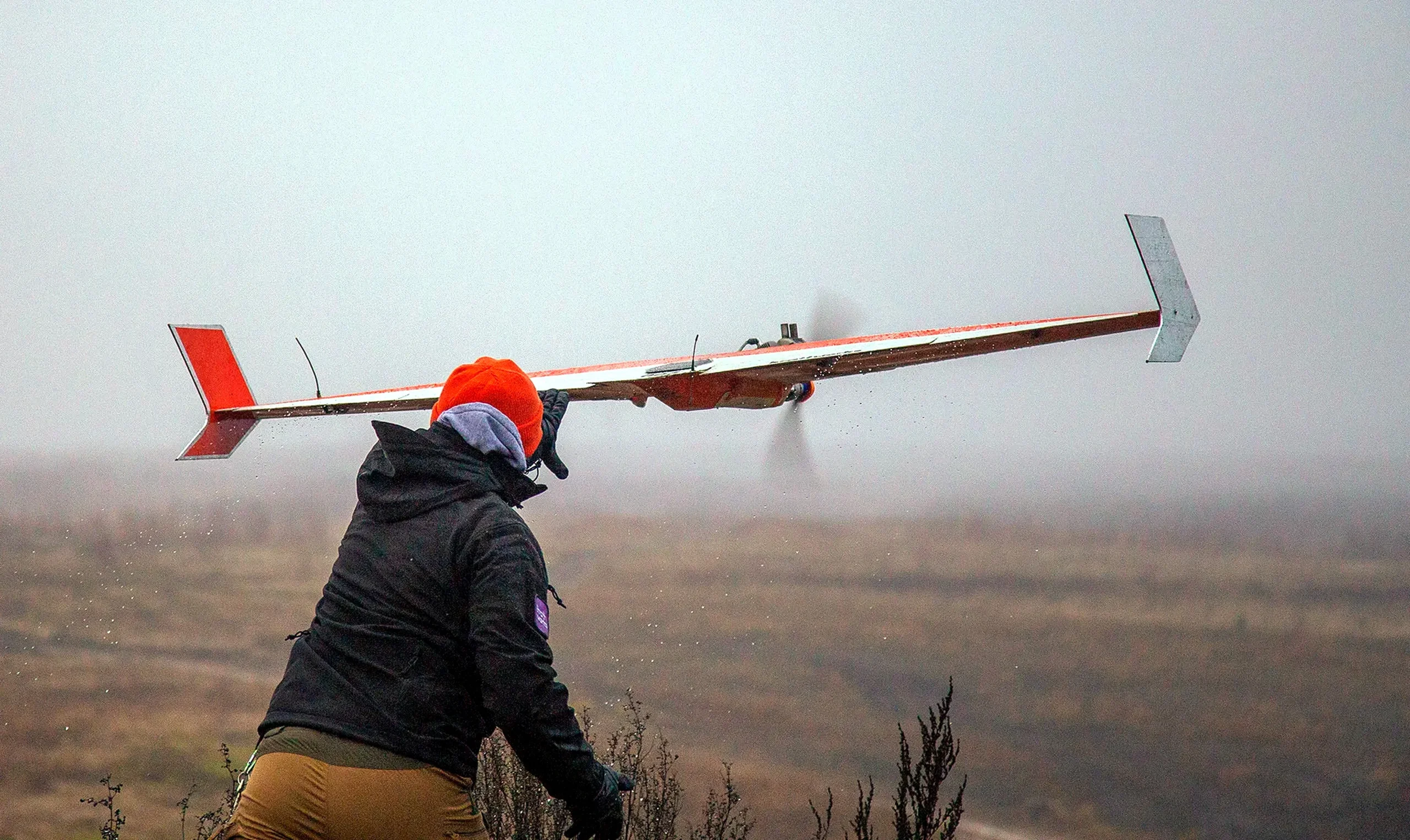
“The other one is a larger fixed-wing drone that can simulate middle-sized attack drones, and is usually used by weapon manufacturers to test their weapon systems, and also by armed forces or navies to train their troops, to become more ready to counter the threats that we have on the battlefield nowadays,” Pajuri said.
That larger target is the DART, a flying-wing drone with a 2.2-metre wingspan, a length of 0.95 metres and a take-off weight of 13 kilogrammes. KrattWorks lists a cruise speed of 35 to 50 metres per second, roughly 126 to 180 kilometres per hour, a top speed of 56 metres per second, about 200 kilometres per hour, and a flight time of 40 or 110 minutes depending on the version. It can operate at altitudes of 4,000 to 5,000 metres, in winds of up to 12 metres per second and in temperatures from minus 15 to plus 40 degrees Celsius. It takes off autonomously and launches without a catapult, which lowers cost and setup time, and can operate from land or sea.
The DART carries infrared flares and can make a terminal dive, so it can be used for training with heat-seeking short-range air defence missiles as well as heavy machine guns and anti-aircraft cannons. A variant, the DART-R, has an adjustable radar signature: it is hard to detect by default but can carry X-band or S-band radar reflectors to look like a larger threat. According to Militarnyi, it has a one-way range of up to 200 kilometres and can carry smoke generators, thermal decoys or a miss-distance indicator. Its mission can follow a moving platform, which suits naval exercises, and it uses the same ground control station as the DART, so one trained operator can fly both.
The Estonian Defence Forces use the DART. In September 2022, the Estonian Centre for Defence Investment signed a seven-year, €15 million contract with KrattWorks to supply aerial targets for the army’s air defence battalion, Estonian public broadcaster ERR reported. The company says the DART is codified in the North Atlantic Treaty Organization (NATO) catalogue.
Training for a changed air threat
Pajuri said the demand comes from how quickly warfare has changed. “As you know, warfare has changed over the last few years. The new aerial threats that we have were not very, very common just a few years ago,” he said. “Now that it has become an everyday thing, we work with different European companies and also in North America to find great partnerships that would provide as realistic a training experience as possible for the troops and for the weapons manufacturers to train against those threats.”
KrattWorks studies drone attacks in Ukraine and works closely with the Ukrainian Armed Forces so its targets reflect current tactics, Defense News reported in October. The company says more than half of its team are veterans who serve as active reservists in the Estonian Defence Forces. It produces its drones in a 2,300-square-metre facility in Tallinn certified to ISO 9001 and the NATO quality standard AQAP 2110, says it has a path to a supply chain free of Chinese components, and exports to 12 markets.
Reconnaissance and one-way attack drones
Target drones are not KrattWorks’ only business. “We are also working on other products. We have an R&D department working on ISR drones,” Pajuri said, referring to research and development on intelligence, surveillance and reconnaissance (ISR) drones. “We are also working to improve our other product, which is actually a one-way attack drone, derived from the same platform. We improve communication systems, navigation systems, and so on.”
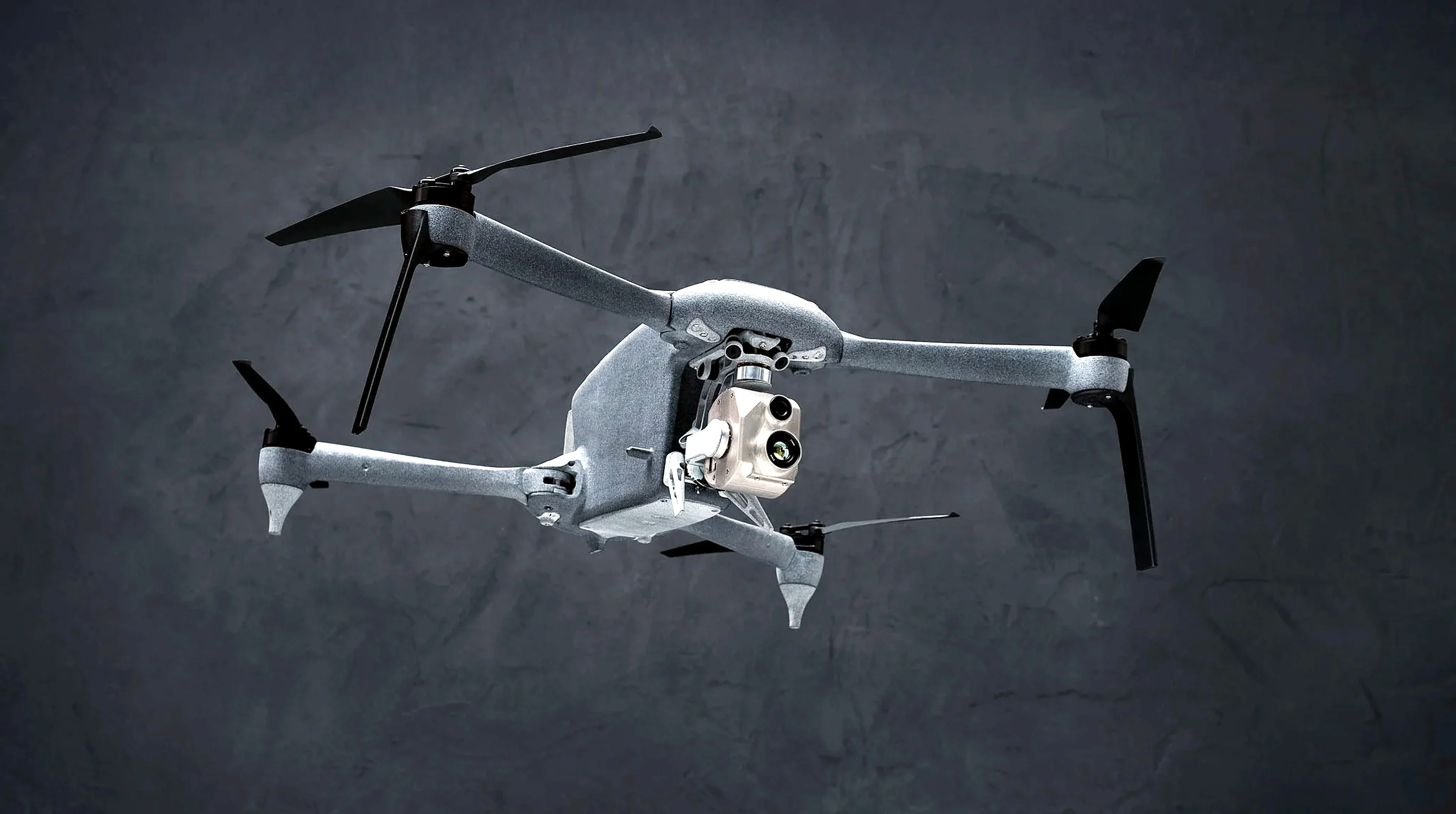
The company’s reconnaissance drone is the Ghost Dragon, a foldable NATO Class I quadcopter for small units with day and thermal cameras. KrattWorks says it detects jamming and moves its link to clear channels, can find its way back to the operator without satellite navigation or a radio link, and is airborne in under two minutes. Militarnyi reported that it integrates with Ukraine’s Kropyva battlefield mapping software, can use a remote antenna placed up to 100 metres from the pilot to hide the operator, and can fly in radio-silent mode. According to Defense News, the Ghost Dragon has been deployed in Estonia, Georgia and Moldova, among other countries, and KrattWorks has supplied one-way attack drones to the Ukrainian Army. At the World Defense Show in Saudi Arabia in February, the company also showed the SLM, a small loitering munition that works in pairs with a reconnaissance drone and has a reported range of up to 10 kilometres.
Next target: jet-powered attack drones
Pajuri said target drones have to keep pace with the attack drones they imitate. “We also have to take into consideration that the attack drone world is also changing, so the target drones that simulate the attack need to change as well,” he said. “The new threat is jet-powered fast attack drones. So we will very soon need jet-powered, fast target drones. That’s the other direction.”
Russia has begun using jet-powered versions of the Shahed one-way attack drone against Ukraine, and they are much harder to shoot down than the propeller-driven originals. Ukraine’s Office of the President said in September that its overall drone shoot-down rate was 70%, but only 57% against jet-powered Shaheds. Pajuri told Defense News that KrattWorks expects to present a target that mimics jet-powered Shahed-type drones by the end of 2027.
Why African forces need drone targets
Drone threats are already part of Africa’s conflicts. Islamic State West Africa Province (ISWAP) has turned to armed drones in attacks on Nigerian military bases in Borno State, and Nigerian troops recovered an armed drone after repelling attacks in March. Armies across the continent are buying counter-drone systems in response. At AFRIDEX, Spain’s EM&E Group showed its ODIN counter-drone systems, a Kenya Defence Forces delegation looked at drones and counter-drone equipment, and in Bamako ASELSAN has offered Sahel forces its KORKUT 35mm air defence gun as a shield against drones.
Buying a counter-drone system is only part of the job. Crews have to learn to detect, track and engage small, fast and low-flying targets, and that takes regular live-fire practice against something that behaves like a real drone. Cheap, reusable targets such as the PARM and DART are aimed at that gap, and African manufacturers of counter-drone systems need targets to test their own designs.
From Tallinn to Lagos
KrattWorks came to Lagos looking for partners. “It’s our first time here, so we hope to make very useful and practical contacts with Nigerian companies, and also other African companies that could be interested in working together with us,” Pajuri said. “I’m totally sure that the changes in warfare and the new UAV type of threats are not just a European problem or a Middle Eastern problem. It is becoming a global problem, and we all have to work together to counter those threats.”
The company is looking for local representatives and has told Defense News it is open to transferring some production abroad if demand in a customer country is large enough, an offer that fits Nigeria’s push for local defence manufacturing. “Hopefully we’ll be here next year,” Pajuri said.