
Military uniform procurement involves more than selecting suitable materials and approving a design. Buyers must consider how garments meet operational requirements, maintain consistency and comply with contractual specifications. For manufacturers, the challenge is to deliver products that meet these expectations across every production order.
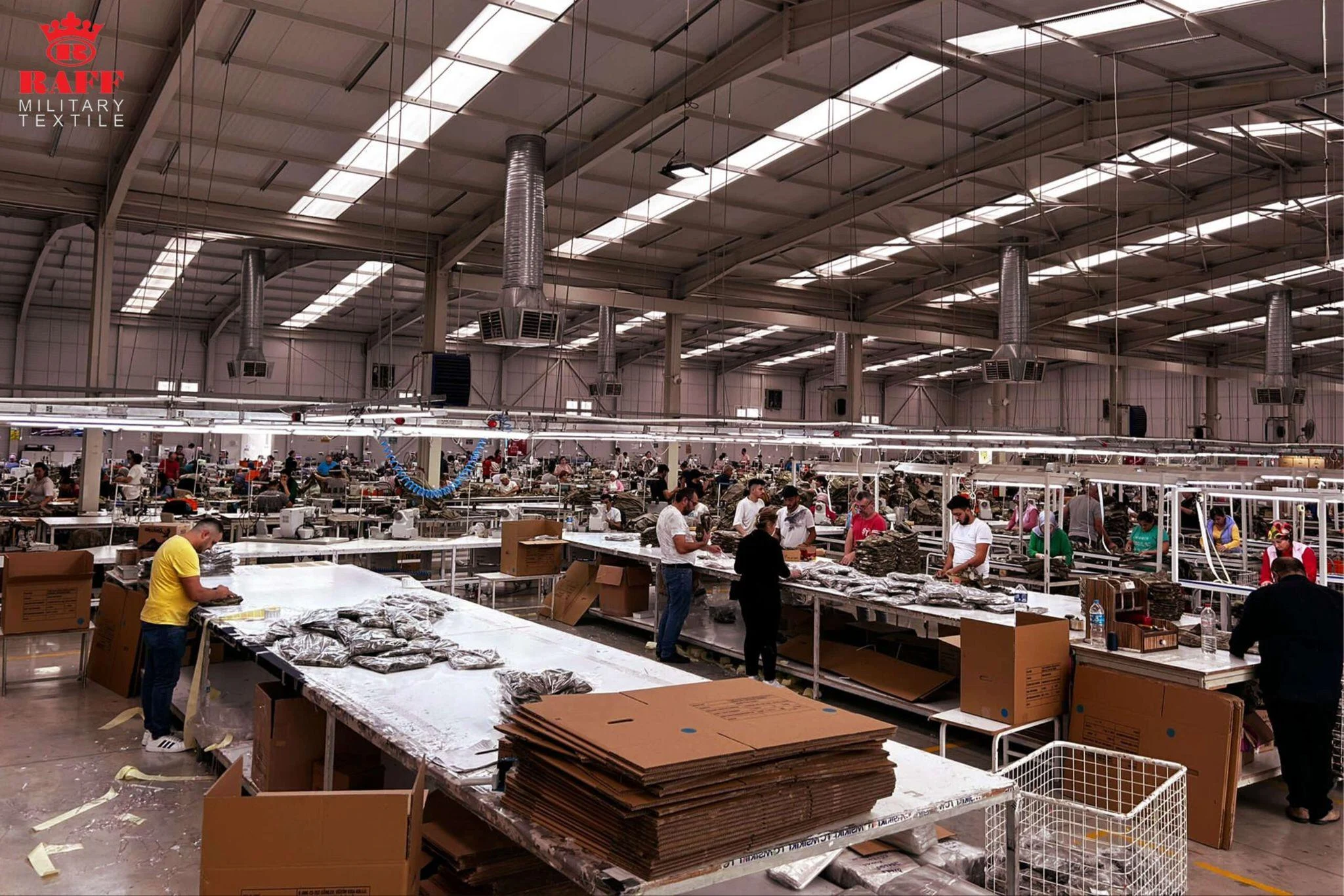
With more than 80 years of manufacturing experience, Turkish company RAFF Military Textile operates in the defence and public safety textile sector, supplying military clothing, uniforms and related equipment to international markets. Its product range reflects the varied requirements of military, police and other professional users, and the company has supplied customers in 45 African countries, most recently expanding its footprint in Uganda.
Defining requirements before production
Fabric composition, weight, construction and finishing influence the characteristics of military clothing. Their suitability depends on the garment’s intended use and the conditions in which it will be worn. A material appropriate for one application may not offer the same advantages in another, a point that matters across Africa’s range of climates, from Sahelian heat to humid coastal and forest environments, as RAFF has discussed previously.
Procurement specifications establish the technical and visual requirements against which products are assessed. Defining these expectations before production begins helps buyers compare offers on a consistent basis and gives manufacturers a clear reference for fulfilling each order.
From material selection to finished garment
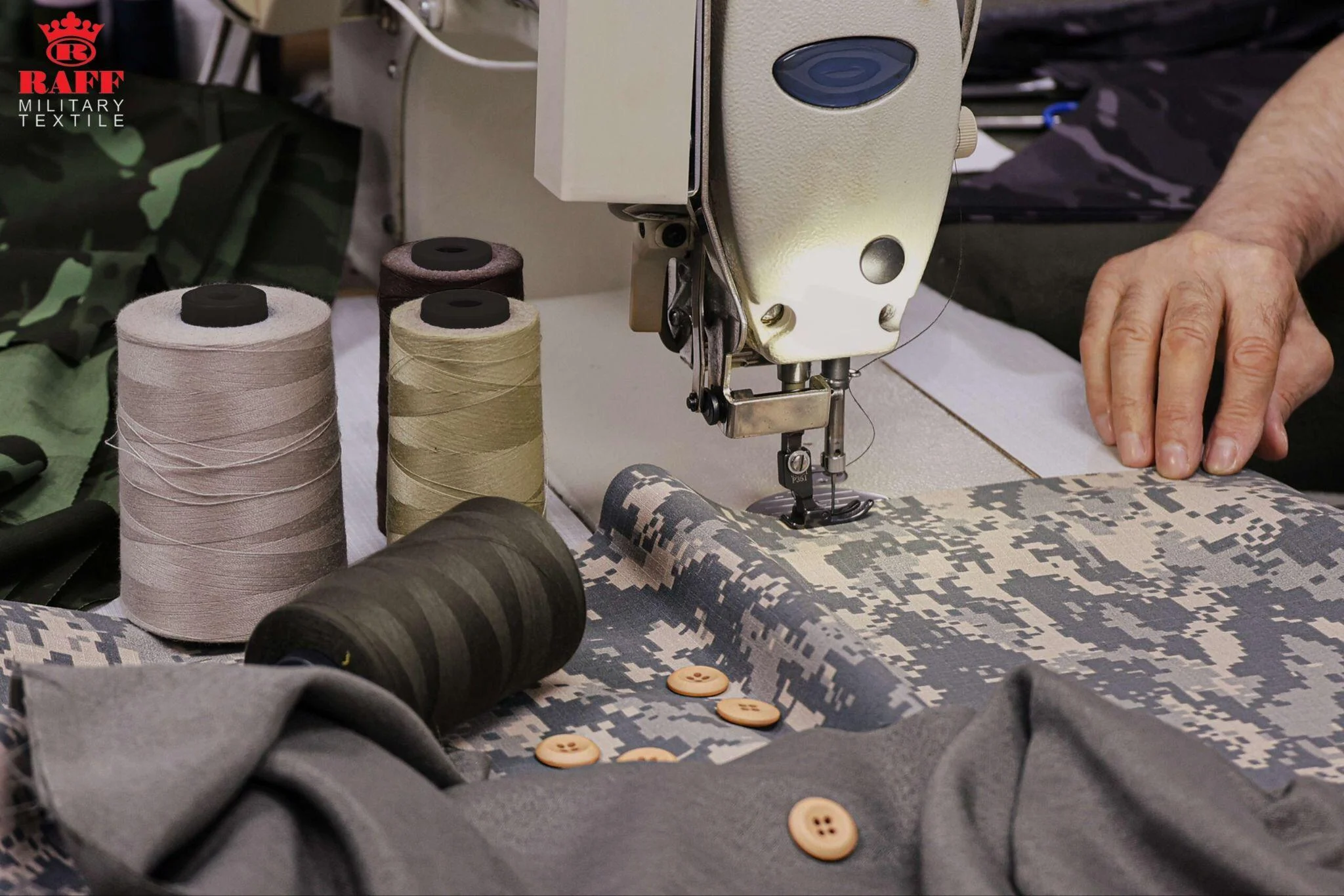
The finished uniform reflects several stages of manufacturing. Cutting, stitching, reinforcement, closures and garment measurements all contribute to its fit, appearance and durability. Material selection alone cannot determine the quality of the completed product.
Camouflage clothing also requires attention to pattern and colour consistency. Approved designs and clear production references help ensure that finished garments correspond to the requirements set by the purchasing organisation. For large orders, consistency across garments is particularly important. Specialist properties, such as the near-infrared (NIR) and flame-retardant (FR) treatments used in modern tactical uniforms, add further requirements that must be written into the specification.
RAFF manufactures military uniforms, tactical clothing and public safety apparel for different applications. Each category has its own requirements, making it important to define product specifications according to the intended use.
The role of quality management and certification
Quality management provides a structured approach to organising processes, monitoring performance and supporting continual improvement. ISO 9001:2015, published by the International Organization for Standardization (ISO), sets out requirements for quality management systems, providing a framework for managing quality-related processes.
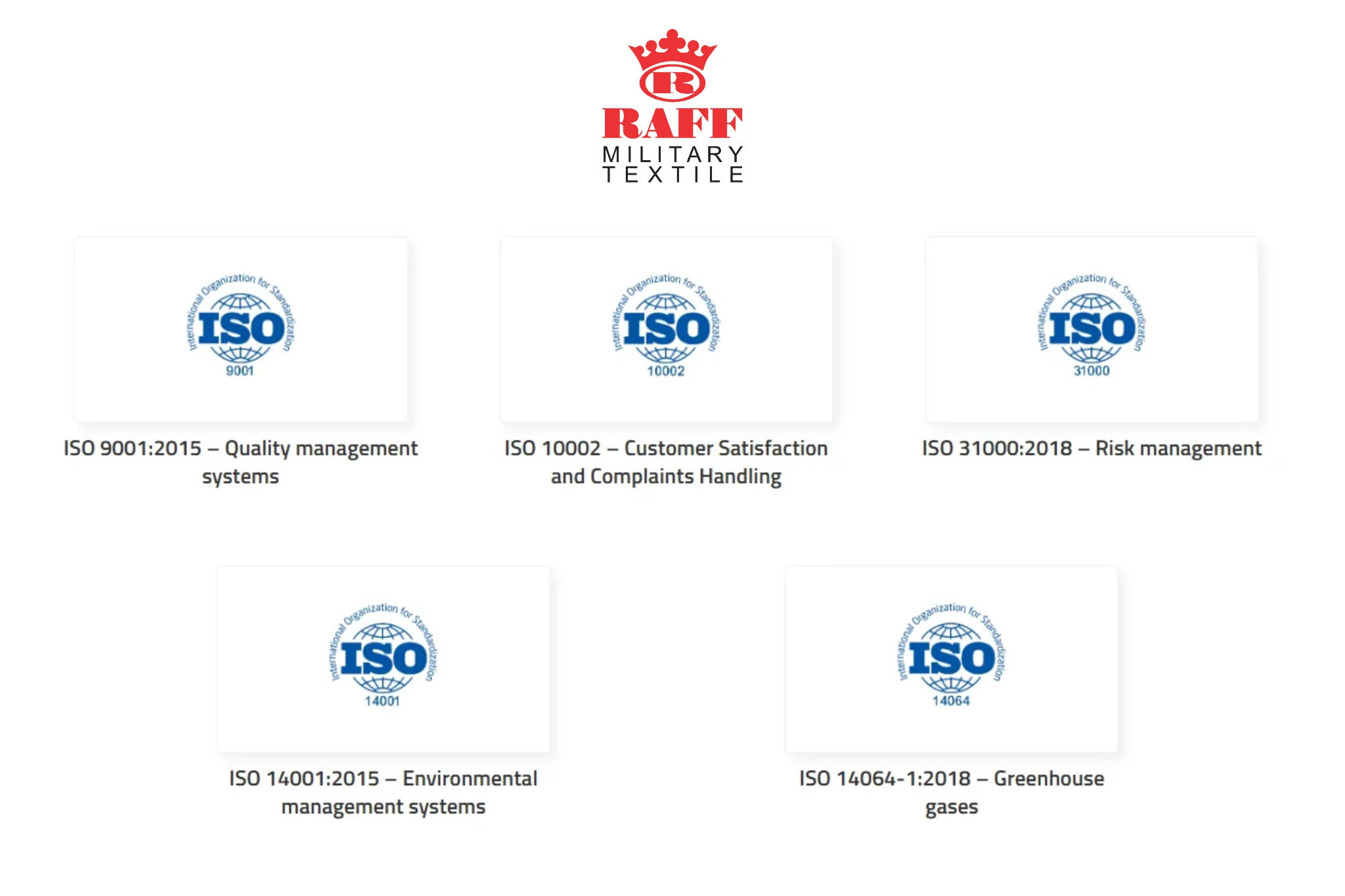
RAFF Military Textile lists ISO 9001:2015, ISO 10002, ISO 31000:2018, ISO 14001:2015 and ISO 14064-1:2018 among its standards and certifications. These relate to quality management, customer satisfaction and complaints handling, risk management, environmental management and greenhouse gas emissions reporting.
Each standard has a distinct purpose. ISO 9001:2015 concerns quality management systems, while ISO 14001:2015 addresses environmental management. ISO 31000 provides risk management guidelines rather than a certifiable management system standard. These distinctions matter when assessing what a company’s credentials demonstrate.
Management system certification does not automatically establish that every garment meets the technical requirements of a particular contract. Product conformity must be assessed against the specifications and documentation that apply to each order.
Quality as a procurement consideration
Purchase price is only one factor in military clothing procurement. Rejected deliveries, replacement orders and delays can increase overall costs, making supplier evaluation an important part of procurement planning.
Clear requirements help purchasing organisations assess offers beyond their initial price, considering whether proposed products meet the needs of the contract. Manufacturers also benefit from defined expectations that provide a common reference for production and delivery. As RAFF has argued, true quality in military clothing is ultimately proven in the field.
Aligning specifications, production and acceptance
For international buyers, including African defence ministries and police forces sourcing uniforms abroad, manufacturing experience and relevant management credentials provide useful context when assessing potential suppliers. They should be considered alongside product specifications, contractual requirements and the evidence requested for each order.
Effective military textile procurement depends on aligning product requirements, manufacturing capabilities and acceptance criteria from the outset. This gives buyers and manufacturers a clearer basis for evaluating deliveries and managing their responsibilities throughout the supply process.