Egyptian technology firm X-GEN plans to increase its investment in domestic drone and robotics production fivefold, to approximately EGP 5 billion (about $92.3 million) over the next three years. Co-founder and Chief Executive Amir Wahid disclosed the target in an interview with Asharq Bloomberg on 7 November, on the sidelines of Cairo ICT 2026, a technology fair held at the Egypt International Exhibition Center in New Cairo from 7 to 10 November.
Wahid said the figure covers direct and indirect spending, from manufacturing facilities to research and development, and represents an increase from the company’s current investment base of approximately EGP 1 billion. In a separate interview with Hapi, he clarified that the EGP 5 billion target covers direct and indirect investment over the next three years, including local manufacturing, industrial facilities and technology development, rather than confirmed spending on factory construction alone. He also cited a separate goal of approximately EGP 5 billion in sales over the same period.
To meet its target, X-GEN is pursuing technology-transfer partnerships with companies in China, France and Saudi Arabia. Rather than importing finished hardware for resale, the company licenses or integrates foreign platforms and supplements them with Egyptian-made components and local engineering support. It runs this model as a service business rather than a straightforward equipment-sales operation. “We want X-GEN to be a strategic technology partner to industries, not just an equipment distributor,” Wahid said in a company statement carried by Zawya.
The degree of localisation varies by product. Some systems based on imported airframes, including firefighting drones, contain approximately 15 percent local content, mainly in their control mechanisms. A drone manufactured by one of X-GEN’s founding partners has a much higher local-content share, which the company estimates at up to 95 percent, including the airframe and other structural components.
Three Agreements at Cairo ICT
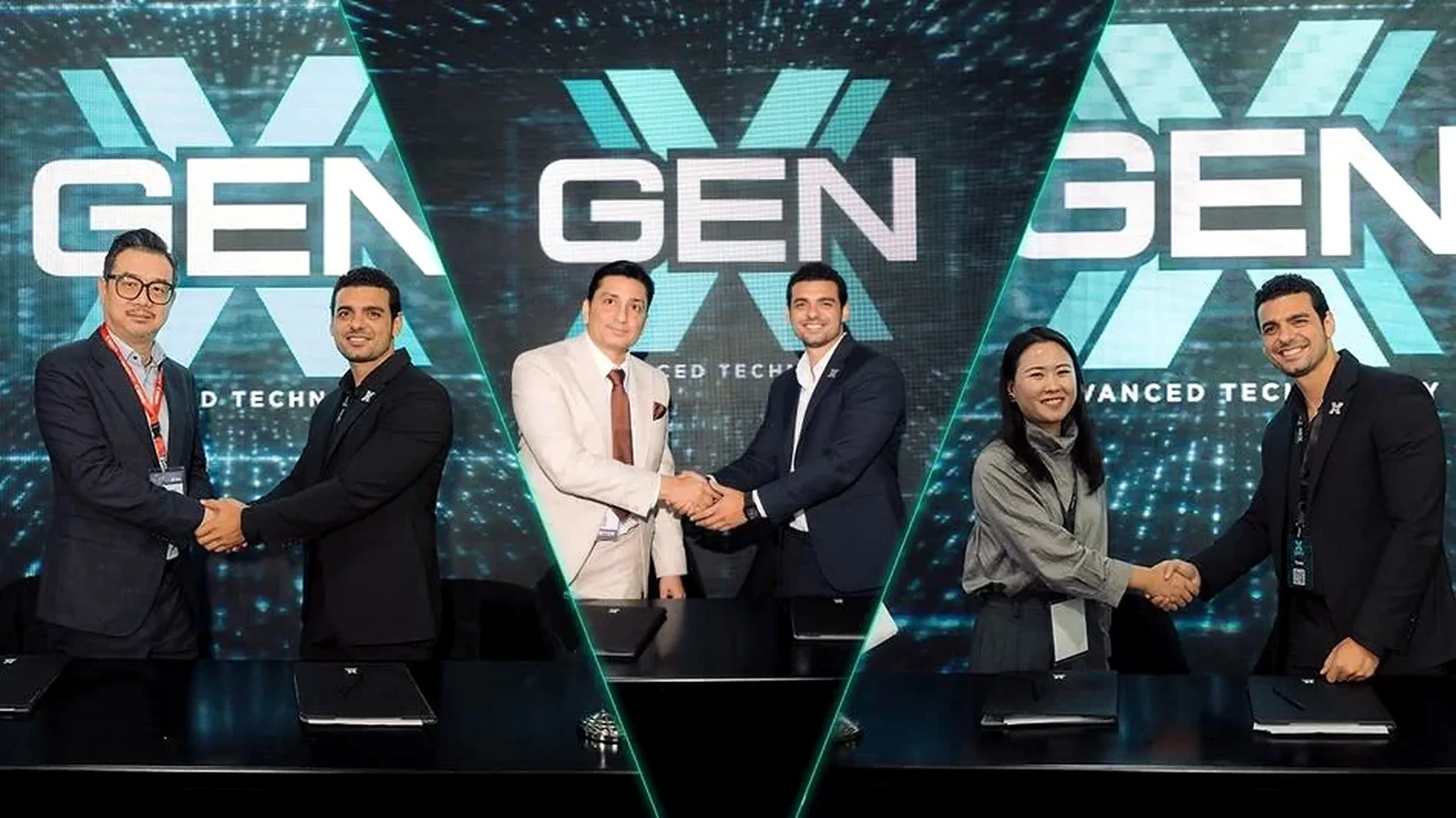
X-GEN used the fair to formalise three memoranda of understanding (MoUs). The first establishes an exclusive partnership with China’s Hollyway to introduce the company’s Iron Dock technology in Egypt. The docking and recharging system lets drones fly automated inspection and monitoring routes without ground crews resetting them between missions. The technology will be used for infrastructure inspections and facility monitoring.
The second agreement makes X-GEN the first partner in Africa for Shenzhen-based PUDU Robotics. It covers four tiers of PUDU’s service and logistics robot line-up, which is designed to reduce manual labour in repetitive warehouse and facility tasks. The third agreement links X-GEN with HPAC, the Middle East distributor for France’s Drone Volt, adding professional drones used for thermal imaging and search-and-rescue operations.
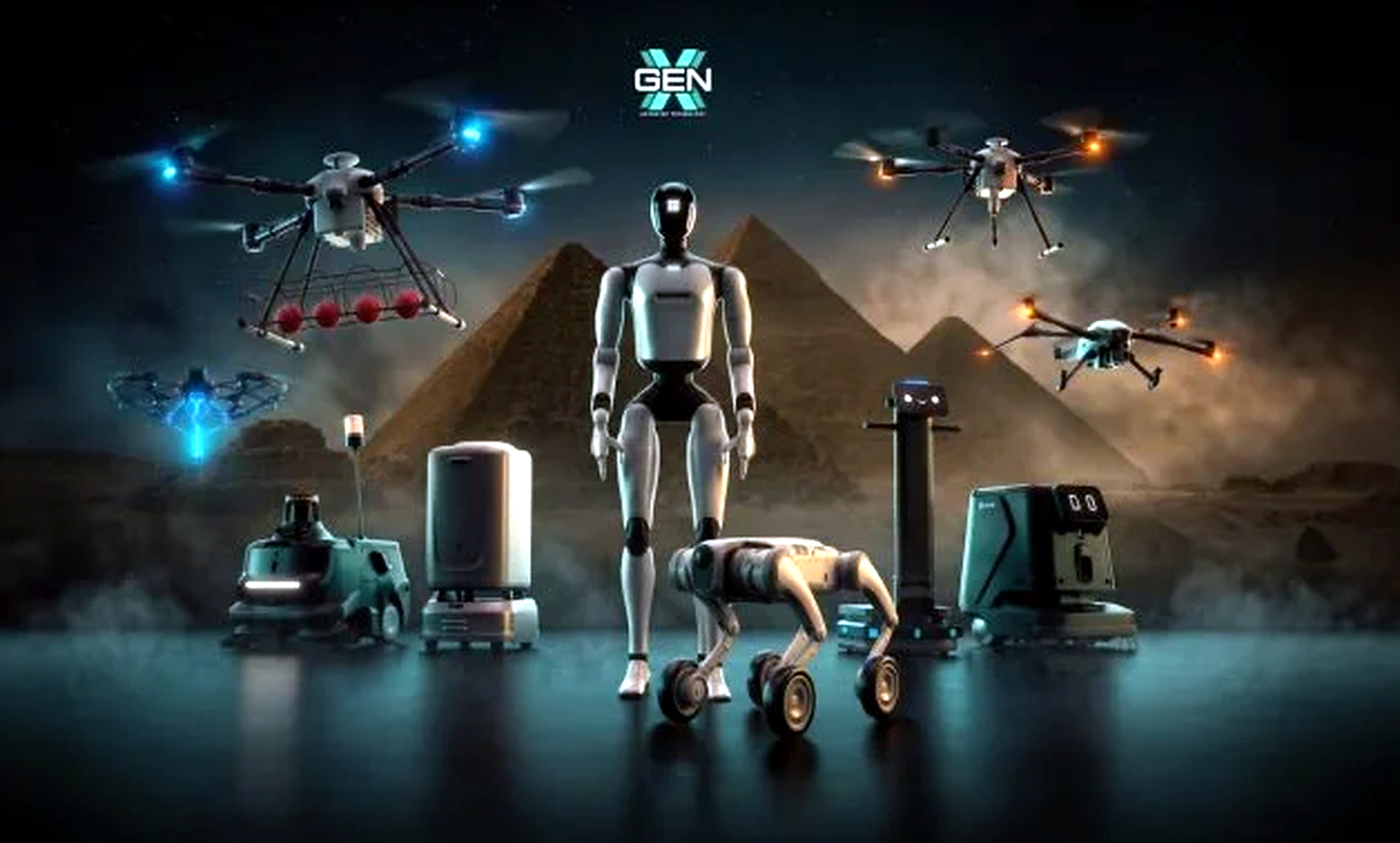
X-GEN already operates projects in Libya and is developing business relationships in Saudi Arabia. Wahid declined to disclose the value of this regional activity or name the next markets the company plans to enter. Planned applications include electricity, energy, agriculture, facilities management and firefighting, sectors the company sees as the main opportunities for Egyptian industry, rather than defence.
Part of a Wider Industrial Push
The initiative aligns with Egypt’s industrial strategy for 2026 to 2030. In a July statement, the Presidency said the strategy targets $100 billion in non-oil exports by 2030, partly through the development of local suppliers and small and medium-sized manufacturers. X-GEN’s plan forms part of this civilian-sector localisation effort, alongside a separate, much larger initiative within Egypt’s defence establishment.
In the military sector, Egypt has relied on imported systems while seeking to develop domestic capacity. Defence press reported that Cairo signed a contract valued at approximately $400 million in June 2025 for 10 Chinese-built WJ-700 unmanned combat aerial vehicles (UCAVs), making Egypt the second foreign operator after Algeria. These jet-powered platforms have an endurance of nearly 20 hours and a weapons payload of approximately 800 kilograms.
Egypt has also expanded its drone-industry partnerships with Türkiye. Turkish defence firm HAVELSAN and Egypt’s Arab Organization for Industrialization (AOI) signed an agreement in Cairo in August 2025 to jointly produce vertical take-off and landing (VTOL) drones. Production is scheduled to take place at the AOI-affiliated Kader Factory for Developed Industries in Cairo. The platform, known as Torgha, is designed for reconnaissance and surveillance rather than strike missions. State-linked firm Tornex has separately promoted its Jabbar drone family at defence exhibitions in 2026, a further sign that several Egyptian entities are pursuing the same localisation goal from different directions. HAVELSAN has taken a similar route further south, signing a cooperation memorandum with Nigeria’s DICON at AFRIDEX 2026.
Civil Drones and Egypt’s Sovereign Capacity
These developments are set against a capability gap that Egypt has experienced directly. In 2020, Egyptian forces lost an RQ-20 Puma tactical drone in Sinai, a reminder of the operational risks that come even with smaller tactical platforms. The incident also showed how reliance on a single foreign supplier can leave a gap if the relationship deteriorates or a unit is lost.
Programmes such as X-GEN’s are aimed mainly at commercial and industrial users rather than the armed forces. Even so, they add to the national pool of engineers, suppliers and production lines that Egypt would need to scale up drone output quickly if required, and the local-content figures X-GEN reports over the next three years will show how much of that capacity is being built at home rather than assembled from imported kits.