
Russia’s Africa Corps is running much of the Malian junta’s drone campaign in the north of the country, using Russian-made Shahed-type one-way attack drones and Lancet loitering munitions against Tuareg separatists, jihadist fighters and, according to rights researchers, civilians, the Africa Defense Forum (ADF) reported on 10 November, drawing on open-source investigations from the past four months.
Under its agreement with Bamako, the Africa Corps operates the aircraft and drones it has supplied. An investigation by The Sentry titled “Who Is Responsible for Mali’s Air War?” attributed some strikes directly to the force’s Russian commanders. “While Bamako describes a sovereign counterterrorism campaign, targets are in fact approved by a foreign power,” The Sentry’s researchers wrote. Bellingcat and Jeune Afrique supported that finding with satellite imagery and drone footage.
Gerans over Inafarak and Talahandak
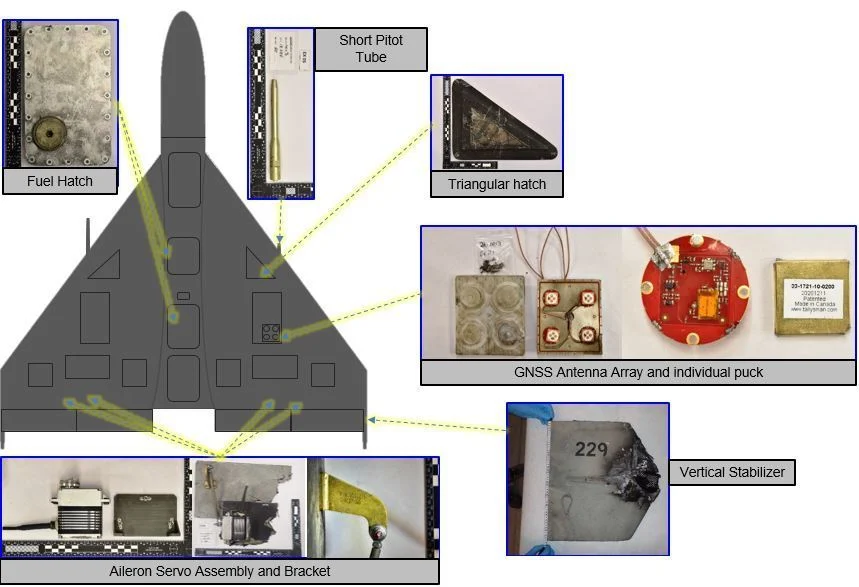
The clearest evidence of Russian long-range drones came in July. Bellingcat and Jeune Afrique geolocated Shahed-136-type strikes on Inafarak, north of Kidal, on 12 July and on Talahandak on 17 July, as Military Africa reported in August. Analysts identified remains of what appeared to be an MD-550 piston engine, a component widely associated with the Shahed design. A Telegram channel linked to the Africa Corps captioned footage of the strikes: “Now the Azawadi ‘khokhols’ will be seeing Gerans all the time,” using a slur for the Tuareg rebels and the name of Russia’s licence-built Shahed-136, the Geran-2.
Reports of Russian drones in Mali first surfaced in May, when Defence Blog published photographs of wreckage near Sévaré. A second Shahed-style Russian design, the Garpiya-A1, has also appeared on the Malian battlefield, according to ADF.
Lancets against pickups
France 24 Observers confirmed images supplied by the Azawad Liberation Front (FLA) showing part of a wing from a Russian ZALA Lancet, a pilot-guided loitering munition, which had been used to attack a civilian vehicle in the Timbuktu area in July. Vincent Tourret, a researcher at the French Institute of International Relations, told France 24 that the Africa Corps had used the Lancet, developed in 2020 to destroy armour in Ukraine, against the FLA’s unarmed vehicles. The Lancet is built by ZALA Aero Group, part of the Kalashnikov Concern, and carries an electro-optical seeker that relays video to its operator until impact.
Léo Jarry, a drone specialist at Tungsten Strategies, said the cheap one-way drones give the Malian side reach beyond the range of its Turkish-made Bayraktar TB2s. “The fact that these systems are relatively cheap and expendable changes the risk calculation for operators,” he told Bellingcat and Jeune Afrique. “They can be used more freely, potentially forcing insurgents in northern Mali to adapt their behavior to a new aerial threat.”
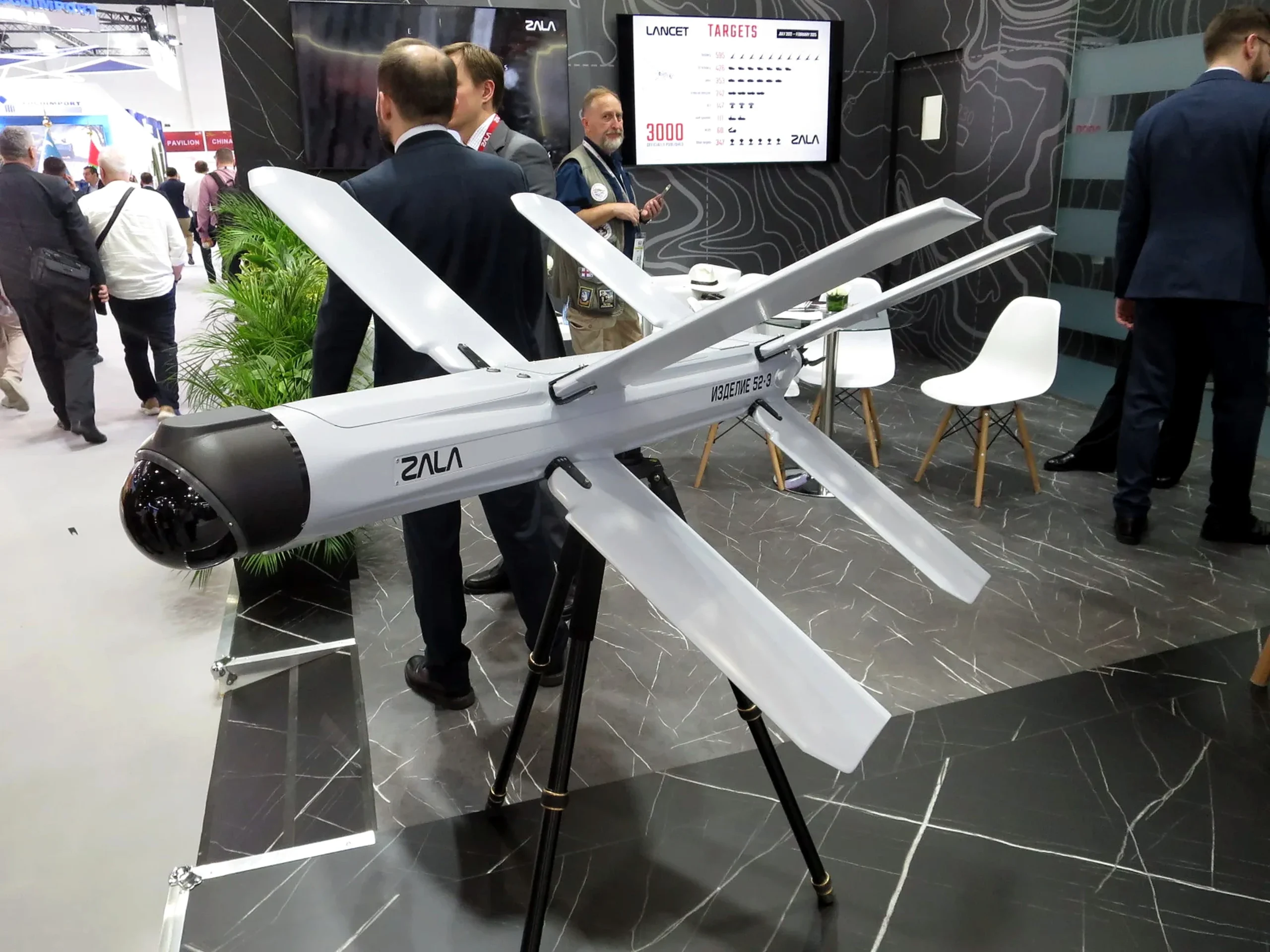
The civilian toll
Data from the Armed Conflict Location and Event Data project (ACLED), cited by Human Rights Watch, show that Malian forces and the Africa Corps carried out 49 airstrikes between April and August 2026, killing 89 civilians. That is more than double the 22 strikes and 44 civilian deaths recorded over the same months of 2025. Human Rights Watch says attacks on civilians in the north have increased since July, including strikes on health facilities and markets after high-profile FLA and Jama’at Nusrat al-Islam wal-Muslimin (JNIM) attacks.
A September investigation by Bellingcat and Jeune Afrique geolocated more than a dozen strikes shown on Malian state television as attacks on terrorists, several of them in civilian areas. A witness to a 2024 strike at Amasrakad told investigators that it killed 13 civilians, including children, sheltering in a tent, and that he later joined the FLA. Yvan Guichaoua of the Bonn International Centre for Conflict Studies described “a huge expansion in the way the Malian authorities define who is considered a legitimate target.” The Malian armed forces did not respond to Bellingcat’s questions about the strikes. Shahed-type drones, unlike the TB2, cannot confirm a target in the final seconds of flight, and their heavier warheads widen the danger area.
A two-tier air war over the north
The pattern points to a division of labour in Mali’s air arm. The Malian Armed Forces (FAMa) fly Turkish TB2s and the Akinci, which received a further batch at Sévaré on 30 July 2026, while Russian crews strike deeper with expendable munitions. Both sides now contest the air: the FLA and JNIM have used FPV drones against Malian and Russian convoys, downed a Russian-operated Mi-24P at Anefis in July, and have reportedly drawn on Ukrainian drone specialists. With Kidal back under junta control since 6 October and Baykar marketing the jet-powered KIZILELMA at BAMEX, the question for Bamako is whether cheaper Russian munitions keep their place alongside Turkish drones, and at what cost to the civilians living under both.