

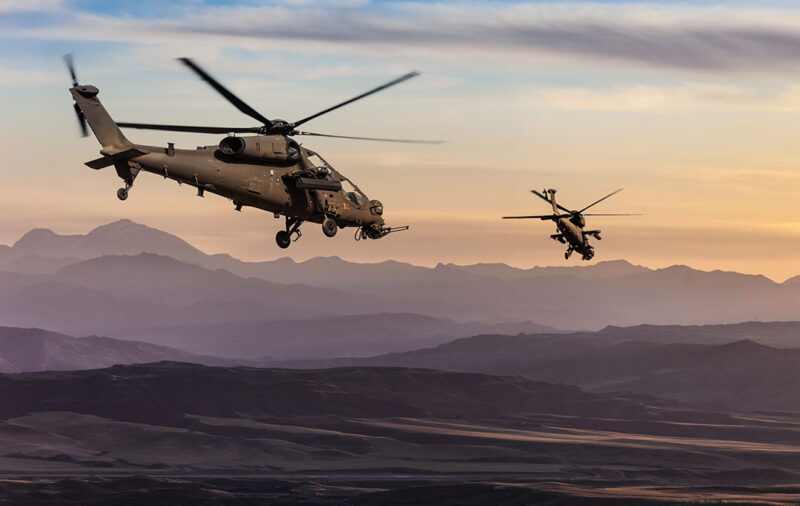
According to Unmanned Africa, the Nigerian Air Force (NAF) is planning to add more than the 12 Turkish Aksungur combat drones it has already named. Beyond the TUSAŞ aircraft, the service has announced the planned acquisition of two Chinese CH-4D unmanned aerial vehicles (UAVs) and six additional T129 ATAK attack helicopters from Turkish Aerospace Industries (TAI), as part of a modernisation drive that has accelerated through 2026.
The Nigerian Air Force (NAF) has named a new aircraft type in its forward plans. In an infographic posted to its official X account on Sunday, 25 October 2026, the service listed 12 TUSAŞ Aksungur unmanned combat aerial vehicles among its “additional expected aircraft,” alongside other platforms planned for the force. If the plan goes ahead, Nigeria would become one of a small group of African air forces to operate one of Turkey’s largest armed drones.
The graphic appeared on the same day the NAF’s Director of Public Relations and Information, Air Commodore Ehimen Ejodame, issued a statement marking the first anniversary of the Chief of the Air Staff, Air Marshal Sunday Kelvin Aneke, on 30 October. That statement reported more than 6,100 flying hours and over 2,900 sorties between November 2025 and September 2026. It described a broader acquisition programme that includes 12 Bell AH-1Z attack helicopters and “other planned aircraft and unmanned aerial systems” for airlift, combat, training, and intelligence, surveillance, and reconnaissance (ISR).
Two CH-4Ds to Sustain a Chinese Drone Line
Nigeria’s relationship with the CASC Rainbow series is more than a decade old. The NAF has flown the CH-3A since about 2014. In October and November 2020, the Chief of the Air Staff at the time, Air Marshal Sadique Abubakar, disclosed that the NAF would receive eight Chinese unmanned aircraft: two Wing Loong II, four CH-4, and two CH-3. He said about 70 personnel had been nominated for training in China, and that the drones would be based at Gusau, Gombe, and the Operation Lafiya Dole headquarters in Maiduguri. Reports in February 2021 suggested the NAF was negotiating for six more CH-4 aircraft.
Attrition has been part of that history. On 2 January 2026, the NAF lost a CH-4 near Kontagora in Niger State. The service said it secured and recovered the airframe quickly, and that technical teams began preliminary evaluations. Military Africa reported on the loss at the time. Two new CH-4Ds would not restore the fleet to a large size, but they would offset losses in a type the air force has trained crews, ground stations, and maintainers for.
The CH-4 was introduced in 2011 and entered Chinese service in 2014. The CH-4B variant that Nigeria operates has a wingspan of about 18 metres and a length of about 8.5 metres. Published figures give it a maximum take-off weight of 1,330 kilograms, a payload capacity of 345 kilograms, and a standard endurance of up to 30 hours, with claims of up to 40 hours in some configurations. It carries electro-optical and infrared sensors with a laser rangefinder and designator, and it can carry up to six weapons.
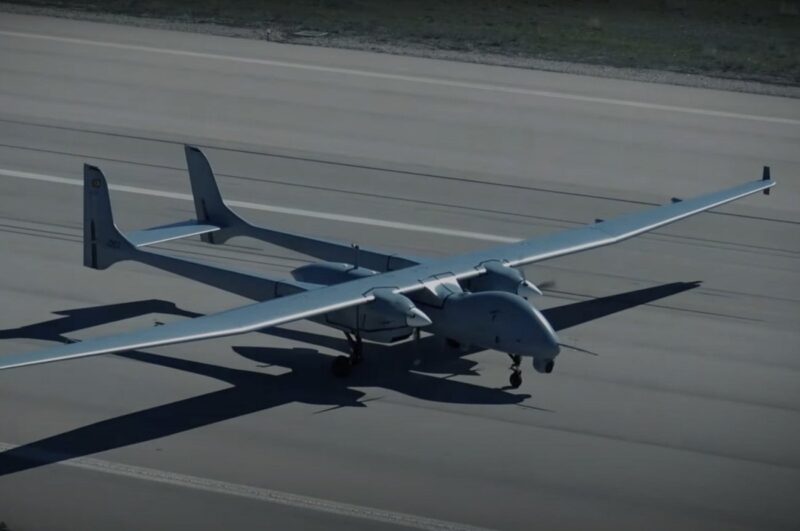
The “D” suffix indicates a newer sub-variant. Janes has reported that CASC developed improved CH-3, CH-4, and CH-5 versions, including a CH-4D, with better range and speed, higher altitude, and larger weapons payloads. Detailed specifications for the CH-4D have not been published in the sources reviewed. Whether Nigeria’s two aircraft would be the improved variant or a description used in the announcement, the NAF has not said.
Six More T129 ATAKs
The T129 plan is easier to place in context. Nigeria ordered six T129 ATAK helicopters in July 2022. The first two arrived in November 2023 and were inducted at Makurdi on 6 February 2024, at a ceremony attended by Vice President Kashim Shettima. The second batch of two arrived on 3 September 2024 aboard a Turkish Air Force A400M. Military Africa covered that delivery. Open-source trackers now list all six as received.
The helicopter has a 20 mm cannon and can carry 70 mm rocket pods, UMTAS anti-tank missiles, Cirit laser-guided rockets, and Stinger air-to-air missiles. After induction, the first two were assigned to the 115th Special Operations Group in Port Harcourt. The NAF has used the type in its counter-insurgency and counter-banditry operations, alongside its older Mi-35 gunships.
Six additional aircraft would double the fleet. That matters because attack helicopters are limited by availability, not just by numbers. A fleet of six, once training, maintenance, and attrition are accounted for, often puts two or three aircraft in the air on a given day. A fleet of twelve gives commanders more flexibility to cover the North-East and North-West at the same time.
Earlier reporting shows the plan has changed shape before. In February 2024, one report spoke of 12 T129s on order, while later reports gave six, so the “additional six” in the current plan may revive an earlier larger figure. One published account listed a unit price of 45 million dollars, while another says six were acquired for 45 million dollars in total. These cannot both be right, and neither is confirmed, so no price for the new helicopters is given here.
A Fleet of Many Suppliers
Taken together with the Aksungur, the new items reinforce a pattern. The NAF is buying from China, Turkey, the United States, Italy, Brazil, and Pakistan at once. The JF-17 Thunder came from Pakistan, the A-29 Super Tucano from Brazil, the M-346 aircraft from Italy, and the AH-1Z Viper helicopters from the United States. The Turkish T129 and Chinese CH-4 sit in that mix, and the Aksungur would join them.
The benefit is that Nigeria is not dependent on one government’s export approvals. The cost is logistics. Each supplier brings separate spare parts, training courses, weapons, and software, and the NAF must keep all of them current. The October statement from the service’s spokesman, Air Commodore Ehimen Ejodame, reflects this effort: five helicopters delivered in September 2026 (three AW-109 Trekker Type B and two H125), six L-39ZA jets reactivated and upgraded in Slovakia and Nigeria, and a C-130 undergoing periodic depot maintenance in Portugal. The statement also lists 12 AH-1Z attack helicopters on the acquisition list.
The numbers behind the push are large. The statement says the NAF flew more than 6,100 hours and over 2,900 sorties between November 2025 and September 2026, using close to 10 million litres of Jet A-1 fuel. Nigeria ranks third in Africa and 33rd globally in the 2026 Global Firepower Index, down from 31st the year before.
What to Watch in the Coming Months
The first question is whether any of these aircraft appear in a signed contract. The NAF has a record of announcing expected aircraft, and not all of them have arrived as planned, so the list is best read as intent.
The second is the integration of Chinese and Turkish unmanned aircraft into one operating system. The CH-4D and the Aksungur have different data links, ground stations, and weapons, and an air force that runs both needs trained crews and separate support for each.
The third is the safeguards that come with armed aircraft. The NAF’s statement says it is building civilian harm mitigation structures, an operational and safety audit committee, and a planned open-source intelligence centre. More armed drones and attack helicopters make those systems more important.
The fourth is serviceability. New aircraft add value only if they fly. The CH-4 loss in January and the long reactivation programmes for older jets show how much of the NAF’s modernisation depends on maintenance as much as on purchasing.