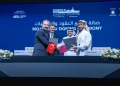

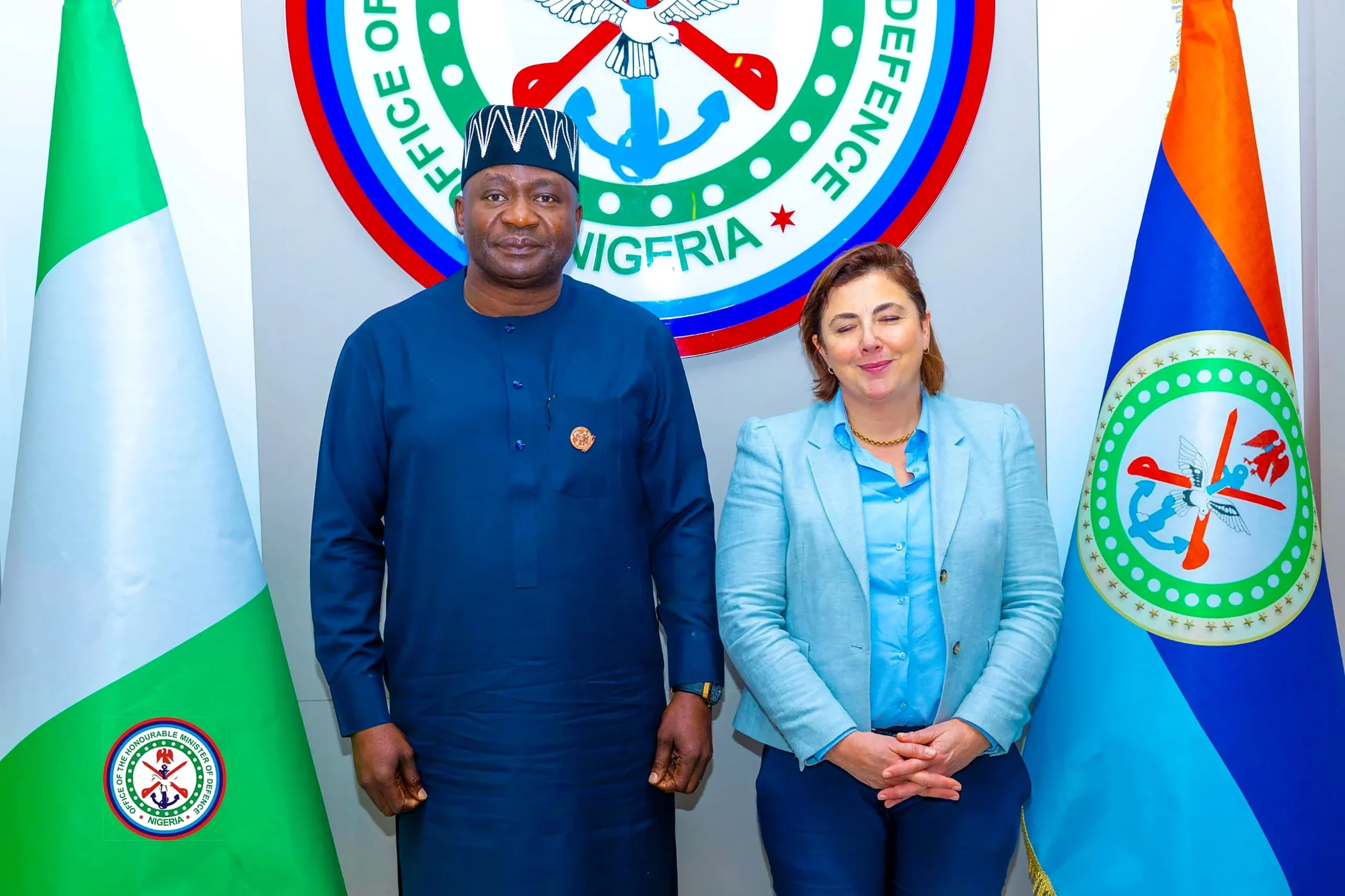
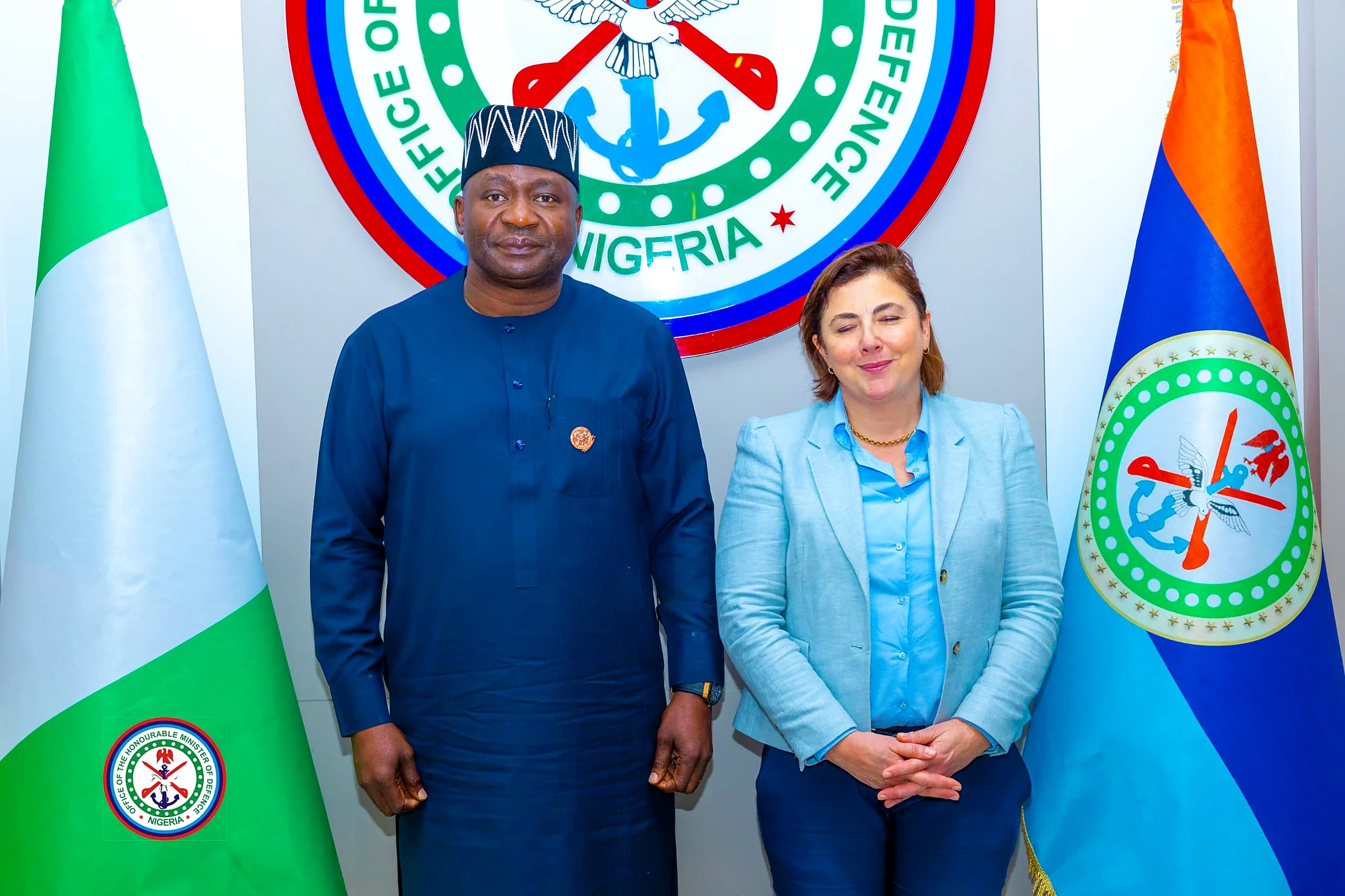
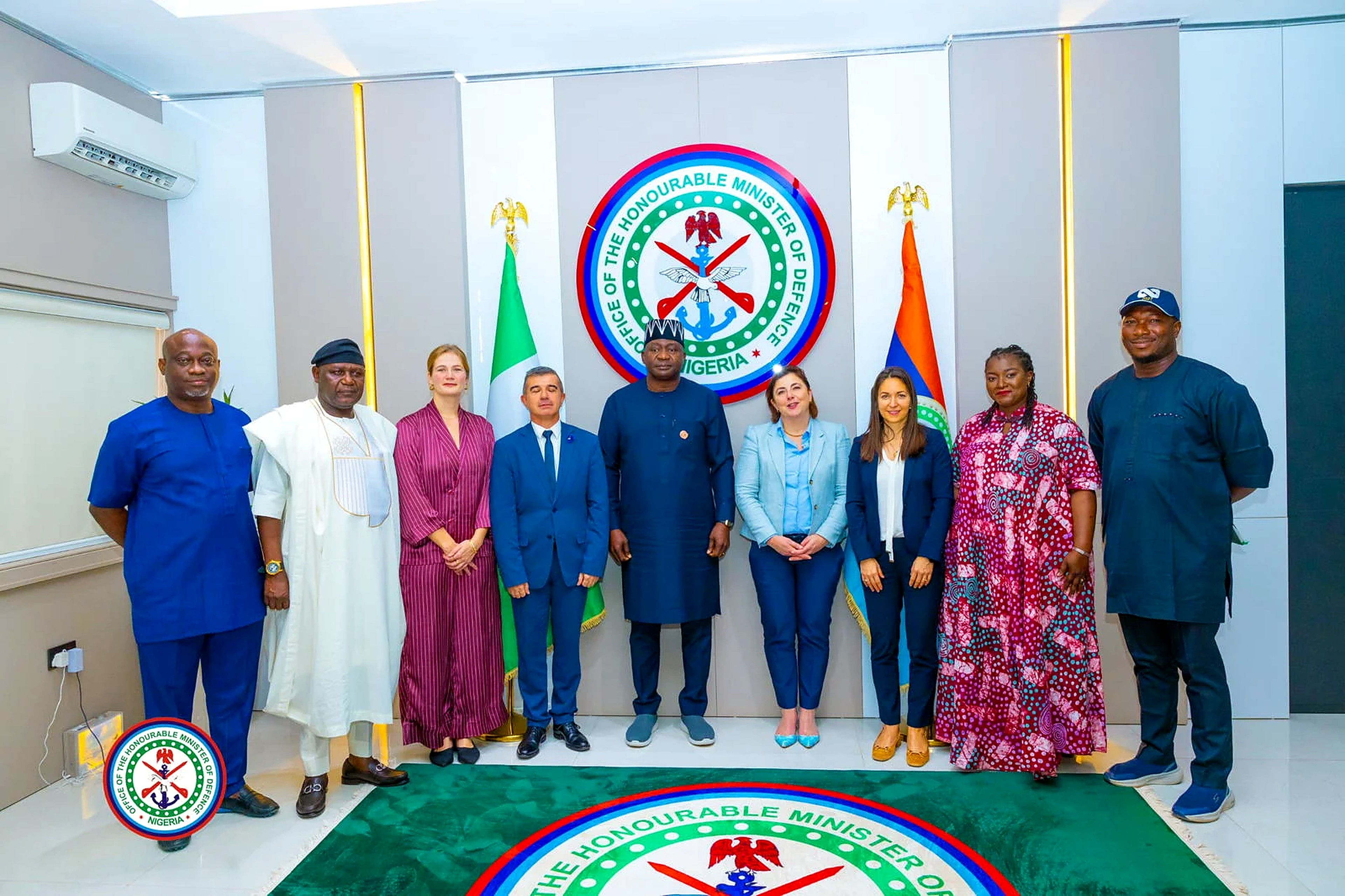
Nigeria’s Defence Minister, General Christopher Musa (retd.), and a European Union delegation led by Claire Gaudin, Head of the European Peace Facility (EPF) at the European External Action Service (EEAS), met at Ship House in Abuja on 13 November 2026 to finalise delivery of a €20 million package of counter-drone, counter-improvised explosive device and night-vision equipment for the Armed Forces of Nigeria.
The measure is the EU’s first bilateral defence assistance to Nigeria under the EPF. Until now, EU security funding reached Nigerian troops only through the regional Multinational Joint Task Force (MNJTF) in the Lake Chad Basin.
From Pledge to Delivery Plan
The talks complete a process Military Africa has followed since October. On 17 October, EU Ambassador Gautier Mignot confirmed the €20 million pledge to Musa and said an EU technical delegation would come to Abuja in November to agree how the aid would be delivered. The Council of the EU formally adopted the assistance measure two days later, on 19 October, The Brussels Times reported, following an EU-Nigeria Peace, Security and Defence Dialogue in February and a ministerial dialogue in Abuja in March 2026.
Gaudin’s visit appears to be the promised follow-up. Musa’s media aide, Leah Katung-Babatunde, said in a statement that the meeting focused on the “delivery modalities” for the package, which she said was “sealed in October 2026”, Punch reported.
What the €20 Million Buys
Gaudin said the package will fund counter-improvised explosive device (C-IED) equipment, counter-unmanned aircraft systems (C-UAS), night-vision capabilities and individual protective gear for troops deployed in operational theatres. She said the priority areas were identified and agreed with the leadership of the Armed Forces of Nigeria after extensive bilateral consultations, Vanguard reported.
Musa said the current phase covers non-lethal supplies together with technical training and maintenance, so that the equipment stays in service after handover. He said he hoped later phases would add military medical support and advanced surveillance. No quantities, suppliers or delivery dates have been published.
Each item answers a threat Nigerian units face every day. Roadside and vehicle-borne bombs remain a leading cause of casualties in the North East, where Boko Haram and the Islamic State West Africa Province (ISWAP) operate. Both groups, and some bandit gangs in the North West, now use commercial and modified drones to watch and attack troops, which makes jammers, detectors and other C-UAS kit a pressing requirement for forward bases. Night-vision equipment lets units patrol and pursue after dark, when many attacks and kidnappings take place.
Local Production and the Wider Agenda
Musa used the meeting to press the EU to back defence manufacturing in Nigeria, urging it to build on the momentum of the recent Africa International Defence Exhibition (AFRIDEX) in Lagos to set up local production lines. That echoes President Bola Tinubu’s call at the show for partnerships that leave lasting capability behind, and a string of AFRIDEX agreements, including Spain’s EM&E memorandum with Nigus Tactical Systems, aimed at producing equipment in Nigeria.
The minister also restated Nigeria’s determination to track and dismantle terrorist financing networks wherever they operate. The two sides discussed closer maritime security cooperation in the Gulf of Guinea, and Gaudin said the package would complement regional stabilisation efforts under the MNJTF, which Nigeria is working to reposition with the Sahel states.
How the European Peace Facility Works
The 27 EU member states created the EPF in March 2021 as an off-budget instrument for the 2021 to 2027 financial cycle, to strengthen partner armed forces, prevent conflict and build peace. Gaudin said Nigeria is one of more than 20 African countries among about 30 beneficiaries worldwide.
In West Africa the EPF has funded coastal and border security more than front-line combat. The Council approved a second €5 million package for the Togolese Navy in June 2026, and earlier measures went to Ghana and Benin. According to the EEAS, EU peace, security and defence cooperation with Nigeria exceeded €700 million between 2015 and 2025, and the EU has given €234.4 million to the MNJTF.
A Small Package for a Large Fight
Set against Nigeria’s own spending, €20 million is modest. The 2026 defence budget runs to about N3.154 trillion, but personnel costs absorb roughly 76% of it, leaving little for the kind of protective and counter-drone kit the EU is now funding. That gap gives the package practical weight beyond its size, and makes the promised training and maintenance as important as the hardware itself.
The aid adds to a heavier equipment pipeline. The Nigerian Air Force is receiving Leonardo AW109 Trekker helicopters, and Bell has started building its 12 AH-1Z Vipers. The EU package will not change the balance against ISWAP on its own. Its test will be whether C-UAS and C-IED kit reaches the forward bases of Operation Hadin Kai quickly, and whether the later phases Musa wants, in medical support and surveillance, follow. More on Nigeria and the European Peace Facility is in our archive.