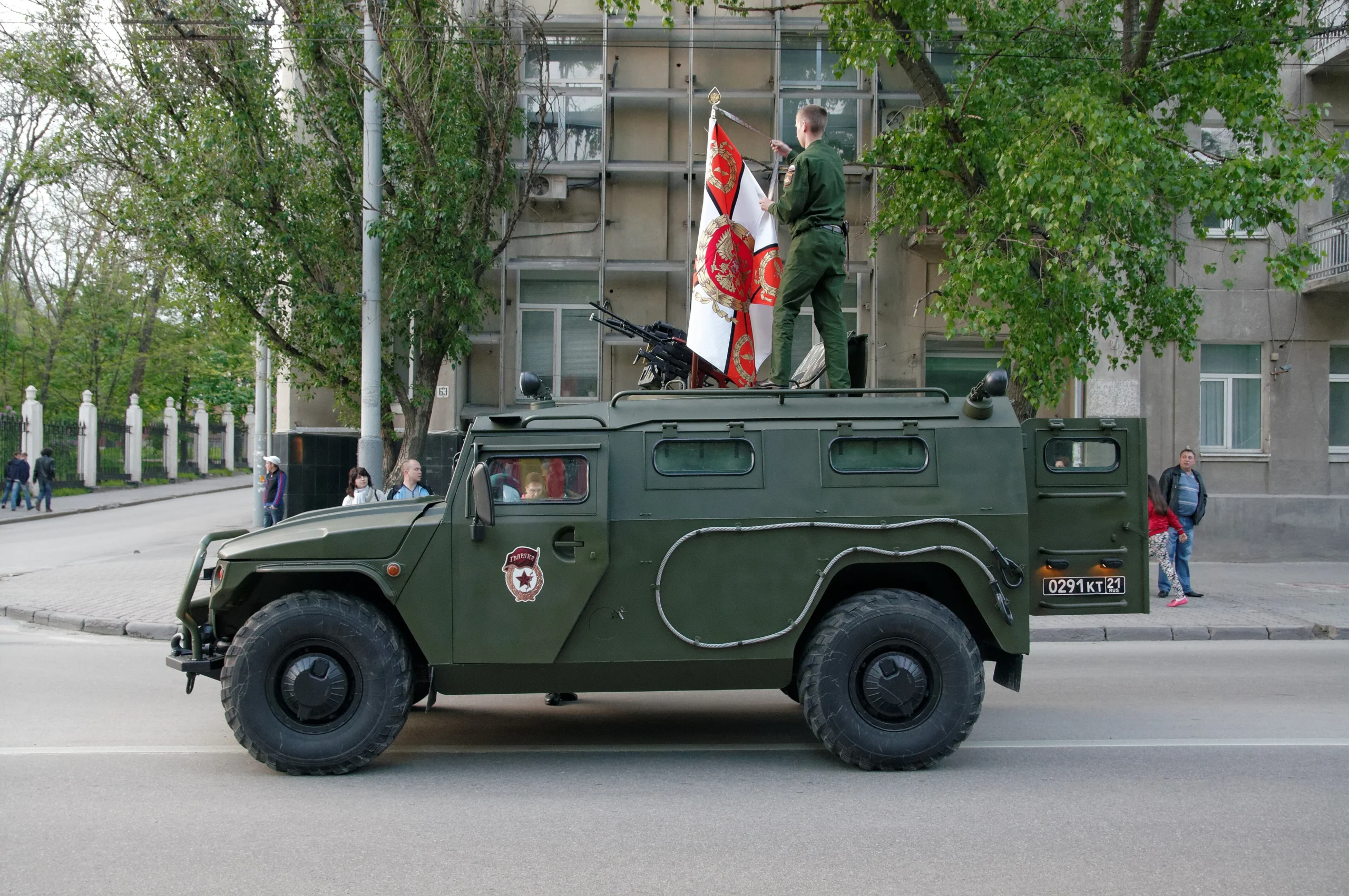
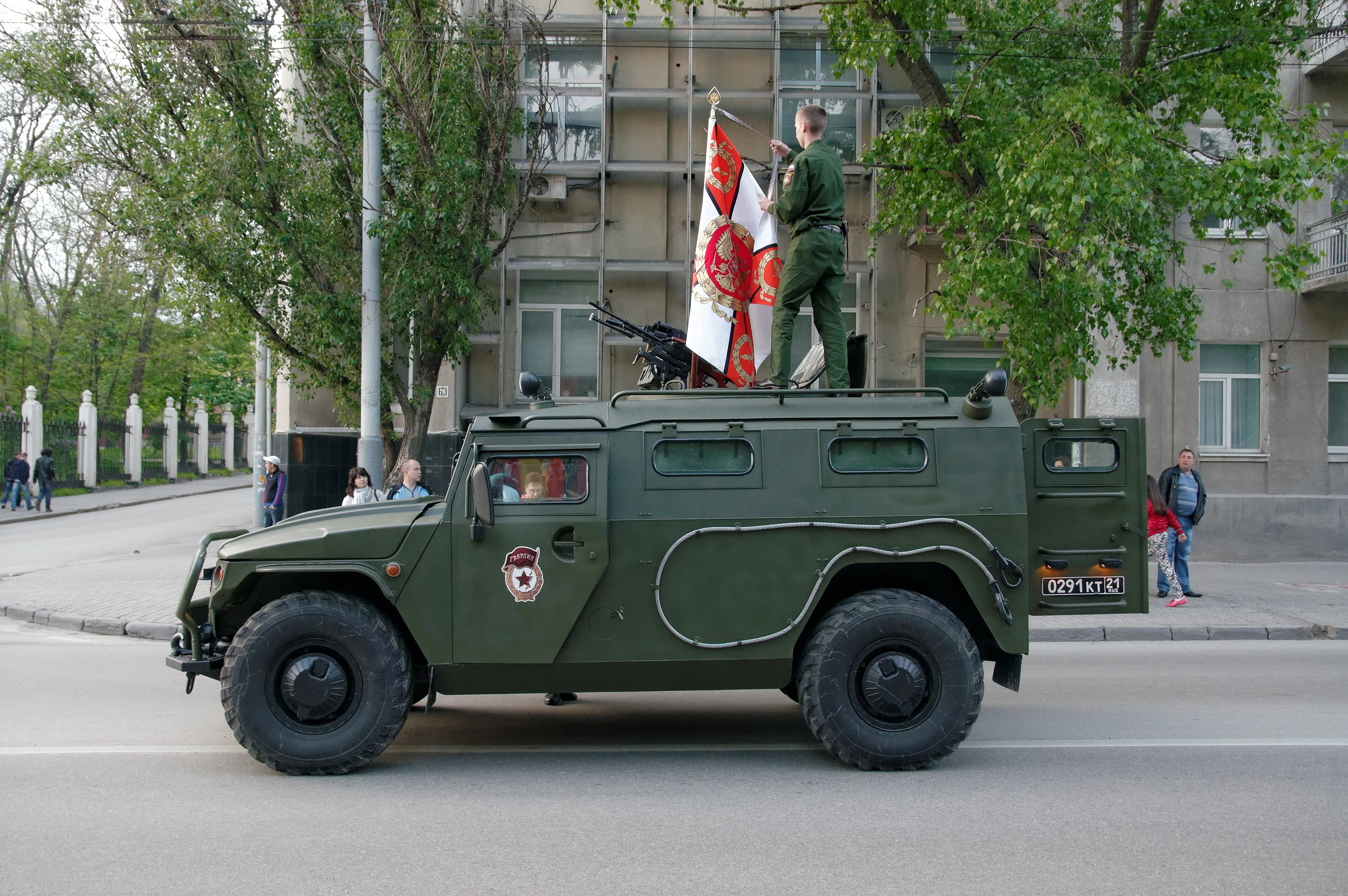
Russian cargo ships have carried T-72 tanks, Spartak mine-resistant ambush protected (MRAP) vehicles, Tigr infantry mobility vehicles and other military equipment to African ports between 2023 and 2026, according to an investigation by C4ADS, the Washington-based research organisation that tracks illicit networks, first reported by Defense News on 10 November.
The study follows a sample of twelve ships with operational ties to Russian military shipments. C4ADS analysts combined Automatic Identification System (AIS) transponder data, satellite imagery, photographs taken on the ground and local reporting to rebuild their voyages. The ports of Conakry in Guinea, Lomé in Togo and Tobruk in Libya stand out as the main gateways, most likely serving Russia’s Africa Corps, the Ministry of Defence force that replaced the Wagner Group across much of the continent. The researchers suggest that Mali was the final destination for many of the shipments.
Conakry: the Atlantic gateway to Bamako
Five known military-affiliated transport ships sailed from Russian Baltic and Arctic ports to Conakry between December 2024 and March 2026, with military convoys then driving inland to Mali. The Adler and Siyanie Severa arrived in January 2025. “Within days, a convoy of roughly a hundred military vehicles, including Spartak mine-resistant ambush protected (MRAP) armored vehicles and T-72 heavy tanks, was filmed arriving in Bamako,” C4ADS said in a summary shared with Defense News.
The Baltic Leader and Patria followed in May 2025, after which more MRAPs appeared in the region. The Siyanie Severa sailed with them and continued past Conakry to Bata in Equatorial Guinea and to Lagos. The Baltic Leader is a 127-metre roll-on/roll-off cargo ship that French customs seized in the English Channel in February 2022 before a court ordered its release.
Some voyages carry naval escorts. The Sabetta arrived in Conakry in March 2026 after a Russian warship escorted it through the English Channel, and C4ADS assesses that it likely delivered military equipment including Tigr vehicles. UNITED24 Media reported last month that the ship docked on 19 March with about 50 military and support vehicles, including armoured vehicles and fuel tankers.
Lomé opens a second route
Togo has become a second waypoint for supplies to the Sahel since Lomé signed a military cooperation agreement with Moscow in 2025, C4ADS found, with equipment moving to Mali by road through Togo and Burkina Faso. The cargo ship Mikhail Britnev likely carried military vehicles and equipment to Lomé in June and July 2026. Malian state television later showed a convoy of 29 armoured vehicles in Bamako that reporters said had travelled from Lomé.
The Sentry, a United States investigative group, said in July that the Britnev carried dozens of armoured vehicles, among them BMP infantry fighting vehicles, BTR-82 armoured personnel carriers and MRAPs, and cited Jeune Afrique reporting that more than 300 Africa Corps personnel had been in Togo since January. The route adds a new dimension to Togo’s security ties, which until now centred on European maritime support such as the EU’s €5 million package for the Togolese Navy.
Tobruk, Pointe-Noire and the sanctions picture
Libya is a regular destination, serving the Africa Corps presence in the east of the country under General Khalifa Haftar’s Libyan National Army. “Like shipments to West Africa, deliveries to Libya follow a recurring pattern: departure from Baltiysk Naval Base in Kaliningrad, a naval escort indicating high-value cargo, and frequent prolonged AIS signal gaps in the Mediterranean,” C4ADS said. The European Union recently extended Operation Irini off Libya to 2029 and added Russia’s shadow fleet to its tasks.
The investigation also flags Pointe-Noire in the Republic of Congo as a possible new hub. Three US-sanctioned ships built to carry vehicles sailed there from the Black Sea and St Petersburg between 2023 and 2026, and two of them also called at West African ports linked to Russian arms deliveries. C4ADS cautions that more work is needed to establish what they carried. Ukrainian outlet Militarnyi notes that any equipment landed there could support Africa Corps instructors in Congo or move on to the Central African Republic.
Ten of the twelve vessels C4ADS tracked are under US sanctions, compared with six covered directly or through their owners by British sanctions and five by European Union sanctions. The C4ADS interactive tracking map was released to the public on 10 November.
Sustaining the Sahel campaign
The sea routes complement a Russian air logistics network through Algeria that Defense News investigated in April, and they help explain how Moscow keeps heavy equipment flowing to Mali despite its war in Ukraine. Military Africa has tracked the results on the ground, from the RB-531B Infauna electronic warfare vehicle spotted with the Africa Corps to the armour used in the recapture of Kidal in October.
The findings sit alongside wider data showing the limits of that effort. As Military Africa reported this week, SIPRI puts Russia’s share of African arms imports at 15%, behind the United States and China. For the Alliance of Sahel States, the dependence on a handful of sanctioned ships calling at Conakry and Lomé means that coastal governments, and the sanctions regimes that watch those ports, now shape how quickly Mali’s army and its Russian partners can replace losses in the north.