


On Monday morning, a devastating accident took place at Fez-Saiss Airport in northern Morocco, claiming the lives of two military officers.
The incident involved an Alpha Jet trainer aircraft, part of the Royal Moroccan Armed Forces (FAR), which crashed during a routine training mission. According to an official statement from the FAR, the aircraft lost balance and slammed into the runway while preparing for takeoff. Security authorities have swiftly launched an investigation to uncover the reasons behind this tragedy, which marks a sombre moment for Morocco’s military aviation community.
This crash is particularly striking as it follows another similar incident near the same airport in April, though details of that earlier event remain scarce. The Alpha Jet at the centre of this accident is a twin-engine jet aircraft with a notable history. Co-manufactured by Dassault Aviation of France and Dornier Flugzeugwerke of Germany, it was developed in the 1970s to meet the dual needs of pilot training and light attack missions. Designed to outperform the earlier generation of jet trainers, the Alpha Jet boasts versatility, capable of carrying an array of weapons such as bombs, rockets, and machine guns.
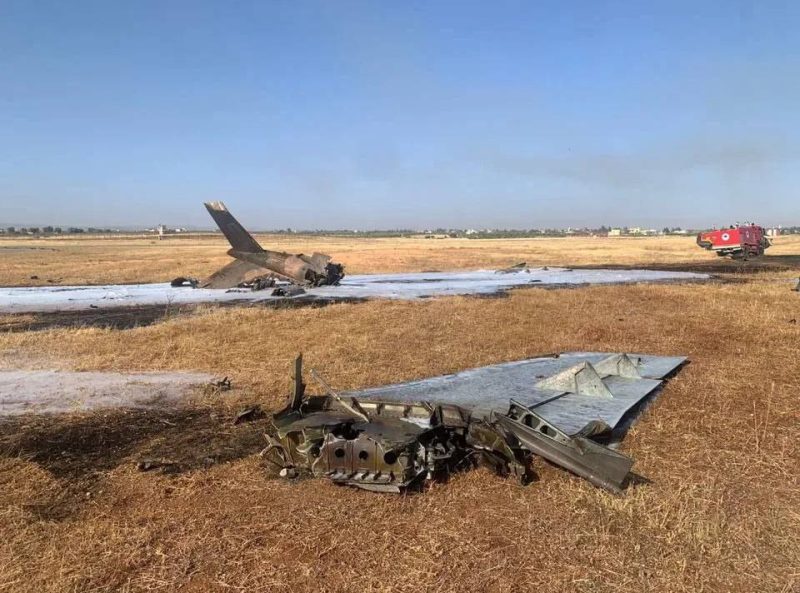
Both pilots died in the crash. (Via Royal Moroccan Armed Forces on X)
This adaptability has made it a valuable tool for air forces seeking a cost-effective, multi-role aircraft. Morocco acquired 24 of these jets between 1979 and 1981, stationing them in Meknes where they formed both a training squadron and a counter-insurgency (COIN) squadron. The aircraft saw active combat during the Western Sahara War, with one being shot down by the Polisario Front in December 1985, a testament to its role in Morocco’s military operations. Beyond Morocco, the Alpha Jet has found a place in the air forces of several other nations, reflecting its global appeal.
Countries such as the Ivory Coast, with seven aircraft, Nigeria with 24, Qatar with six, and Togo with five, have all integrated the Alpha Jet into their fleets. Most of these were French-built models, though Nigeria’s aircraft came from German production lines. The French Air Force has employed the Alpha Jet primarily for training, while Nigeria has used it for both training and combat missions, showcasing its flexibility. This widespread use speaks to the aircraft’s reputation as an affordable and reliable option for air forces worldwide. For Morocco, however, the Alpha Jet fleet, now over four decades old, may be nearing the end of its service life.
The recent crash at Fez-Saiss Airport is not an isolated event, and the recurrence of such accidents raises pressing questions about the maintenance and operational condition of these ageing aircraft. In response, the Royal Moroccan Air Force appears to be looking towards the future. Reports indicate that Morocco is considering replacing its Franco-German Alpha Jets with the Chinese-made L-15 Falcon, an advanced trainer and light attack aircraft. Produced by the Hongdu Aviation Industry Corporation (HAIC), the L-15 features a digital cockpit, cutting-edge avionics, and the ability to carry various weapons, positioning it as a modern successor to the Alpha Jet.
Morocco is in advanced discussions with HAIC, hinting at a potential shift in its military procurement strategy. Moving from European suppliers to Chinese technology could mark a notable change in Morocco’s approach to equipping its air force. The investigation into Monday’s crash will likely explore a range of possible causes, from mechanical failure to pilot error or even environmental factors. Whatever the findings, they could shape the future of Morocco’s Alpha Jet fleet and influence broader decisions about the country’s air force strategy.