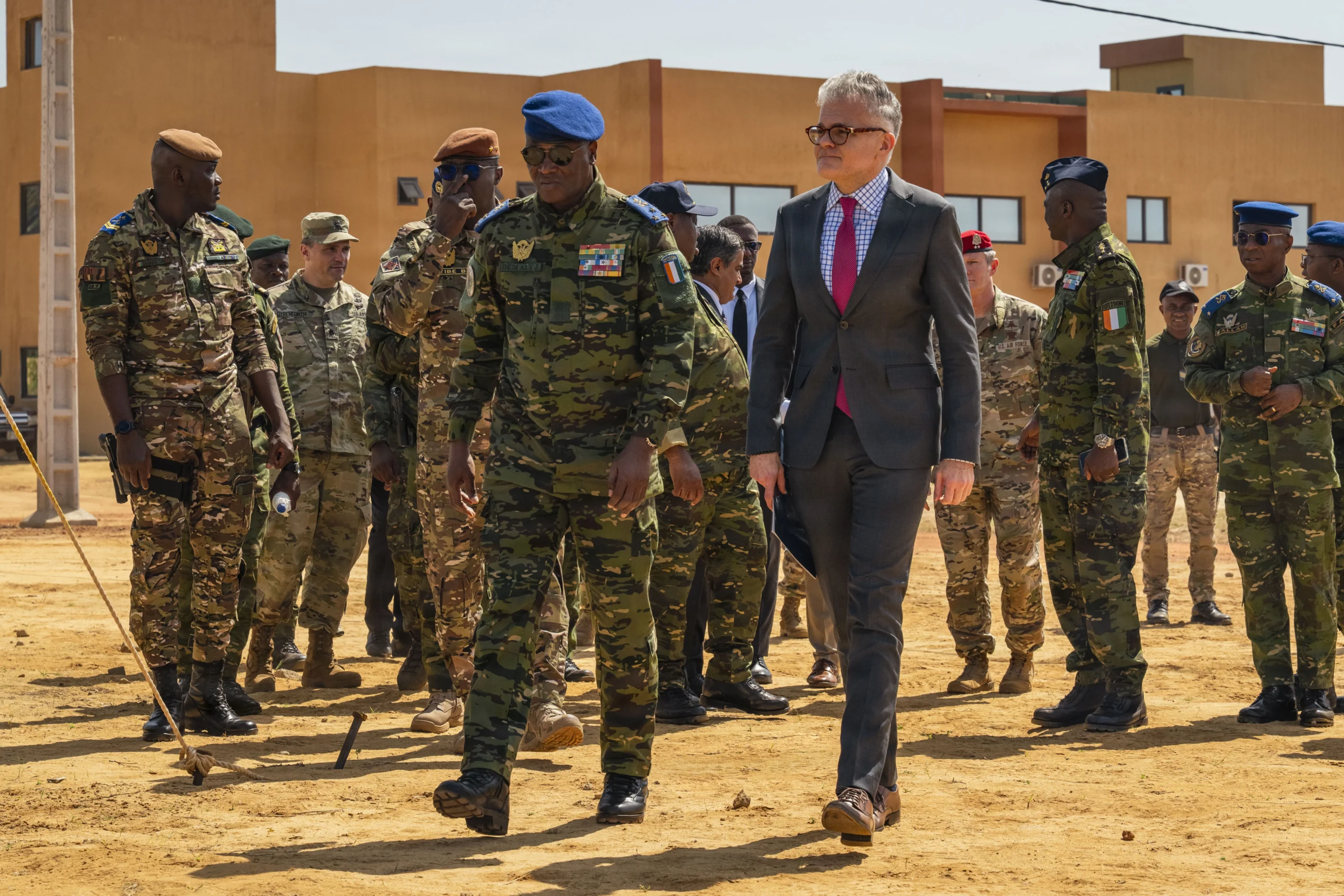
Somewhere in the Sahel, a multinational patrol is caught in an ambush. Soldiers from two neighbouring countries fight side by side, but when one unit runs low on ammunition the other cannot help. Their rifles are different and their calibres do not match. What should be a seamless allied response becomes a moment of dangerous isolation, not for lack of will but for lack of standardisation.
The scene is a composite, but the problem behind it is real. It has quietly hampered African militaries for decades, and it is becoming harder to ignore as jihadist networks, cross-border insurgencies and asymmetric threats spread across the continent. From the Sahel to the Horn of Africa, from the Lake Chad Basin to the forests of the Democratic Republic of the Congo, African forces are being asked to fight together on shared battlefields with incompatible equipment, divergent doctrine and fragmented logistics. The result is a structural disadvantage that no amount of courage or tactical skill can fully overcome.
A patchwork arsenal
Walk through the inventories of West African ground forces and what you find is, in the words of one analyst, “an eclectic mix”. Writing for the NATO Association of Canada, Paul Pryce noted that the infantry of Economic Community of West African States (ECOWAS) members carry a range of weapons in which the Kalashnikov AK-47 and its Chinese copies figure prominently, alongside the American M16A2, the Belgian FN FAL and the German Heckler & Koch G3A3. Those rifles fire at least three different rounds, the 7.62×39 mm, the 5.56×45 mm and the 7.62×51 mm, which creates a logistical nightmare for any intervention in which the forces of several ECOWAS members fight together. The problem showed clearly during the 2013 intervention in Mali, and it continues to dog every multinational deployment the region attempts.
Ammunition is only the most visible symptom of a deeper structural problem. Communications systems cannot talk to each other across borders. Armoured vehicles need entirely different spare parts. Air assets operate on different radio frequencies. Command and control frameworks rest on different doctrinal traditions, some inherited from British practice, others from French, American or Soviet templates. When a crisis hits and regional forces are expected to move as one, these gaps become dangerous.
One analysis of the ECOWAS Standby Force published in early 2026 concluded that the force’s operational viability would depend heavily on harmonised rules of engagement, command integration mechanisms, intelligence fusion structures and interoperability standards among militaries of uneven capacity. The same assessment could apply to almost any joint African military structure on the continent today. ECOWAS is activating a Rapid Deployment Force of 1,650 personnel as the vanguard of a 5,000-strong standby force, with a regional logistics depot at Lungi in Sierra Leone, and every one of those units will bring its own national kit to the fight.
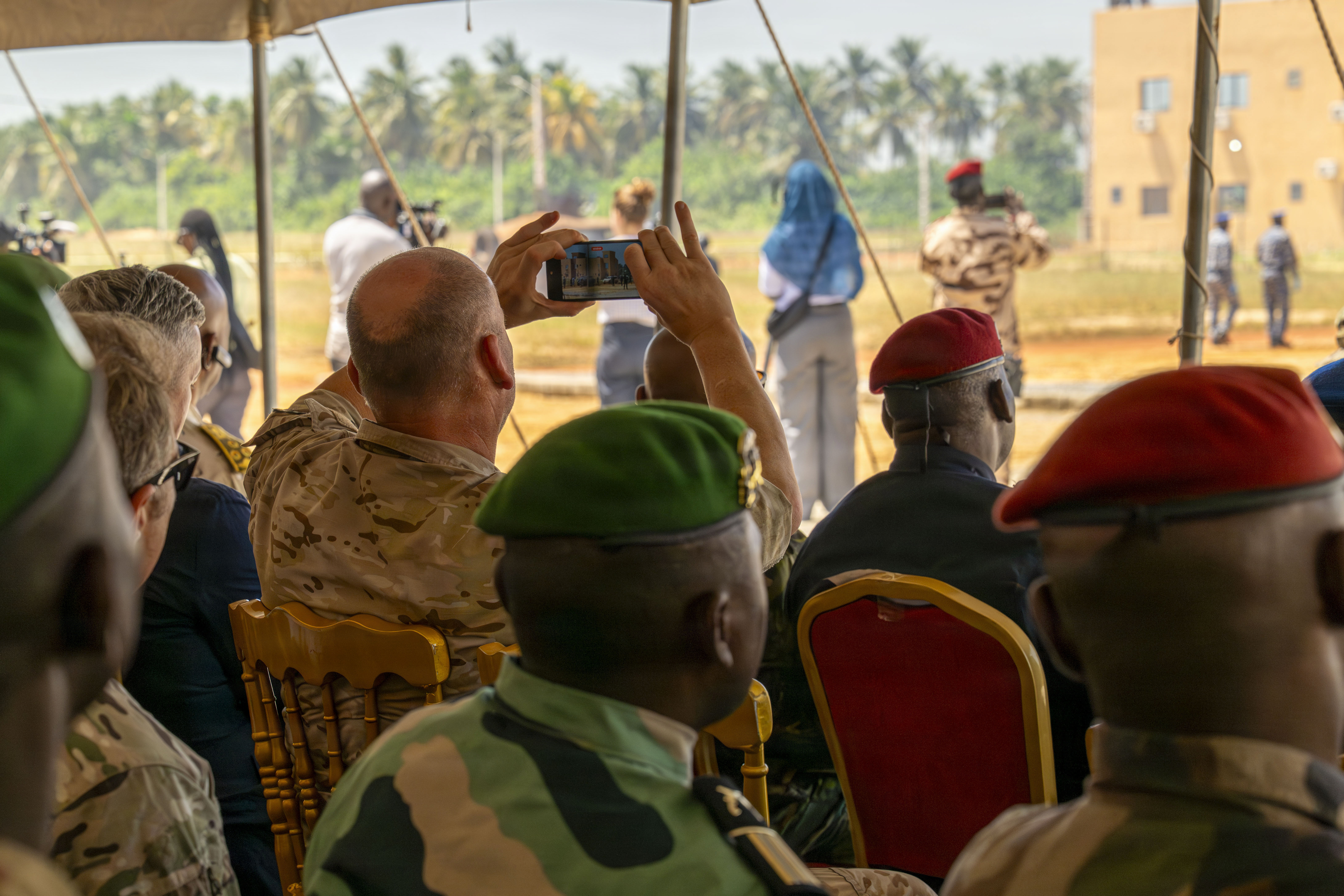
Exercises show both the appetite for working together and the scale of the task. Flintlock 2026, run by United States Special Operations Command Africa in Côte d’Ivoire and Libya from 14 to 30 April, brought together 1,500 personnel from more than 30 nations under an African-led headquarters staff, according to the US military. “Terrorist threats know no borders and can only be contained through a shared will,” said Major General Aly Dem, Deputy Chief of Defence of the Armed Forces of Côte d’Ivoire, at the closing ceremony. Exercises build trust between forces, but they last a few weeks. Common equipment and procedures are what allow that trust to hold in a real firefight.
The price of fragmentation
The costs of this fragmentation go well beyond battlefield inefficiency. They are financial, strategic and political.
Every African country that buys weapons from a different foreign supplier is in effect buying a dependency. When Russia supplies one country, France another, China a third and the United States a fourth, each nation becomes tied to that supplier’s goodwill, pricing and political calculations. Supply disruptions, whether through sanctions, diplomatic fallouts or simple commercial decisions, can leave a military’s primary weapons systems unusable almost overnight. This is not a theoretical risk. Several African governments have faced it in recent years as their foreign relationships shifted, from the Sahel states that expelled French forces to Ethiopia, which spent five years under a US arms embargo that was lifted only in September 2026. Military Africa’s examination of the Turkish defence model in Somalia found the same pattern: well-equipped units that remain functionally dependent on a single partner for support, finance and spares.
At the same time, the fragmented spending model drains African defence budgets. Small countries buying small quantities of many different systems pay premium prices for everything: equipment, spare parts, training and maintenance. The economies of scale that make defence procurement sustainable for larger powers are simply unavailable when each nation shops independently in a global arms market that is not designed with African interests in mind.
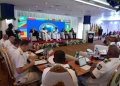
It was this dynamic that Brigadier General Saleh Bala (retired), President of the White Ink Institute for Strategy Education and Research (WISER), addressed in his panel intervention at Session IV of the 10th Dakar International Forum on Peace and Security in Africa, held on 20 and 21 April 2026 at Diamniadio, Senegal, under the theme “Africa facing the challenges of stability, integration and sovereignty”. Speaking on defence industry and geostrategic efficiency for Africa, Brig Gen Bala warned against what he called “blind competition”: the tendency of each African state to try to build its own separate defence industry, resulting in debt, waste and, ultimately, weaker human security.
“Our sovereignty in defense industrialization does not mean that each country builds its own tank,” he argued. “It means that we come together to build what we all need under a collective understanding that the projection of our commitment to provisioning for sovereignty in human security is as well a priority as the military security.”
His solution was pointed: standardisation and specialisation, backed by the logic of economies of scale. If a factory in one West African country can produce ammunition for the armed forces of the entire subregion, the unit cost of production falls sharply. The military benefit, compatible ammunition across all participating armies, comes alongside an economic one. Brig Gen Bala framed it directly, pointing to the pan-African bank founded under the ECOWAS umbrella in 1985: “If we can achieve it with Eco Bank, why not with a defense industry?”
It is a question that deserves a serious answer. At the same forum, ECOWAS Commission President Omar Alieu Touray made a parallel case on money, urging West African states to fund their own standby force rather than see underfunded African missions “re-hatted” into United Nations operations, as happened in Darfur, Mali and the Central African Republic.
What integration actually looks like
The good news is that the outline of a framework already exists. The African Union’s (AU) African Peace and Security Architecture (APSA), the ECOWAS Standby Force mechanism and subregional coordination bodies such as the Multinational Joint Task Force (MNJTF) in the Lake Chad Basin all offer institutional platforms on which standardisation could be built, although the MNJTF itself has been weakened since Niger withdrew in March 2025.
Regional logistics meetings have at least named the problem. At the 2025 West Africa Logistics Conference in Monrovia, co-hosted from 5 to 8 August by US Africa Command (AFRICOM) and the Armed Forces of Liberia, delegates discussed regional logistics planning and coordination, defence transportation, interoperability among ECOWAS and partner nations, supply chain resilience and crisis response, while AFRICOM expanded use of its African Mission Partners Environment, a virtual platform for sharing logistics information, according to Africa Defense Forum. These were discussions rather than binding agreements, and the solutions remain works in progress.
What those frameworks still lack is a binding, enforced standard that governs what African militaries buy, how they equip their forces and how they communicate in the field. The North Atlantic Treaty Organization (NATO) offers a useful model, not as a template to copy wholesale but as proof of concept. NATO members began standardising ammunition in the 1950s, and that work has given Alliance forces a good level of cohesion and interoperability on joint missions. Africa does not need NATO’s budget to learn from NATO’s logic.
A realistic starting point for African integration would address three layers. The first is a common small arms calibre for ground forces operating in joint environments: one shared round, regardless of which manufacturer builds the rifle that fires it. The second is a minimum interoperability standard for military communications, so that a Ghanaian battalion and a Nigerian battalion can work on the same tactical radio net. The third is a set of shared maintenance and logistics protocols for the armoured vehicle classes most often deployed in African counter-insurgency operations. None of this requires any nation to surrender its procurement autonomy. It requires them to agree on a floor.
Building what Africa needs
Integration without indigenous production is only half a solution. As long as African militaries depend almost entirely on foreign-made weapons and platforms, standardisation merely changes which foreign supplier dominates the market. The deeper strategic goal, the one Brig Gen Bala pointed towards at Dakar, is for Africa to produce the equipment its forces standardise around.
The foundation exists, even if it is uneven. South Africa, through Denel, has long led the continent in military production, building artillery, armoured vehicles and missiles. Nigeria, through the Defence Industries Corporation of Nigeria (DICON), has stepped up small arms and vehicle production and is working with foreign partners to develop indigenous capability. Egypt is one of the continent’s most advanced military producers, building a wide range of weapons and armoured vehicles. Algeria has invested heavily in domestic arms production, while Ethiopia, Kenya and Ghana are slowly emerging as players in the sector.
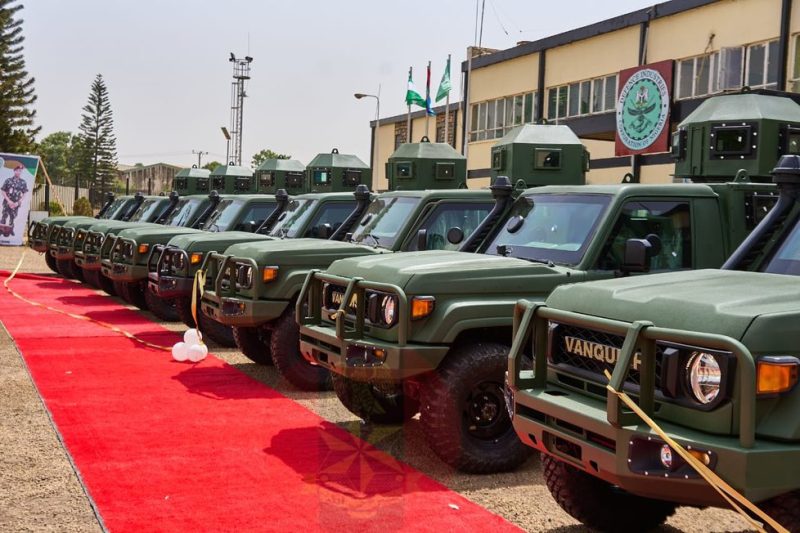
Nigeria’s trajectory is particularly instructive. On 4 March 2026, the Nigerian Army took delivery in Kaduna of 15 Vanquisher light armoured personnel carriers, the first of an initial batch of 20 built by DICON with Vanquish Industries Limited and the Army Command Engineering Depot, as Military Africa reported at the time. The economics are compelling too. DICON’s Ezugwu mine-resistant ambush-protected (MRAP) vehicle has been reported to cost around $180,000 a unit, against reported unit costs of $650,000 to $725,000 for the foreign MRAPs Nigeria has bought. That difference, achieved through lower local labour and manufacturing costs, points directly at the economic case for building African rather than buying foreign.
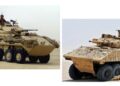
The Sahel shows both the promise and the risk of national efforts. Burkina Faso says it has fielded nearly 300 locally armoured Nanga vehicles, and Niger has shown its Kaocen 2 and Inates 2 vehicles built in army workshops. Both are real achievements, yet they are separate designs on separate chassis, built by neighbours that now fight side by side. Without a shared standard, local production risks reproducing the patchwork rather than ending it.
The deeper challenge is that individual national efforts, however promising, cannot substitute for a regional approach. Denel has the technical depth but spent much of the past decade in financial crisis for lack of orders, and has only recently returned to profit for a second consecutive year. DICON has growing capability but still relies heavily on licensed foreign designs. Neither can sustain a viable defence industrial base on domestic orders alone. A factory producing ammunition, vehicles or communications equipment for fifteen or twenty African militaries working to a common standard is a different economic proposition entirely.
This is the logic Brig Gen Bala described as “standardisation and specialisation”. One country does not build everything. Each builds what it does best, to a shared standard, for a shared market. The result is regional strategic resilience: no single country can be strangled by a foreign arms embargo, because the supply chain is African, regional and collectively owned.
The implications extend well beyond the battlefield. Defence investment in satellite communications, smart devices and energy infrastructure has direct civilian uses in health monitoring, education and power generation. A West African satellite communication network built to support military command and control is also a network that can connect rural hospitals and schools. A munitions factory employing engineers and technicians is also a skills development programme. The division between military security and human security, Brig Gen Bala argued, is a false one. “To achieve lasting success, countries in the region must stop viewing military security and social welfare as two opposing forces.”
The political will problem
None of this happens without political decisions at the highest level. Standardisation requires governments to accept limits on their procurement choices, and therefore on the foreign relationships those choices sustain. France, China, Russia, Türkiye and the United States all use arms sales as instruments of influence in Africa. A regional model disrupts those relationships and invites friction, and African leaders who have built political ties around particular foreign partners will face real pressure to keep them.
Yet the case for change is getting harder to dismiss. Liberian Defence Minister Geraldine George called the Monrovia logistics conference “a critical platform” to strengthen cooperation within ECOWAS, saying it reflected “our collective commitment to enhancing regional security, boosting interoperability” across the region’s armed forces. That language is stronger than it once was. The collapse of security across much of the central Sahel, driven in large part by fragmented and externally dependent security arrangements, has sharpened minds across the continent. Industry is listening too: at AFRIDEX 2026 in Lagos, officers and manufacturers spent much of the Technical Theatre discussing regional collaboration and local capacity.
One business for the entire region
The path from fragmentation to integration will not be short. It begins with a decision, taken by political and military leaders together, that security in this region is, as Brig Gen Bala put it, “one business for the entire region”. Multiple battlefields demand one standard. And if Africa is serious about its own sovereignty, that standard must eventually be manufactured on African soil, by African hands, for African forces.
“Our security,” Brig Gen Bala told the Dakar forum, “can only be assured when we equip ourselves with our own manufactured weapons with one hand, while feeding our people with the other from our own farms.”
For a continent fighting on so many fronts at once, that is more than a slogan. It is a procurement policy waiting to be written.