
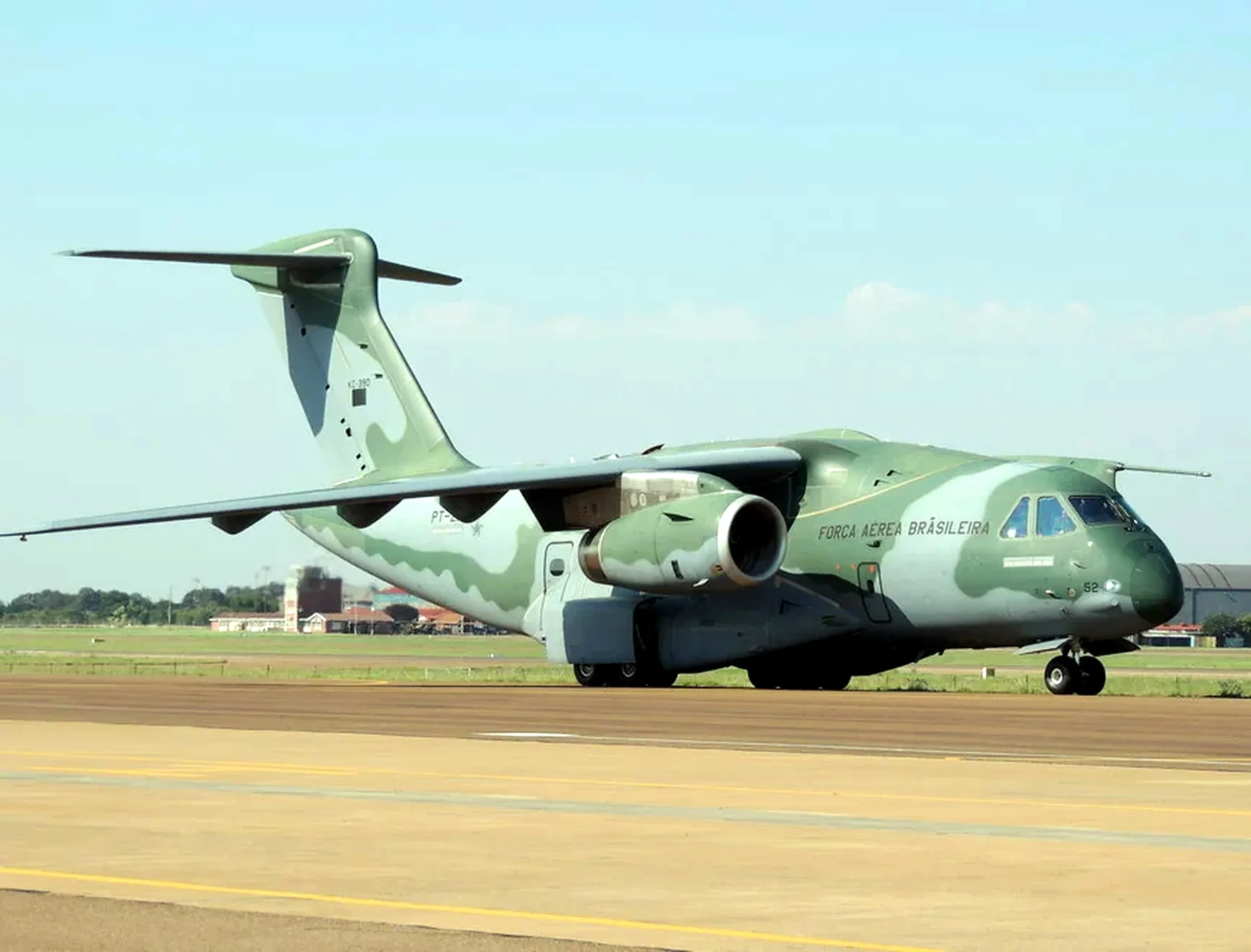
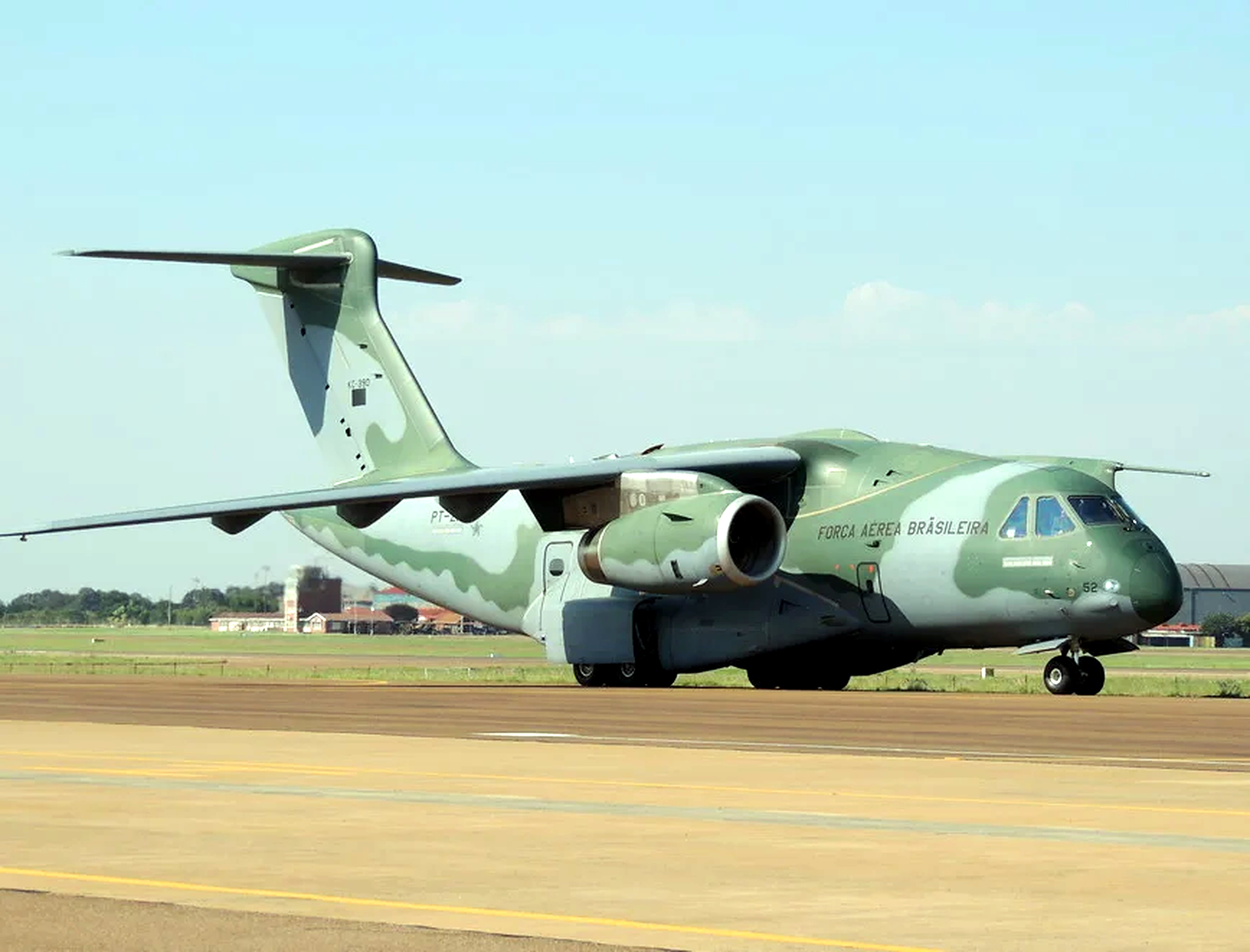
Brazil’s Embraer is running several sales campaigns for its C-390 Millennium military transport aircraft across Africa, with Morocco the only prospective buyer it will name in public, a senior company executive told defenceWeb on 11 November 2026. José Gustavo, Embraer Defence’s Vice President of Sales and Business Development for Europe and Africa, said the other African negotiations remain confidential.
No African air force has yet signed for the twin-jet airlifter. Embraer, however, sees the continent as a long-term market: it forecasts demand for 450 C-390s worldwide over the next 20 years and expects 13% of that, or roughly 58 aircraft, to come from Africa.
Morocco, the named prospect
Rabat’s interest is long-standing. A C-390 landed at Rabat and Kenitra in early 2024 for evaluation by Moroccan crews, and in October 2024 Embraer signed a memorandum of understanding (MoU) at the Marrakech Air Show covering aerospace cooperation, including defence. At the time, Embraer Defence and Security chief executive Bosco da Costa Junior said the company would work with the Royal Moroccan Air Force (RMAF) to make the C-390 “the leading choice for their Future Tactical Airlift capabilities,” Shephard reported.
In May 2026, Morocco World News, citing Spain’s La Razón and Brazilian defence sources, reported that the two sides were in advanced negotiations over up to five aircraft worth about $600 million. Neither government has confirmed a contract. Morocco has meanwhile taken the other path open to it: L3Harris Technologies has begun a multi-year overhaul of the RMAF’s C-130H Hercules fleet that is expected to run through 2029. That programme extends the life of the existing transports, but does not rule out a new type later.
South Africa and the demonstration trail
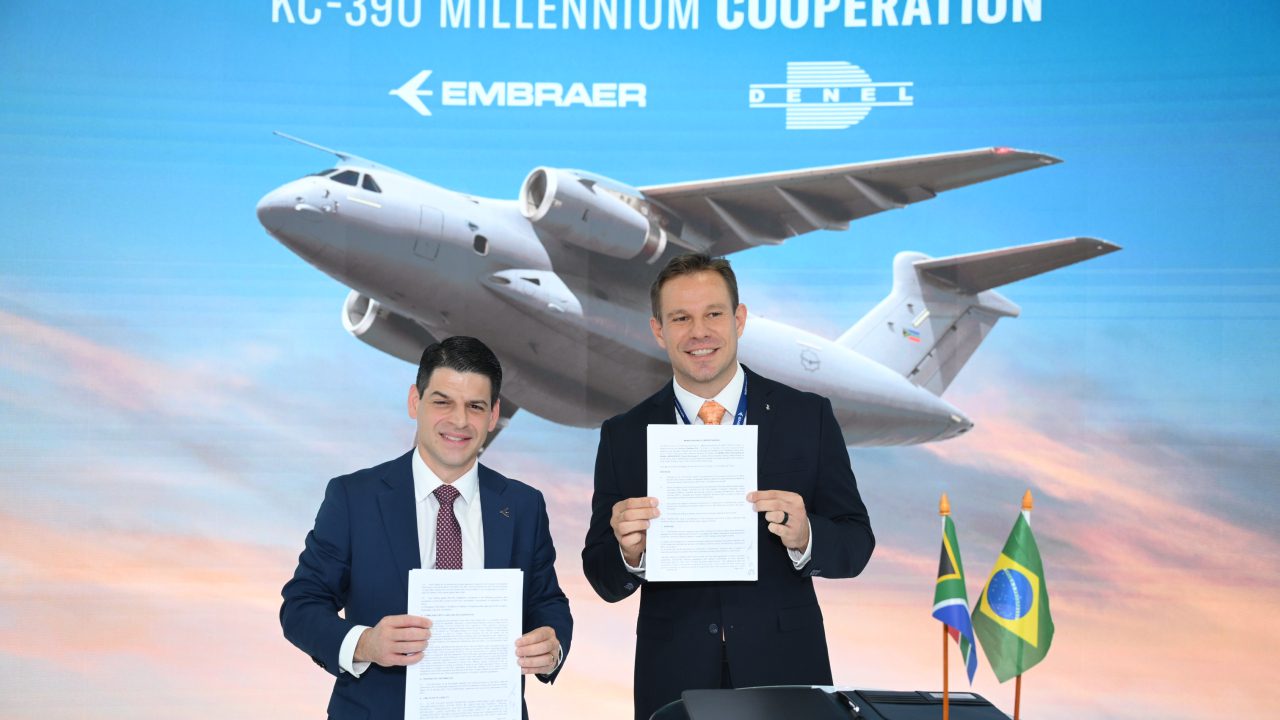
The C-390 has been demonstrated twice in South Africa, where it is pitched as a replacement for the South African Air Force’s (SAAF) ageing C-130B Hercules. It has also flown to Rwanda, Nigeria, Morocco, Ghana and Namibia, according to Gustavo. In early April 2025, Embraer and South Africa’s state-owned Denel signed an MoU to explore manufacturing and maintenance, repair and overhaul (MRO) work on the tanker-transport KC-390 variant, giving Pretoria a possible industrial share in any purchase.
That industrial offer is central to the African pitch. Embraer says it can provide technology transfer ranging from local component manufacturing to a full assembly line, along with an in-country maintenance capability. It has also set up a government-to-government procurement framework with Brazil’s state-owned ALADA aimed at African and Latin American buyers. The approach mirrors its success with the A-29 Super Tucano, which has been bought by Togo among others and for which Embraer expects about 150 African orders over two decades.
What the C-390 offers
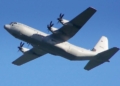
The C-390 carries a 26-tonne payload at speeds of about 870 km/h, considerably faster than turboprop transports such as the C-130. It is powered by two International Aero Engines V2500 turbofans, has fly-by-wire controls and a Rockwell Collins Pro Line Fusion glass cockpit. Embraer argues that two widely used airliner engines, instead of four, cut maintenance demands for air forces with thin support budgets.
The aircraft is designed for more than cargo and troops. Roll-on, roll-off modules allow it to be configured for medical evacuation, including intensive care, and for firefighting with up to 11,000 litres of water or retardant. Its hose-and-drogue air-to-air refuelling system has been qualified with the Saab Gripen E/F, with Gripen C/D work continuing, and Embraer is developing a boom refuelling system with Northrop Grumman. Gustavo also pointed to maritime surveillance with radar and targeting pods, a role that would interest coastal states facing piracy and illegal fishing.
Embraer has more than 40 firm orders and a $4.4 billion order backlog for the type. It has delivered nine of 18 aircraft ordered by Brazil, four of six for Portugal, both Hungarian aircraft and one of two for the Czech Republic, with deliveries to Uzbekistan and South Korea expected soon. The Netherlands, Austria and Sweden have orders pending, Lithuania and Slovakia have selected the type, Greece has approved the purchase of three, and Colombia signed for two KC-390s in August 2026.
Airlift gaps across the continent
Many African air forces still depend on C-130s built in the 1960s and 1970s, small fleets of Ilyushin Il-76s, or tactical transports such as the Airbus C295. Peacekeeping rotations, disaster relief and counter-insurgency resupply all stretch those fleets, and several have sent aircraft abroad for costly depot maintenance. The C-390’s speed and range would let a small fleet cover distances that today require stopovers or chartered airliners.
Price remains the obstacle. A reported $600 million for five aircraft is beyond most African defence budgets, and the SAAF in particular has struggled to keep its existing fleet flying. Embraer’s bet is that local assembly, MRO work and government-to-government financing can close the gap, and that a first African order, most likely from Morocco, would open the way for others.