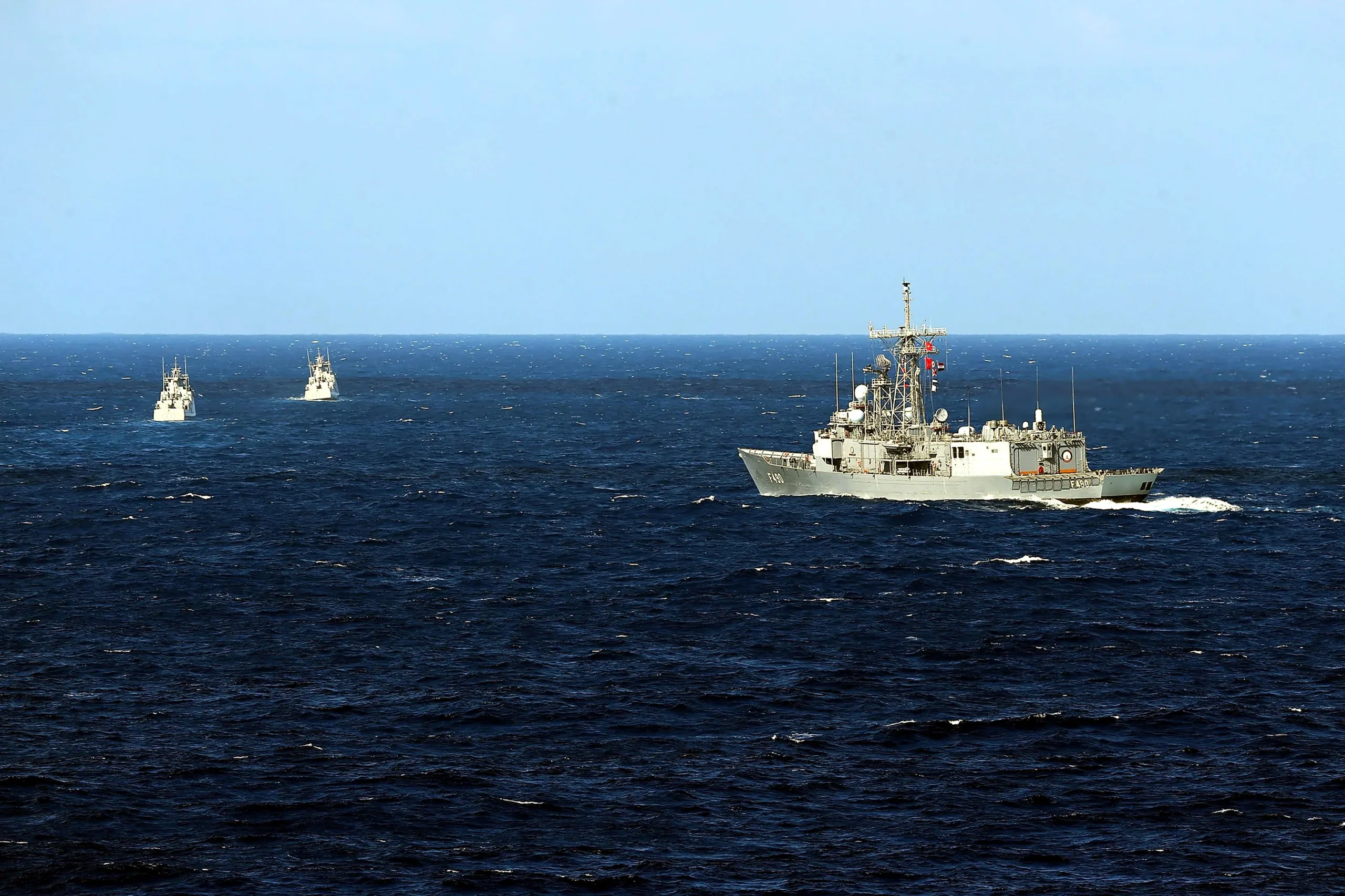
Türkiye aims to build warships jointly with Egypt under its MILGEM (Milli Gemi, or National Ship) programme, Turkish Naval Forces Commander Admiral Ercüment Tatlıoğlu said on 9 November 2026 during the Sea of Friendship-2026 exercise off Alexandria, Anadolu Agency reported. Speaking on the exercise’s Distinguished Observer Day, Tatlıoğlu said Ankara wants to lift its naval defence-industry ties with Cairo to joint shipbuilding.
“By advancing our defense industry cooperation in the naval domain to a further stage, we aim to carry out joint shipbuilding activities with Egypt under the MILGEM Project, similar to the cooperation we have undertaken with Pakistan,” Tatlıoğlu said, according to Anadolu Agency.
He argued that this model could turn relations between the Turkish and Egyptian navies into a broader, lasting partnership. No ship class, shipyard or contract for an Egyptian MILGEM purchase was announced, and the warship goal remains a stated aim rather than a signed industrial deal.
The Pakistan template
The framing follows Türkiye’s national warship programme, which the Turkish Navy describes as a 39-ship build effort, and the template set by Pakistan’s Babur-class corvettes, known as PN-MILGEM. Under that deal, Turkish state defence company ASFAT is supplying four corvettes to the Pakistan Navy: two built in Türkiye and two at Karachi Shipyard, with design rights and technology transfer included. The Babur class is a larger derivative of the Turkish Navy’s Ada-class corvettes, the first ships of the MILGEM programme.
For Egypt, a similar arrangement would mean building Turkish-designed hulls in Egyptian yards and acquiring the skills to maintain and adapt them, rather than buying finished ships abroad. Cairo has pursued a similar model with France, whose Naval Group built the first of the Egyptian Navy’s Gowind 2500 corvettes, including El Fateh, in Lorient before the remaining ships were assembled at Alexandria Shipyard.
Sea of Friendship-2026 off Alexandria
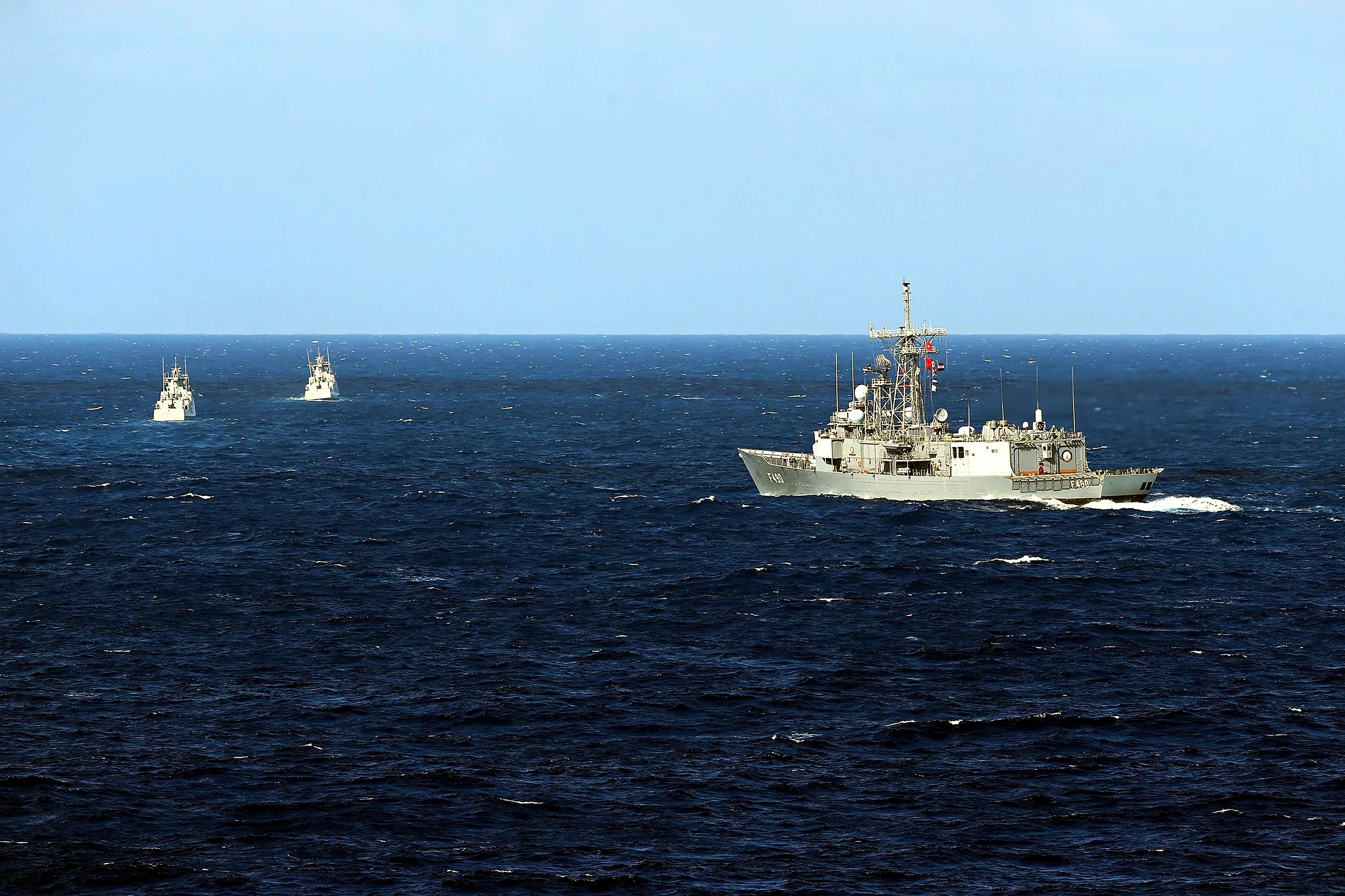
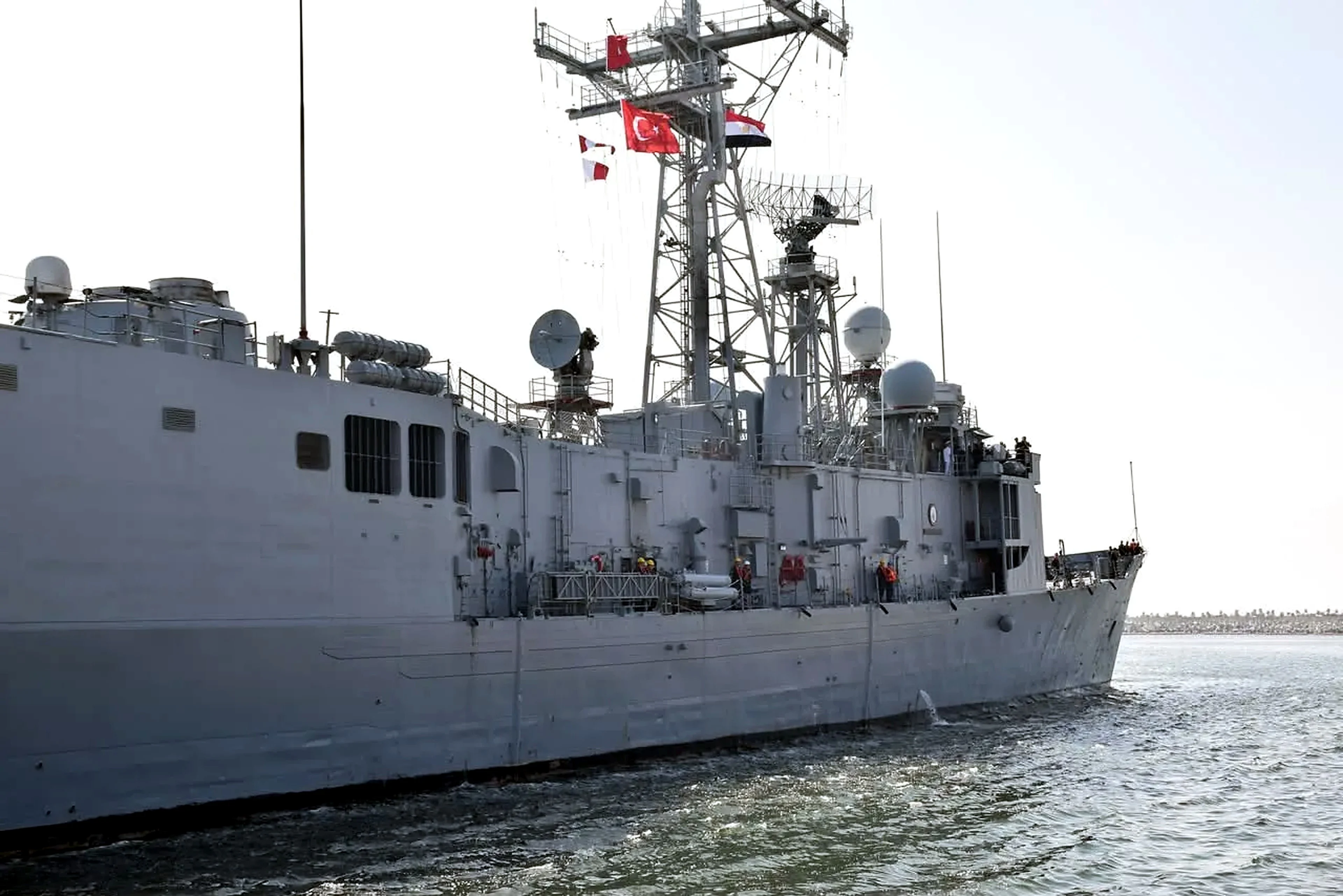
Egypt has hosted the exercise since 4 November in the Egyptian Northern Fleet’s area of operations, after the Turkish corvette TCG Burgazada called at Alexandria from 1 to 3 November. Turkish units include the multipurpose amphibious assault ship TCG Anadolu, the frigate TCG Gaziantep, the fast attack craft TCG Meltem, two SH-70 helicopters, three AH-1W attack helicopters and three Bayraktar TB3 unmanned combat aircraft.
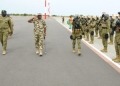
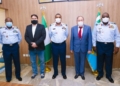
Egypt fielded the amphibious assault ship Gamal Abdel Nasser alongside M. Fahmy, El Fateh, Fouad Zekry, El Farouk and Al-Arish, and a PUMA unmanned aerial vehicle (UAV). Tatlıoğlu and Egyptian Navy Commander Vice Admiral Mahmoud Adel Fawzy followed the observer day together. The programme included an asymmetric threat drill with jet skis and unmanned surface vessels, a man-overboard search and rescue, a visit, board, search and seizure drill by Turkish Underwater Offence (SAT) commandos and Egyptian special forces, a naval and air parade, and a tour of Turkish-built equipment aboard TCG Anadolu, Daily Sabah reported.
The drill is the second since Sea of Friendship was revived in September 2025, when the two navies held their first joint exercise in 13 years after relations broke down in 2012 and 2013.
Unmanned systems and munitions
Tatlıoğlu said the Turkish Navy has gained substantial unmanned capability and is taking concrete steps with Egypt on the shared use of those systems. The Bayraktar TB3, built to operate from TCG Anadolu, and the PİRANA kamikaze unmanned surface vessel developed by Turkish state manufacturer MKE (Makine ve Kimya Endüstrisi) both took part in the exercise. MKE launched a subsidiary in Egypt in September.
He added that Türkiye fields its own guided munitions, torpedoes and naval mines, and that work is under way with the Egyptian Navy on joint employment of those weapons.
A widening defence partnership
The naval offer follows a run of Turkish–Egyptian defence agreements. In February, the two countries signed a $350 million arms and joint production deal; Egypt was earlier approved to join Türkiye’s KAAN fighter programme; and in September Havelsan and Egypt’s Arab Organisation for Industrialisation signed a sales agreement for the Hamza-1 UAV.
Two navies and the Eastern Mediterranean
Tatlıoğlu cast Türkiye and Egypt as “the two key actors in ensuring security and stability” in the Eastern Mediterranean, and described the exercise as “a tangible demonstration of the growing cooperation” between them. The navies are also exchanging mine-warfare experience, including lessons from Turkish operations against drifting mines in the Black Sea.
The MILGEM pitch sits alongside a wider thaw between Cairo and Ankara that has included the revived drills and talks on maritime arrangements in the Eastern Mediterranean. The politics remain delicate. Libya’s House of Representatives ratified the 2019 Turkey–Libya maritime memorandum on 20 October, drawing objections from Egypt, Greece and Cyprus, and Ankara has revived its offer of a maritime delimitation deal with Cairo, Proto Thema reported. Whether Egypt’s navy, which already operates French, German, American and Chinese-built ships, adds a Turkish design built in its own yards will be a test of how far that thaw extends into industry.