

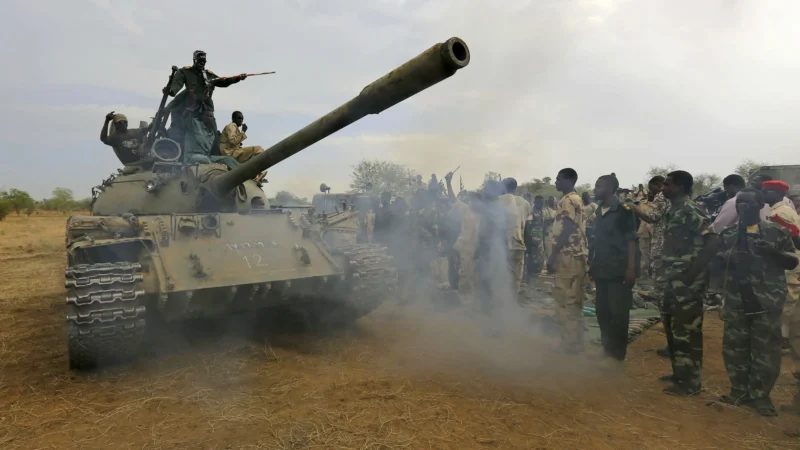
The United States has imposed additional sanctions on Sudan’s military-backed government after accusing its armed forces of using chemical weapons during the country’s civil war. The second package took effect on 20 July 2026, when the State Department published it in the Federal Register.
The measures follow a US determination that Sudan used chemical weapons in 2024 in violation of the Chemical Weapons Convention (CWC). That finding, made on 24 April 2025 under the Chemical and Biological Weapons Control and Warfare Elimination Act of 1991, triggered an initial round of sanctions that took effect on 27 June 2025. Under the same law, Khartoum had three months from the determination to meet conditions that could have averted further penalties, including ending chemical weapons use and allowing international inspection. Washington said Sudan had not met them, and an Under Secretary of State decided on 23 June 2026 to move ahead with the second package, signed off by Christopher Yeaw, Assistant Secretary for Arms Control and Nonproliferation.
What the Second Package Does
The measures tighten US export controls and add financial and aviation penalties. Exports to Sudan of goods and technology on the Commerce Control List, the US register of controlled dual-use items, are now blocked under a presumption of denial. Limited exemptions remain for safety of flight in civil passenger aviation, encryption products, deemed exports to Sudanese nationals, subsidiaries of US and foreign firms operating in Sudan, and a few other specified licence exceptions. Food and agricultural commodities, and ordinary items that are not on the control list, remain outside the ban.
The United States will also oppose loans and financial or technical assistance to Sudan from multilateral development banks, except for help that meets the basic human needs of Sudanese citizens. The Department of Transportation will suspend the right of airlines owned or controlled by the Sudanese government to fly to or from the United States. The sanctions will stay in place for at least one year and until further notice. Their practical bite on the military is limited: army chief General Abdel Fattah al-Burhan and Rapid Support Forces (RSF) leader General Mohamed Hamdan Dagalo were already under personal US sanctions.

Khartoum Rejects the Allegations
Khartoum has denied the allegations. When the first sanctions were announced in May 2025, Information Minister Khalid al-Aiser called them politically motivated, describing the accusations as “nothing but political blackmail and a deliberate falsification of the facts,” and accused Washington of complicity with the RSF and its alleged backer, the United Arab Emirates (UAE), which denies arming the group.
The US has not publicly named the agent or the locations. In January 2025 The New York Times, citing unnamed US officials, reported that the army had used chemical weapons at least twice in remote areas and that the agent appeared to be chlorine; a France 24 investigation published in November 2025 reported strong evidence of chlorine use by the army in 2024, Arms Control Today reported. Sudan set up a national technical committee in May 2025, whose interim report, circulated at the Organisation for the Prohibition of Chemical Weapons (OPCW) Executive Council in July 2026, said it had not “identified any material, technical, or documentary evidence that substantiates the allegations.” At the same session the US ambassador to the OPCW, Nicole Shampaine, called on Sudan to give OPCW inspectors “unhindered, transparent access.” Khartoum says it proposed a joint field investigation with US experts and received no reply.
The War in Sudan
Sudan has been engulfed in civil war since April 2023, when fighting broke out between the Sudanese Armed Forces (SAF), led by General Abdel Fattah al-Burhan, and the paramilitary RSF, commanded by General Mohamed Hamdan Dagalo. Washington has previously sanctioned both sides, and both al-Burhan and Dagalo personally over alleged war crimes and abuses.
According to the United Nations’ 2026 Humanitarian Needs and Response Plan, 33.7 million people across Sudan require humanitarian assistance, the largest number of any country and 3.3 million more than in 2025. Nearly 20 million are experiencing acute food insecurity, with many areas at risk of famine. More than 8.9 million people have been internally displaced since the conflict began, and around 13 million have fled their homes in total including refugees, while over 150,000 have reportedly been killed.
Both sides have been accused of serious violations of international humanitarian law and abuses against civilians. In addition to the chemical weapons allegations, the army has been accused of indiscriminate shelling and air strikes. The RSF has been accused of ethnically motivated killings, widespread sexual violence and extrajudicial executions.
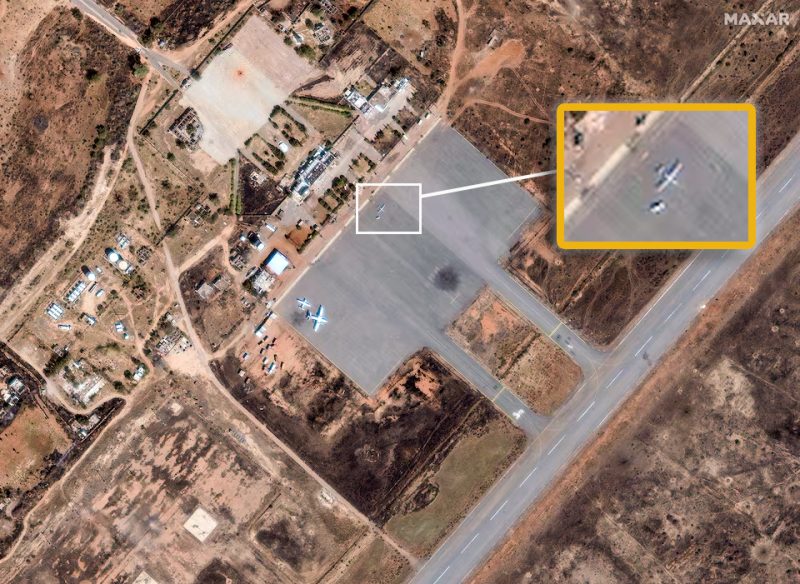
The war has become a contest of imported firepower. Military Africa has tracked the army’s Turkish Akinci drones and its 100 Pakistani Mohafiz-V armoured vehicles, and the RSF’s acquisition of Chinese FK-2000 air defence systems and Chinese-made drones. Neither side’s supply lines run through the United States, which is why the export ban is more a political signal than a military constraint.
A Divided Country With No Ceasefire in Sight
Although the army has regained control of Khartoum and much of the country’s north and east, the RSF still controls most of Darfur, where it captured El Fasher in October 2025, and fighting has shifted to Kordofan. Multiple international mediation efforts have failed to secure a lasting ceasefire, with both sides holding incompatible conditions for talks. On 6 October 2026 al-Burhan rejected negotiations and vowed to retake “every inch” of RSF-held territory, while US envoy Massad Boulos has called for a Sudanese-led national dialogue and a transition to civilian rule. The chemical weapons sanctions run for at least a year from July; whether Khartoum opens its sites to OPCW inspectors will decide whether they are lifted or tightened again.