


The Council of the European Union (EU) extended its Mediterranean naval mission, Operation Irini, to 31 March 2029 on 9 October 2026. The renewal adds three tasks: constraining Russia’s shadow fleet, improving maritime domain awareness and protecting critical maritime infrastructure.
Council Decision (CFSP) 2026/2243, adopted under the Common Foreign and Security Policy (CFSP), moved the end date from 31 March 2027. The Council set common costs for 1 April 2027 to 31 March 2029 at €16.88 million. The previous two-year period carried €16.35 million, so the budget rises by about 3 percent, according to the published decision.
Irini, formally European Union Naval Force Mediterranean (EUNAVFOR MED) Irini, launched on 31 March 2020 under Council Decision 2020/472. The name is Greek for peace. It replaced Operation Sophia, which ended on 20 March 2020, and its first job was to enforce the United Nations (UN) arms embargo on Libya.
A Berlin conference in January 2020 set the case for the operation by calling for effective implementation of the UN arms embargo. The Foreign Affairs Council decided on 17 February 2020 to launch Irini. Its original task list had four items: countering illegal arms trafficking, gathering information on oil smuggling, disrupting the human smuggling business model through information gathering, and training Libyan institutions responsible for law enforcement and search and rescue at sea.
What the Mandate Changes
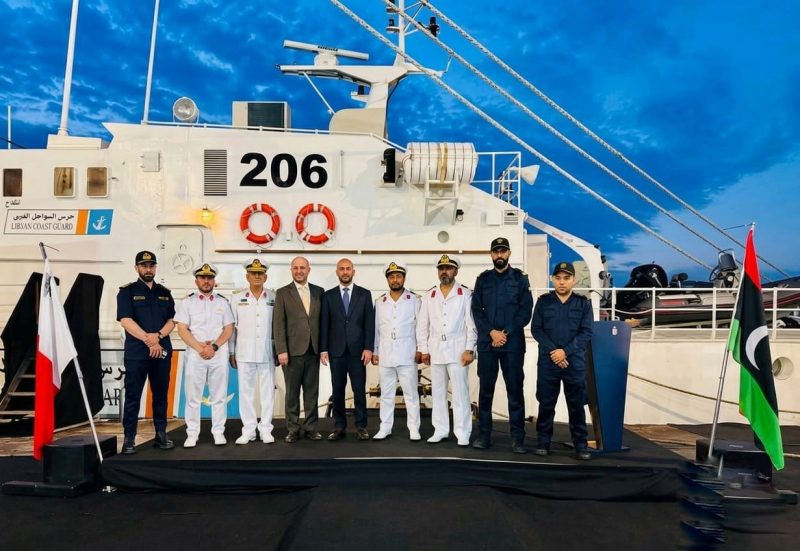
The mandate now rests on three roles. Irini protects and deters in defence of EU interests in the Mediterranean, supports UN Security Council resolutions on Libya, and builds partnerships through training and naval diplomacy.
The Libya work stays. Irini will keep exposing embargo violations and monitoring illicit Libyan petroleum exports, continue aerial patrols over the high seas to detect human smuggling and trafficking, and keep training Libyan maritime law enforcement and search and rescue institutions. The decision also opens a platform for maritime security cooperation that could include Egypt, Tunisia and Lebanon, and the operation says it stays ready to scale up if conditions in Libya change.
The shadow fleet is the network of ageing tankers that carry Russian oil outside normal ownership and insurance rules. The decision says Irini “shall contribute to constraining Russia’s ‘shadow fleet'” through a whole-of-route approach. It defines the term through an International Maritime Organization (IMO) resolution and ties the task to the UN Convention on the Law of the Sea (UNCLOS).
Maritime domain awareness means a shared picture of who and what is at sea. The March 2025 extension had already added a maritime situational awareness task, so the new text builds on it. The infrastructure task covers pipelines and cables, including trials of new technology. Libya Security Monitor reported in May that the change should let Irini protect pipelines and a submarine communications cable.
No New Boarding Powers
The shadow fleet task brings no new inspection power. UNCLOS already lets a warship visit a ship suspected of having no nationality, which reaches false-flagged tankers. Libya Security Monitor says boardings with detentions have so far been national operations by Britain and France.
The legal ground has also shifted. The UN Security Council authority to inspect ships on the high seas off Libya, Resolution 2292 (2016), lapsed on 25 May 2026. A six-month technical extension under Resolution 2804 had run since 25 November 2025.
Libya Security Monitor reported that nobody requested a renewal. It appears Greece and France, who drafted the original resolution, chose not to ask. The EU said Irini would carry on under its own Council mandate.
The new Libya article speaks of reporting and deterring arms trafficking. Every task reports to the EU’s Political and Security Committee (PSC), which may consider follow-on measures.
Ships and Commanders
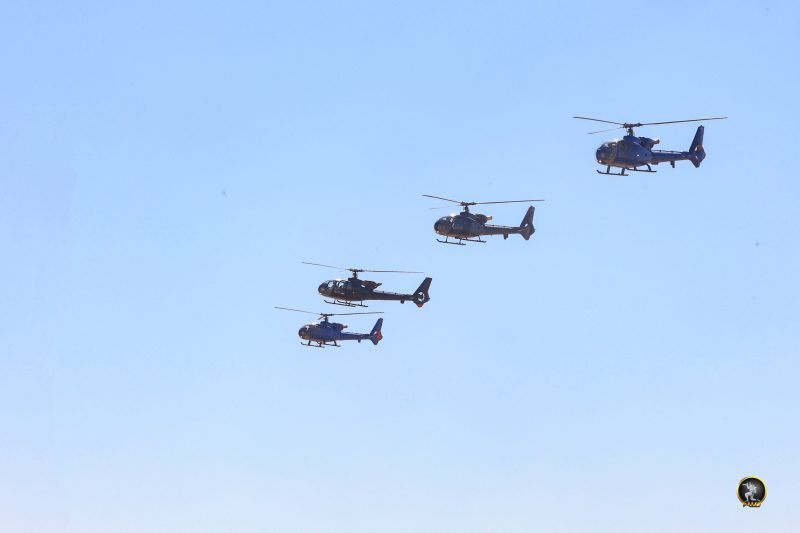
Rear Admiral Marco Casapieri of the Italian Navy is the Operation Commander. Italy and Greece swap the Force Commander post, which controls ships and aircraft at sea, every six months. On 1 October 2026 at Taranto, Commodore Stavros Polydorou of the Hellenic Navy took over from Rear Admiral Andrea Bielli of the Italian Navy.
The force now sails with the Greek frigate HS Navarinon as flagship. Greek City Times reports three Greek ships, Navarinon, Nearchos and Kimon, plus two Italian warships. Agenzia Nova describes Navarinon as an Elli-class frigate, 130.5 metres long and about 3,530 tonnes. She has served in the Greek fleet since 1995 after earlier Dutch service.
Irini has always been small. Its own October 2023 figures counted two naval units, six aircraft and over 600 personnel.
The embargo work has produced seizures. In July 2022 the Italian frigate ITS Grecale searched the cargo ship Victory Roro, and military vehicles were seized. On 11 October 2022 Irini stopped the Dutch-flagged Meerdijk off Libya; later reports counted 41 UAE-built BATT UMG armoured vehicles aboard. Armour still reaches Libya by other routes: dozens of Turkish-made BMC Amazon vehicles appeared with eastern Libyan forces in October.
Stretching Thin Hulls Across the Central Mediterranean
Each new task draws on the same hulls and aircraft. A frigate watching tankers or cables is not watching embargo traffic. That trade-off is Military Africa’s analysis, not a reported finding.
The EU keeps a standing naval presence in the central Mediterranean with a legal basis that no longer depends on a UN renewal. On the shadow fleet, Irini starts as a watcher and reporter. Anything beyond that would rest on flag-state consent, a stateless-ship finding or a new PSC measure.
The practical question for defence planners is assets. In an early interview, the first Operation Commander, Rear Admiral Fabio Agostini of the Italian Navy, said the operation needed continuous availability of air-defence warships, airborne early warning aircraft and surveillance assets. A wider mandate makes that need larger, not smaller. The next marker is 1 April 2027, when the new budget period starts and Italy is due to take back the Force Commander post.