


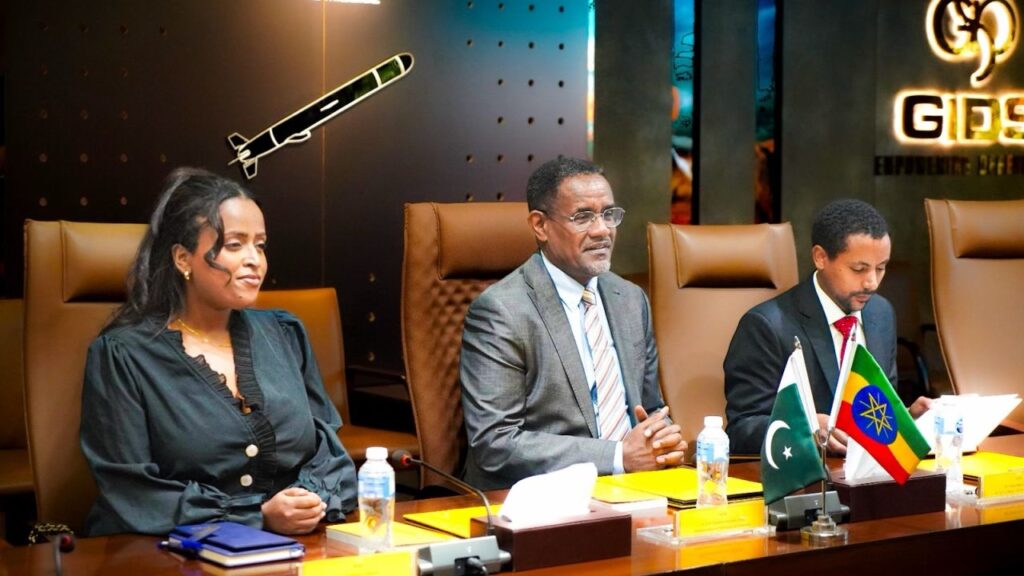
Ethiopia’s ambassador to Pakistan, Dr Oumer H. Oba, has visited the headquarters of Global Industrial and Defence Solutions (GIDS) in mid-October to explore opportunities for bilateral cooperation. We were informed this week. GIDS Chief Executive Officer Asad Kamal received the ambassador, briefed him on the organisation’s role, capabilities and operations, and took him on a tour of the facility.
Talks centred on matters of mutual interest and potential areas for collaboration. Both sides described the engagement as part of an effort to strengthen bilateral ties and advance South-South cooperation. No specific agreements or projects were announced, so the visit is best read as an exploratory step, not a deal.
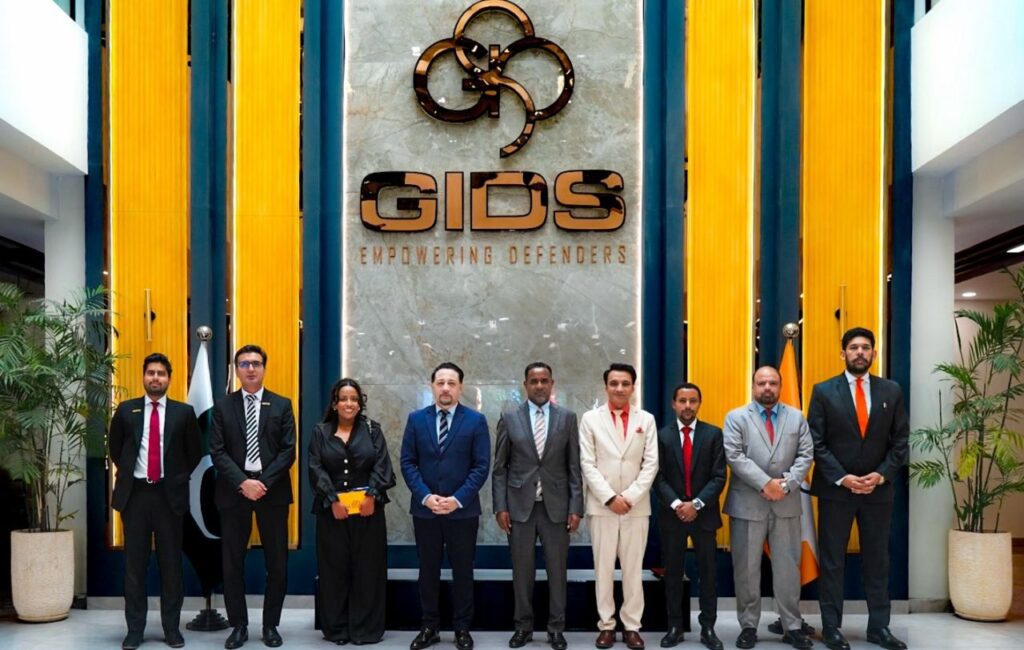
Who GIDS Is
GIDS is Pakistan’s state-owned defence export conglomerate, established in 2007 in Rawalpindi. Its portfolio includes the Shahpar family of unmanned aerial vehicles (UAVs), the Fatah guided rocket systems and, more recently, components for third-party loitering munitions. In a profile published in April, Kamal said more than 18 armed forces operate systems represented by GIDS, which works in nearly 30 countries and exports to more than 20 markets. Military Africa carried that account, which came from the company.
A Busy Fortnight in Islamabad
The GIDS visit follows other high-level contacts in Pakistan’s capital. On 8 October, Pakistan’s Defence Minister, Khawaja Muhammad Asif, met the ambassadors of Ethiopia, Rwanda and Tajikistan on the same day, and Pakistani press reported that defence and aviation cooperation was on the agenda. Dr Oumer was among those received. The material reviewed gives no detail on what Ethiopia asked for or was offered.
The contact builds on an earlier track. Horn Review asked in September 2025 whether Ethiopia was looking to Pakistan for air power, following a visit to Islamabad by the Ethiopian Air Force commander that August. No purchase has been publicly confirmed.

Why Ethiopia Is Shopping Widely
Ethiopia has assembled one of East Africa’s most varied air arms from many suppliers. Military Africa reported in February that it operates Russian Yak-130 trainers and Orion-E UAVs. In 2024 it unveiled a Sukhoi Su-30 fighter and a Turkish Akinci combat drone, and it has flown Iranian Mohajer-6 drones since at least 2021. Military Africa’s Ethiopia coverage charts that growth.
The visit also comes while Ethiopia is in a fast-moving confrontation along its northern border. Press reports describe Ethiopian forces fighting Eritrean troops and Tigrayan militia, and Africanews reported Ethiopian drone strikes near Adigrat on 8 October. Accounts of the fighting are contested and Military Africa has not verified them. Neither side has linked the GIDS visit to those events, and any connection would be inference. It is reasonable to note, though, that the clearest demand in Ethiopia’s current situation is for air power, drones and munitions, the categories in which GIDS trades.

GIDS’s African Push
GIDS has courted Africa steadily since 2024. It demonstrated the Shahpar II drone for delegates from 11 countries, including Nigeria and Kenya, and two months later signed a partnership with Nigeria’s Proforce. A delegation then visited Nigeria’s Defence Industries Corporation in September 2025. In December 2025, Egypt’s Arab Organisation for Industrialisation signed a memorandum of understanding with GIDS covering co-production of loitering munitions. In February, Military Africa reported a 1.5 billion US dollar Pakistani arms agreement with Sudan, the scope of which remained unconfirmed. At the Africa Aerospace and Defence exhibition in September, GIDS reported hosting senior delegations from a long list of African countries, according to its own account in Military Africa’s AAD 2026 coverage.
That list now sits on both sides of regional fault lines. Egypt is in a long-running dispute with Ethiopia over the Grand Ethiopian Renaissance Dam on the Nile, yet it is a GIDS partner, as Ethiopia may become. This does not necessarily signal a conflict of interest. Defence exporters sell to many buyers, and GIDS’s own pitch is that it works with whoever wants its products. It does show how Pakistan’s defence industry is positioning itself across the Horn of Africa and the Nile basin.