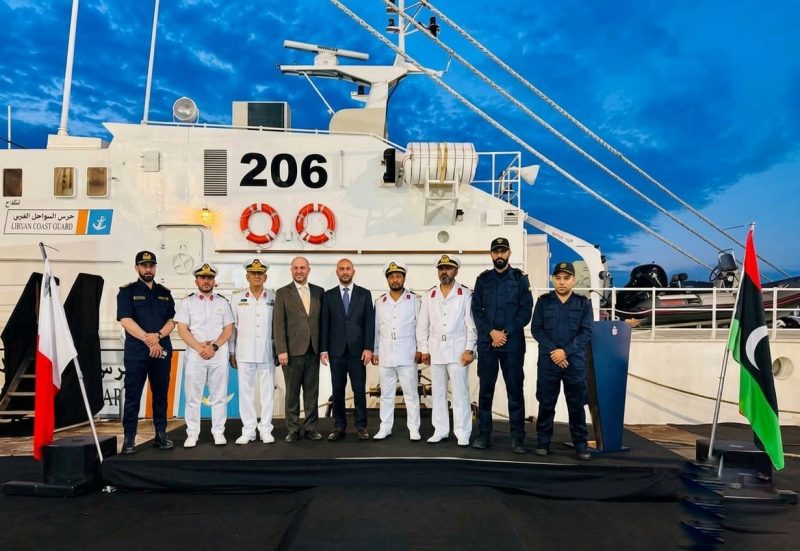
The Libyan Coast Guard and Ports Security Authority formally received the patrol boat Al-Kifah in Valletta on 22 June 2026, following an extended repair and refit period carried out in Malta. The handover ceremony was attended by Malta’s Minister for Home Affairs and Security, Glenn Bedingfield, and marks the return to service of one of the coast guard’s older hulls after a lengthy period out of the water.
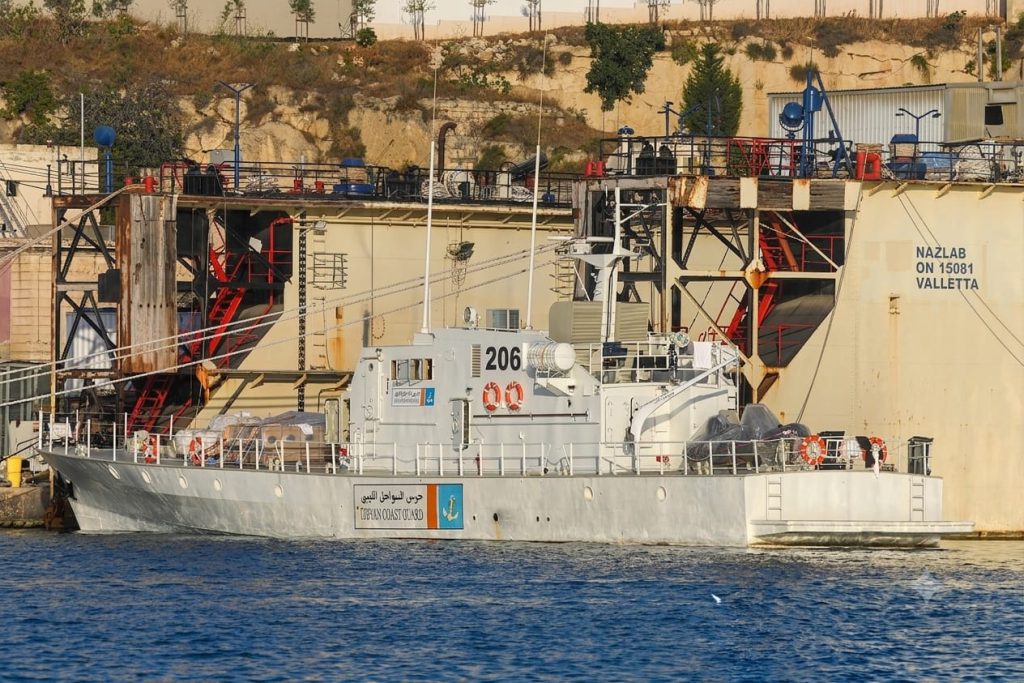
Al-Kifah, pennant number 206, is a Corrubia-class patrol vessel, a design built in Italy through the 1990s for the Guardia di Finanza, Italy’s financial and customs police. The class is a fast composite-hulled craft roughly 27 meters long, powered by twin diesel engines and capable of speeds above 40 knots. Two Corrubia-class boats were among a package of vessels Italy transferred to Libya in 2018 as part of a bilateral effort to build up Libyan maritime capacity after years of civil conflict had eroded the navy’s fleet.
Malta’s Ministry of Home Affairs said the boat will support ongoing cooperation between Valletta and Tripoli on migration and trafficking enforcement in the Central Mediterranean. Bedingfield called the handover an important milestone in the long-running relationship between Malta and Libya, and said the two countries share a commitment to security and stability in the region. He also said prevention should remain central to migration policy and that root causes driving migration deserve more attention alongside enforcement measures.
The Libyan Coast Guard has operated a small, aging fleet since 2011, patched together from Gaddafi-era holdovers and donations from Italy and the European Union. Al-Kifah has been part of that fleet for several years and was photographed in Malta as early as February 2025, suggesting the vessel’s presence there predates the formally announced repair period reported this year.
REDUCED ARMAMENT, NARROWER MISSION
The Al-Kifah returned with a lighter weapons fit than before, with its forward twin 30mm autocannon and an improvised aft 23mm mount both removed, which would fit a broader pattern of donor states favoring lightly armed patrol and rescue configurations for Libyan coast guard vessels, oriented toward interdiction and search and rescue rather than combat roles.
Libya’s coast guard has depended on foreign donors to rebuild its patrol capacity since the 2011 uprising, and Italy has been the largest contributor. In 2018, Rome transferred a dozen patrol craft, arranged under a memorandum of understanding and backed by Italian funding for maintenance and crew training, which remains the foundation of much of the fleet in service today, including the Corrubia-class hulls to which Al-Kifah belongs.
Malta’s role in the current refit reflects a narrower, more recent strand of cooperation focused on repair capacity rather than donation of new hulls. Valletta has periodically hosted Libyan coast guard vessels for maintenance, and officials on both sides have framed the arrangement as practical support for an EU-aligned migration enforcement partner rather than a new procurement program. Whether Al-Kifah’s lighter armament changes how it is used, for patrol, escort, or rescue work, will likely become clearer as it resumes operational patrols out of a Libyan port.