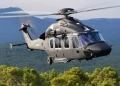
The Nigerian Air Force (NAF) marked a notable milestone in its ongoing efforts to reclaim operational depth and technical self-reliance on 4 February 2026. The commissioning of the reactivated Super Puma helicopter, registered as NAF 565, occurred at the 205 Rotary Wing located in Ikeja, Lagos. This specific aircraft had remained grounded for three years following a complex challenge involving its main rotor hub. The return of the platform to active flight status represents a substantial boost to the rotary-wing capacity of the service. Air Marshal Sunday Kelvin Aneke, the Chief of the Air Staff (CAS), presided over the ceremony and reaffirmed the determination of the NAF to sustain decisive airpower in defence of the nation.
The reactivation of NAF 565 is not merely a routine maintenance achievement. It serves as a demonstration of the commitment of the NAF to enhance a professional and mission-ready force through the restoration of legacy platforms. Air Marshal Aneke described the event as a symbol of renewed capability. He stated that the occasion was about more than returning an aircraft to the fleet; it was a testament to the persistence of the technical personnel involved. The CAS emphasised that maintaining such assets is central to strengthening national security and ensuring that the Air Force maintains operational superiority across various theatres of conflict.
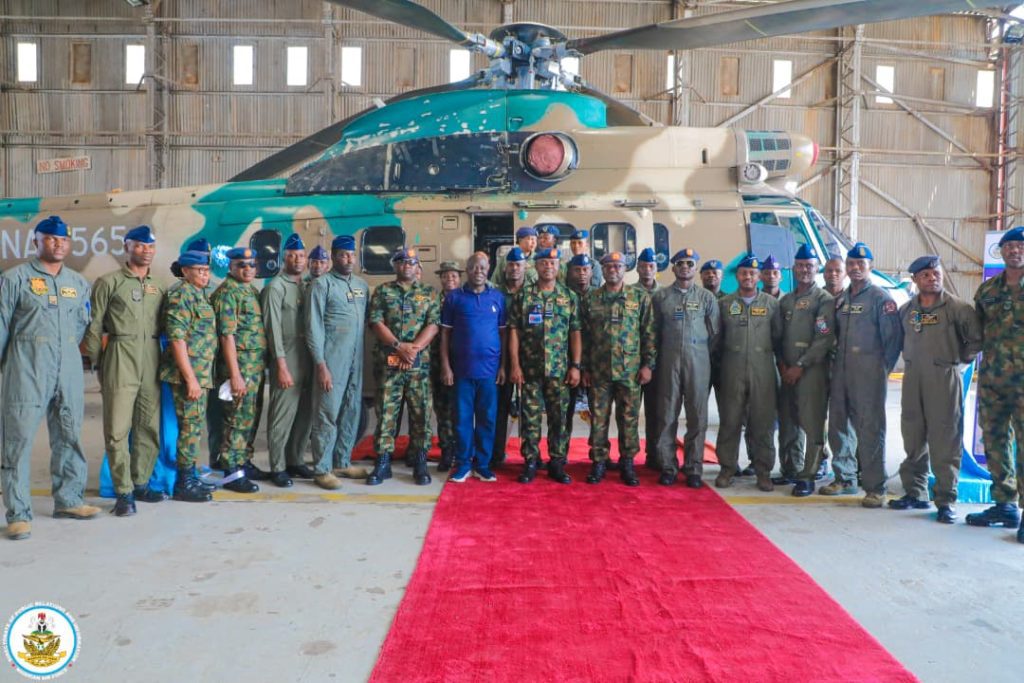

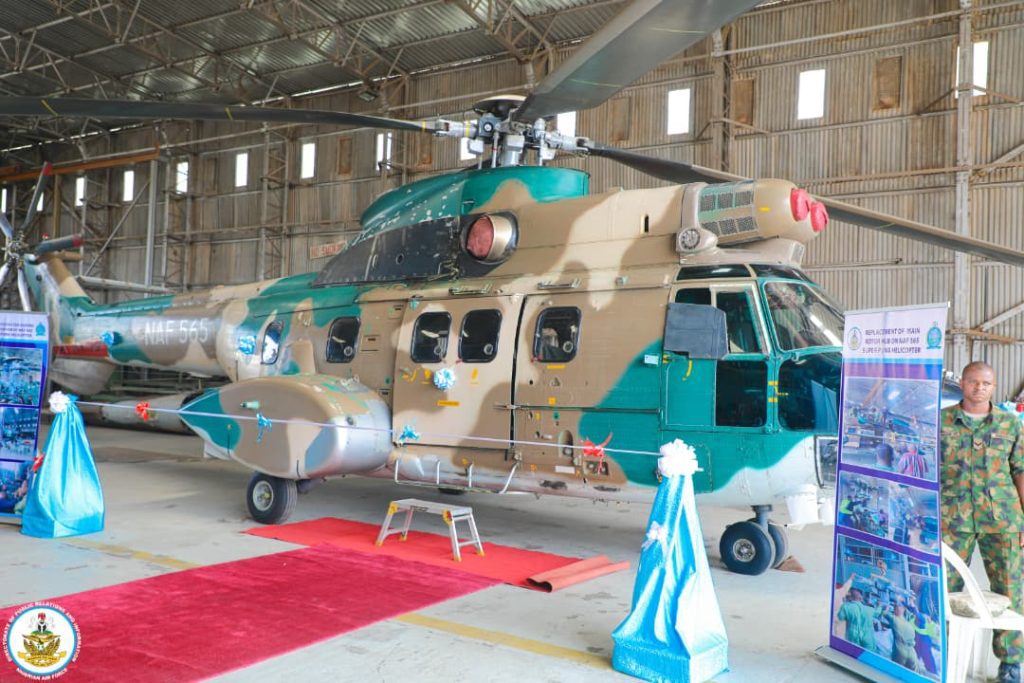
During the grounding period, the NAF sought a solution that balanced technical precision with cost-effectiveness. Air Marshal Aneke acknowledged the contributions of retired Air Commodore Taiwo Badru, who provided support and consultation throughout the reactivation process. The hands-on work was completed by the technicians of the 205 Rotary Wing. This internal approach to maintenance aligns with the broader strategic goal of developing indigenous technical capacity. By performing these complex tasks locally, the NAF reduces its reliance on foreign original equipment manufacturers and ensures that its personnel gain the high-level experience necessary to manage a modern fleet.
Air Marshal Aneke expressed appreciation to President and Commander-in-Chief of the Armed Forces, President Bola Ahmed Tinubu, noting that the Federal Government’s Renewed Hope Agenda is yielding tangible capability gains. These gains are realised through a dual strategy of strategic new acquisitions and the meticulous restoration of critical legacy assets like NAF 565.
The Super Puma has long been regarded as a workhorse within the Nigerian Air Force. Its role is difficult to replicate due to its high-density transport capacity. It can carry up to 20 fully equipped troops or a substantial internal payload. The aircraft has proven its effectiveness in joint missions nationwide, providing a reliable platform for troop transport and logistics support. These specifications make it indispensable for Operation Hadin Kai, the ongoing counter-insurgency campaign in the northeast.
The Super Puma, specifically the AS332 variant utilised by the NAF, is a twin-engine, medium-weight utility helicopter originally developed by Aérospatiale and later produced by Airbus Helicopters. It is powered by two Turbomeca Makila 1A1 turboshaft engines, which provide the lift necessary for heavy-duty operations in the demanding Nigerian climate. The main rotor hub is the critical component that facilitates the connection between the rotor blades and the helicopter mast. It manages the immense aerodynamic and centrifugal loads generated during flight. Because this component is vital for structural integrity, any hub challenge necessitates an immediate grounding of the aircraft. Repairing or replacing these systems often requires specialised tools and deep-level engineering expertise.
The Super Puma serves as a primary asset for casualty evacuation (CASEVAC) and search and rescue (SAR) operations. The speed at which a wounded soldier can be transported from the front line to a medical facility often determines the outcome of the injury. The NAF 565 reactivation ensures that more of these life-saving assets are available for deployment. The CAS noted that the helicopter would also serve as a tool for close air support and the instruction of troops. Furthermore, its versatility allows for seamless coordination with the Nigerian Army and the Nigerian Navy.
The technical success of the 205 Rotary Wing technicians reflects a shift in the NAF toward a culture of ownership and meticulous maintenance. Air Marshal Aneke urged the personnel who will operate and maintain the aircraft to uphold the highest standards of safety and professionalism. He insisted that the platform be treated with utmost care to ensure it remains mission-ready whenever required. In an organisation where equipment is often pushed to its physical limits by the demands of active conflict, the longevity of an airframe depends entirely on the quality of its ground support.
The Nigerian Air Force (NAF) is on a determined path to reach 90% aircraft serviceability by the fourth quarter of 2025, a goal set by Chief of the Air Staff (CAS) Air Marshal Hasan Bala Abubakar. This ambitious target is part of a broader effort to strengthen the NAF’s operational readiness through a robust maintenance culture, institutional reforms, and strategic partnerships. Speaking at the 2025 Aircraft Engineering Conference in Abuja, Abubakar described the event as timely and transformative, stressing that mission success in modern air operations depends on aircraft that are available, airworthy, and capable of sustained performance.
With the NAF’s current serviceability rate standing at 72%, the push to 90% reflects a clear commitment to enhancing air power as the force’s fleet continues to grow. The conference, held at NAF Headquarters, carried the theme “Enhancing Aircraft Serviceability in the NAF through Strong Maintenance Culture and Strategic Partnerships.” It brought together active and retired engineering professionals to explore practical solutions for keeping the Air Force’s aircraft operational. Abubakar outlined several key strategies to achieve the 90% target, including investments in predictive maintenance, spare parts, ground equipment, and digital documentation systems.
He also announced the creation of a new Directorate of Aircraft Life Cycle Management (DALCM), designed to monitor and maintain the fleet’s health from the moment aircraft are introduced until they are retired. This directorate will play a central role in ensuring the long-term sustainability of the NAF’s expanding inventory. Discussions at the conference included detailed presentations on technical documentation and the value of collaboration between local and international partners in aircraft maintenance. These talks were focused on actionable ideas to improve serviceability, with participants exchanging insights drawn from years of experience. AVM AI Amodu, the Chief of Aircraft Engineering, commended Abubakar for his forward-thinking leadership, calling the engineering team the backbone of the force.
The return of NAF 565 to the flight line serves as a reminder of the engineering talent within the Nigerian military. This reactivation is a key component of a larger effort to ensure the Air Force can provide a persistent air presence across the country. As the NAF continues to modernise, the integration of restored legacy aircraft with newly acquired platforms will provide a more robust and flexible defence architecture. With its restored flight capabilities, NAF 565 is prepared to resume its duties in support of national security objectives, from the mangroves of the south to the arid plains of the north.
Similarly, in 2024, the Nigerian Air Force accomplished a groundbreaking 4800-hour Periodic Depot Maintenance (PDM) on a Dornier 228 (DO-228) aircraft. At the time, the Chief of Aircraft Engineering (CACE), Air Vice Marshal Pius Oahimire, highlighted this achievement as a testament to the NAF’s burgeoning engineering expertise and a reflection of the Chief of Air Staff’s (CAS) philosophy that emphasises a robust maintenance culture and logistics support.