

Nigeria is a central pillar of regional security, the commander of United States Africa Command (AFRICOM), General Dagvin Anderson, told the inaugural Africa International Defence Exhibition (AFRIDEX) in Lagos on Tuesday 27 October 2026. In his address, Anderson set out US views on Africa’s security needs and called for stronger and more varied forms of cooperation between the United States, the continent and the wider world.
“We can’t talk about the future of global security without talking about Africa. It sits at the crossroads of global commerce and security, bridging the strategic terrain between the Atlantic and the Indo-Pacific. It is a continent of immense consequence, and what happens here in Africa will shape the 21st century,” he said.
“Africa is not only the world’s supplier of critical resources, minerals like copper, cobalt, lithium, and others that are vital to the advanced defence systems and the global high-tech economy, but the most defining feature of Africa and its future are its people, specifically the youth. By 2050, if estimates are correct, Africa will account for a third of the global working-age population. If left without opportunity, [they will] become a source of profound instability. At the heart of this demographic and economic surge stands Nigeria.”
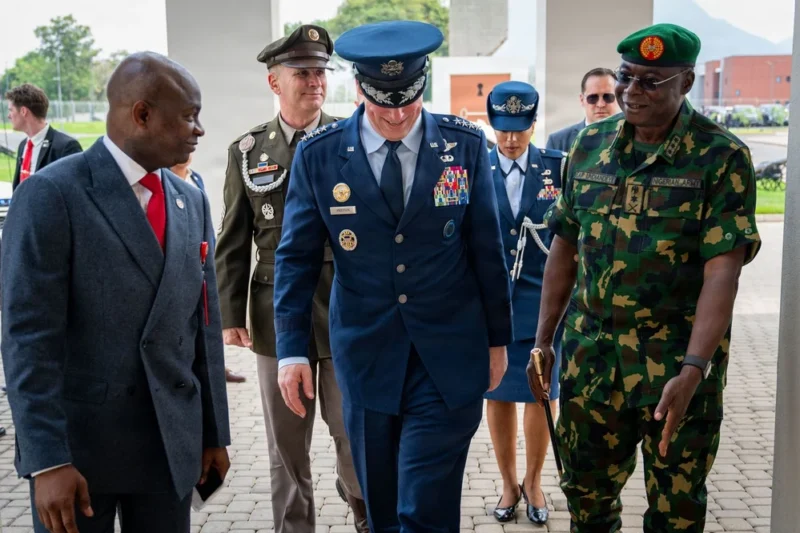
Nigeria pivotal to West African stability
“Nigeria is a central pillar of regional security. You cannot have a stable West Africa without a strong, stable, prosperous Nigeria,” Anderson said. “We also recognise that Nigeria’s success is deeply intertwined with the success of its neighbours in the entire region. We are clear-eyed, though, about the challenges that we face as well. The opportunities across Africa are matched by complex transnational threats, threats that respect no borders. These are threats that the United States, our African partners, and our European partners share. We face the threat of adaptive terrorist organisations that are global in nature. We also face the scourge of a growing narcotics trafficking. Over the past two years, we have witnessed an alarming six-fold increase in cocaine trafficking from South America through Africa.
“So because of this, we understand that this is a shared concern, and that we understand there’s a toxic and symbiotic relationship between the drug cartels and violent extremist organisations. When it comes to terrorism, the United States very clearly understands this is a global fight. It’s not just about the training, but it’s about the ability to understand and share information and intelligence across borders.”
Anderson placed both Africa’s security challenges and its growing defence industrial capacity, as shown at AFRIDEX, at the centre of joint security. “We also know what it means to work together, and we know that we cannot achieve lasting security alone. And today, unfortunately, the epicentre of these global networks is in Africa, whether it’s ISIS’s leadership that has moved to Africa, or Al Qaeda, which seeks to establish a caliphate in the Sahel in West Africa. These are the growing threats that we have watched, and we provide an understanding of those global networks that we need to partner here on the continent, where people have a local understanding and can help not only with the security, but build the stability and governance that follows.
“That is why the defence exhibition here, and looking at the industrial capabilities that are showcased at Afridex, are vital, not just for the technologies they bring, but about creating joint prosperity, about investing in our defence industrial base and investing in our youth. That is the ultimate counterterrorism strategy of providing an alternative path for the youth, providing a sense of hope and future. And because security leads to stability, which is necessary to allow investment, without that, we won’t have shared prosperity. We as the United States want to help willing and able partners when and where our interests align.”
A year of closer US-Nigeria operations
Anderson’s remarks follow a year of closer security cooperation between the United States and Nigeria. On 25 December 2025, the US military, working with Nigeria’s armed forces, conducted air interdiction operations in Nigeria’s North-West and North-Central regions. In February 2026, AFRICOM confirmed it had deployed a small team to Nigeria at Abuja’s request, which the Nigerian government said was restricted to training and intelligence support, and Anderson met President Bola Tinubu and the Office of the National Security Adviser in Abuja.
Military Africa reported in April that the United States had deployed MQ-9 drones and personnel to Nigeria for intelligence support. In May, a series of US strikes carried out with Nigerian forces killed Abu-Bilal al-Minuki, described as the Islamic State’s director of global operations, along with other senior leaders. Anderson said in July that the US had withdrawn much of the force sent for that operation while continuing to share intelligence at Nigeria’s request. Training has continued since, including unmanned aircraft system training for Nigerian Air Force special forces in Bauchi, and US forces have returned to neighbouring Cameroon with a focus on intelligence, surveillance and reconnaissance (ISR).
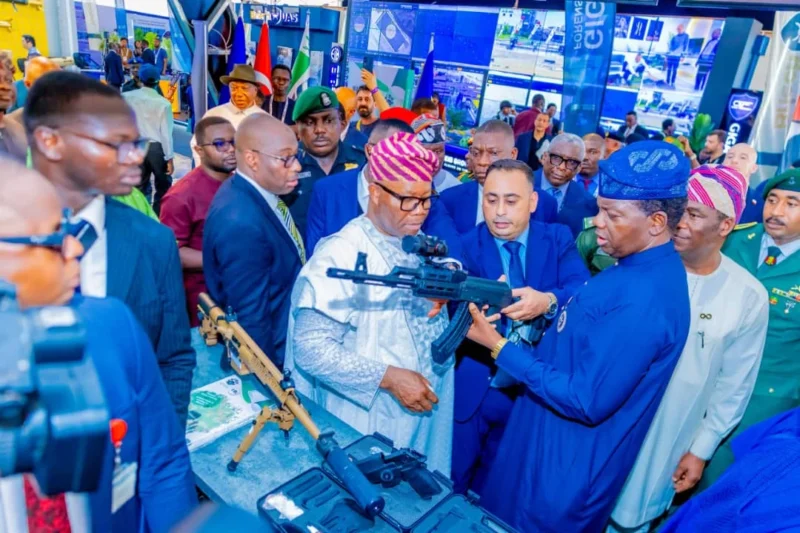
New technologies and tactics
“We have to continue to develop the capabilities that can adapt to the changing character of war, and stay ahead of the terrorists as they also have access to these same technologies, because we are living through an inflection point in human history, where we’re transitioning from the industrial age and industrial age warfare to the digital age and what the digital age brings to warfare,” Anderson said. “We need the right technology in the right place but more importantly we need new ways of thinking, new ways of fighting, and new ways of harnessing that energy. Victory is decided by the speed of relevance, cognitive agility, and the ability to operate across multiple domains simultaneously.
“We cannot afford our own defeat at the hands of agile digitally enabled terrorists or cartels who are rapidly changing and adapting their tactics and this is why we’re looking at initiatives across the continent.”
AFRICOM has been evaluating such initiatives, including the Curtain Call counter-drone swarm system, as armed groups in the Sahel and the Lake Chad Basin make growing use of commercial drones.
Anderson was clear that military readiness can never be the complete solution. “As we look at this, critical to this is how we link the economic sector, commercial sector with the defence sector and it’s not just about production, it’s about how we do this to greater effect. How do we bring those capabilities to bear rapidly? How do we evolve them with our forces and develop them? It’s also about talking about how we do this and how we operate and partner together.”
He referred to the difficult problem of unemployed young people who turn to insurgent groups for a sense of purpose and identity, and to the need for alternative ways for them to believe in a decent future. It was, he said, “an even more important effect in my opinion of being able to take power and manpower away from the terrorists without firing a shot. So it’s equally important to not just conduct the operations, but to talk about it, to identify a future, the fact that Nigeria has an opportunity for these youth to transition away, but then creating the economic opportunities for that youth so they can look elsewhere and not to terrorism, not to cartels, not to illicit activity. We have to invest, we have to engage, but we have to create the security to allow that stability and governance to prosper.”
Trade, not aid
“And so with that, we share that desire to pursue this through trade, not aid. We’re looking at ways of doing market-driven development. We need to find a sustainable model that benefits all parties,” Anderson said. “How do we harness that power of the United States and the West to coordinate that and engage constructively here in Africa to find wins for both partners?”
His message echoed the one delivered at the opening ceremony a day earlier, when President Tinubu, represented by Senate President Godswill Akpabio, told AFRIDEX that Africa must become more self-reliant in defence and that partnerships should be judged by “the capability it leaves behind”.

“You cannot surge trust”
Anderson, a US Air Force officer who was selected to lead AFRICOM in August 2025, having previously commanded Special Operations Command Africa, closed with a point about time. “And in closing, I just want to leave you with one simple truth that we have learned. We can surge assets. The United States is very good at that. But you cannot surge trust. Trust is built over time. There is great hope for the future and great opportunity in the partnerships here on this continent. But I believe we must move with relentless urgency. We must iterate, innovate, and advance our technologies and tactics faster than the threats we face. We must work together to ensure that security, stability, and prosperity, and not extremism and violence, define our futures. Because this future is what we all take dearly, because it’s the future of our children.”