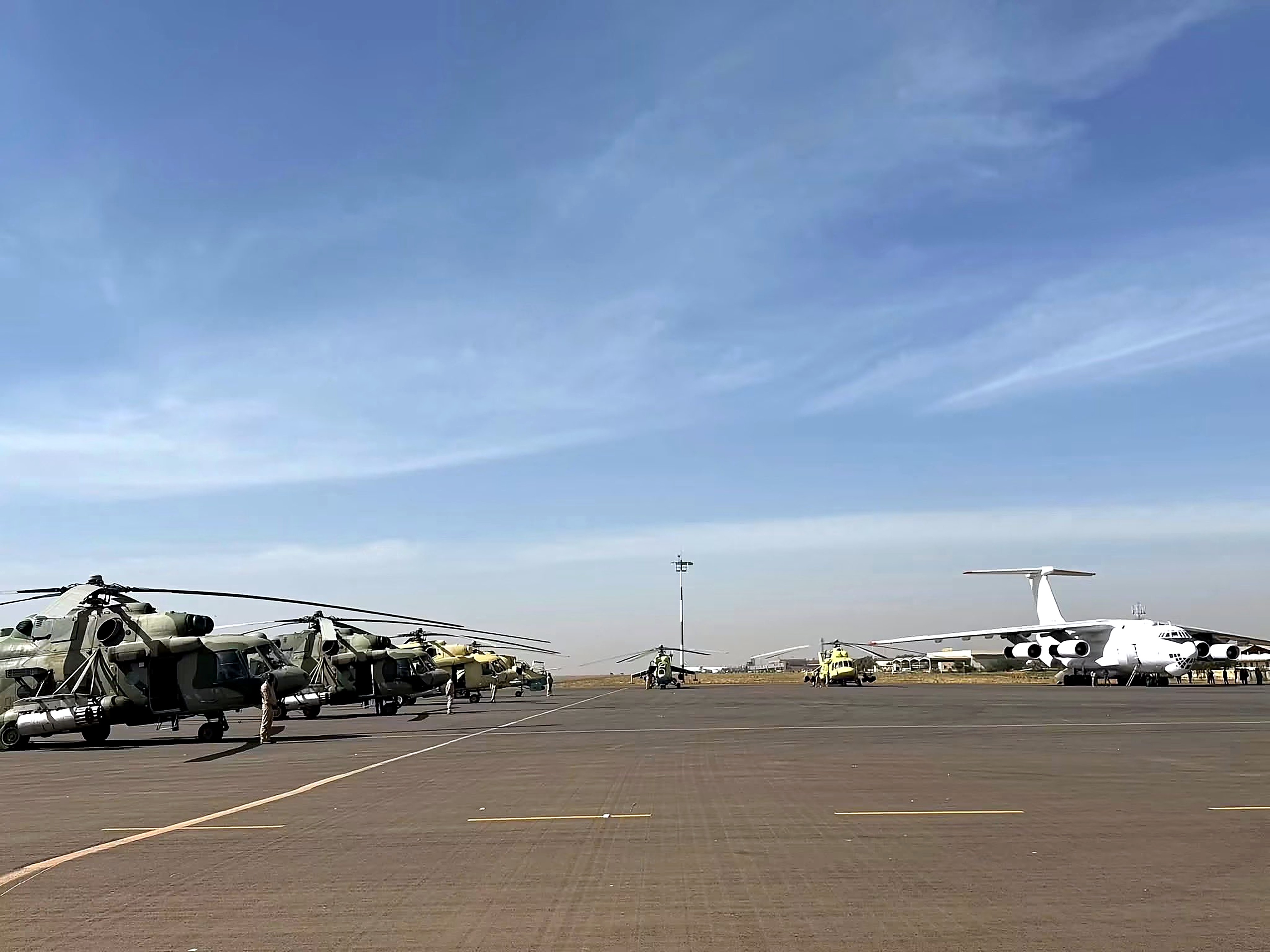
The Malian Air Force has taken delivery of six helicopters and an Ilyushin Il-76 heavy transport aircraft, in one of the largest single additions to its fleet in recent years. Transition President General Assimi Goïta presided over the handover at Modibo Keïta International Airport in Bamako on Monday, 16 November 2026, and symbolically gave the keys to General Oumar Diarra, the minister delegate for defence, who is responsible for bringing the aircraft into service.
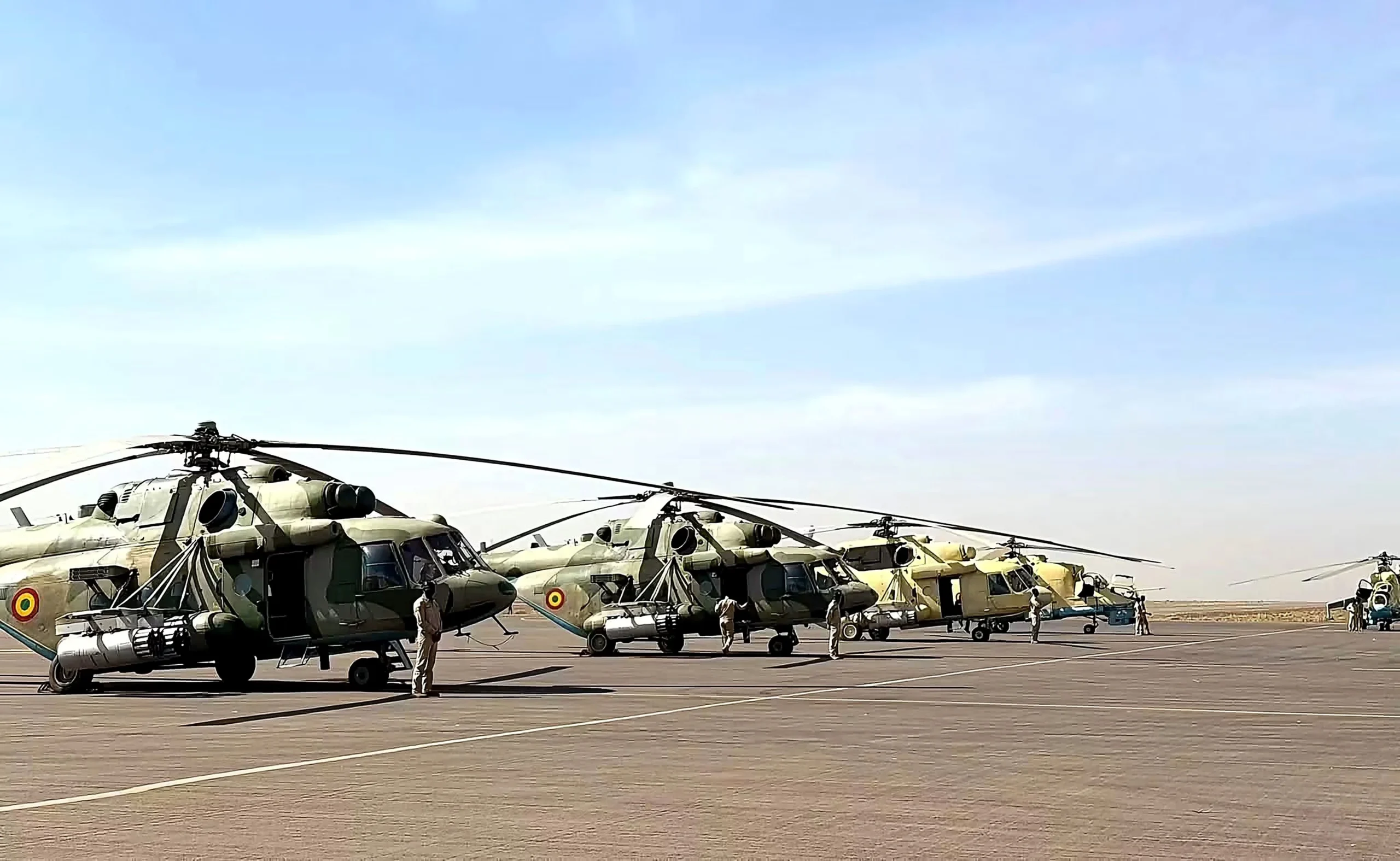
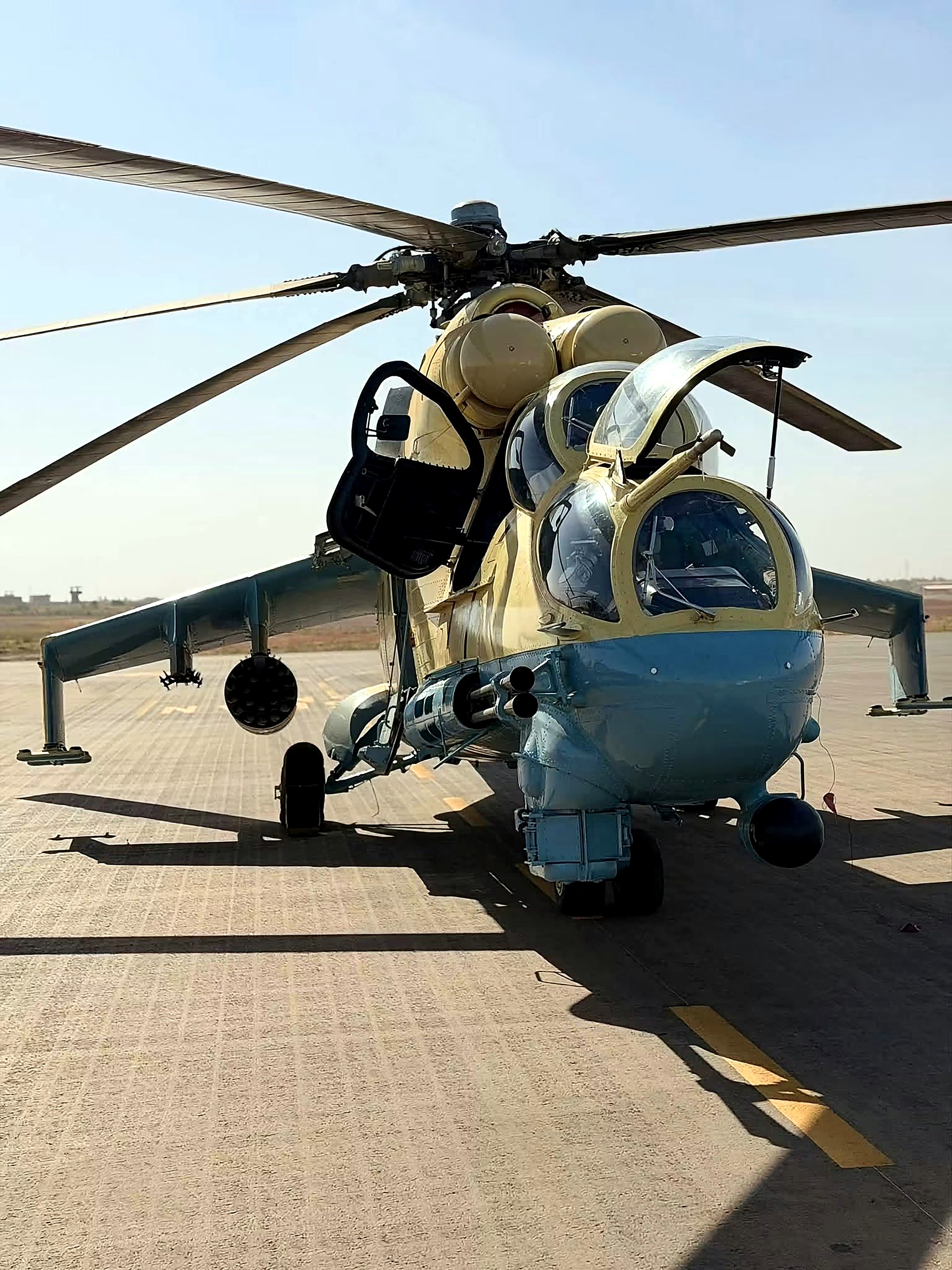
The delivery includes Mil Mi-24 attack helicopters and Mil Mi-8 transport helicopters, though accounts of the mix differ. Malian outlets Mali 24 and La Nouvelle Tribune report four Mi-24s and two Mi-8s, while other early accounts put the split at two Mi-24s and four Mi-8s. Photographs from the apron show at least two Mi-24s alongside several Mi-8-family transports, some in a green and sand camouflage and others in a plain sand finish, carrying “Armée de l’Air” titles, the Malian roundel and serials in the TZ-4xH range. No supplier has been named, but all three types are Russian designs and Russia has been Bamako’s main source of military aircraft since 2021.
Gunships, troop carriers and strategic lift
The Mi-24 is a heavily armoured attack helicopter that can also carry up to eight troops in its rear cabin. At least one of the new aircraft has the fixed twin-barrel cannon on the right side of the nose that marks the Mi-24P variant, which mounts the 30 mm GSh-30-2 gun, together with rocket pods on its stub wings. The Mi-24P has become Mali’s main close air support helicopter since Russia first delivered the type in 2022, and Malian media describe the new aircraft as intended for attack missions and air support for troops on the ground.
The Mi-8 family, which includes the export Mi-17, is the workhorse transport helicopter of most African air forces. It can carry around two dozen troops or several tonnes of cargo, and the camouflaged machines delivered to Bamako are armed with multiple rocket launchers on outrigger pylons, giving them a secondary fire support role. Mali received four Mi-17s from Russia in 2021 and further Mi-8s in 2022 and 2023.
The Il-76 is the most unusual part of the package. The four-engined jet transport can carry more than 40 tonnes over long distances and operate from short, rough runways, which would give the Malian Armed Forces (FAMa) a heavy-lift capacity it has lacked, with Malian outlets describing it as a means of moving troops, equipment and materiel between distant bases. The aircraft at Bamako is painted plain white without visible national markings, and it is not yet clear whether it will carry Malian Air Force titles.
Replacing a year of heavy losses
The delivery comes after a punishing period for Malian airpower. On 25 April 2026, al-Qaeda-linked Jama’at Nusrat al-Islam wal-Muslimin (JNIM) militants and Tuareg separatists launched coordinated attacks in the Bamako, Gao and Kidal sectors. In the aftermath, former defence minister Sadio Camara was killed when a suicide car bomb struck his residence, and Goïta took over the defence portfolio himself, with army chief of staff General Oumar Diarra appointed minister delegate, Reuters reported.
In the north, the Azawad Liberation Front (FLA) and JNIM have taken a steady toll on government aircraft. Military Africa reported in June that Mali had lost a Mi-24P to rebels, and on 5 July another Russian-operated Mi-24P was downed during the siege of Anéfis while escorting a relief convoy from Gao. Open-source tallies compiled in Military Africa’s analysis of the erosion of Mali’s air capabilities put losses since 2023 at four Mi-24Ps, more than four transport helicopters, at least two Su-25s and at least one Bayraktar Akıncı drone. Earlier losses include two helicopters shot down in an ambush in July 2024 and the crash of the last remaining Su-25 in September 2023.
Bamako had signalled the need for more rotary-wing aircraft. In December 2025, Military Africa reported that the Malian Air Force was seeking additional Russian combat helicopters. In July 2026, General Diarra presented a five-year review of defence reforms, saying investment in armoured vehicles, drones, combat aircraft, attack helicopters and artillery had improved “la mobilité, la puissance de feu, la capacité de renseignement et l’efficacité opérationnelle des FAMa” (the mobility, firepower, intelligence capability and operational effectiveness of the FAMa).
Russia, Türkiye and China in Malian skies
Mali’s air arm now draws on several partners. Russia’s Africa Corps runs its own combined aviation grouping in Mali, flying Su-24M bombers, Mi-8AMTSh assault transports, Mi-24P gunships and Il-76 transports from Bamako, and Russian-linked cargo ships have been ferrying armour to Africa Corps units in Mali. Türkiye has supplied Bayraktar TB2 and Akıncı drones, and Bamako is pressing for technology transfer in its defence ties with Ankara, while China has sold Mali the Yitian-L air defence system.
Air mobility for a stretched army
For the FAMa, the new aircraft address its most pressing problem: moving and protecting troops across a country where JNIM’s blockades and ambushes have made many roads too dangerous for convoys. Mi-8s can resupply and evacuate besieged garrisons such as Aguelhok and Anéfis, Mi-24s can escort them and strike attackers, and the Il-76 can move larger loads between Bamako and the main northern hubs at Gao, Timbuktu and Sévaré.
Whether the extra airframes change the balance will depend on how fast they can be crewed, armed and sustained, and on how well they survive the shoulder-launched missiles, heavy machine guns and drones that brought down their predecessors. With losses running at several aircraft a year, Mali will need a steady flow of replacements, and the November delivery suggests that its partners are prepared to keep supplying them.