
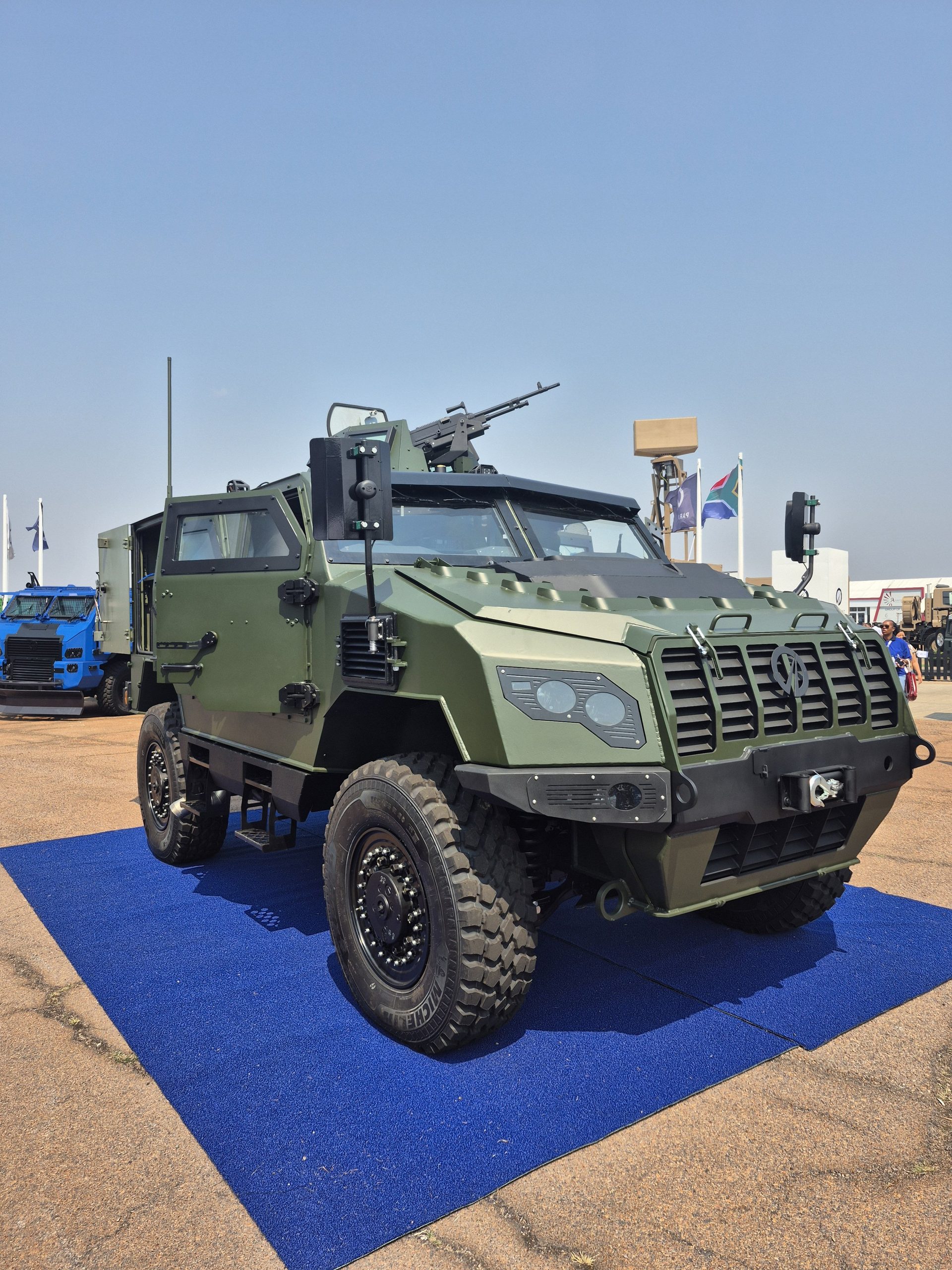
Paramount Group founder Ivor Ichikowitz has told South Africa’s defence establishment that public-private partnerships (PPPs) could rebuild the South African National Defence Force (SANDF) quickly, but only if the government shows it actually wants a defence force. He was speaking on a panel at the Africa Aerospace and Defence (AAD) conference at Air Force Base Waterkloof, Pretoria, on 17 September 2026, remarks DefenceWeb published on 20 November.
“How many of you believe South Africa needs a defence force? Give me a show of hands. Now tell me, how many of you believes the government of South Africa believes we need a defence force?” he asked the panel and audience.
“Private and no public”
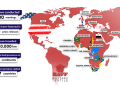
Ichikowitz said PPPs had been central to Paramount’s growth, with some partnerships still running 25 years after they were set up, but none in South Africa. Less than 2% of the company’s turnover is earned at home, he said, with the rest coming from 35 countries. “Can PPPs support South Africa getting a defence capability supported by an industrial capability back on track? Absolutely it can. Can it do it fast? Absolutely, but not without the will, commitment and desire of the government to translate into real engagement. You can’t have a public private partnership if you’ve got private and no public.”
He accused Pretoria of failing to treat defence intellectual property (IP) as a sovereign asset. “We hold some incredible IP, IP that dates back decades, IP that cost the taxpayers of this country billions of rand to develop, and it is just being allowed to be eroded as if it has absolutely no value,” he said, while crediting the National Conventional Arms Control Committee (NCACC) as “the one thing in this country which still actually works”.
Armscor’s procurement model under fire
Ichikowitz argued that the defence market had changed dramatically in four years while the procurement process of the Armaments Corporation of South Africa (Armscor) had not changed since it was drafted in the 1950s, and that this showed in the SANDF’s current operational capability. He pointed to Ukraine, where battlefield commanders work directly with suppliers to refine products in real time. “Complexity is a choice,” he said. “You either decide to build complexity roadblocks, rent-seeking opportunities into the process, or you choose not to.”
Other panellists were more cautious. Lindokuhle Hlatshwayo, senior project adviser at the Government Technical Advisory Centre, said PPPs could be complex enough to discourage investors and depended on political will for practical implementation, not only strategy. Xander Mentz, Milkor’s head of development for West Africa, said private capital was willing to invest before orders: “Industry works against commercial timelines and multiple client requirements, not an annual budget cycle.”
One partnership for the whole industry
Ichikowitz proposed what he called “the complete modernisation of the SANDF” as a single PPP between the defence force and the whole industry, not only Paramount, Milkor or Denel, modelled on the way the US Department of Defense brings manufacturers together to solve a problem collectively. He said Paramount had helped nine countries modernise their forces using South African engineers and concepts of operation, and called it a “travesty” that the industry serves governments around the world but not its own.
The remarks echo the Defence Industry Lekgotla in July 2026, where Deputy Minister of Defence Bantu Holomisa called for a practical “PPP Action Plan” to tackle the SANDF’s infrastructure and capability backlogs. Military Africa has reported on the strain those budgets place on procurement, from Armscor’s request for information on replacing the R4 and R5 rifles to the slow progress of the Milkor 380 drone toward SANDF service.
Political Will Before Partnerships
Ichikowitz’s argument reverses the usual case for PPPs: the private money, he says, is already there, and the missing piece is a state that knows what it wants and is prepared to sign long-term contracts. Whether the Department of Defence turns Holomisa’s call for an action plan into named projects, and whether Armscor’s acquisition rules are rewritten to allow them, will decide if South Africa’s industry ends up rebuilding its own defence force or keeps doing that work for 35 other countries.