


The Kofi Annan International Peacekeeping Training Centre (KAIPTC) opened the first African Maritime Security Forum in Accra on Wednesday, 14 October 2026, bringing naval chiefs, policymakers and researchers from across the continent together for two days of talks on maritime threats and cooperation.
The forum ran until 15 October under the theme “The African Maritime Landscape in Times of Geopolitical Uncertainty in 2026 and Beyond.” KAIPTC organised it with the Security Institute for Governance and Leadership in Africa (SIGLA) at Stellenbosch University and the Royal Danish Defence College (RDDC), under the Danish Peace and Stabilisation Fund’s Maritime Security Programme for the Gulf of Guinea, which has run from 2022 to 2026.
“Not the Responsibility of Navies Alone”
Ghana’s Minister for Defence, Kenneth Gilbert Adjei, opened the event as Guest of Honour. He told delegates that maritime security required a response that was “intelligence-led and sustained by trust among nations,” and warned that criminal networks exploit the links between land, sea and air routes, so no single state can police its waters alone. “Maritime safety and security are not the responsibility of navies alone,” he said, according to the Ghana News Agency, calling for cooperation among governments, industry, regional bodies and international partners. He also pointed to Denmark’s long-running support for the Ghana Armed Forces, including training, simulation equipment and funding for special operations capacity.
KAIPTC Commandant Air Vice Marshal David Anetey Akrong called the gathering a milestone and a step towards a “continent-wide approach to maritime governance.” He noted that the previous four editions of the conference had been held in South Africa, and that moving it to Accra and widening its scope from the Gulf of Guinea to the whole continent marks a shift towards treating African maritime security as one interconnected problem rather than a set of regional ones.
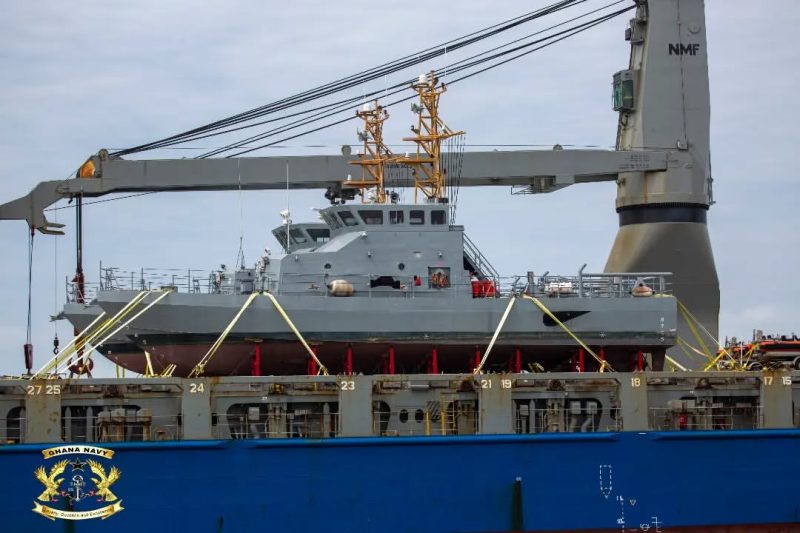
Denmark’s Ambassador to Ghana, Jakob Linulf, used his keynote to link the forum’s agenda to events far from African waters. He pointed to disruption in the Middle East that has pushed commercial shipping onto alternative routes, adding pressure to sea lanes already straining African navies with limited ships and aircraft, and called for stronger national ownership and regional coordination to protect freedom of navigation. Danish officials say the partnership has trained more than 1,000 military and civilian security officers and helped build maritime crime investigation facilities in Ghana and Nigeria since the programme began.
Governance Before Hardware
A recurring theme was governance rather than equipment. Professor Ismael Theletsane, who directs the Organ on Politics, Defence and Security Affairs at the Southern African Development Community (SADC), told delegates that policy gaps, fragmented institutions, weak political will and poor information-sharing do more to undermine maritime security than any shortage of patrol boats. He urged African states and regional blocs to fund their own maritime operations sustainably rather than lean indefinitely on donor programmes, a point that resonates as partners such as the European Union continue to finance Gulf of Guinea navies through the European Peace Facility.
The Cape Route and the Drone Question
For defence planners, the forum’s briefing materials flagged two issues to watch. The first is the Cape sea route around southern Africa, which has absorbed traffic diverted from the Red Sea during Middle East shipping disruptions. Organisers argued that the route should be treated as a normal, permanent part of African and global trade rather than a fallback used only in crises, which in turn demands better maritime domain awareness and stronger enforcement of existing regional agreements.
The second is the growing use of unmanned systems at sea. Briefing notes described unmanned aerial vehicles (UAVs) and unmanned surface vessels (USVs) as increasingly useful for persistent surveillance, letting navies with few hulls and aircraft cover more water at lower cost and risk. The same notes cautioned that criminal and militant groups are adopting the technology too, and that African navies face real limits in fielding their own systems: endurance, communications bandwidth, maintenance and a shortage of trained operators. Some are already moving: Morocco has ordered Dutch-built USVs for mine countermeasures and anti-submarine work, and Military Africa has examined how African navies are adapting to the drone threat.
Organisers also raised the San Remo Manual on International Law Applicable to Armed Conflicts at Sea, the main reference text on naval conduct in wartime, arguing it is increasingly relevant as naval activity and the risk of clashes between fleets grow in African waters. A member of the manual’s working group briefed delegates on revisions under way.
A Crowded Maritime Calendar
The Accra forum joins a busy calendar of African maritime gatherings. The African Maritime Forces Summit (AMFS) and Naval Infantry Leaders Symposium-Africa (NILS-A), hosted by the Ghana Navy with US Naval Forces Africa and US Marine Corps Forces Africa, have met in Accra several times, most recently from 30 April to 2 May 2024, drawing officials from more than 40 countries. An earlier edition of the summit convened in Cabo Verde in 2023, with representatives from 31 of Africa’s 38 coastal states.
Obangame Express 2025 closed with a debrief in Lagos in May 2025, and the 2026 edition returned to Cameroon with 31 participating nations. Ghana held its fourth International Maritime Defence Exhibition and Conference (IMDEC) in Accra in July 2025, and African navies took part in the US Navy’s 250th anniversary International Naval Review in New York in July 2026.

What sets the new forum apart, organisers say, is its academic and policy focus. Where AMFS and NILS-A lean towards operational coordination between navies and marine forces, the Accra forum pairs serving officers with researchers from SADC, Stellenbosch University and the Danish defence establishment, targeting the governance and legal gaps that Theletsane and others say have outlasted the piracy crisis that first drew international attention to the Gulf of Guinea.
Beyond the Piracy Crisis in the Gulf of Guinea
Akrong noted that reported piracy incidents in the Gulf of Guinea have fallen sharply in recent years, a trend regional officials credit partly to the Yaoundé Architecture, the framework that coordinates information-sharing and naval response among Gulf of Guinea states. He warned, however, that underlying causes such as limited naval capability and weak coastal governance remain. Speakers framed the decline as a result that depends on sustained funding and political attention rather than a solved problem, particularly as the threat picture shifts towards armed robbery at sea, illegal fishing, trafficking and the security of a Cape route absorbing new traffic.