

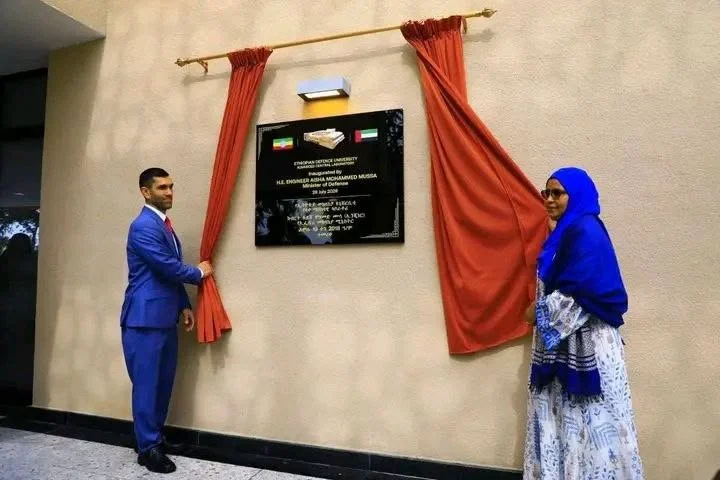
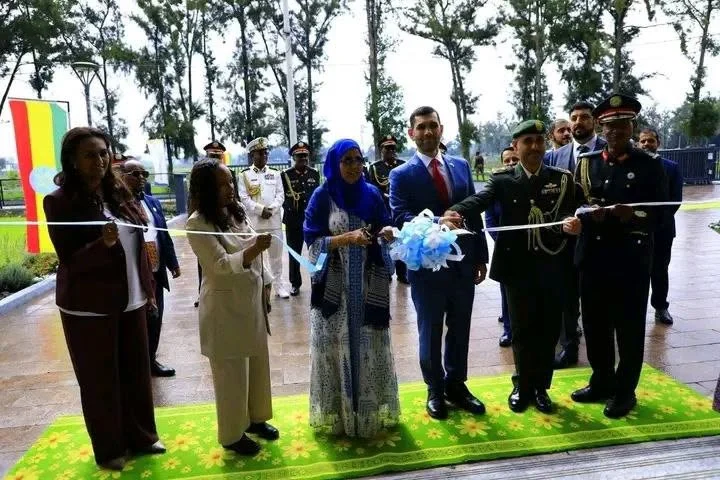
Artificial intelligence (AI) is taking centre stage in Ethiopia’s defence modernisation. On 26 July 2026, the Ethiopian Defence University in Addis Ababa opened an Advanced Central Laboratory, built with support from the United Arab Emirates (UAE), to serve as a national hub for defence research, technology development and specialised training.
According to Ethiopia’s Ministry of Defence, the facility houses dedicated laboratories for AI, cybersecurity, communications, automation, electrical power systems, 3D printing, computer numerical control (CNC) machining and prototyping. The Ethiopian News Agency (ENA) reported that it also includes a nursing education and simulation unit for military medical training, and that the complex sits on a 20,850 square metre site.
The laboratory is expected to speed up the development of indigenous military technology by linking research with workforce training and real-world applications. The university also plans to sell consultancy services in cybersecurity, power infrastructure and logistics engineering, and to run vocational training, technical mentorship and professional workshops for government and industry.
Defence Tech Push
Defence Minister Aisha Mohammed described the laboratory as a flagship initiative to strengthen Ethiopia’s technological base. “The Advanced Central Laboratory represents the beginning of a monumental chapter,” she said at the opening, adding that it was “a practical research initiative designed to transform knowledge into operational strength,” ENA reported. According to Fana Media Corporation, she said the facility would accelerate the Ethiopian National Defence Force’s (ENDF) comprehensive modernisation.
Ethiopian Defence University President Brigadier General Kebede Regassa said it will help prepare the country for evolving security challenges, calling it “a national strategic asset that will enhance Ethiopia’s capacity to respond to rapidly evolving security challenges.” He set out three research streams: cybersecurity and AI, communications and power engineering, and medical simulation for defence personnel. “The success of the center will be measured not only by its equipment, but by the professionals it trains,” he said.
Power supply was designed in from the start. A solar installation with photovoltaic panels, inverters, battery storage and solar water heating can cover the university’s electricity needs for up to eight hours a day, so research and training can continue through grid outages in the capital.
The facility is part of Ethiopia’s broader strategy to expand expertise in AI, cybersecurity and advanced engineering while reducing reliance on foreign defence technology. In March 2025 Prime Minister Abiy Ahmed opened state-owned SkyWin Aeronautics Industries for large-scale drone manufacturing and the Homicho Ammunition Engineering Complex, where he said Ethiopia had signed more than $30 million in ammunition export contracts in three months. Ethiopia’s Dejen Aviation Engineering Industry has since agreed to work with Nigeria on indigenous drone development, and the country showed off its air power at the Black Lion Expo in February 2026.

AI has also become a theme of Ethiopia’s defence diplomacy. In March 2026 a Rwanda Defence Force delegation toured the Ethiopian Artificial Intelligence Institute and discussed AI cooperation with Aisha Mohammed, part of a wider expansion of Ethiopia–Rwanda defence ties, The New Times reported.
A Deepening Partnership With Abu Dhabi
Developed through the Ethiopia–UAE bilateral partnership, the laboratory also reflects deepening cooperation between the two countries in military innovation. Colonel Khalid Alzarooni, speaking on behalf of the UAE Defence Attaché, served as project manager and led the joint technical team; he called the project “an iconic milestone in bilateral relations.” Aisha Mohammed said that “the cooperation between Ethiopia and the United Arab Emirates (UAE) has entered a new stage.” Neither government has disclosed the cost of the facility or the size of the UAE contribution.
The two countries signed a defence cooperation memorandum at the Dubai Airshow in 2019, and their air forces agreed closer military and technical cooperation at the 2025 edition, according to Birr Metrics. Hardware has followed. The ENDF received dozens of Calidus MCAV-20 armoured vehicles in 2024 and a further batch in early 2026, and Emirati drones were reported in support of Ethiopian forces during the Tigray war.
Abu Dhabi is not Ethiopia’s only partner. Addis Ababa operates Russian, Turkish and Chinese equipment, took delivery of its first twelve Su-35 fighters from Russia this month, and has been exploring industrial cooperation with Pakistan. The laboratory also opens at a tense moment in the Horn of Africa, where Ethiopia’s relations with Eritrea remain strained, its dispute with Egypt over the Grand Ethiopian Renaissance Dam is unresolved, and the UAE faces accusations, which it denies, of backing the Rapid Support Forces in neighbouring Sudan.
From Research Benches to Ethiopian Defence Systems
Ethiopia joins a small group of African militaries building dedicated AI research capacity. South Africa’s Military Academy set up a Defence Artificial Intelligence Research Unit in 2024, and Nigeria has signed a $190 million AI-enabled command and control deal with MARSS. Military Africa has examined the wider case for integrating AI into African defence strategy.
The Advanced Central Laboratory’s value will depend on what comes out of it. The measures to watch are the number of engineers and officers it trains, whether its AI and cybersecurity work feeds into ENDF command systems and drone programmes at SkyWin and Dejen, and whether its prototyping and CNC workshops start producing parts and components that Ethiopia now imports.